
- Acasă

- Imprimare pe pânză
- Jean-Antoine Watteau
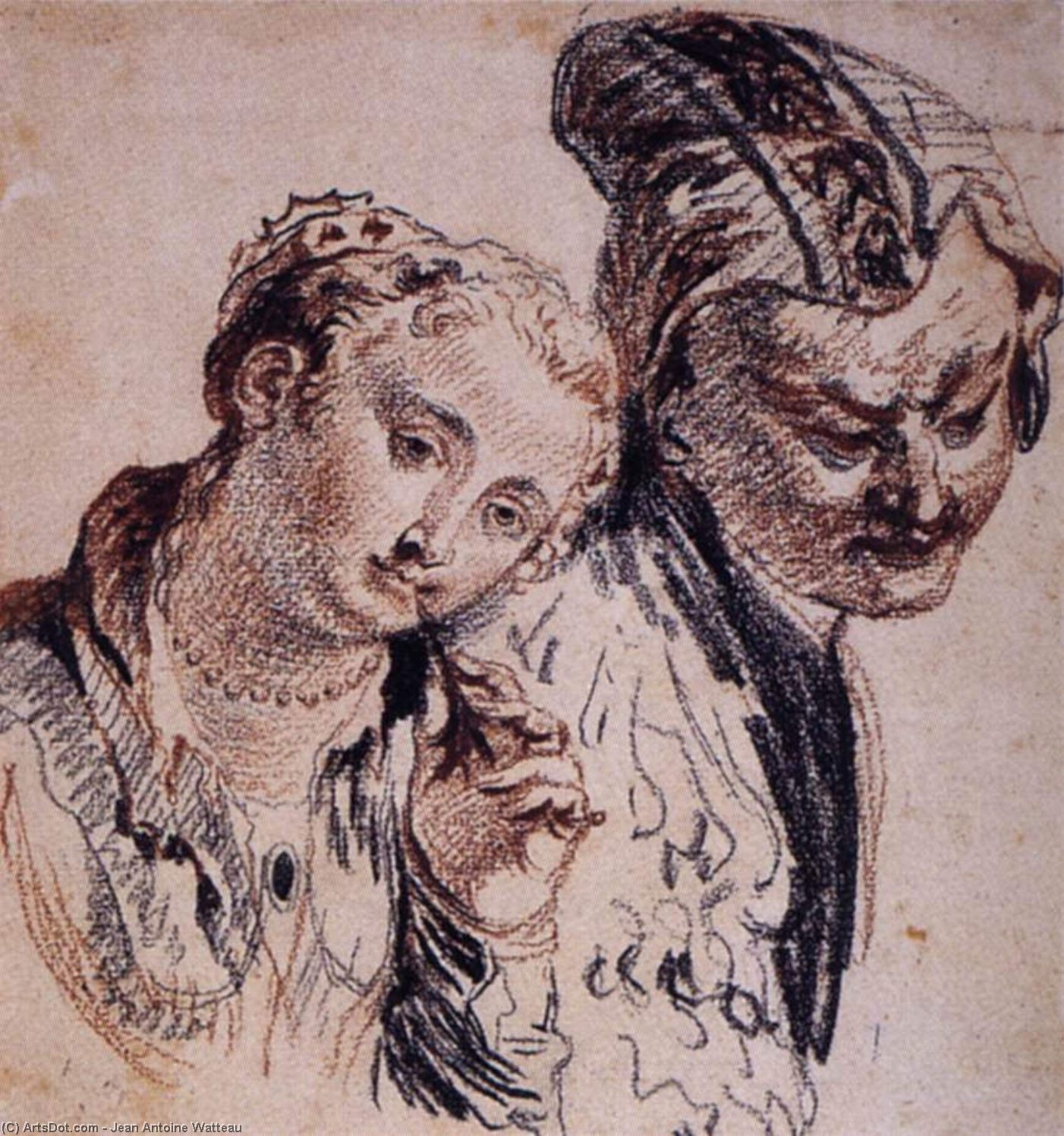
- Sketch with Two Figures
 Comandă reproducere pictată Cumpără imaginea
 Trimite
 Distribuie
 Details
 Adaugă la favorite

 Descarcă
 Similare
 X-Ray
X-Ray
 Diaporama
Sketch with Two Figures
 Acrilic pe pânză
- Artă de perete
- Rococo
 1710
1710- Renașterea
 196.0 x 184.0 cm
 Muzeul Ashmolean
Giclée / Imprimare artistică
Print giclée sau pe canvas de calitate muzeală, cu producție rapidă și opțiuni flexibile de finisare.
 Citește mai mult



P118B $10

P118H $10

P118W $10

P438Z $10

P508JH $12

P508YH $12

P805H $10

P805Z $10

P919BZ $10

P919G $10

P919XJ $10

P959ZH $10

P968JZ $12

W106C $8

W218G $10

W218JH $8

W218Y $10

W307PJ $10

W316G $10

W316PJ $8

W316Y $10

W398PJ $8

W4111J $10

W500HY $15

W500JH $15

W692G $12

W849H $8

W940BG $15

W953PJ $8




Alegeți dintre dimensiunile noastre prestabilite, care respectă proporțiile originale ale operei de artă.

Puteți introduce propriile dimensiuni pentru a se potrivi unui anumit cadru sau spațiu. Dacă dimensiunea selectată nu corespunde proporțiilor imaginii originale, vom decupa lucrarea de artă sau vom extinde imaginea cu margini oglindite sau cu o culoare uniformă. Un mockup digital va fi trimis pentru aprobarea dumneavoastră înainte de începerea producției.
Vă rugăm să rețineți că previzualizarea de pe ecran nu reflectă decuparea sau extinderea reală. Doar mockup-ul va arăta cu exactitate compoziția finală.
Deși dimensiunile personalizate sunt disponibile, vă recomandăm să selectați o dimensiune din lista predefinită pentru a păstra proporțiile originale.
Livrare în întreaga lume () în 2 săptămâni, în loc de cele 4/5 săptămâni standard. (1 Iulie)

Livrare expres gratuită la nivel mondial

Pânză de in de înaltă calitate

Asigurare completă pentru transport

Garanție de rambursare a taxelor vamale

Garanția fidelității culorilor

Politica de retur de 60 de zile (doar pentru defecte)

Garanție 100% de rambursare

Reducere la comenzi multiple
 Opțiunea cu sticlă este disponibilă doar pentru dimensiuni de sub 110 cm

Sketch with Two Figures
Giclée / Imprimare artistică
Dimensiune reproducere
-


Preț total calculat
-
Descriere obiect de colecție
Sketch with Two Figures
The Ashmolean Museum of Art and Archaeology, nestled in Oxford’s historic heart, houses an unparalleled collection of artistic treasures—a testament to centuries of creativity and cultural exchange. Among its celebrated holdings is “Sketch with Two Figures” by Jean-Antoine Watteau, a masterpiece that encapsulates the essence of Rococo artistry and continues to fascinate viewers today. Created in 1715 using chalk on paper, this drawing measures 196 x 184 cm—a substantial canvas for its time—and offers an intimate glimpse into Watteau’s artistic vision. ### Composition and Details The sketch depicts two figures positioned side by side within a richly decorated interior setting. On the left stands a woman adorned in elegant attire, her gaze downward as she examines something held delicately in her hand – perhaps a letter or a cherished trinket. A necklace encircles her neck, subtly enhancing her poise and conveying an aura of refined sophistication. Opposite her is a man absorbed in contemplation; his mouth slightly open as he stares intently into the distance, suggesting deep thought and introspection. Watteau’s meticulous attention to detail—particularly in capturing the textures of hair and facial expressions—elevates this drawing beyond mere representation, imbuing it with palpable emotion and psychological depth. The artist skillfully employs shading and tonal variations to create a sense of volume and atmosphere, mirroring the soft, diffused light characteristic of Rococo interiors. ### Artistic Significance Watteau’s work distinguishes itself through its harmonious blend of realism and idealized beauty—a hallmark of the Rococo style that emerged in France during Louis XV's reign. Unlike the grand narratives favored by Baroque painters like Rembrandt or Rubens, Watteau focused on capturing fleeting moments of pleasure and intimacy, often portraying aristocratic gatherings in idyllic landscapes. “Sketch with Two Figures” exemplifies Watteau’s mastery in conveying complex emotions through understated gestures and expressive brushstrokes—a technique that anticipates Impressionism's emphasis on capturing sensory experience. The artist’s use of chalk lends itself beautifully to delicate lines and subtle gradations of tone, allowing for a remarkable level of precision and nuance. ### Historical Context The Ashmolean Museum’s founding in 1678 represents a pivotal moment in British cultural history—the establishment of the nation's first public museum dedicated to art and archaeology. Prior to this groundbreaking initiative, access to artistic masterpieces was largely confined to aristocratic patronage, fostering an elitist culture of connoisseurship. Watteau’s contemporaries included Hans Holbein The Younger, renowned for his monumental portraits capturing the grandeur of Tudor England, and Michelangelo Buonarroti, whose sculptures embody the humanist ideals of the Renaissance. Consider Holbein's “The Triumph of Riches” (119 x 44 cm), a lavish depiction of royal splendor—a stark contrast to Watteau’s quieter contemplation—and Michelangelo’s “Bust of a Young Man (recto)” (282 x 200 cm)—a testament to sculptural excellence. These artworks underscore the breadth and depth of artistic achievement during Watteau's era, reflecting broader societal shifts toward greater openness and intellectual curiosity. ### Conclusion “Sketch with Two Figures” stands as an enduring symbol of Rococo elegance and psychological insight—a drawing that transcends its formal dimensions to resonate deeply with viewers across time. Its placement within the Ashmolean Museum ensures that Watteau’s artistic legacy continues to inspire admiration and scholarly study. For those seeking to immerse themselves in the beauty of Watteau's oeuvre or explore similar masterpieces from Oxford’s celebrated collection, reproductions of “Sketch with Two Figures” are available on ArtsDot.com – a captivating opportunity to experience firsthand the genius of this pivotal figure in European art history.Opere de artă similare


Biografie artist
A Delicate Brushstroke: The Life and Art of Jean-Antoine Watteau
Jean-Antoine Watteau, a name synonymous with the blossoming Rococo style, emerged from the northern French city of Valenciennes in 1684. His brief but incandescent career irrevocably altered the course of eighteenth-century painting, shifting its focus from the grandeur and drama of the Baroque to an intimate world of elegance, leisure, and subtle emotion. Unlike many artists who followed a clearly defined path, Watteau’s journey was marked by initial struggles for recognition within the established art institutions of Paris. Born into a family of modest means—his father a master roofer—young Jean-Antoine displayed an early aptitude for drawing, initially sketching the colorful characters and bustling scenes of his hometown streets. This formative experience instilled in him a keen eye for observation and a fascination with everyday life, themes that would permeate his later work. His initial training under local artists Jacques-Albert Gérin and Julien provided a foundation, but it was his move to Paris around 1702 that truly ignited his artistic development.From Theatrical Scenes to *Fêtes Galantes*
In the vibrant heart of Paris, Watteau entered the workshop of Claude Gillot, a painter specializing in theatrical designs and the popular genre of *fêtes galantes*—depictions of aristocratic outdoor entertainments. This apprenticeship proved pivotal. Gillot’s influence exposed Watteau to the world of commedia dell'arte, with its masked characters and playful narratives, which would become a recurring motif throughout his oeuvre. However, Watteau’s artistic sensibilities didn’t neatly align with the rigid categories favored by the Académie Royale de Peinture et de Sculpture. His genre paintings were deemed unsuitable for official recognition, leading to initial rejection when he attempted to compete for the prestigious Prix de Rome. Undeterred, and demonstrating a remarkable resilience, Watteau persevered, eventually gaining acceptance as a *maître amateur* in 1717—a status that allowed him to exhibit his work independently. This period marked a crucial turning point, allowing him to fully develop his unique style characterized by luminous colors, delicate brushwork, and an air of wistful melancholy. He began to move away from direct theatrical representation towards more poetic and evocative scenes, inventing the *fête galante* as a distinct genre—idyllic gatherings in park-like settings where aristocratic figures engaged in flirtatious pursuits and refined pastimes.The Essence of Rococo: Style and Masterpieces
Watteau’s paintings are instantly recognizable for their distinctive qualities. He possessed an unparalleled ability to capture the elegance and refinement of aristocratic life, not through bombastic displays of power or wealth, but through subtle gestures, nuanced expressions, and a masterful use of light and color. His figures exude a poetic grace and a delicate emotional depth that sets them apart from the more formal portraits of his predecessors. The Country Dance (1718-1721), perhaps one of his most celebrated works, exemplifies this perfectly—a vibrant scene depicting carefree rustic life with exquisite detail and an underlying sense of longing. Other masterpieces such as Ceres (Summer) (1705) demonstrate his skill in portraying the beauty of nature and the human form, while The Embarkation for Cythera (1717) and its companion piece, Pilgrimage to Cythera, are iconic depictions of mythological journeys to the island of love, imbued with a sense of mystery and romantic yearning. Even his theatrical portraits, like Gilles (1719), possess an enigmatic quality that invites contemplation. Watteau’s technique was equally innovative; he employed a feathery brushstroke and a delicate layering of colors to create a shimmering effect, capturing the fleeting beauty of light and atmosphere.Influences and Artistic Development
Watteau's artistic lineage is complex, drawing inspiration from diverse sources. He deeply admired Venetian Renaissance masters like Titian and Veronese, particularly their rich color palettes and dynamic compositions. The influence of Flemish artists such as Rubens is also evident in his energetic brushwork and sensuous figures. However, Watteau didn’t simply imitate these predecessors; he synthesized their influences into something entirely new and uniquely his own—a style that became the hallmark of Rococo painting. His early training under Gérin provided a solid grounding in traditional techniques, but it was through his exposure to the theatrical world and the *fêtes galantes* that he developed his distinctive vision. The rejection from the Prix de Rome forced him to forge his own path, leading him to experiment with new approaches to composition, color, and subject matter. This period of independent exploration ultimately shaped his artistic identity and allowed him to establish a style that was both innovative and deeply personal.Legacy and Enduring Influence
Watteau's artistic lineage is complex, drawing inspiration from diverse sources. He deeply admired Venetian Renaissance masters like Titian and Veronese, particularly their rich color palettes and dynamic compositions. The influence of Flemish artists such as Rubens is also evident in his energetic brushwork and sensuous figures. However, Watteau didn’t simply imitate these predecessors; he synthesized their influences into something entirely new and uniquely his own—a style that became the hallmark of Rococo painting. Despite a tragically short life—he succumbed to tuberculosis in 1721 at the age of just thirty-seven—Watteau left an indelible mark on art history. His work profoundly influenced generations of artists, including Fragonard and Boucher, who further developed the themes and techniques he pioneered. He redefined genre painting, elevating it to a level of artistic sophistication previously reserved for historical or religious subjects. Today, his paintings are treasured in major museums worldwide—from the National Gallery of Art in Washington D.C. to the Museo del Prado in Madrid—continuing to captivate audiences with their beauty, grace, and enduring appeal, solidifying his place as one of the most important and beloved artists of the Rococo period.
Jean-Antoine Watteau
1684 - 1721 , Franța
Detalii rapide
- Artistic Movement Or Style: Rococō
- Artists Or Movements Influenced By This Artist:
- Fragonard
- Boucher
- Artists Who Influenced This Artist:
- Titian
- Veronese
- Rubens
- Date Of Birth: 1684
- Date Of Death: 1721
- Full Name: Jean-Antoine Watteau
- Nationality: Francez
- Notable Artworks:
- Dansul rural
- Ceres (Vara)
- Contractul de căsătorie
- Gilles
- Pelerinajul către Cythera
- Place Of Birth: Valenciennes, Franța
Articole conexe

The Rococo Style: Aristocratic Leisure & the Pursuit of Delight in 18th-Century Art
Explore the opulent world of Rococo art! Discover Watteau, Boucher & Nattier's masterpieces. Expert insights for collectors seeking museum-quality reproductions and custom portraits at ArtsDot.


Jean-Baptiste Pater: Rococo Charm & Ephemeral Beauty of 18th-Century France
Explore the captivating world of Jean-Baptiste Pater, a master of Rococo painting. Discover his elegant *fête galante* scenes and shimmering portraits – a glimpse into 18th-century French aristocracy. Learn about his legacy & find high-quality reproductions.

The Rococo Aesthetic: Opulence, Rebellion & the Pursuit of Pleasure in 18th-Century Art
Explore the opulent world of Rococo art! Discover its origins, key artists like Watteau & Boucher, and lasting influence on design. Expert insights for collectors & enthusiasts.

The Fête Galante & Beyond: Exploring the Artistic World of Jean-Antoine Watteau
Discover the captivating world of Jean-Antoine Watteau, master of the Fête Galante! Explore his iconic paintings, symbolism, and lasting influence on Rococo art. A deep dive for classic art enthusiasts.

Charles-André van Loo: A Study in Rococo Portraiture & the French Court's Artistic Dynamics
Explore the elegant world of Charles-André van Loo, a master of Rococo portraiture at the French court. Discover his life, techniques, and enduring influence on 18th-century art. Hand-painted reproductions available.



