
- Acasă

- Reproducere Tablou în Ulei
- Isaak Ilyich Levitan
- Silent cloister

 Comandă tipăritul Cumpără imaginea
 Trimite
 Distribuie
 Details
 Adaugă la favorite

 Descarcă
 Similare
 X-Ray
X-Ray
 Diaporama
Silent cloister
 Oil On Canvas
- WallArt
- Contemporary Realism
 1890
1890 88.0 x 108.0 cm
 Galeria Tretyakova
Reproducere manuală în ulei
Pictură în ulei pe pânză, pictată manual, la dimensiunea și ramele dorite de dumneavoastră, realizată la comandă de artiștii noștri.




P118B $10

P118H $10

P118W $10

P438Z $10

P508JH $12

P508YH $12

P805H $10

P805Z $10

P919BZ $10

P919G $10

P919XJ $10

P959ZH $10

P968JZ $12

W106C $8

W218G $10

W218JH $8

W218Y $10

W307PJ $10

W316G $10

W316PJ $8

W316Y $10

W398PJ $8

W4111J $10

W500HY $15

W500JH $15

W692G $12

W849H $8

W940BG $15

W953PJ $8




 Citește mai mult
Alegeți dintre dimensiunile noastre prestabilite, care respectă proporțiile originale ale operei de artă.

Puteți introduce propriile dimensiuni pentru a se potrivi unui anumit cadru sau spațiu. Dacă dimensiunea selectată nu corespunde proporțiilor imaginii originale, vom decupa opera de artă sau vom extinde pictura cu elemente suplimentare pictate manual. O simulare digitală vă va fi trimisă pentru aprobare înainte de începerea producției.
Vă rugăm să rețineți că previzualizarea de pe ecran nu reflectă decuparea sau extinderea reală. Doar macheta va arăta cu exactitate compoziția finală.
Deși sunt disponibile dimensiuni personalizate, vă recomandăm să selectați o dimensiune din lista predefinită pentru a păstra proporțiile originale.
După plasarea comenzii, echipa ArtsDot.com va trimite clientului instrucțiuni prin e-mail și îi va furniza o previzualizare a machetei
Livrare în întreaga lume () în 3/4 săptămâni, în loc de cele 5 săptămâni standard. (1 Iulie). Fără compromisuri în ceea ce privește calitatea.

Livrare expres gratuită la nivel mondial

Pânză de in de înaltă calitate

Asigurare completă pentru transport

Garanție de rambursare a taxelor vamale

Garanția fidelității culorilor

Politica de retur de 60 de zile (doar pentru defecte)

Garanție 100% de rambursare

Reducere la comenzi multiple
 Opțiunea cu sticlă este disponibilă doar pentru dimensiuni de sub 110 cm

Silent cloister
Tehnică de reproducere
Dimensiune reproducere
-


Preț total calculat
-
Descriere operă de artă
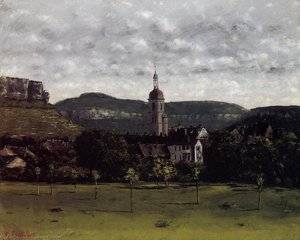
Quiet Cloister (1890; Russian Federation) by Isaac Levitan
Isaac Levitan’s “Quiet Cloister,” painted in 1890 during his journey abroad, stands as a cornerstone of Russian landscape painting and embodies the very essence of what Levitan termed "moodscapes." More than just a depiction of scenery, it's a profound meditation on solitude, spirituality, and the sublime beauty of the natural world—a characteristic hallmark of his artistic vision. This masterpiece resides in the Tretyakov Gallery in Moscow, Russia, measuring 87.5 x 108 cm and executed in oil on canvas using meticulous Realism techniques. ### Composition and Technique: A Symphony of Light and Color The painting’s composition immediately draws the viewer into a tranquil forest scene dominated by a gently curving river and a weathered wooden bridge. The artist skillfully employs atmospheric perspective, subtly blurring distant elements to convey depth and creating an immersive experience for the observer. Levitan's brushstrokes are deliberate and textured, capturing the nuances of light and shadow—particularly the ethereal glow of the evening sun filtering through the foliage. He meticulously blended colors to achieve a harmonious palette that reflects the serenity of the landscape, prioritizing tonal gradations over bold hues. The artist’s attention to detail is evident in the depiction of individual trees, branches, and ripples on the water surface. ## Subject Matter & Composition The painting depicts a secluded monastery nestled amidst a tranquil forest—a quintessential motif in Levitan's oeuvre. The composition centers around the bridge and river, framing the church spire as a focal point, symbolizing faith and contemplation. This deliberate arrangement reinforces the overarching theme of solitude and communion with nature, reflecting Levitan’s deep appreciation for the Russian landscape and its spiritual resonance. ## Artistic Style & Technique “Quiet Cloister” exemplifies Realism—a movement characterized by meticulous observation and faithful representation of visual reality. Levitan employed oil paints on canvas to achieve a luminous texture and subtle tonal gradations that capture the ethereal quality of twilight. The artist skillfully utilized glazing techniques, layering thin washes of color over underpaintings to build up depth and create atmospheric perspective. Careful attention was paid to detail—the reflections in the river, the textures of bark and foliage—demonstrating Levitan’s mastery of artistic craft. ## Historical Context & Significance Painted in 1890 during Levitan's formative years as an artist, “Quiet Cloister” aligns with the broader trends of the Peredvizhniki movement, which championed realism and focused on depicting Russian landscapes with honesty and sensitivity. The painting reflects the Romantic spirit of its time—a fascination with nature’s sublime beauty and a yearning for spiritual contemplation. It captures the mood of the Volga region during the summer months, portraying a scene of tranquil solitude amidst the grandeur of the natural world. ### Artistic Technique & Style Isaac Levitan's approach to landscape painting is characterized by meticulous observation and an ability to convey atmosphere with remarkable precision. “Quiet Cloister” exemplifies his distinctive style—often referred to as “moodscapes”—where he prioritizes capturing not just visual details but also emotional resonance. The artist skillfully employs soft brushstrokes and subtle tonal variations to create a luminous effect, reminiscent of the evening sun filtering through the trees. He meticulously renders textures – bark, foliage, water surfaces – achieving an astonishing level of realism.Subject Matter & Composition
“Quiet Cloister” presents a quintessential Russian landscape scene: a tranquil forest bathed in twilight hues. At its core is a meandering river spanned by a simple wooden bridge, leading the eye towards distant church domes—symbols of faith and tradition deeply ingrained in Russian culture. Scattered figures add scale to the panorama, subtly emphasizing the grandeur of nature while hinting at human presence within it. The artist meticulously crafted this composition to convey not just visual beauty but also an emotional resonance rooted in the contemplative spirit of rural Russia.Style & Technique
Isaac Levitan’s masterpiece exemplifies Realism—a movement that championed truthful depiction of observable reality without embellishment or idealization. He achieved this goal through masterful brushwork, characterized by delicate layering and subtle tonal variations. The artist skillfully utilized oil paints on canvas to capture the nuances of light and shadow, creating a palpable sense of atmosphere. Precise observation of the landscape informed every stroke, resulting in an image that feels both grounded and imbued with poetic feeling.Historical Context
Painted in 1890 during the height of the Russian Symbolist movement, “Quiet Cloister” reflects the artistic sensibilities of its time—a preoccupation with spirituality, melancholy, and the sublime beauty of the natural world. Isaac Levitan’s work aligns closely with the broader trend toward depicting landscapes as expressions of inner emotion rather than mere representations of visual reality. The painting's creation coincided with Levitan's extensive travels throughout Europe, where he absorbed influences from Impressionism and Post-Impressionism, subtly shaping his artistic vision. ## Subject Matter & Composition “Quiet Cloister” presents a quintessential Russian landscape—a tranquil forest bathed in the soft glow of twilight. At its core lies a meandering river bordered by dense foliage, punctuated by a rustic wooden bridge that invites contemplation. Dominating the horizon are church domes and spires, symbolizing faith and serenity amidst the grandeur of nature. The artist’s meticulous attention to detail captures the subtle nuances of light and shadow, creating an immersive experience for the viewer. ## Artistic Style & Technique Isaac Levitan's masterpiece exemplifies Realism—a movement that sought to depict the natural world with uncompromising accuracy and emotional honesty. He employed oil paint on canvas, utilizing a layering technique known as glazing to achieve luminous colors and subtle tonal variations. The artist skillfully blended brushstrokes to convey textures – from the rough bark of trees to the smooth surface of water – capturing the essence of the Volga landscape. ## Historical Context & Significance Painted in 1890 during Levitan’s formative years, “A Quiet Cloister” reflects the burgeoning Symbolist movement's influence on Russian art. However, Levitan firmly rooted his work in observation and emotion, prioritizing a truthful representation of nature over abstract concepts. The painting was exhibited at the XIXth Exhibition of Traveling Art Exhibitions (“Peredvizhniki”), marking an important milestone in Levitan’s artistic career and establishing him as one of Russia's foremost landscape painters. Critics lauded its masterful composition and tonal harmonies, recognizing it as a pinnacle of Realism. ## Artistic Technique & Composition The artwork employs meticulous detail—evident in the rendering of individual leaves and branches—demonstrating Levitan’s dedication to capturing the nuances of natural light and texture. The artist skillfully utilizes atmospheric perspective, subtly diminishing colors and details in the distant landscape to convey depth and realism. The horizontal orientation of the canvas emphasizes the expansive nature of the scene, while the diagonal line formed by the bridge draws the viewer's eye into the composition. The muted palette—dominated by greens, browns, and blues—creates a tranquil mood and reinforces the painting’s contemplative character. ## Subject Matter & Composition: A Moment of Serenity “Quiet Cloister,” painted in 1890 by Isaac Levitan, transports viewers to a secluded Russian forest bathed in the ethereal glow of twilight. The central focus is a picturesque river crossing, spanned by a simple wooden bridge—a motif frequently employed by Levitan to symbolize pilgrimage and spiritual contemplation. Scattered throughout the landscape are figures representing pilgrims or visitors, subtly enhancing the sense of tranquility and inviting reflection on the beauty of nature’s stillness. The artist meticulously captures the interplay between light and shadow, emphasizing the profound connection between humanity and the natural world. ## Artistic Style & Technique: Realism Embodied Levitan's masterful execution exemplifies the tenets of Russian Realism—a movement that sought to depict everyday life with uncompromising honesty and accuracy. He achieved this goal through painstaking observation and meticulous brushwork, utilizing oil paints on canvas to create textured surfaces that faithfully reproduce the nuances of light and color. The artist’s palette is dominated by muted greens, browns, and blues, reflecting the subdued hues of a late summer evening. Attention to detail—the reflections in the river, the texture of bark, the subtle variations in foliage—underscores Levitan's commitment to capturing the essence of his subject matter. ## Subject Matter & Composition “Quiet Cloister,” painted in 1890, presents a quintessential Russian landscape scene: a tranquil forest bathed in the golden light of dusk. Dominating the composition is a meandering river flowing serenely through the verdant expanse, spanned by a simple wooden bridge—a visual motif frequently employed by Levitan to symbolize solitude and contemplation. In the distance rises a church spire, its domes glowing faintly against the darkening sky, representing faith and spiritual solace. Scattered throughout the landscape are figures of people – likely pilgrims or visitors – adding scale and subtly hinting at human interaction with the natural world. The artist’s meticulous attention to detail—the texture of bark, the ripples on the water surface, the subtle gradations of color—creates a remarkably realistic portrayal of an evening forest. ## Subject Matter & Composition: A Symphony of Tranquility “Quiet Cloister,” painted in 1890 by Isaac Levitan, embodies the quintessential Russian landscape genre – moodscapes designed to convey profound emotion through visual representation. Levitan’s masterful composition centers around a river flowing serenely through a dense forest, culminating in a wooden bridge spanning its course. Dominating the horizon are church domes, symbolizing piety and tradition, creating a harmonious blend of natural beauty and spiritual contemplation. Scattered throughout the scene are figuresOpere de artă similare




Biografie artist
A Symphony of the Russian Soul: The Life and Art of Isaak Ilyich Levitan
Isaak Ilyich Levitan, a name synonymous with the evocative power of Russian landscape painting, was more than just a chronicler of nature; he was a poet of the land, a translator of its moods into visual form. Born in 1860 in Kibarty (present-day Lithuania) to a Jewish family who later settled in Moscow, Levitan’s life was marked by both profound hardship and an unwavering dedication to his art. The early loss of his mother and father cast a long shadow, instilling within him a sensitivity that would permeate his canvases with a melancholic beauty. This sense of longing, coupled with the restrictions imposed upon Jewish communities in Tsarist Russia, fueled a desire to find solace and expression in the natural world. He entered the Moscow School of Painting, Sculpture and Architecture in 1873, where he came under the tutelage of Alexei Savrasov, whose influence would prove pivotal in shaping Levitan’s artistic vision. It was Savrasov who nurtured his student's innate ability to capture not merely the appearance of nature, but its very essence—its atmosphere, its emotional resonance.The Early Years and Artistic Foundations
Levitan’s childhood was far from idyllic. The untimely deaths of his parents, followed by the loss of his mother when he was just fifteen years old, instilled in him a deep sense of vulnerability and melancholy – emotions that would become central themes in his work. These personal tragedies, combined with the challenges faced by Jewish communities under Tsarist rule, shaped his artistic perspective profoundly. Despite these difficulties, Levitan’s exceptional talent shone through early on. He displayed an innate ability to observe and represent the natural world with remarkable sensitivity, capturing not just its physical form but also its intangible qualities – light, shadow, atmosphere, and mood. This aptitude led him to be accepted into the prestigious Moscow School of Painting, Sculpture and Architecture in 1873, where he was fortunate enough to study under Alexei Savrasov, a leading figure in Russian landscape painting. Savrasov recognized Levitan’s potential and guided him towards developing a style characterized by lyrical beauty, emotional depth, and a profound connection with the Russian countryside. The lessons learned from Savrasov—particularly his emphasis on capturing the *feeling* of a place rather than simply its topographical details—laid the foundation for Levitan's distinctive artistic approach.The Birth of a ‘Mood Landscape’
Levitan quickly distinguished himself as an artist capable of conveying profound emotion through landscape. He wasn’t interested in topographical accuracy for its own sake; rather, he sought to imbue his paintings with a sense of *mood*, a feeling that resonated deep within the viewer's soul. This approach earned him the title of pioneer of the “mood landscape,” a genre that moved beyond simple representation to explore the spiritual connection between humanity and nature. His palette was often subdued, favoring naturalistic colors and poetic elements over vibrant displays. He masterfully employed light and shadow, creating atmospheric effects that evoked feelings of tranquility, solitude, or even quiet despair. Works like *Autumn Day. Sokolniki* (1879), painted when he was just nineteen years old, already demonstrated this remarkable ability to capture the subtle nuances of the Russian countryside. The painting’s muted tones and delicate rendering of light create a sense of wistful nostalgia, hinting at the transience of beauty and the inevitability of change. Later masterpieces such as *The Vladimirka Road* (1892) and *Eternal Rest* (1894), prominently displayed in the Tretyakov Gallery, further solidified his reputation as a master of emotional landscape painting.Influences and Artistic Kinships
While deeply indebted to Savrasov’s influence, Levitan was also receptive to other artistic currents. He collaborated with fellow artists like Konstantin Korovin, Mikhail Nesterov, and Nikolai Chekhov—the brother of the renowned playwright Anton Chekhov, who became a lifelong friend. This circle fostered an environment of creative exchange and mutual support. Though he briefly experimented with Impressionistic techniques, Levitan never fully embraced the movement, maintaining a uniquely Russian sensibility in his work. He found inspiration not only in the visual world but also in music and literature, seeking to translate their emotional power into his paintings. His designs for scenery for Savva Mamontov’s private Russian Opera demonstrate his versatility and willingness to explore different artistic mediums. The influence of these collaborations and experiences can be seen in works like *Spring Flood*, *Stormy Day*, *Vesper Chimes* and *Silent Cloister*, each a testament to his evolving style and deepening understanding of the emotional landscape.Legacy and Enduring Resonance
In 1897, Levitan was elected to the Imperial Academy of Arts, a recognition of his growing stature within the Russian art world. This honor signified not only professional success but also a validation of his artistic vision by the established institutions of the time. He subsequently became head of the landscape studio at his alma mater in 1898, dedicating himself to nurturing the next generation of Russian landscape painters. His influence extended far beyond his students, however. Levitan’s work played a crucial role in shaping the development of Russian landscape painting, elevating it from mere depiction to a powerful vehicle for emotional and spiritual expression. He instilled within his canvases a sense of national identity and an appreciation for the beauty of the Russian countryside that continues to resonate with audiences today. His untimely death in 1900 at the age of forty left a void in the art world, but his legacy endures as a master of atmospheric landscape painting and a profound interpreter of the Russian soul. In 1897, he created *Moonlit Night: Main Road*, a stunning example of his ability to capture the ethereal beauty of the Russian night, showcasing his mastery of light and shadow. His paintings remain a testament to the enduring power of art to evoke emotion, inspire contemplation, and connect us to the beauty and mystery of the natural world.
Isaak Ilyich Levitan
1860 - 1900 , Lituania
Detalii rapide
- Artistic Movement Or Style: Paisaj de stare de spirit
- Artists Or Movements Influenced By This Artist: ['Peredvizhniki']
- Artists Who Influenced This Artist:
- Savrasov
- Polenov
- Date Of Birth: 1860, August 30
- Date Of Death: 1900, July 22
- Full Name: Isaak Ilyich Levitan
- Nationality: Rusă
- Notable Artworks:
- Ziua Toamnei Sokolniki
- Drumul Vladimirka
- Odihna eternă
- Place Of Birth: Kibarty, Lituania
Articole conexe

Alexei Bogolyubov: Bridging Realism & Romanticism in the Russian Landscape Tradition
Explore the captivating world of Alexei Bogolyubov, a master of Russian Realism & Romanticism. Discover his stunning landscapes, maritime scenes, and lasting influence on 19th-century art. Learn more at ArtsDot.


Alfred Worthington: Bridging Victorian Realism & Early Modern Landscape Painting
Explore the captivating landscapes of Alfred Worthington (1834-1927), a pivotal figure bridging Victorian realism & early Impressionism. Discover his Welsh hunting scenes, artistic evolution, and collecting guide.

The Enchanted Canopy: Exploring Forests in Art History – From Romantic Idealization to Ecological Consciousness
Explore the rich history of forests in art! Discover Romantic masterpieces by Friedrich & Monet, Symbolist depths, and contemporary visions. Find inspiration & quality reproductions at ArtsDot.

Alexei Harlamoff: A Study in Russian Romantic Landscape Painting & Imperial Patronage
Explore the captivating world of Alexei Harlamoff, a master of Russian Romantic painting. Discover his life, Imperial patronage, signature style & enduring legacy with ArtsDot.
Evocations of Open Air: A Comprehensive Exploration of Outdoor Scenes in Art History
Explore the rich history of outdoor painting! Discover Impressionism, en plein air techniques & renowned landscape artists. Learn about light, color & enduring artistic legacies with ArtsDot.


