


The picture follows your choices: , .
Descriere obiect de colecție
Henry Raeburn's 'Mrs. Charles Steuart' captures elegance and refinement with exquisite detail. This captivating portrait, painted in 1794, showcases the artist’s mastery of light, shadow, and subject portrayal.
 Vezi mai mult
Biografie artist
Sir Henry Raeburn (1756-1823): pictor revoluționar din Scoția, renumit pentru portrete realiste și captarea esenței personalităților influente. Descoperă moștenirea sa artistică!
Reproducere pictată manual în ulei
Pictură în ulei pe pânză, pictată manual de artiștii noștri la dimensiunea și ramele dorite de dumneavoastră, pe comandă. ( Comută pe versiunea Print Comută pe Imagine Digitală)
More about this painting
 Previzualizare
 Trimite prin felicitare
 Distribuie
 Detalii despre lucrare
 Ghid
Ghid

 Descarcă imaginea
 Produse similare
 Radiografie
 Galerie foto
 Q&A
Q&A Statistici
Order your painting in four simple steps
Take your time. You can change any answer; the price in your order card follows each choice.
1 Step one of four
Which size would you like?
These sizes keep the proportions of the original painting. The drawing shows your choice on a wall, above a two-metre sofa.
Or give your own measurements
Alegeți dintre dimensiunile noastre prestabilite, care respectă proporțiile originale ale operei de artă.

Introduceți lățimea și înălțimea necesare pentru a se potrivi ramei sau peretelui dumneavoastră. Această lucrare este pictată manual, așa că, pentru o dimensiune cu o formă diferită, artistul poate picta puțin mai mult în jurul imaginii sau poate tăia puțin din margini — dumneavoastră decideți. Vă vom trimite o simulare digitală pentru aprobare înainte de a începe pictarea. Imaginea afișată pe această pagină nu reprezintă rezultatul real — doar simularea este reprezentativă.
2 Step two of four
How should it be prepared: rolled, stretched or framed?
The prices below are for the size you chose in step one.
Choose the edges of the stretched canvas
Choose your frame

White lei1

Blurside lei1

Extended lei1

P118B lei10

P118H lei10

P118W lei10

P438Z lei10

P508JH lei12

P508YH lei12

P805H lei10

P805Z lei10

P919BZ lei10

P919G lei10

P919XJ lei10

P959ZH lei10

P968JZ lei12

W106C lei8

W218G lei10

W218JH lei8

W218Y lei10

W307PJ lei10

W316G lei10

W316PJ lei8

W316Y lei10

W398PJ lei8

W4111J lei10

W500HY lei15

W500JH lei15

W692G lei12

W849H lei8

W940BG lei15

W953PJ lei8

H24-GOLD lei30

H24-SILVER lei30

H36-GOLD lei45

H36-SILVER lei45
Înramat
Moulding: . Overall size with the frame: .
3 Step three of four
Would you like anything changed in the painting?
Most people answer no. Because each painting is made by hand, our artist can also adapt it for you.
After order, ArtsDot.com team will email client for instructions and provide a mockup preview
4 Step four of four
A few finishing options
All of them are optional. The answers already selected cost nothing extra.
Who paints it?
Livrare în întreaga lume () în 3-4 săptămâni, în loc de cele 5 săptămâni standard. (3 Noiembrie). Fără compromisuri în ceea ce privește calitatea.
A nameplate, as in a museum?
Detalii plăcuță din bronz gravat
This elegant plaque features the artist's name and the title of the artwork, finely engraved for a timeless presentation.
It is made from bronze with a refined, elegant finish. The text is precisely laser-engraved for a sharp and permanent result. Measuring 9x2 cm, the plaque is compact yet easy to read. It's built to be durable and scratch-resistant, offering a professional, museum-quality look. Mounting is simple thanks to the included adhesive backing.
Detalii plăcuță din acril transparent
The plaque includes essential engraved details such as the artist's name, the title of the artwork, the date it was created, the type of media used-like oil on canvas or watercolor-a brief description of the piece, and a QR code that links to the complete artwork information.
It is crafted from clear acrylic, offering a sleek, modern appearance. The text is UV-engraved in black to ensure strong visual contrast. With a size of 10x15 cm, it ensures optimal readability. It comes equipped with two metal hooks for secure wall mounting. The plaque is designed to be weather-resistant, making it suitable for various environments, and it includes interactive features that work seamlessly with smartphone scanning.
Detalii placă din acril negru
This elegant plaque includes engraved information such as the artist's name, the title of the artwork, the date it was created, the type of media used (like oil on canvas or watercolor), a short description of the artwork, and a QR code for quick access to more information.
The plaque itself is made from refined black acrylic with a premium finish. The text is laser-engraved in white for high contrast and readability. Its size is 10x15 cm, designed to be easy to read. It comes with two metal hooks for professional mounting. The design is sleek and fits any interior style. It is also weather-resistant and durable, with built-in digital integration for mobile compatibility.
A protective varnish?
When do you need it?
✓ Check and order
Your painting, as you ordered it

Mrs Charles Steuart
Tehnică de reproducere
Dimensiune reproducere
-

Selecție de artiști de elită
Mai multe detalii, rafinament și timp suplimentar de execuție
-

Ramă pentru reproducere artistică
-
-
Pentru opere de artă sau reproduceri care depășesc 105 cm (aproximativ 41 de inch) pe oricare dintre laturi, cadrul va fi livrat demontat, sub formă de kit. Această metodă asigură o livrare sigură și previne deteriorarea în timpul transportului.
Este necesară asamblarea profesională – acest produs nu este de tip DIY (de făcut singur).
Kitul trebuie asamblat, iar pânza întinsă, de către un legător de cadre experimentat, utilizând adeziv pentru lemn (neinclus în colet), o cheie pentru întinderea pânzei și cleme pentru a menține barele la unghi drept în timp ce adezivul se usucă. Asamblarea incorectă sau tensiunea neuniformă a pânzei pot deteriora permanent opera de artă și nu sunt acoperite de garanția noastră.
 Pentru opere de artă sau reproduceri care depășesc 105 cm (aproximativ 41 de inch) pe oricare dintre laturi, cadrul va fi livrat demontat, sub formă de kit. Această metodă asigură o livrare sigură și previne deteriorarea în timpul transportului.
Toate barele din lemn masiv sunt incluse, tăiate cu precizie la dimensiunea necesară.
Asamblat cu șuruburile incluse, plus adeziv pentru lemn pentru îmbinările de colț, care nu este furnizat și trebuie achiziționat de către tâmplarul dumneavoastră.
Sunt necesare unelte profesionale care nu sunt incluse: o șipte de întindere a pânzei (tensionator) și cleme pentru a menține barele la unghi drept în timp ce adezivul se usucă.
Important:
Îmbinările de colț necesită adeziv pentru lemn, barele trebuie fixate cu clești de strângere până când adezivul este complet uscat, iar întinderea pânzei pe cadrul asamblat necesită un clește pentru întins pânza. Niciunul dintre aceste elemente nu este inclus în kit. Vă rugăm să consultați un încadrator profesionist cu experiență înainte de a comanda această dimensiune.

Etichetă de prezentare
-
-

Lac de protecție
Lac lucios (intensifică nuanțele și oferă protecție împotriva luminii și a umidității)
-

Personalizează opera mea de artă
Exemple de elemente ce pot fi personalizate: Înlocuirea feței cu fotografia clientului; Adăugarea unui animal de companie (de exemplu, înlocuirea unei pisici cu un câine); Includerea unui mesaj ascuns în fundal; Modificarea peisajului sau a elementelor din fundal.
-

Livrare rapidă
Livrare la nivel mondial () în 3-4 săptămâni, în loc de cele 5 săptămâni standard. (3 Noiembrie). Fără compromisuri când vine vorba de calitate.
-
Livrare rapidă
Livrare la nivel mondial () în 5 săptămâni. (10 Noiembrie).
Inclus
Preț total calculat
lei 1250
Opțiunea cu sticlă este disponibilă doar pentru dimensiuni de sub 110 cm
Included with every order
- Livrare expres gratuită la nivel mondial
- Pânză de in de înaltă calitate
- Asigurare completă pentru transport
- Garanție de rambursare a taxelor vamale
- Garanția fidelității culorilor
- Politica de retur în 100 de zile (doar pentru defecte de fabricație)
- Garanție de rambursare 100%
- Ofertă pentru comenzi multiple


A Portrait of Refined Elegance: Mrs Charles Steuart by Henry Raeburn
Henry Raeburn’s “Mrs. Charles Steuart,” painted in 1794, is more than just a portrait; it's a meticulously crafted window into the social and artistic sensibilities of late 18th-century Britain. This captivating oil on canvas, currently residing within the hallowed halls of the Tate Gallery in London, exemplifies Raeburn’s mastery of capturing not only likeness but also the very essence of his subject – her poise, grace, and subtle air of wealth. The painting immediately draws the eye to Mrs. Steuart herself, a woman radiating an understated elegance through her carefully chosen attire and direct gaze. Her white gown, adorned with delicate pearl accents, speaks volumes about her social standing, while her brown hair, styled in a fashionable manner of the period, adds to the overall impression of refined beauty.
Raeburn’s technique is characterized by an extraordinary sensitivity to light and shadow. He employs soft, diffused colors – creams, browns, and subtle blues – to create a sense of warmth and intimacy within the scene. The background, featuring a carefully rendered landscape with trees and a sky, serves not merely as a backdrop but as an integral element of the composition, subtly enhancing the feeling of depth and tranquility. Notably, Raeburn’s skill lies in his ability to imbue the portrait with a sense of immediacy; it feels less like a formal depiction and more like a captured moment, inviting the viewer into Mrs. Steuart's world.
The Context of a Scottish Master
To fully appreciate “Mrs. Charles Steuart,” one must understand Henry Raeburn’s place within the broader context of 18th-century British art. Born in Stockbridge, Scotland, in 1756, Raeburn initially pursued a career as a goldsmith before dedicating himself to painting. His early training under James Gilliland honed his precision and attention to detail – skills that would prove invaluable in his later portraiture work. Raeburn’s rise to prominence was remarkable; he became the first native Scottish painter to achieve widespread acclaim and royal patronage, a testament to his talent and ambition.
The painting reflects Raeburn's growing confidence as an artist, moving beyond the more rigid conventions of earlier portraiture styles. He embraced a looser, more naturalistic approach, capturing not just the outward appearance of his subjects but also their personalities and inner lives. This shift towards realism was partly influenced by his time in Italy, where he studied the works of Michelangelo and other masters, absorbing their techniques and philosophies.
Symbolism and Social Significance
Beyond its aesthetic qualities, “Mrs. Charles Steuart” offers a glimpse into the social dynamics of the era. Portraits like this were not merely decorative; they served as powerful symbols of status, wealth, and lineage. The elaborate gown, the pearl necklace – these details communicated Mrs. Steuart’s position within the social hierarchy. The direct gaze of the subject also suggests a degree of self-assurance and confidence, qualities highly valued in women of her station.
Furthermore, Raeburn's decision to portray Mrs. Steuart in such a dignified manner reflects the prevailing attitudes towards women during this period – they were often idealized as virtuous, gentle, and refined. However, beneath the surface of elegance lies a subtle complexity; the painting invites us to contemplate not just her outward appearance but also her inner world.
Discovering More of Henry Raeburn’s Works
For those captivated by “Mrs. Charles Steuart,” a wealth of resources is available for further exploration. The Tate Gallery's website offers detailed information about the painting, including high-resolution images and scholarly essays. Additionally, the Kendal Museum in the United Kingdom houses an impressive collection of artworks by Elias V. Coe, providing a broader context for understanding Raeburn’s artistic influences. Reproductions of “Mrs. Charles Steuart” are available through various sources, offering collectors and interior designers alike the opportunity to bring this timeless masterpiece into their own spaces.
The enduring appeal of “Mrs. Charles Steuart” lies in its ability to transport us back to a bygone era – a time of elegance, refinement, and artistic innovation. It is a testament to Henry Raeburn’s genius as a portrait painter and a valuable window into the social and cultural landscape of 18th-century Britain.
Întrebări și răspunsuri
De unde provin vizitatorii "Mrs Charles Steuart" de Henry Raeburn?
Există o pagină de Statistici pentru "Mrs Charles Steuart". Aceasta prezintă graficul vizitelor lunare pentru această operă și pentru celelalte lucrări ale artistului, cu detalii pe țări și limbi vorbite.
Cum este descrisă paleta de culori din "Mrs Charles Steuart" de Henry Raeburn?
Paleta lui "Mrs Charles Steuart" de Henry Raeburn este descrisă ca fiind Earthy, oferind o descriere concisă a culorilor lucrării.
Cum se îmbină contrastul și armonia în "Mrs Charles Steuart"?
Compoziția cromatică a operei "Mrs Charles Steuart" de Henry Raeburn îmbină un Bold contrast cu o Strong Color Unity armonie.
Opere similare


Henry Raeburn
1756 - 1823, Regatul Unit al Marii Britanii și Irlandei
Biografie artist
A Scottish Master of Realism: The Life and Art of Sir Henry Raeburn
Sir Henry Raeburn, a name synonymous with the vibrant spirit of 18th-century Scotland, stands as one of the nation’s most celebrated portrait painters. His journey from humble beginnings to royal patronage is a testament to his unwavering dedication and extraordinary artistic talent. Born in Stockbridge, Edinburgh, in 1756, amidst the burgeoning Enlightenment, Raeburn's life was shaped by both privilege and adversity – an orphaned childhood followed by the support of his brother, leading him to a goldsmith apprenticeship before ultimately embracing the captivating world of painting. This early exposure to detail and craftsmanship would prove invaluable as he honed his skills, initially through miniature portraiture, a demanding medium that demanded precision and observation.From Miniature Precision to Grand Portraiture
Raeburn’s artistic evolution wasn't simply a progression; it was a deliberate transformation fueled by an insatiable desire for mastery. He diligently studied the works of masters like David Martin, a former assistant to Allan Ramsay, absorbing techniques and stylistic nuances. However, his true path lay in self-directed learning, driven by relentless practice and a keen eye for capturing the essence of his subjects. A pivotal moment arrived with his marriage to Ann Edgar in 1778, providing him with financial stability that allowed him to fully dedicate himself to painting without the constraints of commercial obligations. This period witnessed a significant shift – Raeburn abandoned the delicate world of miniatures and embarked on a journey towards larger-scale oil paintings, a medium that demanded both technical skill and artistic vision. His brief sojourn in Italy, though ultimately curtailed, exposed him to the grandeur of the Old Masters, profoundly influencing his approach to composition, lighting, and color. He sought inspiration from the works of Venetian painters like Titian and Veronese, incorporating their dramatic use of light and shadow into his own style.Capturing Character: Raeburn’s Artistic Signature
What truly distinguishes Raeburn's work is not merely the technical proficiency displayed in his portraits but rather his remarkable ability to capture the inner character of his subjects. He possessed an uncanny knack for revealing personality, status, and even mood through subtle gestures, expressions, and carefully chosen details. His technique was a masterful blend of meticulous observation, confident brushwork, and a sophisticated understanding of light and shadow – a combination that created images brimming with life and immediacy. Consider *The Young Polo Player*, a dynamic snapshot of youthful energy and aristocratic leisure; it’s not simply a depiction of a sporting gentleman but an embodiment of vitality and privilege. Similarly, his portrait of Alexander Allan, a prominent figure in Scottish art, reveals a man of intellect and refinement through the careful arrangement of his attire and the thoughtful gaze directed towards the viewer. Raeburn's signature technique – known as *chiaroscuro* – involved employing dramatic contrasts between light and dark to create depth, intensity, and focus, drawing the eye directly to the subject’s face and expression.Recognition and Legacy: A Scottish Icon
Raeburn’s artistic achievements garnered widespread recognition throughout his career. He quickly established himself as a leading member of Edinburgh society, attracting commissions from prominent families and individuals. His appointment as Portrait Painter to King George IV in Scotland in 1822 – shortly before his untimely death in 1823 – served as the ultimate validation of his artistic prowess, cementing his place among the most celebrated artists of his time. His work profoundly impacted Scottish art, establishing a distinctively Scottish identity within the broader context of British painting. He championed realism and psychological insight, moving away from the idealized portrayals prevalent at the time and offering a more honest and nuanced representation of his subjects. His legacy extends far beyond the canvas; he embodies the spirit of self-education, perseverance, and artistic vision – a testament to the transformative power of dedication and talent. Today, Raeburn’s paintings are treasured possessions within prestigious collections worldwide, including the Scottish National Gallery in Edinburgh and The Frick Collection in New York, ensuring that his remarkable contribution to art history continues to be celebrated for generations to come.- His dedication to realism and psychological insight set him apart from many of his contemporaries.
- He helped establish a distinctly Scottish identity within British art.
- His masterful technique continues to be studied and admired by artists and scholars alike.
Articole similare

The Allure of Elegance in Art: A Historical & Aesthetic Exploration of Refinement & Grace
Explore the exquisite world of Rococo art! Discover its history, masters (Watteau, Boucher & more), and defining elegance. Expert insights for collectors seeking museum-quality reproductions & custom portraits.
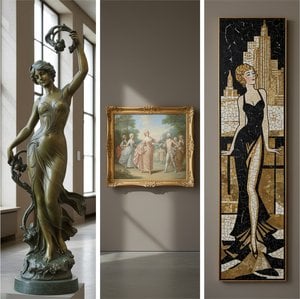
The Allure of Elegance: Exploring Artistic Representations of Refinement Across Movements
Explore the captivating history of elegance in art, from Rococo's grace to Romanticism’s passion. Discover investment-worthy masterpieces & expert guidance for building your collection with ArtsDot.

Eleganță eternă în artă: Top 10 opere care inspiră rafinament | ArtsDot.ro
Descoperă top 10 opere de artă clasice ce emană eleganță și rafinament! Explorează poveștile din spatele picturilor celebre, artiști precum Monet și Renoir, și găsește inspirație pentru decorul interior. Reproduceri de calitate muzeală pe ArtsDot.ro.