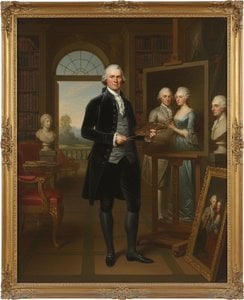
Tinerețe, Familie și Formare
Născut pe 26 decembrie 1734 în Beckside, Dalton-in-Furness, Lancashire, George Romney a pășit într-o lume a meșteșugului practic. El a fost al treilea dintre cei unsprezece copii născuți de John Romney, un mobilier, și Anne Simpson. Anii săi de început au fost modelați de ritmurile domestice ale unei familii numeroase din nord-vestul Angliei. Deși a frecventat școala în apropierea Dendron, educația sa formală a fost scurtă. La vârsta de unsprezece ani, a fost retras din școală pentru a începe un domn de ucenic în atelierul de mobilier al tatălui său.
Precizia necesară meseriei tatălui său i-a influențat, probabil, atenția sporită la detalii din perioada ulterioară, însă inclinațiile sale naturale pendulau spre ceva mult mai ilustrativ. Un ceasornic de la locul lui de muncă i-a aprins interesul pentru desen, oferindu-i o direcție subtilă, departe de unghiile și sculele de lemn ale gospodăriei sale. Acest talent incipient l-a îndepărtat, în cele din urmă, de atelierul de mobilier și l-a condus spre studiul portretului. A căutat îndrumarea lui Christopher Steele, un portretist itinerant bazat în Kendal, pentru a-și rafina abilitățile. Sub îndrumarea lui Steele, Romney a început tranziția de la ucenicul unui meșteșugar la un student dedicat formei umane.
Consolidarea unei reputații în Londra
Până în anul 1762, George Romney părăsise peisajele nordice ale Lancashire pentru a se confrunta cu atmosfera competitivă a Londrei. A ajuns în capitală căutând atât fortuna, cât și recunoașterea, fiind impulsionat de o ambiție care depășea cu mult pregătirea sa inițială. Orașul s-a dovedit a fi un creuzet dificil pentru un nou-venit, însă el a navigat printre complexitățile sociale cu o naturalețe instinctivă. Rapid, s-a impus ca un pictor de portrete talentat, găsind un loc de drept în cercul înalt al societății, care dicta gusturile estetice ale epocii.
Ascensiunea sa a fost marcată de o competiție directă cu cele mai proeminente figuri ale timpului, printre care Thomas Gainsborough și Joshua Reynolds. Deși acești contemporani dețineau o influență semnificativă, George Romney și-a creat un spațiu distinctiv, unic. El a devenit unul dintre cei mai populari pictori de portrete britanici de la sfârșitul secolului al XVIII-lea, servind atât unei clase comerciale în plină expansiune, cât și nobilii consacrați. Capacitatea sa de a naviga prin ierarhiile sociale fluctuante ale erei georgiene i-a asigurat prezența în cele mai sofisticate saloane de modă ale perioadei.
- 1763: Jacob Morland de la Capplethwaite
- 1765: Portretul unei doamne
- 1767: Portretul unei fete
Tehnică și Stil Artistic
Abordarea lui George Romney față de pânză era definită de un echilibru delicat între detaliul meticulos și o brushwork expresivă. El a preferat o tehnică rafinată care evita abordarea forțată a unor contemporani ai săi, optând în schimb pentru pictură cu pensulațe moi, care generau un sentiment de realism blând. Această metodă i-a permis să reducă texturile subtile ale țesăturilor și ale pielii cu o sofisticare discretă. Paleta sa de culori se baza adesea pe nuanțe mate, ceea ce contribui la atmosfera de calm și compoziție liniștită a lucrărilor sale. În loc să se bazeze pe artificii dramatice, el a căutat să surprindă esența subiectelor sale printr-o înțelegere profundă a psihologiei umane, o calitate ce se reflectă în expresiunile nuanțate pe care le reușea să obțină.
Repertoriul său tehnic era vast, întinzându-se mult dincolo de picturile finite în ulei pe pânză. A fost un desenator prolific, care utiliza schițe, cartoane și chiar studii de detaliu pentru a-și contura ideile. Această practică disciplinată i-a permis să experimenteze cu forma și lumina înainte de a se angaja pe o scară mai mare. Capacitatea sa de a traduce aceste studii preliminare în portrete lucrate cu măiestrie l-a ajutat să navigheze prin peisajul social competitiv al Londrei, unde era adesea solicitat să portreteze figuri de prim rang ale epocii, cu precizie și grație.
- Portrait of Sir Chaloner Ogle, 1st Baronet (1782)
- Portrait of Thomas Greene
Influența lui Emma Hamilton
Traiectoria creației artistice a lui George Romney a suferit o schimbare profundă odată cu întâlnirea sa cu Emma Hart, femeia care avea să fie cunoscută ulterior sub numele de Lady Hamilton. Aceasta a devenit mult mai mult decât un simplu subiect recurent; ea a fost cel mai celebru model al său și o muză ce a exercitat o influență puternică asupra imaginației sale. Relația lor a fost una intensă și totalizatoare, o conexiune care i-a afectat adânc atât viața personală a artistului, cât și focalizarea sa profesională. Prin intermediul ei, George Romney a găsit o cale de a transcende constrângerile portretului clasic, pășind spre un teritoriu mult mai imaginativ și poetic.
Sub vraja lui Emma, George Romney a compus o serie de subiecte inspirate din universul lui Shakespeare și din alte teme fantastice. Aceste lucrări i-au permis să exploreze teme legate de fantezie și narațiune literară, utilizând spectrul ei expresiv pentru a aduce la viață personaje dramatice. El a pictat peste 80 de portrete ale sale, fiecare încercare capturând o latură diferită a personalității sale. Această perioadă de colaborare intensă l-a văzut experimentând cu compoziția și simbolismul, îndreptându-se spre acele pânze de o poezie și o imaginație debordante care i-au definit anii de maturitate.
Anii de final și moartea
Ultima decenie din viața lui George Romney a fost marcată de o retragere treptată din cercurile sociale care, odinioară, îi alimentaseră cariera. În anul 1794, boala a început să îi limiteze serios activitatea de portretist, încetinind acea producție prolifică ce îi definise anii de glorie. Această scădere a productivității nu a fost doar o chestiune de interes diminuat, ci o luptă fizică dură care i-a umbrit anii de la urmă. Omul care fusese capabil să concureze cu cele mai proeminente figuri ale erei georgiene s-a trezit, treptat, marginalizat de propria sa sănătate.
Până în 1799, necesitatea de a căuta liniște și odihnă a devenit inevitabilă. George Romney s-a întors, cu o sănătate fragilă, la Kendal pentru a fi alături de soția sa, Molly. Această perioadă de convalescență în Nord-Vest a fost o codă liniștită pentru o viață petrecută în agitația centrelor artistice de la Londra și Paris. El a rămas un desenator de o putere remarcabilă, chiar și atunci când capacitatea de a accepta comenzi de mari dimensiuni îi diminuase. George Romney a murit în Kendal, Westmorland, Anglia, pe 15 noiembrie 1802. Cenotafurile sale au fost depozitate în Dalton, întorcându-l astfel în peisajul locului nașterii sale.
Unde pot fi admirate astăzi operele sale
Distribuția supraviețuirii picturilor lui George Romney reflectă arcul geografic al vieții sale, de la rădăcinile sale din nord până la ascensiunea sa în capitală. În Londra, prezența sa este simțită cel mai puternic în colecțiile Tate Gallery, care păstrează șaptesprezece dintre lucrările sale, și în National Portrait Gallery, care deține zece piese. Aceste instituții oferă o perspectivă asupra artistului în apogeul influenței sale sociale, capturând chipurile erei georgiene cu acea profunzime psihologică ce i-a definit întreaga carieră.
Dincolo de capitală, legătura sa cu Nord-Vestul rămâne vizibilă prin colecțiile Abbot Hall Art Gallery din Kendal, care păstrează nouă dintre picturile sale. Această colecție oferă o punte către regiunea în care viața sa a început și unde a ajuns, în cele din urmă, la o încheiere liniștită. Amprenta sa se extinde peste Atlantic, având mai multe lucrări păstrate la Metropolitan Museum of Art din New York. Printre acestea se numără și celebratul Portrait of Sir Chaloner Ogle, 1st Baronet din 1782.
- Portrait of Sir Chaloner Ogle, 1st Baronet (1782)
- The Leigh Family
- Portrait of Mrs. Verelst
Întrebări și răspunsuri
Unde pot vizualiza operele lui George Romney într-o galerie 3D?
Operele de artă ale lui George Romney pot fi vizualizate într-o galerie 3D, pe pagina Galerie 3D a artistului.
Pot sorta operele lui George Romney după culoare?
Operele lui George Romney pot fi explorate pe criterii de culoare în pagina Indice Spectral a artistului.
Cum pot găsi lucrările lui George Romney dintr-o anumită paletă de culori?
Operele lui George Romney pot fi explorate pe baza paletei cromatice în pagina de După paletă de culori a artistului.