


The picture follows your choices: , .
Descriere obiect de colecție
Explore Giorgio Vasari’s "Winter" fresco – a Baroque masterpiece featuring a reclining figure in opulent detail. Discover dynamic composition & rich symbolism of strength & transformation.
 Vezi mai mult
Biografie artist
"meta_description": "Giorgio Vasari (1511-1574): pictor, arhitect și istoric de artă italian, cunoscut pentru \"Viețile artiștilor\", o lucrare fundamentală a artei renascentiste, și pentru designul Palatului Uffizi."
Reproducere pictată manual în ulei
Pictură în ulei pe pânză, pictată manual de artiștii noștri la dimensiunea și ramele dorite de dumneavoastră, pe comandă. ( Comută pe versiunea Print Comută pe Imagine Digitală)
More about this painting
 Trimite prin felicitare
 Distribuie
 Detalii despre lucrare
 Ghid
Ghid

 Descarcă imaginea
 Produse similare
 Galerie foto
 Q&A
Q&A Statistici
Order your painting in four simple steps
Take your time. You can change any answer; the price in your order card follows each choice.
1 Step one of four
Which size would you like?
These sizes keep the proportions of the original painting. The drawing shows your choice on a wall, above a two-metre sofa.
Or give your own measurements
Alegeți dintre dimensiunile noastre prestabilite, care respectă proporțiile originale ale operei de artă.

Introduceți lățimea și înălțimea necesare pentru a se potrivi ramei sau peretelui dumneavoastră. Această lucrare este pictată manual, așa că, pentru o dimensiune cu o formă diferită, artistul poate picta puțin mai mult în jurul imaginii sau poate tăia puțin din margini — dumneavoastră decideți. Vă vom trimite o simulare digitală pentru aprobare înainte de a începe pictarea. Imaginea afișată pe această pagină nu reprezintă rezultatul real — doar simularea este reprezentativă.
2 Step two of four
How should it be prepared: rolled, stretched or framed?
The prices below are for the size you chose in step one.
Choose the edges of the stretched canvas
Choose your frame

White lei1

Blurside lei1

Extended lei1

P118B lei10

P118H lei10

P118W lei10

P438Z lei10

P508JH lei12

P508YH lei12

P805H lei10

P805Z lei10

P919BZ lei10

P919G lei10

P919XJ lei10

P959ZH lei10

P968JZ lei12

W106C lei8

W218G lei10

W218JH lei8

W218Y lei10

W307PJ lei10

W316G lei10

W316PJ lei8

W316Y lei10

W398PJ lei8

W4111J lei10

W500HY lei15

W500JH lei15

W692G lei12

W849H lei8

W940BG lei15

W953PJ lei8

H24-GOLD lei30

H24-SILVER lei30

H36-GOLD lei45

H36-SILVER lei45
Înramat
Moulding: . Overall size with the frame: .
3 Step three of four
Would you like anything changed in the painting?
Most people answer no. Because each painting is made by hand, our artist can also adapt it for you.
After order, ArtsDot.com team will email client for instructions and provide a mockup preview
4 Step four of four
A few finishing options
All of them are optional. The answers already selected cost nothing extra.
Who paints it?
Livrare în întreaga lume () în 3-4 săptămâni, în loc de cele 5 săptămâni standard. (2 Noiembrie). Fără compromisuri în ceea ce privește calitatea.
A nameplate, as in a museum?
Detalii plăcuță din bronz gravat
This elegant plaque features the artist's name and the title of the artwork, finely engraved for a timeless presentation.
It is made from bronze with a refined, elegant finish. The text is precisely laser-engraved for a sharp and permanent result. Measuring 9x2 cm, the plaque is compact yet easy to read. It's built to be durable and scratch-resistant, offering a professional, museum-quality look. Mounting is simple thanks to the included adhesive backing.
Detalii plăcuță din acril transparent
The plaque includes essential engraved details such as the artist's name, the title of the artwork, the date it was created, the type of media used-like oil on canvas or watercolor-a brief description of the piece, and a QR code that links to the complete artwork information.
It is crafted from clear acrylic, offering a sleek, modern appearance. The text is UV-engraved in black to ensure strong visual contrast. With a size of 10x15 cm, it ensures optimal readability. It comes equipped with two metal hooks for secure wall mounting. The plaque is designed to be weather-resistant, making it suitable for various environments, and it includes interactive features that work seamlessly with smartphone scanning.
Detalii placă din acril negru
This elegant plaque includes engraved information such as the artist's name, the title of the artwork, the date it was created, the type of media used (like oil on canvas or watercolor), a short description of the artwork, and a QR code for quick access to more information.
The plaque itself is made from refined black acrylic with a premium finish. The text is laser-engraved in white for high contrast and readability. Its size is 10x15 cm, designed to be easy to read. It comes with two metal hooks for professional mounting. The design is sleek and fits any interior style. It is also weather-resistant and durable, with built-in digital integration for mobile compatibility.
A protective varnish?
When do you need it?
✓ Check and order
Your painting, as you ordered it

Winter
Tehnică de reproducere
Dimensiune reproducere
-

Selecție de artiști de elită
Mai multe detalii, rafinament și timp suplimentar de execuție
-

Ramă pentru reproducere artistică
-
-
Pentru opere de artă sau reproduceri care depășesc 105 cm (aproximativ 41 de inch) pe oricare dintre laturi, cadrul va fi livrat demontat, sub formă de kit. Această metodă asigură o livrare sigură și previne deteriorarea în timpul transportului.
Este necesară asamblarea profesională – acest produs nu este de tip DIY (de făcut singur).
Kitul trebuie asamblat, iar pânza întinsă, de către un legător de cadre experimentat, utilizând adeziv pentru lemn (neinclus în colet), o cheie pentru întinderea pânzei și cleme pentru a menține barele la unghi drept în timp ce adezivul se usucă. Asamblarea incorectă sau tensiunea neuniformă a pânzei pot deteriora permanent opera de artă și nu sunt acoperite de garanția noastră.
 Pentru opere de artă sau reproduceri care depășesc 105 cm (aproximativ 41 de inch) pe oricare dintre laturi, cadrul va fi livrat demontat, sub formă de kit. Această metodă asigură o livrare sigură și previne deteriorarea în timpul transportului.
Toate barele din lemn masiv sunt incluse, tăiate cu precizie la dimensiunea necesară.
Asamblat cu șuruburile incluse, plus adeziv pentru lemn pentru îmbinările de colț, care nu este furnizat și trebuie achiziționat de către tâmplarul dumneavoastră.
Sunt necesare unelte profesionale care nu sunt incluse: o șipte de întindere a pânzei (tensionator) și cleme pentru a menține barele la unghi drept în timp ce adezivul se usucă.
Important:
Îmbinările de colț necesită adeziv pentru lemn, barele trebuie fixate cu clești de strângere până când adezivul este complet uscat, iar întinderea pânzei pe cadrul asamblat necesită un clește pentru întins pânza. Niciunul dintre aceste elemente nu este inclus în kit. Vă rugăm să consultați un încadrator profesionist cu experiență înainte de a comanda această dimensiune.

Etichetă de prezentare
-
-

Lac de protecție
Lac lucios (intensifică nuanțele și oferă protecție împotriva luminii și a umidității)
-

Personalizează opera mea de artă
Exemple de elemente ce pot fi personalizate: Înlocuirea feței cu fotografia clientului; Adăugarea unui animal de companie (de exemplu, înlocuirea unei pisici cu un câine); Includerea unui mesaj ascuns în fundal; Modificarea peisajului sau a elementelor din fundal.
-

Livrare rapidă
Livrare la nivel mondial () în 3-4 săptămâni, în loc de cele 5 săptămâni standard. (2 Noiembrie). Fără compromisuri când vine vorba de calitate.
-
Livrare rapidă
Livrare la nivel mondial () în 5 săptămâni. (9 Noiembrie).
Inclus
Preț total calculat
lei 1247
Opțiunea cu sticlă este disponibilă doar pentru dimensiuni de sub 110 cm
Included with every order
- Livrare expres gratuită la nivel mondial
- Pânză de in de înaltă calitate
- Asigurare completă pentru transport
- Garanție de rambursare a taxelor vamale
- Garanția fidelității culorilor
- Politica de retur în 100 de zile (doar pentru defecte de fabricație)
- Garanție de rambursare 100%
- Ofertă pentru comenzi multiple


A Baroque Vision of Mythic Contemplation: Giorgio Vasari’s “Winter”
Giorgio Vasari's "Winter," painted in 1557, is not merely a decorative ceiling fresco; it’s a profound meditation on human experience rendered with the dramatic intensity characteristic of the High Renaissance and blossoming into the Baroque. This monumental work, likely commissioned for a grand palazzo or religious institution, immediately captivates with its layered composition and masterful manipulation of light and shadow – hallmarks of Vasari's innovative approach to ceiling painting. The central figure, draped in luxurious fabrics and posed in a state of apparent repose, evokes a sense of both vulnerability and immense power, instantly drawing the viewer into a world of mythic drama. The sheer scale of the fresco, combined with its intricate details, speaks to the ambition and patronage that fueled artistic endeavors during this pivotal period.
- Subject Matter & Narrative Complexity: The scene depicts a reclining figure – traditionally interpreted as Hercules or another heroic deity – engaged in a moment of profound contemplation. The inclusion of smaller framed scenes flanking the central figure adds layers to the narrative, suggesting a complex mythological story unfolding across multiple registers. This deliberate layering was a key feature of Baroque ceiling designs, intended to overwhelm and inspire awe.
- Baroque Style & Dramatic Lighting: Vasari’s command of Baroque style is evident in the dynamic use of light and shadow. Strong highlights accentuate the central figure's form, while deep shadows create a sense of depth and volume, enhancing the dramatic effect. The curvilinear lines throughout the composition contribute to a feeling of movement and fluidity – essential elements of the Baroque aesthetic.
Technique & Materials: A Masterclass in Fresco Painting
“Winter” exemplifies Vasari’s groundbreaking techniques for ceiling painting, pushing beyond the limitations of earlier Renaissance approaches. The fresco technique itself is central to its impact; pigments were applied directly onto wet plaster, creating a durable and luminous surface that has endured for over four centuries. Vasari meticulously blended colors – primarily warm tones of browns, ochres, reds, and golds – accented with cooler blues and greens – achieving a rich and nuanced palette. The subtle texture of the finished surface, a direct result of the fresco process, adds to the painting’s tactile quality and sense of realism. Notably, Vasari incorporated gold leaf for decorative elements, further amplifying the work's opulence and grandeur.
- Pigments & Plaster: The pigments used were likely oil-based, a departure from traditional tempera paints, allowing for greater color saturation and blending capabilities. The plaster itself was carefully prepared to ensure optimal adhesion and durability.
- Gold Leaf: The strategic use of gold leaf – particularly in the wreath-like structure above the figure – served not only as decoration but also symbolized divine favor and immortality, a common motif in Renaissance art.
Symbolism & Historical Context
Beyond its aesthetic qualities, “Winter” is rich in symbolic meaning. The fire burning nearby could represent passion, transformation, or even the destructive power of fate – themes frequently explored in classical mythology. The wreath, often associated with victory and immortality, reinforces this interpretation. Painted in 1557, during a period of intense artistic innovation and religious fervor, “Winter” reflects the broader cultural currents of the late Renaissance. Vasari’s work aligns with the humanist ideals that emphasized human potential and celebrated classical antiquity, while simultaneously embracing the dramatic and emotional intensity characteristic of the emerging Baroque style. The piece stands as a testament to Vasari's role in shaping artistic conventions and his enduring legacy within the history of Western art.
Întrebări și răspunsuri
Ce stare și ce emoție transmite "Winter" de Giorgio Vasari?
Starea de spirit surprinsă în "Winter" de Giorgio Vasari este Dramatic, iar tonul său emoțional este Melancholic.
Pot vedea "Winter" de Giorgio Vasari pe propriul meu perete înainte de achiziție?
Poți vizualiza "Winter" de Giorgio Vasari pe propriul tău perete folosind pagina Previzualizare în AR a operei de artă, prin intermediul realității augmentate pe un dispozitiv compatibil.
Ce emoție transmite opera de Baroque „Winter”?
În cadrul mișcării Baroque, „Winter” este marcată de un ton Melancholic.
Opere similare


Giorgio Vasari
1511 - 1574, Italia
Biografie artist
A Life Woven into the Renaissance Fabric
Giorgio Vasari, born in Arezzo, Tuscany, on July 30, 1511, was more than simply a painter; he was a quintessential embodiment of the Italian Renaissance spirit. His life unfolded as a vibrant tapestry woven with threads of artistic creation, architectural innovation, insightful historical writing, and an unwavering dedication to celebrating the masters who came before him. From his earliest training under Guglielmo da Marsiglia, a skilled artisan in stained glass, young Giorgio’s path was steered towards visual artistry. However, it was his move to Florence at sixteen that truly ignited his potential. Immersing himself within the dynamic circle of Andrea del Sarto and absorbing the influences of Rosso Fiorentino and Jacopo Pontormo, Vasari began a journey that would see him become one of the most influential figures of his era. His formative years were also deeply marked by the patronage and friendship of the powerful Medici family, a relationship that would shape both his career and his perspective on art’s role in society.The Artist's Hand and Eye
Vasari’s artistic style is often categorized as Mannerist, reflecting the prevailing aesthetic trends of the mid-16th century. His paintings are characterized by elongated figures, dynamic compositions, and a sophisticated use of color—qualities highly admired during his lifetime. While perhaps not achieving the same level of enduring fame as some of the artists he chronicled, Vasari’s skill was undeniable. Notable works such as *The Studio of the Painter*, a fresco housed in Casa Vasari in Arezzo, offer a fascinating glimpse into the artistic practices of the time. The sheer scale and ambition of his frescoes for the Palazzo Vecchio in Florence, undertaken between 1555 and 1572, demonstrate his mastery of large-scale decorative schemes. His final monumental undertaking, *The Last Judgement*, adorning the cupola of Florence Cathedral—completed after his death by Federico Zuccari—stands as a testament to his unwavering commitment to grand artistic visions. Beyond painting, Vasari’s architectural contributions were equally significant. He designed the elegant loggia of the Palazzo degli Uffizi, transforming it into a public piazza and creating a vital link within Florence's urban landscape. Perhaps most famously, he conceived and oversaw the construction of the Vasari Corridor, a secret passageway connecting the Uffizi Gallery with the Palazzo Pitti—a feat of engineering and architectural ingenuity that continues to captivate visitors today.A Historian Forging a Legacy
However, it is arguably as an art historian that Giorgio Vasari secured his most lasting legacy. His monumental work, *Lives of the Most Excellent Painters, Sculptors, and Architects*, published in 1550 (with a revised edition in 1568), revolutionized the way art was understood and appreciated. This groundbreaking text wasn’t merely a collection of biographies; it established a narrative framework for the development of Italian Renaissance art, tracing its evolution from the early masters like Cimabue and Giotto to his contemporaries Michelangelo and Raphael. Vasari's work introduced the very concept of the “Renaissance” – a rebirth of classical ideals—and laid the foundation for modern art history as a discipline. While acknowledging that Vasari’s accounts are not without their biases and inaccuracies, particularly concerning artists predating his own time, the impact of *Lives* remains profound. It provided a crucial historical context for artistic creation, elevating the status of artists from skilled craftsmen to intellectual figures worthy of scholarly attention.Influences and Enduring Significance
Vasari’s artistic development was profoundly shaped by his exposure to the works of Renaissance masters. His visit to Rome in 1529, where he studied the art of Raphael and other High Renaissance artists, proved pivotal. He absorbed their principles of composition, anatomical accuracy, and idealized beauty, incorporating them into his own style. Michelangelo, whom Vasari greatly admired, exerted a particularly strong influence on both his painting and architecture. The grandeur and dynamism characteristic of Michelangelo’s work are evident in many of Vasari’s projects. Beyond specific artists, the broader intellectual currents of the Renaissance—humanism, classical learning, and a renewed interest in empirical observation—also informed Vasari's approach to art and history. Giorgio Vasari died on June 27, 1574, in Florence, leaving behind a multifaceted legacy that continues to resonate today. He was not only a talented artist and architect but also a pioneering historian whose writings shaped our understanding of one of the most transformative periods in Western art history. His work remains essential for anyone seeking to explore the rich cultural heritage of the Italian Renaissance.Major Works
- The Studio of the Painter (1563): A monumental fresco located in Casa Vasari, Arezzo, offering a detailed depiction of an artist’s studio and serving as a visual treatise on artistic techniques.
- Lives of the Most Excellent Painters, Sculptors, and Architects (1550 & 1568): Vasari's magnum opus, a biographical survey of Italian artists from the early Renaissance to his own time, establishing a framework for art historical study.
- Frescoes in Palazzo Vecchio (1555-1572): A series of large-scale decorative frescoes adorning the Salone dei Cinquecento, showcasing Vasari’s mastery of monumental painting and narrative composition.
- The Last Judgement (1573): A grand fresco on the cupola of Florence Cathedral, completed after Vasari's death by Federico Zuccari, representing a culmination of his artistic ambitions.
- Vasari Corridor (1564-1569): An architectural marvel connecting the Uffizi Gallery with the Palazzo Pitti, demonstrating Vasari’s innovative design skills and strategic thinking.
Legacy
Vasari's legacy extends far beyond his individual artistic achievements. He is widely considered the “father of art history,” having pioneered a systematic approach to studying and documenting the lives and works of artists. His *Lives* provided an invaluable source of information for subsequent generations of art historians, shaping our understanding of the Renaissance and influencing the development of the discipline. Furthermore, Vasari’s architectural designs—particularly the Palazzo degli Uffizi and the Vasari Corridor—continue to be admired for their elegance, functionality, and historical significance. His work stands as a testament to his versatility, intellectual curiosity, and enduring contribution to Italian culture.


Articole similare

The Enduring Legacy of Fresco: Technique, History & Artistic Expression Across Cultures
Explore the rich history & enduring legacy of fresco painting! Discover ancient techniques, Giotto's masterpieces, and modern applications. Expert insights for art lovers & professionals.

Arta care prinde viață: Puterea emoțională a unei fresce interioare personalizate
Descoperă puterea emoțională a unei fresce interioare personalizate! Experți în arta frescei oferim design unic, execuție impecabilă și consultanță gratuită. Transformă-ți spațiul!
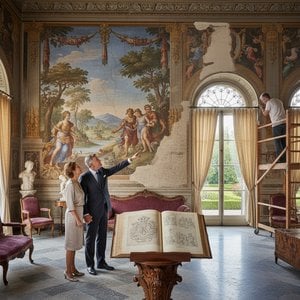
Moștenirea Frescei: Pictând Istoria Familiei pe Pereți
Transformă istoria familiei tale într-o frescă unică! Artiști profesioniști, tehnici moderne și consultanță gratuită. Creează o moștenire vizuală de neuitat cu .