

 Previzualizare
 Trimite prin felicitare
 Distribuie
 Detalii despre lucrare
 Ghid
Ghid

 Descarcă imaginea
 Produse similare
 Radiografie
 Galerie foto
 Întrebări și răspunsuri
 Statistici
David De Wildt


 Vezi mai mult
Giclée / Imprimare artistică
Printuri giclée sau pe canvas de calitate muzeală, cu proces de producție rapid și opțiuni flexibile de finisare. ( Comandă pictură realizată manual Comută pe Imagine Digitală)




P118B lei10

P118H lei10

P118W lei10

P438Z lei10

P508JH lei12

P508YH lei12

P805H lei10

P805Z lei10

P919BZ lei10

P919G lei10

P919XJ lei10

P959ZH lei10

P968JZ lei12

W106C lei8

W218G lei10

W218JH lei8

W218Y lei10

W307PJ lei10

W316G lei10

W316PJ lei8

W316Y lei10

W398PJ lei8

W4111J lei10

W500HY lei15

W500JH lei15

W692G lei12

W849H lei8

W940BG lei15

W953PJ lei8




Alegeți dintre dimensiunile noastre prestabilite, care respectă proporțiile originale ale operei de artă.

Introduceți lățimea și înălțimea necesare pentru a se potrivi ramei sau peretelui dumneavoastră. O printare poate fi doar tăiată, niciodată extinsă dincolo de dimensiunea imaginii originale, astfel încât o dimensiune cu o formă diferită va pierde o parte din imagine. Vă trimitem o simulare digitală pentru aprobare înainte de a imprima orice. Imaginea afișată pe această pagină nu prezintă tăierea reală — doar simularea arată acest lucru.
Livrare în întreaga lume () în 2 săptămâni, în loc de cele 4/5 săptămâni standard. (4 Noiembrie)

Livrare expres gratuită la nivel mondial

Pânză de in de înaltă calitate

Asigurare completă pentru transport

Garanție de rambursare a taxelor vamale

Garanția fidelității culorilor

Politica de retur în 100 de zile (doar pentru defecte de fabricație)

Garanție de rambursare 100%

Ofertă pentru comenzi multiple
 Opțiunea cu sticlă este disponibilă doar pentru dimensiuni de sub 110 cm

David De Wildt
Giclée / Imprimare artistică
Dimensiune reproducere
-


Preț total calculat
lei 299
A Quiet Scholar Amidst Baroque Grandeur: Examining Ferdinand Bol’s “David De Wildt”
Ferdinand Bol, a figure often relegated to the footnotes of Dutch Golden Age art history, deserves a deeper appreciation for his contribution to the artistic landscape. While Rembrandt van Rijn commanded attention with dramatic chiaroscuro and emotive portraits, Bol carved out a distinct path—one characterized by meticulous realism and an uncanny ability to capture psychological nuance—particularly evident in works like “David De Wildt,” painted circa 1667.
- Subject Matter: The portrait depicts David De Wildt, a gentleman of considerable intellect, seated thoughtfully before a table laden with papers. This deliberate positioning speaks volumes about Bol’s artistic intention—to portray not merely appearance but also character and intellectual pursuits.
- Style & Technique: Bol's style firmly anchors itself within the Baroque tradition, yet diverges subtly from Rembrandt’s more overtly theatrical approach. The artist employs a masterful technique of sfumato – a hazy blending of tones – to soften contours and create an atmosphere of contemplative serenity. Fine details meticulously rendered in the subject’s face and clothing underscore Bol's commitment to realism, mirroring the exacting standards upheld by Rembrandt himself.
Bol’s apprenticeship under Rembrandt undoubtedly instilled a profound understanding of tonal modulation and psychological observation. However, “David De Wildt” transcends mere imitation; it embodies Bol’s own artistic sensibilities—a quiet confidence in conveying inner life through visual representation.
Historical Context & Artistic Influences
Painted during the height of Amsterdam’s cultural flourishing, “David De Wildt” reflects the broader preoccupation with humanist ideals prevalent at the time. The Baroque era championed grandeur and drama, yet Bol skillfully tempered these impulses with a sensitivity to human emotion. Rembrandt's influence is palpable in the subdued palette and masterful use of light—a hallmark of Rembrandt’s oeuvre—but Bol distinguishes himself through his nuanced portrayal of De Wildt’s gaze, conveying both seriousness and introspection.
- Location: Currently housed within the Rijksmuseum in Amsterdam, “David De Wildt” serves as a testament to Bol's enduring legacy. Its presence amongst other masterpieces underscores its significance within Dutch Baroque art history.
- Symbolism: The red curtain serving as backdrop is more than mere decorative element; it symbolizes prestige and formality—fitting for a portrait depicting a scholar of noble lineage.
Emotional Resonance & Artistic Legacy
"David De Wildt" transcends its formal constraints to evoke a powerful sense of contemplation and intellectual curiosity. Bol’s ability to capture the subtle expressions of thought—the furrowed brow, the steady gaze—demonstrates his profound understanding of human psychology. This portrait stands as an exemplar of Baroque realism, securing Bol's place amongst the most accomplished artists of his era.
Its enduring appeal lies in its quiet dignity and its invitation to contemplate the complexities of intellect and character – qualities that continue to resonate with viewers today. Bol’s meticulous technique and masterful composition solidify “David De Wildt” as a cornerstone of Dutch Baroque art, ensuring its continued fascination for generations to come.
Întrebări și răspunsuri
Ce subiecte sunt reprezentate în "David De Wildt" de Ferdinand Bol?
Subiectele din "David De Wildt" sunt portraiture, dutch golden age, baroque art, scholarship, religious symbolism, light and shadow, amsterdam painting.
Care este luminozitatea percepută a lucrării "David De Wildt" de Ferdinand Bol?
În general, "David De Wildt" este înregistrată ca având o deep_shadow. Luminozitatea percepută descrie cât de deschisă sau întunecată pare lucrarea.
Din ce curent artistic face parte "David De Wildt" de Ferdinand Bol?
„David De Wildt” este o operă de Baroque Portraiture. Acest curent indică tradiția artistică din care face parte lucrarea.
Opere similare


Biografie artist
A Forgotten Master of the Dutch Golden Age
Ferdinand Bol, a name perhaps less familiar than those of his illustrious contemporaries Rembrandt van Rijn and Johannes Vermeer, nevertheless occupies a significant, if often overlooked, position within the pantheon of 17th-century Dutch Masters. Born in Dordrecht in 1616, Bol’s artistic journey was deeply intertwined with that of Rembrandt, serving as a pupil in the master's Amsterdam studio during a formative period. This apprenticeship profoundly shaped his style, initially leading to works so convincingly reminiscent of Rembrandt that attribution could prove challenging even for seasoned experts. However, to simply categorize Bol as a mere imitator would be a disservice to his own unique artistic voice and considerable talent. His early life laid the groundwork for a career marked by both technical brilliance and an evolving stylistic independence. While details regarding his initial training remain somewhat scarce – possibilities include tutelage under Jacob Cuyp in Dordrecht or Abraham Bloemaert in Utrecht – it was undoubtedly his time with Rembrandt that proved pivotal, immersing him in the dramatic lighting, psychological depth, and masterful brushwork characteristic of the Baroque period.From Rembrandt’s Shadow to Independent Vision
Bol's artistic development can be traced through a fascinating trajectory—one beginning with faithful emulation and gradually blossoming into a distinctive personal style. In his early works, the influence of Rembrandt is undeniable; compositions often echo those of his teacher, employing similar chiaroscuro effects and a penchant for portraying figures in moments of intense emotional or psychological drama. However, as Bol matured, he began to refine his technique, moving towards a greater emphasis on clarity, elegance, and refined detail. His palette lightened, and his figures acquired a more polished, aristocratic bearing. This shift is particularly evident in his portraits, which became increasingly sought after by Amsterdam’s wealthy elite. He quickly rose through the ranks of Amsterdam's artistic community, becoming a burgher in 1652 and marrying into a family with connections to both the Admiralty and the wine merchants’ guild – affiliations that undoubtedly contributed to securing prestigious commissions. Notably, he received orders for chimney pieces for the new Amsterdam Town Hall, designed by Jacob van Campen, a testament to his growing reputation and artistic standing. He even took on pupils of his own, most notably Godfrey Kneller, who would later achieve fame as an English portrait painter.Historical Narratives and Portraiture: A Diverse Oeuvre
Bol’s oeuvre is remarkably diverse, encompassing historical subjects, portraits, *tronies* (character studies), and even some landscape elements. He demonstrated a particular aptitude for large-scale historical paintings, imbuing them with a sense of grandeur and dramatic tension. The Peace Negotiations between Claudius Civilis and Quintus Petillius Cerealis on the Demolished Bridge, now housed in a museum collection, stands as a prime example of his skill in depicting complex narratives with compelling visual impact. The painting showcases not only his mastery of composition and perspective but also his ability to convey the weight of historical events through expressive gestures and carefully rendered details. The scene unfolds with a palpable sense of urgency and strategic maneuvering, reflecting Bol’s understanding of military tactics and political intrigue. However, it was perhaps in the realm of portraiture that Bol truly excelled. He possessed an uncanny ability to capture the likenesses of his sitters while simultaneously revealing their inner character and social status. His portraits are characterized by a refined elegance and psychological insight, offering glimpses into the lives and personalities of Amsterdam’s prominent citizens. Works like Man in Golden Helmet (Mars), now residing in Warsaw's National Museum, exemplify this talent, presenting a figure imbued with both authority and vulnerability. The subtle play of light on his armor, combined with the carefully rendered details of his attire, speaks volumes about his position and character – a potent blend of military prowess and regal bearing.Influences and Artistic Development
Bol’s artistic journey wasn't solely defined by his time with Rembrandt; he absorbed influences from various sources, shaping his unique style. The dramatic lighting and emotional intensity of Caravaggio undoubtedly resonated within him, while the meticulous detail and refined elegance of artists like Rubens also contributed to his development. However, Bol skillfully synthesized these diverse influences into a distinctly personal vision. He wasn’t simply copying his predecessors; he was building upon their foundations, forging a new path that combined technical mastery with expressive depth. His early works demonstrate a clear debt to Rembrandt, particularly in the use of *chiaroscuro* and the portrayal of dramatic scenes. Yet, as he matured, Bol gradually moved towards a greater emphasis on clarity, elegance, and refined detail, developing a more polished and aristocratic style. The subtle shifts in his palette – from darker, earthier tones to lighter, brighter hues – reflect this evolution, mirroring his growing independence and artistic confidence.Legacy and Rediscovery
Despite his success during his lifetime, Ferdinand Bol’s reputation waned considerably after his death in 1680. His works were often misattributed to Rembrandt, obscuring his individual contributions to Dutch Golden Age painting. It wasn't until the 20th century that concerted efforts began to re-evaluate his oeuvre and establish him as a significant artist in his own right. Today, scholars and collectors are increasingly recognizing the unique qualities of Bol’s work—his masterful technique, his evolving stylistic independence, and his ability to capture both the outward appearance and inner lives of his subjects. While his output remains relatively small compared to some of his contemporaries, the surviving paintings offer a captivating window into the artistic and cultural landscape of 17th-century Amsterdam. His legacy continues to inspire admiration and intrigue, ensuring that this once-forgotten master will continue to be rediscovered and appreciated by generations to come. The Museum Van Loon in Amsterdam and the Rembrandt House Museum both provide opportunities to encounter his work within the context of the era that shaped him.
Ferdinand Bol
1616 - 1680 , Olanda
Detalii rapide
- Artistic Movement Or Style: Baroc olandez
- Artists Or Movements Influenced By This Artist: ['Cornelis Bisschop']
- Artists Who Influenced This Artist: ['Rembrandt']
- Date Of Birth: 24 iunie 1616
- Date Of Death: 24 august 1680
- Full Name: Ferdinand Bol
- Nationality: Olandez
- Notable Artworks:
- Pace între Claudius...
- Pyrrhus...
- Cavaler în casac
- Place Of Birth: Dordrecht, Olanda
Articole similare

Illuminating Innovation: Exploring the Dutch Golden Age of Painting
Explore the Dutch Golden Age of painting with ArtsDot. Discover Rembrandt, Vermeer & other Masters. Learn about key characteristics, iconic artworks, and lasting influence. Expert insights for collectors & enthusiasts.

Top 10 Capodopere Baroc Olandez: Artă, Istorie și Decorațiuni Interioare de Lux
Descoperă top 10 capodopere Baroc Olandez! Rembrandt, Vermeer și alți maeștri. Explorează istoria artei, tehnicile unice și atmosfera luxoasă a picturilor baroce. Reproduceri de artă de calitate muzeală pe ArtsDot.com.
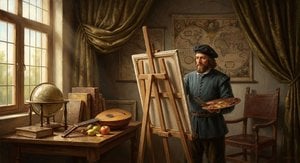
Illuminating Realism: Exploring the Dutch Golden Age of Painting (1600-1700)
Explore the Dutch Golden Age of painting (1600-1700) with ArtsDot. Discover Rembrandt, Vermeer & other masters. Learn about techniques, history & find museum-quality reproductions.

Epoca de Aur Olandeză: 10 Capodopere Care Au Definit Arta și Decorațiunea Interioară
Descoperiți Epoca de Aur Olandeză prin 10 capodopere Rembrandt, Vermeer și alți pictori olandezi. Aflați poveștile din spatele acestor tablouri baroce iconice și inspirați-vă pentru decorațiuni interioare unice. Explorează colecția completă pe ArtsDot.com!

Golden Age Reflections: Dutch Baroque Painting & Cultural Innovation
Explore the Dutch Golden Age of painting! Discover key artists like Vermeer & ter Borch, their innovative techniques, and the rich cultural context behind these Baroque masterpieces. Learn about collecting & appreciating this iconic art period.
