Primii ani, familia și formarea artistică
Decembrie 1617 marchează începutul poveștii lui Gerard Ter Borch în Zwolle, în provincia Overijssel din Republica Olandeză. Talentul artistic îi curge în sânge, fiind o moștenire de familie. Tatăl său, Gerard Ter Borch cel Mai Tânăr, îi oferă primele lecții, modelându-i înțelegerea timpurie a acestui meștecurecurios. Această inclinație familială se extinde și asupra surorii sale, Gesina ter Borch, care de asemenea își urmează vocația în pictură.
Formarea sa artistică trece de la sfera domestică la centrele urbane vibrante ale Republicii Olandeze. Până în 1632, Gerard Ter Borch se află în Amsterdam, unde probabil studiază sub îndrumarea lui Willem Cornelisz Duyster sau Pieter Codde, absorbind fundamentele tehnice necesare pentru o carieră profesională. Această energie creatoare continuă în 1634, când se mută la Haarlem pentru a studia sub îndrumarea lui Pieter de Molijn. Această perioadă de instruire intensă culminează în 1635, când tânărul de optsprezece ani este acceptat în Gilda Sfântului Luca din Haarlem, o recunoaștere oficială a talentului său în plină dezvoltare.
Călătorii și activitate internațională
Viața lui Ter Borch traversează frontierele. Până în 1635, acesta se află în Londra, absorbind atmosfera sofisticată a curții engleze. Această perioadă de migrație continuă prin Germania și Franța, conducându-l în cele din urmă spre inima lumii mediteraneene. În 1641, ajunge în Roma, unde influența italiană devine imediată și specifică; el începe să lucreze pe cupru, creând portrete rafinate precum Jan Six și A Young Lady. Aceste suprafețe mici și extrem de detaliate reflectă o schimbare în focusul său tehnic în timpul șederii sale în Italia.
Impulsionat de succes, artistul se îndreaptă spre Peninsula Iberică. În Madrid, reputația sa ajunge în fața curții spaniole, unde regele Filip al IV-lea îi acordă titlul de cavaler, o distincție rară pentru un pictor olandez. Această perioadă de patronaj de înalt nivel și expunere internațională marchează un apogeu în statutul său social și profesional. După aceste excursii, se întoarce în Țările de Jos, stabilindu-și rezidența la Haarlem și, ulterior, la Deventer, unde devine în cele din urmă membru al consiliului orașului.
Opere remarcabile și realizări
Anii 1640 aduc o schimbare de paradigmă către o observație istorică profundă. În 1648, el surprinde gravitatea unui moment politic crucial în The Ratification of the Treaty of Münster, 15 May 1648. Această perioadă este, de asemenea, cea în care își rafinează scenele domestice care îi vor defini renumele. The Knifegrinder's Family emerge din perioada 1630-1650, un interval de timp în care s-a concentrat intens pe viața oamenilor de rând și pe portretizarea artiștilor de divertisment.
Textura devine limbajul său principal în perioada de maturitate. În The Letter, lumina și calitatea tactilă a materialelor textile ocupă centrul scenei. Artistul trece de la aceste momente intime și liniștite către cadre sociale mai structurate. Până în 1655, lucrări precum The Glass of Lemonade demonstrează o stăpânire continuă a luminii în interiorurile domestice. Accentul rămâne pe nuanțele subtile ale interacțiunii umane și pe realitatea fizică a obiectelor care le înconjoară.
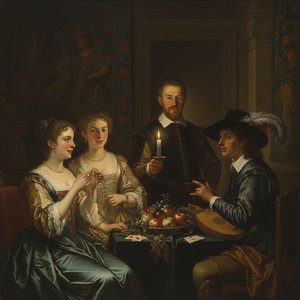
Cariera sa de la finalul vieții continuă această precizie excepțională. The Concert, datată în 1675, ne arată un artist consacrat, încă preocupat de jocul dintre lumină și umbră într-un cadru muzical. Capacitatea sa de a picta strălucirea suprafețelor lucioase și țesătura delicată a draperiilor rămâne o constantă pe parcursul celor decenii de activitate.
- The Ratification of the Treaty of Münster, 15 Mai 1648
- The Glass of Lemonade (1655)
- The Concert (1675)
Întrebări și răspunsuri
Cum pot găsi lucrările lui Gerard Ter Borch pe o temă specifică?
Pentru a găsi lucrări realizate de Gerard Ter Borch pe o temă specifică, accesați pagina După cuvinte cheie a artistului, unde operele sunt grupate pe cuvinte cheie.
Sub ce alte nume este cunoscut/ă Gerard Ter Borch?
Gerard Ter Borch este cunoscut și sub numele de Gerard Terborch, Gerard Terburg, Gerard Ter Burg, Gerard Terborch Cel Tânăr, Gerard Terborch Ii.
Unde pot fi explorate operele lui Gerard Ter Borch organizate pe culori?
Pagina Indice Spectral organizează operele lui Gerard Ter Borch în funcție de culoare.