


 Vezi în context
 Trimite
 Distribuie
 Detalii
 Ghidul

 Descarcă
 Produse similare
 Radiografie
 Diaporama
 Statistici
Tanoo
 Watercolor
- WallArt
- Post-Impressionism
 1912
1912 74.0 x 53.0 cm
 McMichael Canadian Art Collection
 Citește mai mult
Giclée / Imprimare artistică
Printuri giclée sau pe canvas de calitate muzeală, cu proces de producție rapid și opțiuni flexibile de finisare. ( Comandă pictură realizată manual Treci la imagine digitală)




P118B lei10

P118H lei10

P118W lei10

P438Z lei10

P508JH lei12

P508YH lei12

P805H lei10

P805Z lei10

P919BZ lei10

P919G lei10

P919XJ lei10

P959ZH lei10

P968JZ lei12

W106C lei8

W218G lei10

W218JH lei8

W218Y lei10

W307PJ lei10

W316G lei10

W316PJ lei8

W316Y lei10

W398PJ lei8

W4111J lei10

W500HY lei15

W500JH lei15

W692G lei12

W849H lei8

W940BG lei15

W953PJ lei8




Alegeți dintre dimensiunile noastre prestabilite, care respectă proporțiile originale ale operei de artă.

Introduceți lățimea și înălțimea de care aveți nevoie, pentru a se potrivi ramei sau peretelui dumneavoastră. O printare poate fi doar tăiată, niciodată extinsă dincolo de dimensiunea imaginii originale, astfel încât o dimensiune cu o formă diferită va pierde o parte din imagine. Vă trimitem o simulare digitală pentru aprobare înainte de a imprima orice. Imaginea afișată pe această pagină nu prezintă tăierea reală — doar simularea arată acest lucru.
Livrare în întreaga lume () în 2 săptămâni, în loc de cele 4/5 săptămâni standard. (22 Octombrie)

Livrare expres gratuită la nivel mondial

Pânză de in premium

Asigurare completă pentru transport

Garanție de rambursare a taxelor vamale

Garanția fidelității culorilor

Politica de retur în 100 de zile (doar pentru defecte)

Garanție de rambursare 100%

Reducere pentru comenzi multiple
 Opțiunea cu sticlă este disponibilă doar pentru dimensiuni de sub 110 cm

Tanoo
Giclée / Imprimare artistică
Dimensiune reproducere
-


Preț total
lei 285
Emily Carr’s ‘Tanoo’: A Window into Haida Spirit and Northwest Coast Majesty
Emily Carr's “Tanoo,” painted in 1912, is more than just a depiction of totem poles; it’s a profound meditation on the spirit of the Pacific Northwest and the enduring connection between Indigenous peoples and their ancestral lands. Created during a pivotal period of change for both Canada and its First Nations communities, this watercolor offers a rare glimpse into a world largely untouched by modern influence – a world where storytelling, spirituality, and the natural world are inextricably intertwined.
The painting immediately commands attention with its verticality. Two imposing totem poles dominate the composition, rendered in Carr’s signature style: a blend of realism and expressive abstraction. These aren't simply static structures; they pulse with life through the artist’s skillful use of line and color. The figures carved into their surfaces – one a human face, the other an eagle – are not merely decorative but represent powerful ancestral spirits, guardians of knowledge and tradition. Carr herself spent time living amongst the Haida people on Queen Charlotte Island (now Haida Gwaii), learning from them and incorporating their worldview into her art. This intimate connection is palpable in the painting’s quiet reverence.
A Masterclass in Watercolor Technique
Carr's mastery of watercolor is evident in every brushstroke. The loose, layered washes create a remarkable sense of texture – you can almost feel the dampness of the forest air and the roughness of the weathered wood. Notice how she builds up color gradually, allowing each layer to bleed into the next, creating subtle shifts in tone and value. This technique isn’t simply about representation; it's about capturing the *feeling* of the landscape – its depth, its mystery, its inherent energy. The diffused lighting, suggesting an overcast day or a shaded forest, further enhances this atmospheric effect.
The composition itself is carefully considered. Carr employs a flattened perspective, prioritizing the verticality of the poles and creating a sense of monumental scale. Geometric shapes – rectangles for the poles, organic forms for the surrounding foliage – are used strategically to guide the viewer’s eye and establish a clear visual hierarchy. The use of line is particularly noteworthy; it defines the contours of the poles with precision while simultaneously suggesting movement and dynamism.
Symbolism and Cultural Significance
“Tanoo” is deeply rooted in Haida culture, where totem poles served as vital records of lineage, history, and spiritual beliefs. Each figure carved into a pole represents an individual or clan, narrating their stories and connecting them to the past. The eagle, for example, often symbolizes strength, wisdom, and connection to the spirit world. The human face likely represents a respected leader or ancestor.
Beyond its specific cultural context, “Tanoo” speaks to broader themes of identity, spirituality, and the relationship between humanity and nature. Carr’s work reflects a growing awareness of Indigenous cultures in Canada during the early 20th century, but it also demonstrates a deep respect for the traditions she encountered. The painting serves as a poignant reminder of the importance of preserving cultural heritage and recognizing the profound wisdom embedded within Indigenous knowledge systems.
Bringing ‘Tanoo’ into Your Space
Reproductions of “Tanoo” offer a beautiful way to bring this evocative artwork into your home or office. The vibrant colors and dynamic composition will add a touch of Northwest Coast spirit to any setting, while the intricate details capture the essence of Carr's artistic vision. Consider framing it in a natural wood frame to complement the painting’s earthy tones and further enhance its connection to the landscape.
Whether you are an art enthusiast, a collector seeking unique pieces, or simply someone who appreciates stunning visual beauty, “Tanoo” is a timeless masterpiece that continues to resonate with viewers today. It's a powerful testament to Emily Carr’s artistic talent and her profound understanding of the spirit of British Columbia.
Întrebări și răspunsuri
"Tanoo" de Emily Carr este o compoziție de tip portret, peisaj sau pătrată?
"Tanoo" de Emily Carr are în format Portrait. Formatul descrie proporțiile compoziției.
Imaginea pentru "Tanoo" de Emily Carr poate fi reprodusă liber?
Statusul drepturilor de autor pentru "Tanoo" de Emily Carr: opera este în domeniul public - drepturile de autor au expirat. Acest lucru determină dacă reproducerile imaginii pot fi realizate liber.
Drepturile de autor asupra operei "Tanoo" de Emily Carr permit reproducerea acesteia?
Originalul „Tanoo” se află la McMichael Canadian Art Collection, iar opera este în domeniul public - drepturile de autor au expirat.
Opere similare


Biografie artist
A Life Rooted in the Landscape and Spirit of British Columbia
Emily Carr, born December 13, 1871, in Victoria, British Columbia, was more than just a painter; she was a chronicler of a changing world, a passionate observer of both the natural majesty of the Pacific Northwest and the rich cultural heritage of its First Nations peoples. Her life unfolded against the backdrop of a rapidly evolving Canada, a nation grappling with its identity and relationship to its Indigenous populations. The daughter of Richard and Emily Carr, English immigrants who sought opportunity in the burgeoning colony, she grew up in a household that valued both tradition and progress. This duality would profoundly shape her artistic vision. From an early age, encouraged by her father, Emily displayed a remarkable aptitude for art, a talent nurtured through formal instruction and a deep connection to the surrounding landscape. The imposing forests of Vancouver Island, the rugged coastline, and the vibrant life within them became enduring sources of inspiration – not merely as subjects for observation, but as embodiments of a spirit she felt compelled to capture. However, it was not merely the visual beauty that captivated Carr; she sought to convey the *spirit* of this land, its inherent power and mystery, an essence far deeper than simple representation.Forging a Unique Artistic Voice
Carr’s artistic journey was one of continuous exploration and refinement. She initially pursued formal training at the San Francisco Art Institute (1890-1892), immersing herself in the vibrant American art scene, and later at the Westminster School of Art in London (1899), absorbing the currents of European artistic movements – particularly Impressionism and Post-Impressionism. Yet, despite these influences, she found herself increasingly drawn back to her native British Columbia, recognizing that true artistic expression lay not in imitation but in authentic representation of her own experience, her own unique connection to the land and its people. Early works often reflected a more conventional style, influenced by European techniques, but Carr quickly began to develop a distinctive approach – one characterized by bold colors, dynamic brushstrokes, and an almost visceral energy. This shift was profoundly shaped by her encounters with the First Nations communities along the British Columbia coast. She embarked on extensive journeys, traveling through remote villages and documenting their way of life with meticulous detail and genuine respect. These weren’t simply portraits; they were attempts to capture the essence of a culture deeply intertwined with the natural world – a worldview where humans and nature existed in a symbiotic relationship. A pivotal moment in her development came through these firsthand experiences, moving beyond mere observation to a deeper understanding of the spiritual significance embedded within First Nations art and traditions. She began to incorporate elements of their symbolism into her paintings, not as literal depictions but as expressions of underlying values – respect for nature, reverence for ancestors, and a profound connection to the spirit world. Carr’s style evolved dramatically, moving away from academic realism towards a more expressive and subjective approach. Her brushstrokes became looser, her colors more vibrant, and her compositions increasingly dynamic, reflecting the energy and vitality of the landscapes she depicted. She experimented with techniques like impasto – applying thick layers of paint to create texture and depth – further enhancing the sense of movement and immediacy in her work.Modernism and the Expression of Inner Vision
Emily Carr stands as a pioneering figure in Canadian Modernism, embracing new forms of expression while remaining deeply rooted in her own unique perspective. She wasn’t content to merely replicate what she saw; instead, she sought to convey the emotional and spiritual essence of her subjects – not just their appearance, but their *feeling*. This led her to experiment with increasingly abstract compositions, employing bold colors and dynamic brushstrokes to create a sense of movement and texture. Her canvases often pulsate with energy, reflecting the raw power of the natural world and the vibrant life force of the First Nations communities she depicted. Kispiox Village, for example, is not simply a representation of a village scene; it’s an evocation of its atmosphere, its history, and its spiritual significance – a feeling of ancient wisdom and enduring strength. Carr wasn't afraid to challenge conventional artistic norms, pushing boundaries and forging her own path. This commitment to artistic independence would inspire generations of Canadian artists to come.Major Works and Lasting Legacy
Emily Carr’s oeuvre is characterized by a remarkable diversity of subject matter, reflecting her lifelong fascination with the landscapes and cultures of British Columbia. Some of her most celebrated works include:- Tanoo (watercolor): A delicate yet powerful depiction of First Nations life, showcasing Carr’s mastery of watercolor techniques and her ability to capture the subtle nuances of Indigenous culture.
- A Haida Village (oil): A striking oil painting that captures the architectural grandeur and spiritual significance of a Haida village – a testament to Carr's understanding of both form and feeling.
- The Indian Church (oil): A poignant representation of the intersection between Indigenous culture and Christian missionary influence, reflecting Carr’s complex engagement with colonial history and her desire to document a rapidly changing world.
- Kispiox Village (oil): An iconic painting that embodies Carr's unique style and her deep connection to the landscapes and communities of British Columbia – a vibrant celebration of life and spirit.

Emily Carr
1871 - 1945 , Canada
Informații rapide
- Artistic Movement Or Style: Modernism, Post-Impressionism
- Artists Or Movements Influenced By This Artist: ['Pegi Nicol Macleod']
- Date Of Birth: Dec 13, 1871
- Date Of Death: Mar 2, 1945
- Full Name: Emily Carr
- Nationality: Canadian
- Notable Artworks:
- Tanoo
- A Haida Village
- The Indian Church
- Place Of Birth: Victoria, Canada
Articole conexe

Farmecul Durabil al Acuarelei: Istorie, Tehnici și Practică Contemporană
Descoperă farmecul acuarelei! Explorează istoria, tehnicile și evoluția acestei arte delicate. Ghid complet pentru artiști amatori și pasionați de pictură.

Ephemeral Visions: Exploring the History & Emotional Resonance of Watercolor Painting
Explore the captivating history of watercolor painting, from ancient techniques to modern masters like Kandinsky & Blake. Discover essential artists, collecting tips & the emotional power of this luminous medium. Expert insights for art enthusiasts.
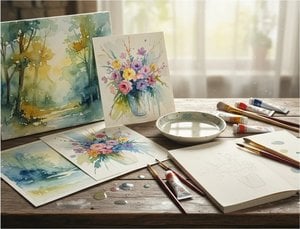
Ephemeral Visions: Exploring the Artistic Legacy & Nuances of Watercolor Painting
Explore the captivating world of watercolor painting! Discover its rich history, essential techniques, influential artists & collecting tips from art experts. A comprehensive guide for enthusiasts.

Ephemeral Visions: Exploring the Artistic Legacy & Contemporary Practice of Watercolor Painting
Explore the captivating world of watercolor painting! Discover its rich history, essential techniques, influential artists & collecting tips. A comprehensive guide for art enthusiasts from ArtsDot.

Top 10 Capodopere Acvarelă Legendară care au Schimbat Arta pentru Totdeauna | ArtsDot.ro
Descoperă Top 10 capodopere acuarelă legendară de la Sargent, Turner și alți maeștri! Explorează istoria artei, tehnicile unice și paletele vibrante. Reproduceri de artă de calitate muzeală pentru decorul perfect pe ArtsDot.com.

