


 Previzualizare
 Trimite
 Distribuie
 Detalii despre lucrare

 Descarcă
 Produse similare
 Radiografie
 Diapozitive automate
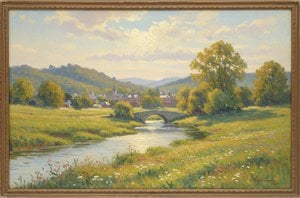
Kispiox Village
 Oil On Canvas
- WallArt
- Impressionism
 19th Century
 78.0 x 93.0 cm
 Royal BC Museum
 Vezi mai mult
Reproducere pictată manual în ulei
Pictură în ulei pe pânză, realizată manual de artiștii noștri la dimensiunea și ramele dorite de dumneavoastră, pe comandă. ( Comandă printul Cumpără imaginea)




P118B $10

P118H $10

P118W $10

P438Z $10

P508JH $12

P508YH $12

P805H $10

P805Z $10

P919BZ $10

P919G $10

P919XJ $10

P959ZH $10

P968JZ $12

W106C $8

W218G $10

W218JH $8

W218Y $10

W307PJ $10

W316G $10

W316PJ $8

W316Y $10

W398PJ $8

W4111J $10

W500HY $15

W500JH $15

W692G $12

W849H $8

W940BG $15

W953PJ $8




Alegeți dintre dimensiunile noastre prestabilite, care respectă proporțiile originale ale operei de artă.

Puteți introduce propriile dimensiuni pentru a se potrivi unui anumit cadru sau spațiu. Dacă dimensiunea selectată nu corespunde proporțiilor imaginii originale, vom decupa opera de artă sau vom extinde pictura cu elemente suplimentare pictate manual. O simulare digitală vă va fi trimisă pentru aprobare înainte de începerea producției.
Vă rugăm să rețineți că previzualizarea de pe ecran nu reflectă decuparea sau extinderea reală. Doar macheta va arăta cu exactitate compoziția finală.
Deși sunt disponibile dimensiuni personalizate, vă recomandăm să selectați o dimensiune din lista predefinită pentru a păstra proporțiile originale.
După plasarea comenzii, echipa ArtsDot.com va contacta clientul prin e-mail pentru instrucțiuni și îi va furniza o previzualizare a machetei
Livrare în întreaga lume () în 3-4 săptămâni, în loc de cele 5 săptămâni standard. (24 August). Fără compromisuri în ceea ce privește calitatea.

Livrare expres gratuită la nivel mondial

Pânză de in de înaltă calitate

Asigurare completă pentru transport

Garanție de rambursare a taxelor vamale

Garanția fidelității culorilor

Politica de retur în 60 de zile (doar pentru defecte)

Garanție de rambursare 100%

Ofertă pentru comenzi multiple
 Opțiunea cu sticlă este disponibilă doar pentru dimensiuni de sub 110 cm

Kispiox Village
Tehnică de reproducere
Dimensiune reproducere
-


Preț total calculat
$ 388
Descriere operă de artă
A Window Into a Changing World: Emily Carr’s Kispiox Village
Emily Carr's "Kispiox Village," painted in 1929, isn’t merely a depiction of a remote British Columbia landscape; it’s a poignant snapshot of a vanishing world – the traditional life and artistry of the Gitxsan people. The painting captures a pivotal moment, a brief window into a culture on the cusp of profound change, as documented by Carr during her extensive travels throughout the Pacific Northwest. Towering, intricately carved totem poles dominate the composition, their geometric patterns and symbolic figures anchoring the scene against the backdrop of a rugged mountain range and a small, vibrant village nestled at the river’s edge. These aren't static monuments; they are living narratives, imbued with stories passed down through generations, and Carr’s work serves as a vital record of this oral tradition. The painting’s power lies in its ability to evoke both the grandeur of the natural world and the intimate details of daily life within that landscape – the figures engaged in their tasks, the children playing, the quiet dignity of the community.Impressionistic Realism: A Hybrid Style
Carr's artistic approach is a fascinating blend of Impressionist techniques and a grounded realism rooted in her observations of Indigenous culture. The brushstrokes are loose and visible, creating a sense of movement and immediacy – capturing not just the appearance of the poles and village but also the feeling of being present within that environment. She employs broken color to create atmospheric effects, particularly in the depiction of the mountains and sky, lending an ethereal quality to the scene. Yet, unlike purely Impressionistic works focused on fleeting moments, Carr’s attention to detail – the textures of the wood, the folds of clothing, the expressions on the faces of the villagers – firmly anchors the painting within a realistic framework. This hybrid style allows her to convey both the subjective experience of witnessing this unique culture and the objective reality of its landscape. The influence of early 20th-century realism is evident in the careful rendering of forms and the use of light, while the Impressionistic touches imbue the work with a sense of vibrancy and immediacy.Symbolism Woven into the Landscape
The totem poles themselves are rich with symbolic meaning, representing clan histories, ancestral lineages, and spiritual beliefs. Carr’s painting doesn't simply depict these structures; it subtly hints at their significance through careful composition and detail. The specific figures carved onto the poles – thunderbirds, mountain ferns, human faces – each carry distinct meanings within Gitxsan cosmology. The placement of the poles within the village suggests a connection between the community and its heritage. Beyond the poles, the landscape itself is laden with symbolism. The towering mountains represent strength and permanence, while the river symbolizes life and continuity. Carr’s choice to focus on these elements speaks volumes about her understanding and respect for the culture she was documenting. The painting becomes more than a visual record; it's a meditation on the interconnectedness of people, place, and belief.A Legacy Preserved: Historical Context and Reproduction
“Kispiox Village” is inextricably linked to Emily Carr’s broader project of documenting Indigenous cultures in British Columbia during a period of rapid change. As Canada grappled with its identity and relationship with First Nations peoples, Carr sought to capture the essence of these communities before their traditions were irrevocably lost. Her work was initially met with mixed reactions – some critics dismissed her depictions as sentimental or overly romanticized, while others recognized their profound value as a visual record of a disappearing way of life. Today, Carr’s paintings are celebrated for their honesty and sensitivity, offering invaluable insights into the rich cultural heritage of British Columbia. Reproductions of “Kispiox Village” provide an accessible means to appreciate Carr's artistic vision and contribute to a deeper understanding of Gitxsan culture. When selecting a reproduction, consider the quality of materials used – archival inks on museum-grade canvas will ensure that the colors remain vibrant for generations to come, preserving the painting’s emotional impact and historical significance.Bringing Kispiox Home: Interior Design Considerations
The evocative palette of blues, greens, and browns in “Kispiox Village” lends itself beautifully to interior design. Consider incorporating these hues into a room to create a sense of tranquility and connection to nature. The painting’s vertical format works particularly well in hallways or above fireplaces, drawing the eye upwards and creating a focal point. The textured brushstrokes can be replicated through textiles – think woven rugs, linen curtains, or even tactile wall coverings – to add depth and visual interest to a space. Ultimately, “Kispiox Village” is more than just a painting; it’s a portal into another world—a reminder of the beauty, resilience, and enduring spirit of Indigenous cultures in British Columbia.Opere similare


Biografie artist
A Life Rooted in the Landscape and Spirit of British Columbia
Emily Carr, born December 13, 1871, in Victoria, British Columbia, was more than just a painter; she was a chronicler of a changing world, a passionate observer of both the natural majesty of the Pacific Northwest and the rich cultural heritage of its First Nations peoples. Her life unfolded against the backdrop of a rapidly evolving Canada, a nation grappling with its identity and relationship to its Indigenous populations. The daughter of Richard and Emily Carr, English immigrants who sought opportunity in the burgeoning colony, she grew up in a household that valued both tradition and progress. This duality would profoundly shape her artistic vision. From an early age, encouraged by her father, Emily displayed a remarkable aptitude for art, a talent nurtured through formal instruction and a deep connection to the surrounding landscape. The imposing forests of Vancouver Island, the rugged coastline, and the vibrant life within them became enduring sources of inspiration – not merely as subjects for observation, but as embodiments of a spirit she felt compelled to capture. However, it was not merely the visual beauty that captivated Carr; she sought to convey the *spirit* of this land, its inherent power and mystery, an essence far deeper than simple representation.Forging a Unique Artistic Voice
Carr’s artistic journey was one of continuous exploration and refinement. She initially pursued formal training at the San Francisco Art Institute (1890-1892), immersing herself in the vibrant American art scene, and later at the Westminster School of Art in London (1899), absorbing the currents of European artistic movements – particularly Impressionism and Post-Impressionism. Yet, despite these influences, she found herself increasingly drawn back to her native British Columbia, recognizing that true artistic expression lay not in imitation but in authentic representation of her own experience, her own unique connection to the land and its people. Early works often reflected a more conventional style, influenced by European techniques, but Carr quickly began to develop a distinctive approach – one characterized by bold colors, dynamic brushstrokes, and an almost visceral energy. This shift was profoundly shaped by her encounters with the First Nations communities along the British Columbia coast. She embarked on extensive journeys, traveling through remote villages and documenting their way of life with meticulous detail and genuine respect. These weren’t simply portraits; they were attempts to capture the essence of a culture deeply intertwined with the natural world – a worldview where humans and nature existed in a symbiotic relationship. A pivotal moment in her development came through these firsthand experiences, moving beyond mere observation to a deeper understanding of the spiritual significance embedded within First Nations art and traditions. She began to incorporate elements of their symbolism into her paintings, not as literal depictions but as expressions of underlying values – respect for nature, reverence for ancestors, and a profound connection to the spirit world. Carr’s style evolved dramatically, moving away from academic realism towards a more expressive and subjective approach. Her brushstrokes became looser, her colors more vibrant, and her compositions increasingly dynamic, reflecting the energy and vitality of the landscapes she depicted. She experimented with techniques like impasto – applying thick layers of paint to create texture and depth – further enhancing the sense of movement and immediacy in her work.Modernism and the Expression of Inner Vision
Emily Carr stands as a pioneering figure in Canadian Modernism, embracing new forms of expression while remaining deeply rooted in her own unique perspective. She wasn’t content to merely replicate what she saw; instead, she sought to convey the emotional and spiritual essence of her subjects – not just their appearance, but their *feeling*. This led her to experiment with increasingly abstract compositions, employing bold colors and dynamic brushstrokes to create a sense of movement and texture. Her canvases often pulsate with energy, reflecting the raw power of the natural world and the vibrant life force of the First Nations communities she depicted. Kispiox Village, for example, is not simply a representation of a village scene; it’s an evocation of its atmosphere, its history, and its spiritual significance – a feeling of ancient wisdom and enduring strength. Carr wasn't afraid to challenge conventional artistic norms, pushing boundaries and forging her own path. This commitment to artistic independence would inspire generations of Canadian artists to come.Major Works and Lasting Legacy
Emily Carr’s oeuvre is characterized by a remarkable diversity of subject matter, reflecting her lifelong fascination with the landscapes and cultures of British Columbia. Some of her most celebrated works include:- Tanoo (watercolor): A delicate yet powerful depiction of First Nations life, showcasing Carr’s mastery of watercolor techniques and her ability to capture the subtle nuances of Indigenous culture.
- A Haida Village (oil): A striking oil painting that captures the architectural grandeur and spiritual significance of a Haida village – a testament to Carr's understanding of both form and feeling.
- The Indian Church (oil): A poignant representation of the intersection between Indigenous culture and Christian missionary influence, reflecting Carr’s complex engagement with colonial history and her desire to document a rapidly changing world.
- Kispiox Village (oil): An iconic painting that embodies Carr's unique style and her deep connection to the landscapes and communities of British Columbia – a vibrant celebration of life and spirit.

Emily Carr
1871 - 1945 , Canada
Detalii rapide
- Artistic Movement Or Style: Modernism, Post-Impressionism
- Artists Or Movements Influenced By This Artist: ['Pegi Nicol Macleod']
- Date Of Birth: Dec 13, 1871
- Date Of Death: Mar 2, 1945
- Full Name: Emily Carr
- Nationality: Canadian
- Notable Artworks:
- Tanoo
- A Haida Village
- The Indian Church
- Place Of Birth: Victoria, Canada
Articole similare

Evocations of Place: A Historical Journey Through Landscape Art
Explore the rich history of landscape art with ArtsDot. Discover renowned artists, movements like Impressionism & Romanticism, and expert guidance for collecting timeless pieces. Find your perfect serene escape today!
Henry Marvell Carr: A Study in American Impressionism's Evolving Landscape of Light and Form
Explore the captivating work of Henry Marvell Carr, a pivotal figure in American Impressionism. Discover his evocative realism, war art, and cultural depictions – a journey through light, form, and legacy.

Peisaje Romantice Iconice: 10 Capodopere Artistice pentru Decorul de Lux
Descoperă 10 capodopere romantice iconice de Caspar David Friedrich, Turner și alți maeștri. Explorează istoria artei, emoțiile din peisaje și găsește tablouri canvas perfecte pentru decorul tău pe ArtsDot.com!

John Constable: Cele Mai Frumoase 25 de Capodopere – Artă Clasică pentru Decorul Casei Tale
Descoperă cele mai frumoase 25 de picturi ale lui John Constable, maestru al peisajului englezesc! Explorează stilul romantic, Dedham Vale și capodopere precum The Hay Wain. Reproduceri artă clasică pentru decorul casei tale – ArtsDot.com.

Thomas Thomson: Pioneering Canadian Landscape & the Pursuit of National Identity
Explore the evocative landscapes of Tom Thomson, a pivotal figure in Canadian art & precursor to the Group of Seven. Discover his bold style, lasting legacy, and profound impact on shaping a national artistic identity.



