
- Acasă

- Imprimare pe pânză
- Cornelis Van Poelenburch
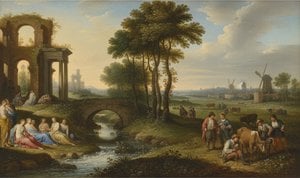
- Landscape with Diana and Callisto

 Comandă reproducere pictată Cumpără imaginea
 Trimite
 Distribuie
 Detalii
 Adaugă la favorite

 Descarcă
 Similare
 Raze X
 Diaporama
Landscape with Diana and Callisto
 Oil On Canvas
- WallArt
- Baroque
 54.0 x 82.0 cm
 Muzeul Hermitaj
 Vezi mai mult
Giclée / Imprimare artistică
Print giclée sau pe canvas de calitate muzeală, cu producție rapidă și opțiuni flexibile de finisare.




P118B $10

P118H $10

P118W $10

P438Z $10

P508JH $12

P508YH $12

P805H $10

P805Z $10

P919BZ $10

P919G $10

P919XJ $10

P959ZH $10

P968JZ $12

W106C $8

W218G $10

W218JH $8

W218Y $10

W307PJ $10

W316G $10

W316PJ $8

W316Y $10

W398PJ $8

W4111J $10

W500HY $15

W500JH $15

W692G $12

W849H $8

W940BG $15

W953PJ $8




Alegeți dintre dimensiunile noastre prestabilite, care respectă proporțiile originale ale operei de artă.

Puteți introduce propriile dimensiuni pentru a se potrivi unui anumit cadru sau spațiu. Dacă dimensiunea selectată nu corespunde proporțiilor imaginii originale, vom decupa lucrarea de artă sau vom extinde imaginea cu margini oglindite sau cu o culoare uniformă. Un mockup digital va fi trimis pentru aprobarea dumneavoastră înainte de începerea producției.
Vă rugăm să rețineți că previzualizarea de pe ecran nu reflectă decuparea sau extinderea reală. Doar mockup-ul va arăta cu exactitate compoziția finală.
Deși dimensiunile personalizate sunt disponibile, vă recomandăm să selectați o dimensiune din lista predefinită pentru a păstra proporțiile originale.
Livrare în întreaga lume () în 2 săptămâni, în loc de cele 4/5 săptămâni standard. (2 Iulie)

Livrare expres gratuită la nivel mondial

Pânză de in de înaltă calitate

Asigurare completă pentru transport

Garanție de rambursare a taxelor vamale

Garanția fidelității culorilor

Politica de retur de 60 de zile (doar pentru defecte)

Garanție 100% de rambursare

Reducere la comenzi multiple
 Opțiunea cu sticlă este disponibilă doar pentru dimensiuni de sub 110 cm

Landscape with Diana and Callisto
Giclée / Imprimare artistică
Dimensiune reproducere
-


Preț total calculat
-
Descriere obiect de colecție
Landscape with Diana and Callisto – A Baroque Masterpiece
Cornelis van Poelenburch’s “Landscape with Diana and Callisto,” painted circa 1630, stands as a testament to the burgeoning artistic fervor of the Dutch Golden Age and embodies the stylistic hallmarks of its era. More than just a depiction of a serene Italian hillside—though undeniably inspired by the picturesque landscapes favored during van Poelenburch’s formative years in Rome—the painting delves into profound mythological themes, exploring notions of divine retribution and human vulnerability within a meticulously crafted visual framework.Composition and Technique: Embracing Dynamic Movement
The artwork's composition is remarkably balanced, prioritizing a central group of figures – Diana and Callisto – nestled amongst rocky outcrops that dominate the mid-ground. These figures are positioned strategically to draw the viewer’s gaze upwards towards a hazy horizon line, creating an illusion of depth that anchors the scene in its surroundings. Van Poelenburch skillfully employs linear perspective, subtly diminishing size as objects recede into the distance, reinforcing this sense of spatial realism. Furthermore, he utilizes layering and blending techniques with oil paint on canvas—a technique common for his time—to achieve smooth transitions between colors and tones. Visible brushstrokes contribute to textural richness, particularly in the depiction of foliage and rock surfaces, hinting at the artist’s dedication to capturing natural detail.Historical Context: Roman Influence and Mythological Narrative
Van Poelenburch's journey to Rome profoundly impacted his artistic sensibilities, aligning him with a cohort of painters who sought inspiration from classical traditions. Like many artists of his generation, he embraced the Italianate landscape style—characterized by idealized vistas populated by diminutive figures enacting biblical or mythological narratives—demonstrating an awareness of artistic precedents and a desire to elevate his work beyond mere topographical representation. The scene portrays Diana, goddess of the hunt, confronting Callisto, Zeus’s wife who was seduced by Jupiter and subsequently impregnated – a tale rife with symbolism concerning divine justice and mortal transgression.Symbolism: Reflections on Time and Divine Judgment
The inclusion of ruined architectural structures—likely Roman columns—adds another layer of significance to the composition. These remnants serve as visual reminders of past glories, symbolizing the inevitable decay of civilizations and prompting contemplation about mortality. The figures’ expressions convey a palpable sense of vulnerability alongside serene observation, suggesting an emotional resonance that transcends the narrative itself. Diana's gaze is directed towards Callisto, embodying divine scrutiny and hinting at the consequences of defying celestial law.Emotional Impact: Tranquility Amidst Dramatic Narrative
Ultimately, “Landscape with Diana and Callisto” succeeds in conveying a captivating blend of tranquility and drama. Despite the weighty mythological subject matter—the confrontation between goddess and mortal—the painting’s muted color palette and diffused lighting evoke a feeling of contemplative stillness. It invites viewers to immerse themselves in the beauty of the Italian landscape while simultaneously pondering the timeless themes of morality, retribution, and human experience – qualities that continue to resonate with audiences today.Opere de artă similare


Biografie artist
primii ani și formarea artistică
cornelis van poelenburgh, un pictor de peisaje olandez de o notorietate remarcabilă, s-a născut în utrecht, nederland, în anul 1594. Întrucât căutarea sa artistică a început sub îndrumarea lui abraham bloemaert, un artist celebru al epocii, această formare fundamentală a pus bazele succesului său viitor.cariera artistică și influențele
călătoriile lui van poelenburch către rome, la începutul secolului al xvii-lea, i-au modelat profund viziunea, transformându-l într-un reprezentant de prim rang al primei generații de pictori olandezi de peisaje activi în italia. lucrările sale de mic format, care adesea prezintă peisaje italianizante animate de figuri minuscule ce pun în scenă episoade biblice sau mitologice, au reușit să demonstreze un stil absolut unic. lucrări remarcabile:- satyrs spying on nymphs (după 1627), un exemplu caracteristic al creației lui van poelenburch, ce surprinde peisaje arhaice cu figuri în proces de scăldare. (vezi pe ArtsDot)
- council of the gods (aprox. 1630), o pictură ce ilustrează peisajul colinar idealizat al lui van poelenburch și zeițele inspirate de cultura romană, păstrată astăzi în mauritshuis (the hague, netherlands). (vezi pe ArtsDot)
moștenirea și ultimii ani
opera lui van poelenburch a fost extrem de apreciată de contemporanii săi, inclusiv de marea ducă de toscana și de stadholderul olandez. ulterior, artistul s-a întors la utrecht, unde și a trecut în neființă în anul 1667, la doar câțiva ani după mentorul său, abraham bloemaert. puncte cheie:- născut în utrecht, nederland, în 1594
- format sub îndrumarea lui abraham bloemaert
- influențat profund de perioada petrecută în rome
- cunoscut pentru peisajele italianizante de mic format, populate cu figuri
- decedat în utrecht, în 1667 vezi operele lui cornelis van poelenburch pe ArtsDot află mai multe despre cornelis van poelenburgh pe wikipedia

Cornelis Van Poelenburch
1594 - 1667 , Țările de Jos
Detalii rapide
- Artistic Movement Or Style: Peisaj Olandez, Romanat
- Artists Or Movements Influenced By This Artist: ['Claude Lorraine']
- Artists Who Influenced This Artist: ['Abraham Bloemaert']
- Date Of Birth: 1594, Utrecht, Țările de Jos
- Date Of Death: 1667, Utrecht, Țările de Jos
- Full Name: Cornelis van Poelenburgh
- Nationality: Olandez
- Notable Artworks:
- Satiroli spionând nimfele
- Consiliul zeilor
- Place Of Birth: Utrecht, Țările de Jos
Articole conexe
Cornelis van Poelenburch: Bridging Mannerism & the Dutch Baroque Landscape
Discover Cornelis van Poelenburch, a pivotal Dutch Baroque landscape painter bridging Mannerism & Italianate styles. Explore his life, key works, and lasting influence on 17th-century art with ArtsDot.

The Dramatic Vista: Exploring Emotion, Power & Technique in Baroque Landscape Painting
Explore the dramatic power of Baroque landscape painting! Discover Rembrandt, Vermeer & Caravaggio's techniques, symbolism & lasting influence. Expert insights for art lovers & collectors at ArtsDot.

Victor Vasnetsov: Myth, Nationalism & the Revival of Russian Fairy Tale Painting
Explore the captivating world of Victor Vasnetsov, a co-founder of Russian folklorist painting. Discover his iconic works, influence on national identity, and lasting legacy in this expert guide.

Echoes of Olympus: Mythological Narratives in Western Art Through the Ages
Explore the captivating history of mythological narratives in Western art! From ancient Greece to modern masterpieces, discover iconic artworks & symbolism. Expert analysis and high-quality reproductions at ArtsDot.

The Visceral Stage: Exploring Dramatic Narratives & Emotional Intensity in Baroque Art
Explore the dramatic world of Baroque art! Discover iconic masters like Caravaggio & Rembrandt, their techniques, and the movement's lasting impact. Expert insights for collectors & enthusiasts at ArtsDot.

