

 Previzualizare
 Trimite prin felicitare
 Distribuie
 Detalii despre lucrare
 Ghid
Ghid

 Descarcă imaginea
 Produse similare
 Radiografie
 Galerie foto
 Q&A
Q&A Statistici
Punch or May Day

- 150.0 x 185.0 cm


 Vezi mai mult
Giclée / Imprimare artistică
Printuri giclée sau pe canvas de calitate muzeală, cu proces de producție rapid și opțiuni flexibile de finisare. ( Comandă pictură realizată manual Comută pe Imagine Digitală)




P118B lei10

P118H lei10

P118W lei10

P438Z lei10

P508JH lei12

P508YH lei12

P805H lei10

P805Z lei10

P919BZ lei10

P919G lei10

P919XJ lei10

P959ZH lei10

P968JZ lei12

W106C lei8

W218G lei10

W218JH lei8

W218Y lei10

W307PJ lei10

W316G lei10

W316PJ lei8

W316Y lei10

W398PJ lei8

W4111J lei10

W500HY lei15

W500JH lei15

W692G lei12

W849H lei8

W940BG lei15

W953PJ lei8




Alegeți dintre dimensiunile noastre prestabilite, care respectă proporțiile originale ale operei de artă.

Introduceți lățimea și înălțimea necesare pentru a se potrivi ramei sau peretelui dumneavoastră. O printare poate fi doar tăiată, niciodată extinsă dincolo de dimensiunea imaginii originale, astfel încât o dimensiune cu o formă diferită va pierde o parte din imagine. Vă trimitem o simulare digitală pentru aprobare înainte de a imprima orice. Imaginea afișată pe această pagină nu prezintă tăierea reală — doar simularea arată acest lucru.
Livrare în întreaga lume () în 2 săptămâni, în loc de cele 4/5 săptămâni standard. (3 Noiembrie)

Livrare expres gratuită la nivel mondial

Pânză de in de înaltă calitate

Asigurare completă pentru transport

Garanție de rambursare a taxelor vamale

Garanția fidelității culorilor

Politica de retur în 100 de zile (doar pentru defecte de fabricație)

Garanție de rambursare 100%

Ofertă pentru comenzi multiple
 Opțiunea cu sticlă este disponibilă doar pentru dimensiuni de sub 110 cm

Punch or May Day
Giclée / Imprimare artistică
Dimensiune reproducere
-


Preț total calculat
lei 295
A Symphony of London Life
In the vibrant heart of the Marylebone Road, Benjamin Robert Haydon captures a moment where time seems to both stand still and race forward. Punch or May Day is not merely a painting; it is a sprawling, cinematic window into the soul of 1829 London. As the eye wanders through this grand oil on canvas, one is immediately swept up in the infectious energy of a city celebrating the enduring traditions of ‘Old England.’ Haydon, an artist deeply enamored with the pulse of the metropolis, masterfully orchestrates a dense tapestry of human experience, where the festive spirit of May Day mingles with the everyday grit and glamour of the Regency era's twilight.
The composition is a breathtaking feat of narrative layering. At first glance, the viewer is greeted by a kaleidoscope of movement: a costumed procession winds through the streets, a lively Punch and Judy show captivates a curious crowd, and even a humble dog wanders amidst the throng, adding an element of spontaneous realism. There is a profound sense of social intersection here; Haydon brings together individuals of diverse classes, ages, and races, creating a democratic panorama of urban existence. The presence of a horse and the distant silhouette of a carousel further enrich this festive atmosphere, suggesting a world that is as much about communal joy as it is about the structured rituals of tradition.
The Artistry of Detail and Irony
Technically, Haydon employs his celebrated anatomical precision to breathe life into every figure within this massive 150 x 185 cm work. His background in studying the meticulous details of human form allows him to render each face and gesture with a startling, lifelike quality that anchors the larger-than-life scene in palpable reality. The brushwork, while serving the grand scale of the historical tradition, possesses a fluid vitality that mirrors the "fizz" Haydon so dearly loved. He uses light and shadow not just to define form, but to direct the viewer's emotional journey through the crowded street, highlighting moments of celebration against the more somber undertones of city life.
Yet, beneath the surface of this jubilant parade lies a layer of poignant, biting irony. Haydon, a history painter who often felt his grander ambitions were overlooked by a philistine public, embedded subtle critiques within the festivities. Amidst the joy, he includes an Italian vendor attempting to sell casts and statues to a crowd more interested in the immediate spectacle than in high art. This serves as a heartbreakingly personal commentary on the artist's own struggle for recognition. It transforms the painting from a simple genre scene into a complex psychological study of value, perception, and the tension between fleeting entertainment and enduring culture.
An Inspiring Masterpiece for the Modern Collector
For the discerning collector or interior designer, Punch or May Day offers an unparalleled opportunity to introduce a sense of historical grandeur and narrative depth into a space. This reproduction serves as a magnificent focal point, capable of anchoring a room with its immense scale and rich, warm palette. The painting’s ability to evoke both the nostalgic charm of a bygone era and the timeless complexity of human connection makes it a versatile choice for sophisticated environments—from stately libraries to contemporary galleries that crave a touch of Romantic drama.
Owning a piece of this magnitude is an invitation to engage in a continuous dialogue with history. It is a work that rewards repeated viewing, revealing new characters and subtle emotional shifts with every glance. Whether you are drawn to its technical brilliance, its sociological depth, or its sheer atmospheric power, this masterpiece brings the enduring spirit of London’s most vibrant traditions directly into your home, offering a window into a world where every street corner holds a story waiting to be told.
Întrebări și răspunsuri
Cât de intense sunt culorile din "Punch or May Day"?
Culorile din "Punch or May Day" de Benjamin Robert Haydon prezintă o saturație de Subtle Color cu o intensitate de Monochromatic.
Unde pot vedea originalul "Punch or May Day" de Benjamin Robert Haydon?
Puteți vedea originalul "Punch or May Day" la Tate Britain, Londra, Regatul Unit.
Pot examina "Punch or May Day" mai detaliat?
„Punch or May Day” poate fi explorat strat cu strat pe pagina Raze X a operei de artă, printr-un vizualizator inspirat de masa de lumină a unui conservator, care oferă unsprezece lecturi optice ale imaginii.
Opere similare


Biografie artist
A Life Immersed in History and Drama
Benjamin Robert Haydon, a name perhaps less instantly recognizable than his Romantic contemporaries, nevertheless occupies a fascinating and poignant position within 19th-century British art. Born in Plymouth in 1786, the son of a printer and publisher, Haydon’s life was one of passionate dedication to historical painting, coupled with relentless financial struggle and ultimately, tragic despair. From an early age, he displayed a remarkable aptitude for study, nurtured by his mother and fueled by a burgeoning fascination with anatomy sparked by the illustrations of Albinus. This anatomical precision would become a hallmark of his work, grounding his dramatic compositions in meticulous detail. His formal education at Plymouth Grammar School and later Plympton Grammar School provided a solid foundation, but it was his move to London in 1804 and subsequent entry into the Royal Academy Schools that truly set him on the path toward becoming a history painter – a genre he championed with unwavering conviction.The Pursuit of Grand Historical Visions
Haydon’s artistic ambition centered firmly on grand historical narratives, though his portfolio also included portraits and contemporary scenes. He debuted at the Royal Academy in 1807 with “The Repose in Egypt,” a work that immediately garnered attention and secured early patronage from Thomas Hope. However, it was his subsequent painting, "Dentatus" (1809), that ignited both acclaim and controversy. The piece, depicting a Roman soldier refusing to surrender his arms, was deemed too politically charged by the Academy’s committee and relegated to a less prominent display location – an act that fueled Haydon's lifelong distrust of the institution. His style evolved as a compelling blend of Neoclassical rigor and Romantic fervor. He embraced dramatic compositions, often employing bold lighting and dynamic poses to convey emotional intensity. He wasn’t merely illustrating history; he was striving to *animate* it, imbuing his canvases with moral weight and civic virtue. Works like “Christ's Entry into Jerusalem,” a monumental canvas teeming with figures – including recognizable portraits of contemporaries such as Wordsworth, Hazlitt, and Keats – exemplify this approach. “The Judgment of Solomon” and “Resurrection of Lazarus” further demonstrate his skill in depicting pivotal moments with both grandeur and psychological depth. Even his portraiture, like that of Thomas Alcock, reveals a neoclassical sensibility tempered by a Romantic sensitivity to character.A Tumultuous Path Marked by Financial Strain
Despite critical recognition, Haydon’s career was perpetually overshadowed by financial difficulties. His father ceased providing support in 1810, forcing him to rely solely on the income from his art – a precarious existence given the scale and ambition of his projects. Disputes with patrons, notably Lord Mulgrave and Richard Payne Knight, further exacerbated his problems. He possessed a regrettable tendency toward tactless dealings, alienating potential benefactors and hindering his commercial success. Consequently, Haydon faced repeated imprisonment for debt – in 1821 and again in 1827 – experiences that deeply scarred him and fueled a growing sense of frustration and resentment. He was a man driven by artistic vision but perpetually hampered by practical realities.Notable Achievements & Artistic Style
Haydon’s distinctive style—characterized by monumental canvases bathed in dramatic chiaroscuro, reminiscent of Caravaggio—established him as a leading figure within the Romantic movement. His meticulous anatomical studies, informed by Albinus' illustrations and underpinned by his own rigorous observation, ensured that his historical scenes possessed an unparalleled level of realism. He championed the depiction of emotion and psychological complexity alongside formal grandeur, elevating history painting to new heights of expressive power. Among his most celebrated works are “Christ’s Entry into Jerusalem,” a masterpiece lauded for its monumental scale and emotive portrayal of faith; “Napoleon Bonaparte,” which captured the emperor's imposing presence with masterful technique; "Unexpected Visitor," showcasing Haydon's ability to convey subtle nuances of character; and “Thomas Alcock,” demonstrating his skill in capturing likeness and conveying psychological insight. His unwavering belief in the moral significance of art—expressed eloquently in his diaries—solidified his reputation as a visionary artist and humanist thinker.Legacy & Influence
Benjamin Robert Haydon’s contribution to British Romanticism remains significant, despite the challenges he faced throughout his life. He served as an inspiring teacher, nurturing talent at Plympton Grammar School and fostering a passion for art among his pupils. His meticulous anatomical studies influenced subsequent generations of artists, shaping their understanding of human form and bolstering their commitment to realism. Furthermore, Haydon’s fervent advocacy for historical painting—a genre increasingly marginalized by Impressionism—helped preserve the legacy of Neoclassical ideals while simultaneously embracing the expressive dynamism of Romantic fervor. He died tragically in 1846, leaving behind a body of work that continues to captivate audiences and inspire admiration for its artistic brilliance and intellectual depth. His life serves as a poignant reminder of the sacrifices demanded by creative ambition and the enduring power of art to illuminate both beauty and truth.
Benjamin Robert Haydon
1786 - 1846 , Regatul Unit
Detalii rapide
- Artistic Movement Or Style: Neoclasicism/Romanticism
- Artists Who Influenced This Artist: ['Albinus']
- Date Of Birth: 26 ianuarie 1786
- Date Of Death: 22 iunie 1846
- Full Name: Benjamin Robert Haydon
- Nationality: Britanic
- Notable Artworks:
- Cristos În Ascensiune în Ierusalim
- Napoleon Bonaparte
- Vizitator Neașteptat
- Thomas Alcock
- Place Of Birth: Plymouth, UK
Articole similare

Katsushika Hokusai: Cele Mai Iubite 25 de Opere de Artă – Inspirație pentru Decorul Casei Tale
Descoperă cele mai frumoase 25 de opere de artă semnate de Katsushika Hokusai, maestru ukiyo-e. Explorează istoria valului Kanagawa și a picturilor japoneze iconice. Reproduceri de calitate muzeală pentru decorul casei tale pe ArtsDot.com!

Giclée Prints: Archival Quality & Aesthetic Nuances for the Discerning Collector
Explore the world of giclée prints with ArtsDot. Learn about archival quality, aesthetic nuances & investment potential. Expert guidance for discerning art collectors seeking museum-quality reproductions and lasting value.
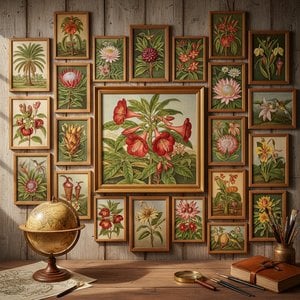
Marianne North: Cele Mai Frumoase 25 de Opere – Artă Botanică Excepțională pentru Decorul Casei Tale
Descoperă cele mai frumoase 25 de picturi ale lui Marianne North, o pionieră a artei botanice victoriene. Explorează acuarelele vibrante și peisajele exotice care au capturat natura într-un stil unic. Reproduceri artă de calitate muzeală disponibile pe ArtsDot.com!

Echoes of Time: Exploring the Enduring Appeal & Historical Context of Vintage Art Prints
Explore the captivating world of vintage art prints! Discover their history, collecting tips & enduring appeal. Expert insights on chromolithography and building a legacy collection with ArtsDot.

The Enduring Legacy of Fine Art Prints: Technique, History & Aesthetic Impact
Explore the rich history & techniques of fine art prints. Discover investment potential, assess authenticity, and learn how to preserve your collection with expert guidance. Trusted insights for discerning collectors.