
- Início

- Reprodução de Pintura a Óleo
- watanabe seitei
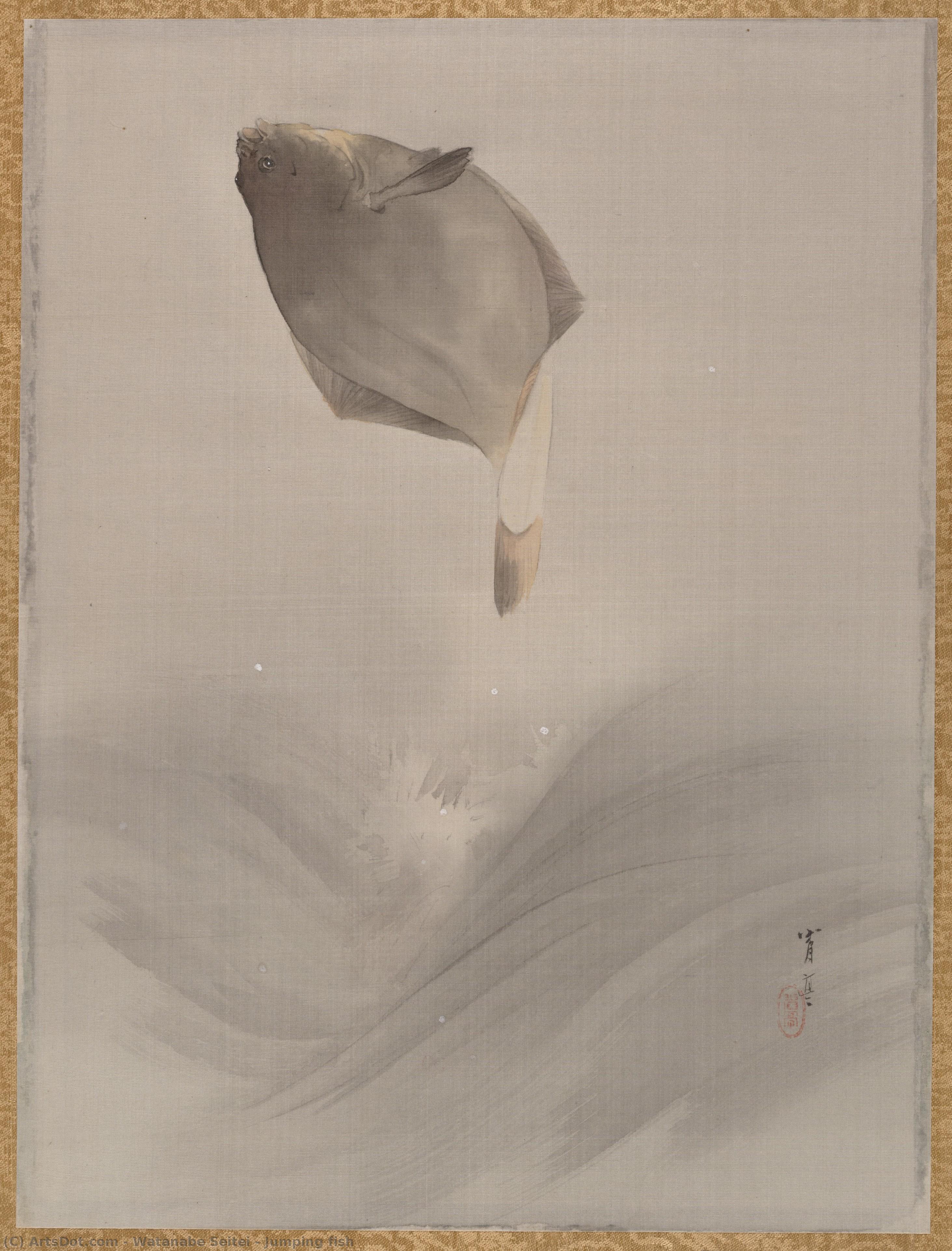
- Jumping fish
 Visualizar na parede
 Compartilhar
 Compartilhar
 Detalhes

 Baixar imagem
 Semelhantes
 Raio X
 Apresentação de slides
Jumping fish


 Ler mais
Reprodução em Óleo Feita à Mão
Óleo sobre tela pintado à mão no seu tamanho e moldura, feito sob encomenda pelos nossos artistas. ( Alternar para Impressão Alternar para Imagem)




P118B $10

P118H $10

P118W $10

P438Z $10

P508JH $12

P508YH $12

P805H $10

P805Z $10

P919BZ $10

P919G $10

P919XJ $10

P959ZH $10

P968JZ $12

W106C $8

W218G $10

W218JH $8

W218Y $10

W307PJ $10

W316G $10

W316PJ $8

W316Y $10

W398PJ $8

W4111J $10

W500HY $15

W500JH $15

W692G $12

W849H $8

W940BG $15

W953PJ $8




Escolha entre os nossos tamanhos pré-definidos que respeitam as proporções originais da obra de arte.

Pode inserir as suas próprias dimensões para se adequar a uma moldura ou espaço específico. Se o tamanho selecionado não corresponder às proporções da imagem original, iremos cortar a obra de arte ou estender a pintura com elementos adicionais pintados à mão. Um esboço digital será enviado para sua aprovação antes do início da produção.
Tenha em atenção que a pré-visualização no ecrã não reflete o corte ou extensão real. Apenas o esboço mostrará com precisão a composição final.
Embora tamanhos personalizados estejam disponíveis, recomendamos selecionar uma dimensão da lista predefinida para preservar as proporções originais.
Após o pedido, a equipa ArtsDot.com enviará um e-mail ao cliente para solicitar instruções e fornecer uma prévia do esboço.
Entrega mundial () em 3 a 4 semanas, em vez das 5 semanas padrão. (3 Agosto). Sem comprometer a qualidade.

Envio Expresso Gratuito para todo o Mundo

Tela de Linho de Alta Qualidade

Seguro de transporte completo

Garantia de Reembolso de Impostos Alfandegários

Garantia de Fidelidade Cromática

Política de Devolução de 60 Dias (Apenas para Defeitos)

Garantia de reembolso de 100%

Oferta de desconto por quantidade
 A opção de vidro está disponível apenas para tamanhos inferiores a 110 cm

Jumping fish
Técnica de Reprodução
Tamanho da Reprodução
-


Preço Total
$ 263
Obras Relacionadas


Biografia do Artista
Watanabe Seitei: A Harmonious Bridge Between East and West
The world of early 20th-century Japanese art is rich with figures who navigated the complex currents of modernization, seeking to reconcile tradition with the allure of the West. Among these pioneers stands Watanabe Seitei (1852–1918), a master of *kachōga* – bird and flower paintings – whose work represents a remarkable synthesis of Chinese landscape aesthetics, Western realism, and deeply rooted Japanese sensibilities. Seitei’s journey, marked by travel, experimentation, and a quiet dedication to his craft, offers a fascinating glimpse into the artistic ferment of a nation undergoing rapid transformation.
Born Yoshikawa Yoshimata in Edo (modern-day Tokyo), Seitei's early life was shaped by exposure to traditional Japanese arts. He began his training at the age of sixteen under Kikuchi Yōsai, a prominent figure known for his innovative approach to *Nihonga* – Japanese-style painting, which emphasized brushwork and subject matter distinct from Western techniques. This foundational experience instilled in him a deep appreciation for the subtle nuances of ink wash painting and the evocative power of nature imagery. Following his brief apprenticeship with Shibata Zeshin, he embarked on a pivotal chapter of his life: a journey to Europe in 1878.
The Parisian Encounter and Artistic Evolution
Seitei’s arrival in Paris marked a turning point, not just for him personally but also for the trajectory of Japanese art. He participated in the International Exposition of 1878, an event that served as a crucial gateway for Japanese artists to engage with Western culture and artistic trends. This exposure ignited within him a desire to incorporate elements of Western realism into his own style – a daring move at a time when *Nihonga* was largely defined by its adherence to established conventions. He spent the next three years in Paris, immersing himself in the art world and forging connections with influential figures like Tadamasa Hayashi, an American art dealer who championed Japanese artists.
During his Parisian sojourn, Seitei’s style began to evolve dramatically. He absorbed Western techniques of perspective, composition, and color rendering while retaining the core principles of *Nihonga*, such as the emphasis on brushwork and the depiction of nature's essence. This fusion resulted in a unique artistic voice – one that blended the serene beauty of Chinese landscape painting with the meticulous detail and realistic portrayal characteristic of Western art. His paintings began to feature more defined forms, brighter colors, and a greater sense of spatial depth, all while maintaining a profound connection to the natural world.
The Kacho-ga Style: A Delicate Balance
Seitei’s mastery lay particularly in his *kachōga* – bird and flower paintings. These works are not merely decorative; they are imbued with symbolic meaning and philosophical depth, reflecting a core tenet of Japanese aesthetics known as *wabi-sabi*, which celebrates the beauty of imperfection, transience, and simplicity. He meticulously rendered delicate blossoms like peonies, cherry blossoms, and chrysanthemons alongside graceful birds – often cranes, symbolizing longevity and good fortune – creating scenes that evoke a sense of quiet contemplation and harmony with nature.
His technique was characterized by a remarkable control of ink washes, layering subtle shades to create atmospheric effects and capture the ephemeral beauty of his subjects. He skillfully employed *sumi* (inkstick) and *mizusashi* (water container) to achieve varying tones and textures, demonstrating an intimate understanding of the medium. Furthermore, Seitei’s compositions often incorporated elements of Chinese landscape painting – distant mountains, flowing rivers, and sparse foliage – creating a sense of depth and perspective that was both visually engaging and spiritually resonant.
Legacy and Rediscovery
Upon his return to Japan in 1903, Seitei continued to produce paintings and designs for ceramics and cloisonné, collaborating with the renowned artisan Namikawa Sosuke. Despite his considerable talent and growing recognition, he largely withdrew from public life towards the end of his career, a decision that contributed to his relative obscurity for many years. However, in recent decades, there has been a renewed appreciation for Seitei’s work, fueled by scholarly research and exhibitions showcasing his unique artistic vision.
Today, Watanabe Seitei is recognized as one of the most important figures in the development of *Nihonga* during the Meiji era. His paintings stand as a testament to his ability to bridge Eastern and Western traditions, creating a harmonious synthesis that continues to captivate viewers with its beauty, serenity, and profound sense of connection to nature. His legacy serves as an inspiration for contemporary artists seeking to explore new ways of expressing themselves within the rich tapestry of Japanese art history.

watanabe seitei
1851 - 1918
Dados Rápidos
- Artistic Movement Or Style: Nihonga, bird-and-flower painting
- Artists Or Movements Influenced By This Artist:
- Mizuno Toshikata
- Kaburagi Kiyokata
- Artists Who Influenced This Artist:
- Kikuchi Yōsai
- Shibata Zeshin
- Date Of Birth: January 18, 1852
- Date Of Death: April 2, 1918
- Full Name: Watanabe Seitei
- Nationality: Japanese
- Notable Artworks:
- Gold Fishes
- Ducks in the Rushes
- Roses, Young Bird & Butterfly
- Place Of Birth: Edo (Tokyo), Japan
Artigos Relacionados

Echoes of Heritage: Continuity & Innovation in Traditional Art Forms
Explore the rich history of cultural heritage & folk art traditions worldwide! Discover inspiring artists, preservation efforts, and museum collections. Find handmade oil paintings & expert insights at ArtsDot.

A Arte das Narrativas em Camadas: Harmonia Espacial e Coesão Visual em Arranjos de Múltiplas Peças
Explore a arte da composição em múltiplas peças e transforme seus espaços com harmonia visual. Guia especializado para designers de interiores sobre dípticos, trípticos e polípticos. Crie narrativas impactantes e ambientes sofisticados.

Mestres do Preto e Branco: 10 Pinturas Icônicas que Definem a Elegância Sombria
Descubra 10 pinturas icônicas dominadas pelo preto e branco, de Rembrandt a Goya. Explore a história, técnica e emoção por trás dessas obras-primas atemporais. Encontre reproduções de arte exclusivas em ArtsDot.com!

James Abbott McNeill Whistler: As 25 Obras-Primas que Definem um Mestre da Arte
Descubra as 25 obras-primas de James Abbott McNeill Whistler, o mestre do Impressionismo e dos 'Nocturnes'. Explore a história por trás de cada pintura, cores e técnicas. Encontre reproduções de arte exclusivas para decorar sua casa com elegância em ArtsDot.com!

Da Imagem à Herança: A Arte de Comissionar uma Reprodução Pintada à Mão – Preservando Memórias Através da Pintura a Óleo
Transforme suas fotos em obras de arte atemporais! Descubra a arte de comissionar reproduções pintadas à mão, com artistas experientes e materiais de qualidade museológica. Preserve memórias para sempre.

