


 Visualizar em escala
 Enviar
 Compartilhar
 Ver detalhes
 Guia
Guia

 Baixar imagem
 Semelhantes
 Raio X
 Apresentação de slides
 Estatísticas
Saint John the Baptist


 Ver mais
Reprodução em Óleo Feita à Mão
Óleo sobre tela pintado à mão no tamanho e moldura de sua escolha, feito sob encomenda pelos nossos artistas. ( Alternar para Impressão Ver Imagem Digital)




P118B $10

P118H $10

P118W $10

P438Z $10

P508JH $12

P508YH $12

P805H $10

P805Z $10

P919BZ $10

P919G $10

P919XJ $10

P959ZH $10

P968JZ $12

W106C $8

W218G $10

W218JH $8

W218Y $10

W307PJ $10

W316G $10

W316PJ $8

W316Y $10

W398PJ $8

W4111J $10

W500HY $15

W500JH $15

W692G $12

W849H $8

W940BG $15

W953PJ $8




Escolha entre os nossos tamanhos pré-definidos que respeitam as proporções originais da obra de arte.

Pode inserir as suas próprias dimensões para se adequar a uma moldura ou espaço específico. Se o tamanho selecionado não corresponder às proporções da imagem original, iremos cortar a obra de arte ou estender a pintura com elementos adicionais pintados à mão. Um esboço digital será enviado para sua aprovação antes do início da produção.
Tenha em atenção que a pré-visualização no ecrã não reflete o corte ou extensão real. Apenas o esboço mostrará com precisão a composição final.
Embora tamanhos personalizados estejam disponíveis, recomendamos selecionar uma dimensão da lista predefinida para preservar as proporções originais.
Após o pedido, a equipa ArtsDot.com enviará um e-mail ao cliente para solicitar instruções e fornecer uma prévia do esboço.
Entrega mundial () em 3 a 4 semanas, em vez das 5 semanas padrão. (23 Setembro). Sem comprometer a qualidade.

Envio expresso gratuito para todo o mundo

Tela de Linho Premium

Seguro de transporte total

Garantia de Reembolso de Impostos Alfandegários

Garantia de Fidelidade de Cor

Política de Devolução em 100 Dias (Apenas para Defeitos)

Garantia de reembolso de 100%

Desconto para múltiplas unidades
 A opção de vidro está disponível apenas para tamanhos inferiores a 110 cm

Saint John the Baptist
Técnica de Reprodução
Dimensões da Reprodução
-


Preço Total
$ 263
A Vision of Devotion: Encountering Carpaccio’s Saint John
In the quiet, contemplative atmosphere of the Philbrook Museum of Art, there exists a window into the soul of the Venetian Renaissance. Vittore Carpaccio’s Saint John the Baptist, painted in 1505, is not merely a portrait but a profound spiritual encounter. The young saint stands with a poised, almost ethereal grace, draped in vibrant red robes that command the viewer's attention against the soft, atmospheric backdrop of a cloud-swept sky. Through his masterful use of oil on panel, Carpaccio captures a moment of divine stillness, inviting anyone who gazes upon it to pause and reflect on the intersection of the earthly and the divine.
The composition is a masterclass in the delicate balance of light and texture characteristic of the Venetian school. While Carpaccio’s training under the legendary Gentile Bellini provided him with a foundation in luminous color, his unique stylistic voice—deeply influenced by the meticulous detail of Netherlandish art and the structural clarity of Antonello da Messina—is on full display here. The way the light catches the folds of the crimson fabric and illuminates the saint's youthful features creates a sense of tangible presence. This technique breathes life into the figure, making him feel less like a distant icon and more like a living, breathing witness to faith.
Symbolism and the Renaissance Spirit
Every element within this frame serves a higher narrative purpose. The cross held firmly in Saint John's hand acts as a poignant symbol of his future mission and the weight of his prophetic calling. As he stands upon a pedestal, separated from the viewer by a thin veil of sanctity, the window behind him offers a glimpse into a world that feels both vast and intimate. This interplay between the interiority of the saint’s devotion and the expansive sky suggests the omnipresence of the spiritual realm within our daily existence.
For the discerning collector or interior designer, this piece offers more than just aesthetic beauty; it provides a focal point of profound emotional depth. The painting's conservative yet strikingly beautiful approach to the Renaissance style makes it a timeless addition to any curated space. Whether placed in a sunlit gallery or a sophisticated study, the Saint John the Baptist brings with it an aura of historical prestige and a sense of tranquil permanence. It is a work that does not merely decorate a room but elevates its very atmosphere, turning a house into a sanctuary of art and thought.
Obras Relacionadas


Biografia do Artista
Early Life and Training
Vittore Carpaccio, a pivotal figure in Venetian Renaissance painting, was born around 1465 in Venice, Italy—a city renowned for its artistic patronage during the era. Little is known definitively about his formative years, yet it’s understood that he commenced his artistic education under the tutelage of Gentile Bellini, arguably the most influential artist of the Venetian School at the time. This apprenticeship proved instrumental in shaping Carpaccio's future artistic trajectory and establishing him as a master craftsman. Bellini’s meticulous attention to detail and masterful use of color undoubtedly instilled within Carpaccio a foundational understanding of Venetian painting techniques.Artistic Style and Influences
Carpaccio’s distinctive style stood apart from the broader humanist currents sweeping across Italy during his lifetime—a movement that dramatically reshaped artistic expression. Unlike many of his contemporaries, he eschewed experimentation with innovative approaches, prioritizing instead a conservative aesthetic rooted in tradition. His artistic vision drew heavily from Antonello da Messina's groundbreaking style and, crucially, incorporated elements of early Netherlandish art. This singular blend resulted in an unparalleled Venetian painting style characterized by its serene compositions, luminous color palettes, and profound narrative depth. The influence of Flemish artists is particularly evident in Carpaccio’s meticulous depiction of drapery folds and his masterful manipulation of light—techniques that would become hallmarks of Venetian art for decades to come.Notable Works
Carpaccio's artistic legacy rests upon a remarkable corpus of paintings executed between 1490 and 1519, cementing his position as one of the foremost masters of the Venetian Renaissance. Among his most celebrated achievements is “The Legend of Saint Ursula,” a monumental cycle comprising nine canvases now housed in the Gallerie dell’Accademia—a testament to Carpaccio's unparalleled skill in storytelling through visual imagery. The series exemplifies his ability to convey complex narratives with remarkable clarity and emotional resonance, captivating audiences for centuries. Equally impressive is “Glory of St. Ursula Altarpiece,” where Carpaccio skillfully captures the ethereal beauty of Saint Ursula’s chapel—a masterpiece that showcases his mastery of color and light, mirroring Bellini's stylistic brilliance. Furthermore, "Miracle of the Relic of the Cross at the Ponte di Rialto" demonstrates Carpaccio’s exceptional compositional prowess and his capacity to imbue scenes with palpable drama—a feat achieved through careful attention to perspective and dramatic lighting.Career Highlights and Legacy
Carpaccio’s artistic career unfolded against the backdrop of Venice's flourishing cultural landscape, securing him a prominent place within Venetian art history. He honed his craft under Bellini, Vivarini and Bastiani, absorbing their expertise and furthering the Venetian School’s reputation for excellence. His orientalist inclinations—evident in “St. George Baptizing the Selenites”—reflected a burgeoning fascination with the Levant during the Renaissance, introducing exotic motifs into Venetian art. Despite being somewhat overshadowed by luminaries like Bellini and Giorgione, Carpaccio's enduring influence persists through his masterful depictions of biblical narratives and his contribution to establishing Venice as a center for artistic innovation—a legacy that continues to inspire artists today.References and Further Reading
Discover more about Vittore Carpaccio and the Venetian School on ArtsDot.
Vittore Carpaccio
1465 - 1526 , Itália
Informações Rápidas
- Artistic Movement Or Style: Early Venetian Renaissance
- Artists Who Influenced This Artist:
- Gentile Bellini
- Antonello da Messina
- Date Of Birth: Venice, Italy (c. 1465)
- Date Of Death: 1526
- Full Name: Vittore Carpaccio
- Nationality: Italian
- Notable Artworks:
- The Legend of Saint Ursula
- Glory of St. Ursula Altarpiece
- Miracle of the Relic of the Cross at the Ponte di Rialto
- Place Of Birth: Venice
Artigos Relacionados

Crimson Threads of Narrative: Exploring Symbolism & Representation in Artworks Featuring the Red Dress
Explore the rich symbolism of the red dress in art history! From ancient power displays to iconic portraits like Cézanne’s 'Madame Cezanne', discover the cultural and artistic significance behind this captivating color. Expert analysis & insights.

John Singer Sargent: As 25 Obras-Primas que Definem um Ícone da Arte
Descubra as 25 obras-primas de John Singer Sargent, o mestre do retrato e do impressionismo americano. Explore a história, técnica e beleza atemporal de seus quadros mais famosos. Encontre reproduções de arte exclusivas para decorar sua casa com elegância em ArtsDot.com.

Jacopo Tintoretto: As 25 Obras-Primas do Mestre da Luz e Drama | ArtsDot
Descubra as 25 obras-primas de Jacopo Tintoretto, o mestre veneziano do Renascimento! Explore a história, técnica e emoção por trás de pinturas icônicas como 'O Milagre de São Marcos'. Encontre reproduções de arte exclusivas para decorar sua casa com ArtsDot.com.

John Constable: As 25 Obras-Primas que Definem o Mestre da Paisagem Inglesa | ArtsDot
Descubra as 25 obras-primas de John Constable, o mestre da paisagem inglesa! Explore a arte romântica, cores vibrantes e histórias fascinantes por trás de 'Hay Wain' e outras pinturas icônicas. Encontre reproduções de alta qualidade para decorar sua casa com ArtsDot.com.
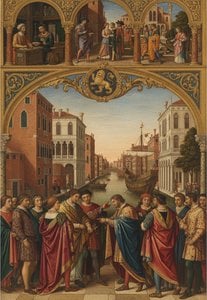
Vittore Carpaccio: Venetian Renaissance Narrative & the Poetics of Detail
Explore the captivating world of Vittore Carpaccio, a master storyteller of the Venetian Renaissance. Discover his intricate details, narrative cycles like 'The Legend of St. Ursula,' and unique artistic style.


