Juventude e Formação Artística
Nascido em Veneza por volta de 1465, Vittore Carpaccio cresceu em uma cidade definida pelo seu comércio marítimo e por uma luz única e mutável. Como um jovem inserido na escola veneziana, ele buscou a orientação de Gentile Bellini. Este período de aprendizado foi uma fase formativa crucial, que moldou sua abordagem técnica e forneceu o alicerce necessário para o seu sucesso futuro como pintor.
A formação que Carpaccio recebeu sob a tutela de Bellini permitiu-lhe desenvolver um traço firme e um olhar atento aos detalhes específicos da vida veneziana. Ele aprendeu a navegar pelas complexidades da composição e da cor, elementos que eram essenciais para a época. Esta educação precoce ajudou-o a estabelecer-se dentro do competitivo cenário artístico da República, preparando o terreno para uma carreira dedicada a documentar tanto histórias sagradas quanto as realidades cotidianas de sua cidade natal.
Estilo Artístico e Influências
A abordagem de Carpaccio em relação à pintura permaneceu notavelmente conservadora, mesmo enquanto o mundo ao seu redor se transformava. Enquanto muitos de seus contemporâneos abraçavam as vastas tendências humanistas que redefiniram a arte do Renascimento italiano, ele frequentemente olhava em uma direção distinta. Sua obra carrega um senso de fantasia, recorrendo frequentemente ao espírito do romance medieval em vez dos ideais pastorais favorecidos pela geração seguinte de pintores. Essa preferência conferiu às suas cenas uma atmosfera única, algo que se sentia distinto dos gostos em evolução do continente veneziano.
Sua linguagem visual foi moldada por uma mistura específica de influências. Ele bebeu profundamente do estilo de Antonello da Messina e das tradições meticulosas da arte flamenga primitiva. Essa combinação permitiu-lhe desenvolver um domínio da perspectiva e uma precisão no detalhe arquitetônico que o diferenciava de outros artistas de sua época. Ele possuía uma maneira singular de situar seus temas dentro de ambientes altamente específicos e estruturados, utilizando a luz e a sombra para construir uma sensação de profundidade que parecia, ao mesmo tempo, terradamente real e de outro mundo.
Essa atenção ao detalhe é particularmente evidente em suas obras narrativas de grande escala, onde ele conseguia tecer histórias complexas na própria trama do cenário. Sua habilidade em renderizar as texturas dos tecidos e a geometria exata de um edifício ajudou a criar um senso de realismo que sustentava sua narrativa mais imaginativa. Ao focar nesses elementos precisos, ele construiu um mundo que parecia habitado, mesmo quando o tema da obra inclinava-se para o lendário ou o sagrado.
Obras Notáveis e Ciclos Narrativos
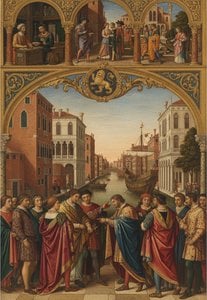
Vittore Carpaccio encontrou a sua mais sublime expressão através da arte de contar histórias em grande escala. O seu empreendimento mais célebre foi o ciclo de nove pinturas conhecido como A Lenda de Santa Úrsula, um projeto que iniciou em 1490. Estas obras permitiram-lhe construir mundos complexos, transportando o espectador para o âmago dos detalhes minuciosos da vida da santa. O artista possuía também um talento singular para capturar a alma da sua cidade natal; em O Milagre da Relíquia da Cruz na Ponte de Rialto, ele ilustrou Veneza no auge do seu poder, utilizando a paisagem urbana para ancorar as suas narrativas religiosas numa realidade tangível e reconhecível.
A sua versatilidade ao abordar temas distintos é evidente na diversidade dos seus encargos artísticos. Produziu o Retrato do Doge Leonardo Loredan, uma obra que reflete o seu prestígio como uma figura de relevo no Renascimento veneziano. Pintou também São Jorge e o Dragão, uma têmpera sobre painel de madeira que se encontra atualmente na Scuola di San Giorgio degli Schiavoni, em Veneza. Esta peça captura uma profunda sensação de drama através da sua composição magistral e da interação dinâmica entre as suas figuras.
Entre os seus legados mais significativos, destacam-se:
- A Lenda de Santa Úrsula (iniciada em 1490)
- O Milagre da Relíquia da Cruz na Ponte de Rialto
- São Jorge e o Dragão
- Retrato do Doge Leonardo Loredan
Carreira e Grandes Comissões
Os anos mais produtivos de Vittore Carpaccio desenrolaram-se entre 1490 e 1519, um período em que o artista se tornou uma presença constante na vibrante vida religiosa de Veneza. Através de diversas comissões eclesiásticas, ele encontrou o palco ideal para explorar narrativas complexas e envolventes. A sua arte parecia ganhar vida nas próprias ruas da cidade, capturando a essência e o espírito da República em vastas e detalhadas cenas urbanas. Um exemplo sublime desta mestria é o Milagre da Relíquia da Cruz na Ponte di Rialto, uma obra que ilustra Veneza no auge do seu orgulho cívico, fundindo o sagrado com a realidade palpável do quotidiano veneziano.
Com o desenrolar da sua carreira, a natureza do seu mecenato começou a transformar-se de forma subtil. Se os seus primeiros anos foram marcados por ciclos religiosos de grande escala e obras de caráter público, a sua produção após 1510 começou a inclinar-se para a esfera privada. Vittore Carpaccio passou a dedicar-se primordialmente a patronos venezianos individuais, criando peças que espelhavam os gostos pessoais da crescente classe mercantil da cidade. Esta transição marcou a sua evolução de um narrador épico e público, típico da sua juventude, para um artista de interações mais íntimas e sofisticadas com os seus colecionadores.
A sua produção de temática religiosa manteve-se constante durante a primeira década do século XVI, consolidando o seu legado através de encomendas notáveis, tais como:
- São Tomás de Aquino Entronizado (1507)
- A Apresentação de Cristo no Templo (1510)
Legado e Relevância Histórica
Vittore Carpaccio ocupa um lugar de destaque entre os primeiros mestres do Renascimento veneziano, um período de transformações profundas na arte italiana. Enquanto os seus contemporâneos se lançavam em direção às novas tendências humanistas, Carpaccio manteve-se, muitas vezes, ancorado a uma forma de ver mais tradicional. Por volta de 1510, aqueles que viviam e trabalhavam ao seu lado começaram a perceber o seu estilo como excessivamente conservador. Ele não perseguiu as correntes mutáveis da sua era, preferindo um método que olhava para trás, resgatando as ricas tradições narrativas e detalhadas do passado.
Essa firmeza de propósito fez com que o seu nome fosse, por vezes, eclipsado pela sombra de figuras monumentais como Giovanni Bellini ou Giorgione. Enquanto outros artistas evoluíam para uma linguagem visual distinta, Carpaccio continuou a construir os seus mundos através de um detalhe arquitetónico preciso e de um fascínio constante pelo exótico. A sua obra permanece como uma janela para um momento específico de Veneza, capturando o orgulho cívico da cidade e a sua ligação profunda com o Levante, através de uma lente que parecia cada vez mais antiquada para os seus pares. Ao falecer em 1526, deixou um legado que reflete uma devoção única, ainda que algo obstinada, ao seu ofício.
Entre as suas obras mais emblemáticas, destacam-se:
- A Lenda de Santa Úrsula
- O Milagre da Relíquia da Vera Cruz na Ponte di Rialto
- São Jorge e o Dragão
Perguntas e Respostas
Quais obras de Vittore Carpaccio são as mais visualizadas?
Existe uma página de Estatísticas para Vittore Carpaccio, apresentando estatísticas sobre as obras do artista no este site.
Que sentimentos as obras de Vittore Carpaccio expressam?
As obras de Vittore Carpaccio podem ser exploradas por humor na página Coleção por Humor, que organiza as artes de acordo com seus humores registrados.
A qual período histórico pertence a obra de Vittore Carpaccio?
Vittore Carpaccio atuou no período Renascimento. Este período situa a atividade do artista na história.