


 Visualizar em escala
 Enviar
 Compartilhar
 Ver detalhes
 Guia
Guia

 Baixar imagem
 Semelhantes
 Raio X
 Apresentação de slides
 Estatísticas
Four Demons with a Book
 Acrylic On Paper
- WallArt
- Renaissance draftsmanship
 335.0 x 284.0 cm
 Biblioteca e Museu Morgan
 Ver mais
Giclée / Impressão de Arte
Impressão giclée ou em tela de qualidade de museu, com produção rápida e opções flexíveis de acabamento. ( Encomendar reprodução pintada à mão Ver Imagem Digital)




P118B $10

P118H $10

P118W $10

P438Z $10

P508JH $12

P508YH $12

P805H $10

P805Z $10

P919BZ $10

P919G $10

P919XJ $10

P959ZH $10

P968JZ $12

W106C $8

W218G $10

W218JH $8

W218Y $10

W307PJ $10

W316G $10

W316PJ $8

W316Y $10

W398PJ $8

W4111J $10

W500HY $15

W500JH $15

W692G $12

W849H $8

W940BG $15

W953PJ $8




Escolha entre os nossos tamanhos pré-definidos que respeitam as proporções originais da obra de arte.

Você pode inserir suas próprias dimensões para se ajustar a uma moldura ou espaço específico. Se o tamanho selecionado não corresponder às proporções da imagem original, iremos recortar a obra de arte ou estender a imagem com uma borda espelhada ou preenchimento sólido. Um mockup digital será enviado para sua aprovação antes do início da produção.
Por favor, observe que a visualização na tela não reflete o recorte ou a extensão real. Apenas o mockup mostrará com precisão a composição final.
Embora tamanhos personalizados estejam disponíveis, recomendamos selecionar uma dimensão da lista predefinida para preservar as proporções originais.
Entrega mundial () em 2 semanas, em vez das 4/5 semanas padrão. (25 Setembro)

Envio expresso gratuito para todo o mundo

Tela de Linho Premium

Seguro de transporte total

Garantia de Reembolso de Impostos Alfandegários

Garantia de Fidelidade de Cor

Política de Devolução em 100 Dias (Apenas para Defeitos)

Garantia de reembolso de 100%

Desconto para múltiplas unidades
 A opção de vidro está disponível apenas para tamanhos inferiores a 110 cm

Four Demons with a Book
Giclée / Impressão de Arte
Dimensões da Reprodução
-


Preço Total
$ 62
The Genesis of a Masterpiece: Luca Signorelli's Preparatory Drawing
Luca Signorelli’s “Four Demons with a Book,” a remarkably detailed preparatory study for the monumental fresco cycle adorning Orvieto Cathedral, offers a captivating glimpse into the mind of one of the High Renaissance’s most potent visual storytellers. More than just a sketch, it's a concentrated distillation of ideas, a vibrant testament to Signorelli’s meticulous draftsmanship and his profound understanding of human psychology – particularly as manifested through the unsettling interplay of demonic figures and forbidden knowledge. The drawing itself, rendered in charcoal or silverpoint on aged paper, possesses an immediate power, radiating a palpable sense of urgency and contained chaos.
The work’s genesis lies within the Cappella Nova, a space already steeped in religious narrative through earlier frescoes by Fra Angelico. Signorelli was tasked with expanding this existing framework, creating a dramatic visual representation of the Apocalypse – a subject demanding both grandeur and terrifying intimacy. This preparatory study isn't merely a preliminary sketch; it’s a crucial stage in the artist’s process, revealing his initial compositional choices, anatomical explorations, and the evolution of individual figures before they were unleashed upon the vast cathedral walls.
A Symphony of Line: Technique and Composition
Signorelli's mastery is immediately evident in the drawing’s intensely linear quality. Hatching and cross-hatching dominate, building up volume with a remarkable degree of precision and control. The figures aren’t simply outlined; they are sculpted through layers of carefully applied lines, conveying not just their physical form but also the texture of skin, clothing, and even the suggestion of demonic musculature. The limited palette – primarily shades of gray and white – amplifies this effect, creating a dramatic chiaroscuro that emphasizes the figures’ powerful presence against an implied darkness. The composition itself is deliberately claustrophobic, with the demons crowding together in a dynamic, almost violent arrangement. There's no background; the focus remains entirely on these unsettling characters and their interaction with the central object of contemplation – the book.
The drawing’s flattened perspective, characteristic of preparatory studies, lends it an immediacy and intimacy rarely found in finished works. It feels as though we are witnessing Signorelli wrestling with his ideas directly, capturing a fleeting moment of creative struggle. The subtle erasures and adjustments visible throughout the piece further underscore this sense of process, revealing the artist’s willingness to experiment and refine his vision.
Symbolism and Psychological Depth
The subject matter – four demonic figures clustered around a book – is laden with symbolic weight. Demons, traditionally representing temptation, sin, and the forces of evil, are inherently unsettling. Their muscular physiques and aggressive postures convey power and menace. The book, however, introduces an element of ambiguity. It’s not simply a symbol of knowledge; it suggests a dangerous, potentially corrupting influence – a forbidden text promising enlightenment but ultimately leading to damnation. The positioning of the demons, particularly one holding the book aloft with a look of intense concentration, hints at a struggle between intellect and faith, reason and revelation.
Signorelli’s genius lies in his ability to imbue these archetypal figures with psychological depth. The expressions on their faces – ranging from rage and suspicion to curiosity and perhaps even a hint of despair – suggest a complex internal landscape. The drawing isn't merely a depiction of demons; it’s an exploration of the human condition, confronting us with our own vulnerabilities and temptations.
A Legacy in Stone and Charcoal
“Four Demons with a Book” stands as a pivotal work in Signorelli’s oeuvre, foreshadowing the dramatic intensity and psychological complexity that would define his masterpiece at Orvieto. It's a testament to his extraordinary draftsmanship, his profound understanding of human anatomy, and his ability to translate complex theological ideas into visually arresting imagery. The drawing offers a rare opportunity to connect with the creative process of one of the Renaissance’s most influential artists, revealing the meticulous care and intellectual rigor that underpinned his monumental achievements. Reproductions of this captivating study offer a window into a world of dramatic tension, profound symbolism, and enduring artistic power.
Obras Relacionadas


Biografia do Artista
Luca Signorelli (c. 1450-1523) – A Titan of Fresco Painting
Luca Signorelli, born around 1441/1445 in Cortona, Tuscany, stands as one of the most influential figures within the Italian Renaissance artistic landscape. His mastery of disegno—drawing—combined with an unparalleled understanding of perspective and anatomy cemented his place among the foremost painters of his era, leaving behind a breathtaking corpus of monumental frescoes that continue to inspire awe centuries later. While precise biographical details remain elusive due to incomplete archival records, Signorelli’s formative years were steeped in the artistic fervor of Perugia, where he absorbed the stylistic nuances of artists like Benedetto Bonfigli and Pinturicchio—influences that would profoundly shape his distinctive approach to artmaking.Early Training and Apprenticeship
Giorgio Vasari recounts Signorelli's apprenticeship under Piero della Francesca by his maternal uncle, Lazaro Vasari, marking a pivotal moment in establishing his artistic foundation. This association instilled within him the principles of classical observation and meticulous detail—traits that would become hallmarks of Signorelli’s oeuvre. The young Signorelli honed his skills diligently, demonstrating an innate talent for capturing human form with remarkable accuracy and conveying emotion through subtle shading techniques. His early works reveal a preoccupation with idealized beauty and a fascination with humanist ideals prevalent during the Renaissance.Notable Works: A Symphony of Vision
Signorelli’s artistic output is characterized by ambitious projects that pushed the boundaries of artistic innovation. Perhaps his most celebrated achievement is “The Last Judgment,” executed between 1499 and 1503 for Orvieto Cathedral—a colossal fresco cycle depicting the apocalyptic vision of Judgement Day with unparalleled grandeur and psychological depth. The sheer scale of this undertaking, coupled with Signorelli’s masterful manipulation of perspective and chiaroscuro, established him as a pioneer in monumental painting and solidified his reputation as one of the greatest artists of his time. Equally impressive is “The Polyptych of St. Medard,” completed in 1507 for the Museo San Medardo in Arcevia—a testament to Signorelli’s meticulous attention to detail and his ability to convey spiritual contemplation through exquisitely rendered figures and landscapes.Technique and Artistic Innovation
Signorelli's artistic genius resided not merely in his technical prowess but also in his groundbreaking conceptual innovations. He championed the use of foreshortening—a technique that dramatically compressed spatial dimensions—creating an illusionistic depth that captivated viewers and revolutionized painting conventions. Signorelli’s meticulous anatomical studies, informed by humanist scholarship, ensured that his figures possessed a palpable sense of realism and conveyed profound emotional resonance. Furthermore, he skillfully employed chiaroscuro—the dramatic interplay between light and shadow—to sculpt forms with remarkable subtlety and to heighten the expressive power of his compositions.Legacy and Influence
Luca Signorelli’s impact on subsequent generations of artists is undeniable. His unwavering commitment to disegno and his masterful execution of monumental frescoes established him as a cornerstone of Renaissance art, influencing painters like Fra Angelico and shaping artistic trends throughout Europe. Today, Signorelli's works continue to inspire admiration for their beauty, psychological complexity, and technical brilliance—serving as enduring symbols of the humanist spirit and artistic excellence that defined the Italian Renaissance. His legacy persists in museums worldwide, where visitors can contemplate masterpieces that encapsulate the pinnacle of artistic achievement during a transformative period in Western history.
Luca Signorelli
1450 - 1523 , Itália
Informações Rápidas
- Artistic Movement Or Style: Renascimento
- Artists Or Movements Influenced By This Artist: ['Impressionismo']
- Artists Who Influenced This Artist:
- Piero della Francesca
- Fra Angelico
- Date Of Death: 16 outubro 1523
- Full Name: Luca di Egidio di Ventura Signorelli
- Nationality: Italiano
- Notable Artworks:
- Último Julgamento
- Escola de Pan
- Place Of Birth: Cortona, Itália
Artigos Relacionados

The Alchemy of Graphite: An Expert Guide to Mastering Detail and Depth in Pencil Sketching
Unlock the secrets of graphite sketching with our expert guide for art students. Learn to master pencil grades, create realistic depth, and capture intricate textures through professional techniques designed to elevate your observational drawing skills.

Luca Signorelli: Renaissance Innovation & Dramatic Foreshadowing of Modern Artistic Expression
Explore the revolutionary art of Luca Signorelli, a High Renaissance master renowned for his dramatic frescoes & anatomical precision. Discover his lasting impact on art history and techniques like foreshortening.

The Nuances of Graphite: Exploring Emotional Depth & Technical Mastery in Pencil Drawing
Explore the captivating world of graphite drawing! Discover its rich history, master essential techniques like chiaroscuro, and learn how artists evoke emotion through this timeless medium. Expert insights for art enthusiasts.

The Eloquent Line: Exploring the Artistic Significance of Sketches Across Movements and Media
Explore the profound artistic significance of sketches throughout history. From Renaissance masters to modern innovators like Van Gogh & Guston, discover how these foundational works reveal technique, emotion, and vision. Learn more at ArtsDot.
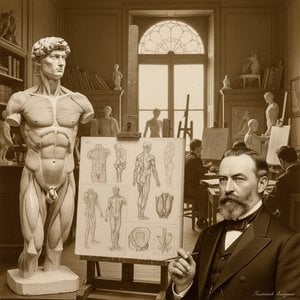
Frederick Bridgman: Anatomical Mastery & the Evolution of Figure Drawing Instruction
Explore the anatomical mastery of George B. Bridgman & his revolutionary figure drawing techniques. Discover how his methods transformed art instruction and continue to inspire artists today. Learn more at ArtsDot.


