


 Visualizar em escala
 Enviar
 Compartilhar
 Ver detalhes
 Guia
Guia

 Baixar imagem
 Semelhantes
 Raio X
 Apresentação de slides
 Estatísticas
FRANCOIS CHRISTOPHE KELLERMAN, GENERAL EN CHEF DE L'ARMEE DE LA MOSELLE EN 1792 (1735 1820)

 Ver mais
Reprodução em Óleo Feita à Mão
Óleo sobre tela pintado à mão no tamanho e moldura de sua escolha, feito sob encomenda pelos nossos artistas. ( Alternar para Impressão Ver Imagem Digital)




































Escolha entre os nossos tamanhos pré-definidos que respeitam as proporções originais da obra de arte.

Pode inserir as suas próprias dimensões para se adequar a uma moldura ou espaço específico. Se o tamanho selecionado não corresponder às proporções da imagem original, iremos cortar a obra de arte ou estender a pintura com elementos adicionais pintados à mão. Um esboço digital será enviado para sua aprovação antes do início da produção.
Tenha em atenção que a pré-visualização no ecrã não reflete o corte ou extensão real. Apenas o esboço mostrará com precisão a composição final.
Embora tamanhos personalizados estejam disponíveis, recomendamos selecionar uma dimensão da lista predefinida para preservar as proporções originais.
Após o pedido, a equipa ArtsDot.com enviará um e-mail ao cliente para solicitar instruções e fornecer uma prévia do esboço.
Entrega mundial () em 3 a 4 semanas, em vez das 5 semanas padrão. (21 Setembro). Sem comprometer a qualidade.

Envio expresso gratuito para todo o mundo

Tela de Linho Premium

Seguro de transporte total

Garantia de Reembolso de Impostos Alfandegários

Garantia de Fidelidade de Cor

Política de Devolução em 100 Dias (Apenas para Defeitos)

Garantia de reembolso de 100%

Desconto para múltiplas unidades
 A opção de vidro está disponível apenas para tamanhos inferiores a 110 cm

FRANCOIS CHRISTOPHE KELLERMAN, GENERAL EN CHEF DE L'ARMEE DE LA MOSELLE EN 1792 (1735 1820)
Técnica de Reprodução
Dimensões da Reprodução
-


Preço Total
$ 263
Obras Relacionadas


Biografia do Artista
The Apprentice of Grandeur
Born into the burgeoning energy of late 18th-century Paris, Marie-Georges Louis Rouget was destined to become a silent architect of visual history. His journey began within the prestigious halls of the École des Beaux-Arts, where he first learned the rigors of classical form under masters such as Jean-Victor Carrier Sabre and Alexandre François Bouchardy. Yet, it was his entry into the legendary atelier of Jacques-Louis David in 1797 that would irrevocably alter the course of his life and art. In this crucible of Neoclassicism, Rouget did not merely learn to paint; he learned to breathe the very spirit of an era. As David’s most trusted assistant, he became a vital conduit for the master's revolutionary vision, absorbing a technique defined by dramatic lighting, idealized anatomy, and a profound commitment to heroic narrative. This formative period instilled in him an unwavering dedication to portraying monumental historical events with a sense of scale and conviction that would define his entire career.A Canvas of Empire
As Napoleon Bonaparte ascended the throne, Rouget’s brush became an instrument of imperial grandeur and historical record. His career was inextricably woven into the fabric of the First Empire, earning him the evocative reputation as the painter of Napoleon. This was not a role of mere imitation, but one of profound creative symbiosis between student and master. Working alongside David, Rouget contributed to some of the most iconic imagery of the age, including meticulously crafted interpretations of Bonaparte at the Grand Saint Bernard and the monumental The Coronation of Napoleon. His work captured the tension between the weight of history and the soaring ambition of a single man, utilizing a palette of deep blues, regal reds, and earthen tones to evoke a sense of permanence and power. Through his hands, the fleeting triumphs of the battlefield and the political maneuvers of the court were transformed into eternal monuments of oil and canvas, much of which eventually adorned the hallowed halls of Versailles.The Legacy of Neoclassical Precision
Beyond the sweeping historical panoramas, Rouget found his greatest expression in the intimate dignity of portraiture. His ability to capture the essence of the era's leading figures—from military commanders like François Chasseloup Laubat to the quiet authority of the French elite—demonstrated a mastery of Neoclassical realism. In these works, one finds an exquisite attention to texture and light; the subtle sheen of gold embroidery, the heavy drape of a uniform, and the soft, diffused glow that sculpts a subject's features are all rendered with breathtaking precision. While he may not have shared the singular, household fame of David or Ingres, Rouget’s presence in the annals of French art is undeniable. His legacy remains a testament to an age where art served as the ultimate mirror to human ambition, leaving behind a visual lexicon of strength, formality, and grace that continues to resonate with the spirit of the Napoleonic era.
Georges Rouget
1783 - 1869
Informações Rápidas
- Artistic Movement Or Style: Neoclassical
- Artists Or Movements Influenced By This Artist: Versailles
- Artists Who Influenced This Artist: David
- Date Of Birth: August 26, 1783
- Date Of Death: April 9, 1869
- Full Name: Georges Rouget
- Nationality: French
- Notable Artworks:
- Marriage of Napoleon and Marie Louise
- Cupid pleading Venus to forgive Psyche
- Leonidas at Thermopylae
- Place Of Birth: Paris, France
Artigos Relacionados

Georges Braque: As 25 Obras-Primas Essenciais para Amantes da Arte Moderna | ArtsDot
Descubra as 25 obras-primas de Georges Braque, pioneiro do Cubismo! Explore a história, cores e técnicas por trás de seus quadros mais famosos. Encontre reproduções de arte exclusivas para decorar sua casa com elegância em ArtsDot.com.

Reflections of an Age: Social Commentary & Artistic Representation in 18th-Century Society
Explore the social commentary & artistic representation of 18th-century society. Discover Rococo masterpieces, portraiture's power, and shifting historical perspectives. Expert insights for art lovers.

Georges Seurat: As 25 Obras-Primas do Mestre do Pontilhismo | ArtsDot
Descubra as 25 obras-primas de Georges Seurat, o mestre do pontilhismo! Explore a história, cores vibrantes e técnica inovadora por trás de seus quadros mais famosos. Encontre reproduções de arte exclusivas para decorar sua casa com ArtsDot.com.
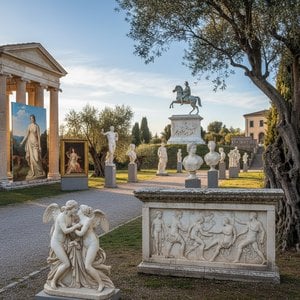
Os 10 Grandes Mestres do Neoclassicismo: Arte, História e Decoração
Descubra os 10 grandes mestres do Neoclassicismo! Explore a história, técnica e beleza de obras icônicas de David, Ingres e outros. Encontre reproduções de arte de museu e inspire sua decoração em ArtsDot.com.

Século XVIII na Arte: 10 Obras que Definem uma Era – ArtsDot
Descubra 10 obras-primas do Século XVIII! Explore a arte de David, Fragonard e Reynolds. Neoclassicismo, Rococó e retratos icônicos ganham vida. Encontre reproduções de alta qualidade para decorar sua casa com ArtsDot.com