


 Visualizar na parede
 Compartilhar
 Compartilhar
 Detalhes

 Baixar imagem
 Semelhantes
 Raio X
 Slideshow
Nets and Sails Drying

 Ler mais
Giclée / Impressão de Arte
Impressão giclée ou em tela de qualidade de museu, com produção rápida e opções flexíveis de acabamento. ( Comprar pintura feita à mão Comprar imagem)




































Escolha entre os nossos tamanhos pré-definidos que respeitam as proporções originais da obra de arte.

Você pode inserir suas próprias dimensões para se ajustar a uma moldura ou espaço específico. Se o tamanho selecionado não corresponder às proporções da imagem original, iremos recortar a obra de arte ou estender a imagem com uma borda espelhada ou preenchimento sólido. Um mockup digital será enviado para sua aprovação antes do início da produção.
Por favor, observe que a visualização na tela não reflete o recorte ou a extensão real. Apenas o mockup mostrará com precisão a composição final.
Embora tamanhos personalizados estejam disponíveis, recomendamos selecionar uma dimensão da lista predefinida para preservar as proporções originais.
Entrega mundial () em 2 semanas, em vez das 4/5 semanas padrão. (24 Agosto)

Envio expresso gratuito para todo o mundo

Tela de Linho de Alta Qualidade

Seguro de transporte completo

Garantia de Reembolso de Impostos Alfandegários

Garantia de Fidelidade Cromática

Política de Devolução em 60 Dias (Apenas para Defeitos)

Garantia de reembolso de 100%

Oferta de desconto por quantidade
 A opção de vidro está disponível apenas para tamanhos inferiores a 110 cm

Nets and Sails Drying
Giclée / Impressão de Arte
Tamanho da Reprodução
-


Preço Total
$ 62
Obras Relacionadas


Biografia do Artista
Dennis Miller Bunker (1861-1890): American Impressionist Painter of Luminous Landscapes & Refined Portraits
Dennis Miller Bunker, a name perhaps less immediately recognized than those of his contemporaries like Sargent or Cassatt, nevertheless occupies a pivotal position in the narrative of American Impressionism. His tragically short life – he succumbed to meningitis at just twenty-nine years old – belies an artistic output brimming with innovation and sensitivity, a testament to a talent that burned intensely but briefly. Born in New York City in 1861, Bunker’s path toward becoming a significant painter was nurtured by a supportive family background; his father held a position with the Union Ferry Company, while his mother came from a lineage of artistic inclination through her brother, the celebrated illustrator Sol Eytinge Jr. This early exposure to creative pursuits undoubtedly played a role in shaping young Dennis's aspirations. He formally began his training at the Art Students League and the National Academy of Design in 1876, laying a foundation steeped in academic tradition that would later be beautifully disrupted by his embrace of more modern techniques.From Barbizon to Brilliance: Artistic Development and Influences
Bunker’s artistic journey was marked by a constant evolution, a willingness to absorb influences and synthesize them into something uniquely his own. A crucial period in this development came with his travels to Paris in 1882, where he studied at the École nationale supérieure des beaux-arts under Jean-Léon Gérôme. However, it wasn’t within the confines of the studio that Bunker truly found his artistic voice. Rather, it was during excursions through France and Brittany alongside fellow artists Charles A. Platt and Kenneth R. Cranford that he encountered the Barbizon school – a group renowned for their direct observation of nature and naturalistic approach to painting. This exposure proved transformative, instilling in Bunker a deep appreciation for *plein air* painting and a commitment to capturing the subtleties of light and atmosphere. He began his artistic career with meticulous sketches of landscapes and portraits, reflecting the influence of academic training while simultaneously preparing him for bolder explorations of Impressionist techniques. His early works often depicted marine subjects like beached boats with painstaking detail honed through preparatory studies—a testament to his dedication to mastering traditional methods before venturing into more experimental territory. The Brittany period (1883-1884) witnessed a significant shift toward softer atmospheric effects and tonal subtleties in scenes featuring church spires, cemetery crosses, and solitary trees against expansive skies. This careful observation of natural light—a hallmark of the Barbizon school—would continue to inform his artistic vision throughout his career.A Pivotal Friendship & Artistic Inspiration
Bunker’s artistic trajectory gained further momentum through a formative relationship with John Singer Sargent. Their meeting in Boston during Sargent’s visit in 1887 proved instrumental in propelling him toward Impressionism, as Sargent encouraged Bunker to embrace brighter hues and looser brushwork—a decisive step away from purely academic considerations. This influence extended beyond mere stylistic preference; Sargent’s presence fostered a spirit of intellectual exchange and artistic camaraderie that profoundly shaped Bunker’s creative process. The summer spent together at Calcot Mill in England solidified this connection, providing invaluable experience in capturing the immediacy of outdoor painting under challenging conditions. During this period, Bunker experimented with new palettes and techniques—abandoning the muted tones favored by academic painters for bolder colors and expressive brushstrokes that mirrored the Impressionist movement’s emphasis on capturing fleeting moments of beauty. He brought these newfound sensibilities back to Boston, where he was recognized for his innovative approach to landscape painting and portraiture.Recognition & Patronage: Establishing a Career in Boston
Bunker’s talent did not go unnoticed by the art community. He was elected to the Society of American Artists in 1885—a prestigious acknowledgment of his growing reputation—and swiftly established himself as a respected instructor at Cowles Art School, where he taught figure and cast drawing, artistic anatomy, and composition from 1885 to 1889. This period allowed him to refine his skills while simultaneously nurturing the next generation of American artists. Simultaneously, he secured the invaluable support of Isabella Stewart Gardner—a prominent art collector and patroness who recognized Bunker’s exceptional talent and fostered a collaborative relationship that enriched both his artistic endeavors and his personal life. Gardner’s patronage provided financial stability and encouragement, enabling Bunker to pursue ambitious projects and explore new avenues in his work without constraint. His 1890 exhibition at the St. Botolph Club showcased his evolving Impressionistic landscapes—a culmination of years of experimentation and refinement—further cementing his position as a rising star within Boston’s artistic landscape.A Legacy Illuminated: Bunker’s Enduring Influence
Though his life was tragically curtailed by meningitis at the age of twenty-nine, Dennis Miller Bunker left an indelible mark on late 19th-century American art. He stands as a key figure in bridging traditional academic training with emerging modern artistic trends—a testament to his ability to synthesize influences and forge a distinctive artistic voice. His masterful blending of Barbizon observation with Impressionistic vibrancy resulted in works that are both technically accomplished and emotionally resonant, capturing the essence of fleeting moments and conveying profound atmospheric sensations. Bunker’s paintings continue to inspire artists today, demonstrating a transformative journey from meticulous academic sketches to expressive landscapes imbued with luminous color—a legacy illuminated by brilliance despite its brevity.
Dennis Miller Bunker
1861 - 1890 , Estados Unidos da América
Dados Rápidos
- Artistic Movement Or Style: American Impressionism
- Artists Who Influenced This Artist:
- Jean-Léon Gérôme
- John Singer Sargent
- Date Of Birth: November 6, 1861
- Date Of Death: December 28, 1890
- Full Name: Dennis Miller Bunker
- Nationality: American
- Notable Artworks:
- Eleanor Hardy Bunker
- Marshland, Medfield
- The Station
- Place Of Birth: New York City, USA
Artigos Relacionados

Os 10 Mestres do Impressionismo e a Paisagem que Mudou a Arte | ArtsDot
Descubra os 10 quadros impressionistas que revolucionaram a arte! Explore Monet, Renoir e outros mestres da paisagem francesa. Encontre reproduções de alta qualidade para decorar sua casa com beleza e história em ArtsDot.com.
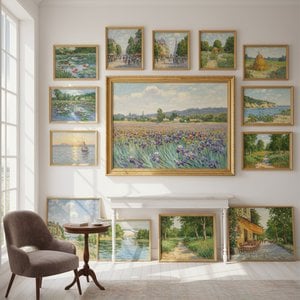
Paisagens Impressionistas Icônicas: 10 Obras que Mudaram a Arte | ArtsDot
Descubra as 10 obras impressionistas que revolucionaram a arte! Explore Monet, Renoir e outros mestres da paisagem. Encontre reproduções de alta qualidade para decorar sua casa com a beleza do Impressionismo em ArtsDot.com.

Beyond the Horizon: A Curated Guide to Integrating Post-Impressionist Landscapes into Modern Interiors
Transform your home with the emotive power of Post-Impressionist landscapes. Discover expert tips on selecting hand-painted oil reproductions to create a soulful, vibrant interior that reflects your unique style and connection to nature.

Evocations of Place: A Historical Journey Through Landscape Art
Explore the rich history of landscape art with ArtsDot. Discover renowned artists, movements like Impressionism & Romanticism, and expert guidance for collecting timeless pieces. Find your perfect serene escape today!

Os 10 Mestres da Paisagem Romântica: Arte para Inspirar a Sua Casa
Descubra os 10 quadros mais emblemáticos da Paisagem Romântica! Explore a história de Turner, Friedrich e outros mestres. Encontre reproduções de arte exclusivas para inspirar sua decoração em ArtsDot.com.

