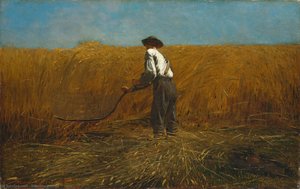
A Vida e as Origens de Winslow Homer
Winslow Homer chegou a Boston, Massachusetts, em 24 de fevereiro de 1836. Ele era o segundo de três filhos nascidos de Charles Savage Homer e Henrietta Maria Benson. Seu pai, um comerciante, acabou deixando a família para buscar fortuna na corrida do ouro na Califórnia. Essa partida deixou o lar para ser moldado pela presença de sua mãe, Henrietta Maria Benson Homer. Ela era uma talentosa aquarelista amadora que se tornou sua primeira professora, transmitindo-lhe uma forma de enxergar o mundo através da aplicação delicada da cor.
O menino cresceu em um ambiente onde o trabalho silencioso da arte era uma presença constante. Enquanto seu pai perseguia oportunidades distantes, a influência das aquarelas de sua mãe permanecia. Essa exposição precoce ao meio ajudou a formar o alicerce de sua obra posterior. Sua infância na zona rural de Cambridge, Massachusetts, proporcionou um cenário de vida constante e observadora antes que ele se movesse em direção ao ritmo mais frenético do trabalho comercial.
Infância, Família e Formação
Crescer nas extensões rurais de Cambridge, Massachusetts, proporcionou um cenário tranquilo para os seus primeiros anos. Ele começou a esboçar aos onze anos de idade, encontrando o seu caminho através do simples ato de desenhar. A sua mãe, uma aquarelista que pintava estudos de plantas e flores, foi a sua primeira professora. Ela partilhava uma relação próxima com ele, transmitindo-lhe tanto o seu talento artístico quanto um certo temperamento. O seu pai, um comerciante, era um homem inquieto que acabou por deixar a família para procurar fortuna na corrida do ouro na Califórnia e, mais tarde, na Europa.
Aos dezenove anos, ele iniciou um aprendizado de dois anos com J. H. Bufford, um litógrafo comercial em Boston. Foi uma experiência repetitiva e constante. Passava os seus dias a trabalhar em capas de partituras musicais, uma tarefa que exigia um tipo específico de disciplina e uma mão firme. Este período de trabalho comercial ajudou a desenvolver a clareza e o detalhe que mais tarde definiriam a sua visão artística. Eventualmente, ele moveu-se para o estudo formal, frequentando aulas na National Academy of Design até 1863. Durante este tempo, também passou um breve período a estudar com Frederic Rondel.
O Ilustrador Freelance e o Correspondente de Guerra
Por volta de 1857, a busca pela independência através de uma carreira freelance já estava em curso, após a decisão de recusar um cargo na Harper's Weekly. Winslow Homer abriu seu próprio estúdio em Boston, dedicando quase vinte anos ao trabalho como ilustrador. Seus traços ganharam as páginas de diversas publicações, incluindo a Ballou's Pictorial. Em 1859, sua mudança para a cidade de Nova York marcou um ponto de inflexão, colocando-o no epicentro da vibrante atividade editorial do país.
Contudo, foi o estopim da Guerra Civil Americana que alterou profundamente a natureza de suas observações. Entre 1861 e 1865, a Harper's enviou-o para as linhas de frente. Atuando como um "artista especial", ele recebeu a missão de cronicar a vida das tropas da União na Virgínia. Ele imergiu na realidade cotidiana dos acampamentos e no caos das cenas de batalha, transformando o ato de desenhar em algo muito mais profundo. Seus esboços não eram meros desenhos; eram registros sensíveis do movimento e daqueles momentos de silêncio, muitas vezes pesados, que permeavam a existência dos soldados.
- Sharpshooter on Picket Duty (1862)
- Home, Sweet Home (1863)
- Prisoners from the Front (1866)
Desenvolvimento Artístico em Nova York e na Europa
Em 1859, Winslow Homer mudou-se para a cidade de Nova York e abriu um estúdio no Tenth Street Studio Building. Este movimento marcou uma transição crucial de seu trabalho anterior como freelancer para uma busca mais focada pela pintura. Ele dedicou anos ao estudo na National Academy of Design até 1863, recebendo aulas de Frédéric Rondel. Durante esses anos, começou a se afastar dos contornos simplificados de suas gravuras comerciais para abraçar o peso e a profundidade da pintura a óleo. Suas obras desse período frequentemente lidavam com as realidades da época, incluindo os impactos devastadores da guerra no cotidiano das famílias.
Os anos que se seguiram foram marcados por viagens pelo estado de Nova York, Virgínia e Massachusetts. Em 1867, ele passou um ano na França e visitou a Europa, uma experiência que coincidiu com seu crescente interesse pela paisagem. Já na década de 1870, seu foco havia se voltado para cenas de infância e de jovens mulheres, refletindo uma certa nostalgia por tempos mais simples. Winslow Homer estava desenvolvendo um estilo objetivo e fiel ao que observava, evitando os refinamentos excessivamente polidos que eram comuns nas academias de arte daquele período.
Em 1881, ele iniciou uma estadia de dois anos na Inglaterra, vivendo em Cullercoats, próximo a Newcastle. Esse período de convivência com o litoral influenciaria profundamente a maneira como ele abordaria o mar em seus anos tardios. Ele não era mais apenas um ilustrador de cenas sociais; ele estava se tornando um pintor dos elementos.
Os Anos no Maine e as Viagens Tropicais
Em 1884, Winslow Homer mudou-se para Prout's Neck, no Maine, onde permaneceria pelas três décadas seguintes, vivendo e pintando em um estúdio que fora ampliado e transformado para atender às suas necessidades criativas. A construção erguia-se em um trecho de costa onde o Atlântico era uma presença constante e imponente. Ele dedicava grande parte de seu tempo àquele cenário, frequentemente pintando de uma varanda que se debruçava sobre as águas, mesmo durante os rigorosos meses de inverno.
A intensidade dos invernos do Maine acabou por motivar uma mudança de ares. Entre 1884 e 1905, Winslow Homer realizou diversas viagens da costa do Maine em direção aos trópicos. Ele explorou as Bahamas, a Flórida, Cuba e as Bermudas. Essas excursões levaram-no pelo Caribe e pelas montanhas Adirondacks, além de passagens pelo Canadá. Nesses refúgios de clima mais quente, ele recorria à aquarela para capturar a luminosidade vibrante e as texturas singulares das paisagens tropicais.
- Natural Bridge, Bahamas (1898)
- Woman Standing by a Gate, Bahamas (1885)
- Spanish Moss at Tampa (1886)
Técnica, Estilo e Maestria Artística
Seus primeiros trabalhos em gravuras comerciais baseavam-se em contornos limpos e formas simplificadas, utilizando um contraste dramático entre luz e sombra para definir seus temas. Essa clareza gráfica transbordou para suas pinturas posteriores; em suas grandes obras de estúdio a óleo, a tinta carrega uma sensação de peso e densidade. Winslow Homer frequentemente empregava o chiaroscuro, utilizando o jogo entre luz e sombra para esculpir a forma e construir uma atmosfera envolvente sobre a tela.
Ele era igualmente prolífico na aquarela, abordando o meio de forma fluida e direta. Ao pintar o Caribe, utilizava a transparência inerente da aquarela para replicar a clareza cristalina do mar das Bahamas. Essa habilidade de transitar tanto na aplicação densa do óleo quanto nas lavagens delicadas da aquarela permitiu que ele capturasse os múltiplos e distintos aspectos do mundo natural.
Obras-Primas e Legado Imortal
As primeiras incursões de Winslow Homer revelam um olhar atento aos detalhes íntimos da vida doméstica. Em Lady Wearing Spectacles, pintada por volta de 1840, a figura sentada em uma cadeira parece capturada em um momento de quietude, com seus óculos refletindo a luz de forma sutil. Este período de sua produção reflete uma observação serena das pessoas que o rodeavam. No entanto, conforme os anos avançavam e ele se aproximava das linhas de frente da Guerra Civil, a temática de sua arte sofria uma transformação profunda. Ele deu vida a obras como Sharpshooter on Picket Duty, em 1862, e Home, Sweet Home, em 1863, composições que traduziam a crueza e a realidade do conflito através de seus esboços e pinturas carregadas de significado.
Com o passar do tempo, o mar tornou-se uma presença constante e quase espiritual em sua obra. Em Breezing Up, pintada por volta de 1876, o artista consegue capturar com maestria o movimento de um barco que aproveita um vento favorável. Já em 1885, seu foco voltou-se para a luta épica do pescador, imortalizada em The Fog Warning, Halibut Fishing. Winslow Homer frequentemente retornava à costa escarpada do Maine, onde a densidade da tinta e a textura da tela espelhavam a atmosfera pesada e salgada do Atlântico. Em 1896, a obra The Lookout - "All's Well" apresentou uma perspectiva contemplativa a partir da borda da terra, voltada para a imensidão do horizonte.
Seus anos finais foram dedicados à observação das marés e da força indomável dos elementos. The Gulf Stream, criada em 1906, apresenta um homem confrontando a vastidão absoluta do oceano. Sua última obra concluída, Driftwood, foi pintada em 1909. Estas pinturas tardias carregam uma essência visceral do mundo físico — o borrifo da água, a aspereza da areia e a força implacável das correntes marítimas.
- Lady Wearing Spectacles, por volta de 1840
- Sharpshooter on Picket Duty, 1862
- Home, Sweet Home, 1863
- Breezing Up, por volta de 1876
- The Fog Warning, Halibut Fishing, 1885
- The Lookout - "All's Well", 1896
Anos Finais e Morte
O estúdio em Prout's Neck tornou-se o centro de seu universo. De 1884 até o fim de seus dias, ele viveu e pintou entre aquelas paredes, em um espaço que fora ampliado e transformado para atender às suas necessidades criativas. Ele dedicou suas últimas décadas àquele refúgio, trabalhando através das estações e encontrando um ritmo próprio na luz costeira. O edifício, uma estrutura de dois andares com cerca de 200 metros quadrados, guardou sua vida e sua obra em uma presença silenciosa e constante.
Winslow Homer faleceu no Maine, em 1910. O seu fim ocorreu em seu estúdio, no dia 30 de setembro de 1910. Foi um homem que dedicou a vida a observar o movimento do mar e o peso do ar, permanecendo naquele espaço até o último suspiro. Seus restos mortais foram depositados no cemitério de Mount Auburn, no Lote 563, no caminho Lily Path.
Legado e Significado Histórico
Winslow Homer permanece como uma figura central no desenvolvimento do Realismo Americano. Sua obra oferece uma janela para a experiência americana do século XIX, capturando uma nação em meio a mudanças rápidas e profundas. Ele não buscou os estilos acadêmicos e polidos da Europa; em vez disso, concentrou-se nas realidades honestas e, muitas vezes, difíceis de seu próprio país. Esse compromisso em enxergar as coisas como elas eram — desde os desdobramentos da Guerra Civil até as paisagens mutáveis do litoral — assegura seu lugar entre os artistas mais importantes da tradição americana.
Sua habilidade em documentar a tensão entre a vida humana e o mundo natural continua a influenciar a maneira como artistas contemporâneos abordam seus temas. Ele se afastou das cenas idílicas de sua juventude para confrontar as forças elementares do mar e a resiliência silenciosa de pessoas enfrentando adversidades. Essa transição de visões pastorais para um estilo mais direto e observacional ajudou a definir uma forma de ver unicamente americana. Suas pinturas não oferecem uma versão romantizada da história; elas oferecem um registro dela.
- The Gulf Stream (1906)
- Breezing Up (1876)
- The Fog Warning (1885)
- Undertow (1886)
- Driftwood (1909)
Onde Contemplar suas Obras Hoje
Rastrear a presença física da obra de Winslow Homer é embarcar em uma jornada por algumas das mais prestigiadas instituições dos Estados Unidos. Em Nova York, o Metropolitan Museum of Art abriga 26 de suas peças, permitindo um mergulho profundo em seu legado. Não muito longe dali, o Brooklyn Museum, também na cidade de Nova York, mantém uma coleção de 17 obras. Para aqueles que buscam a capital, a National Gallery of Art, em Washington, guarda 23 pinturas e desenhos que testemunham sua maestria.
No Nordeste, o Museum of Fine Arts, em Boston, preserva 16 obras em seu acervo. Seguindo para o sul, o Sterling and Francine Clark Art Institute, em Williamsburg, detém 12 peças. Juntas, essas coleções oferecem um caminho para observar a evolução de seu traço, desde os esboços primordiais da Guerra Civil até as texturas densas e expressivas de seus anos tardios.
- The Fog Warning, Halibut Fishing (1885)
- The Gulf Stream (1906)
- Driftwood (1909)
- Breezing Up (A Fair Wind) (1876)
- Old Settlers (1892)
Perguntas e Respostas
Onde posso explorar as obras de Winslow Homer mapeadas por tema?
As obras de Winslow Homer podem ser exploradas por tema na página Atlas de Temas do artista.
Onde posso ver as obras de Winslow Homer em ordem cronológica?
Existe uma linha do tempo das obras de Winslow Homer: a página Linha do tempo das obras do artista organiza as obras por data de criação.
Quantas obras de Winslow Homer estão disponíveis para explorar?
Você pode explorar 755 obras de arte obras de Winslow Homer na página Todas as obras.