


 Visualizar na parede
 Compartilhar
 Compartilhar
 Detalhes

 Baixar imagem
 Semelhantes
 Raio X
 Slideshow
Landscape
 Oil On Canvas
- WallArt
- Baroque Style
 1650
1650- Early Modern
 98.0 x 157.0 cm
 Museu Hermitage
 Ler mais
Reprodução em Óleo Feita à Mão
Óleo sobre tela pintado à mão no tamanho e moldura de sua escolha, feito sob encomenda pelos nossos artistas. ( Comprar impressão Comprar imagem)




P118B $10

P118H $10

P118W $10

P438Z $10

P508JH $12

P508YH $12

P805H $10

P805Z $10

P919BZ $10

P919G $10

P919XJ $10

P959ZH $10

P968JZ $12

W106C $8

W218G $10

W218JH $8

W218Y $10

W307PJ $10

W316G $10

W316PJ $8

W316Y $10

W398PJ $8

W4111J $10

W500HY $15

W500JH $15

W692G $12

W849H $8

W940BG $15

W953PJ $8




Escolha entre os nossos tamanhos pré-definidos que respeitam as proporções originais da obra de arte.

Pode inserir as suas próprias dimensões para se adequar a uma moldura ou espaço específico. Se o tamanho selecionado não corresponder às proporções da imagem original, iremos cortar a obra de arte ou estender a pintura com elementos adicionais pintados à mão. Um esboço digital será enviado para sua aprovação antes do início da produção.
Tenha em atenção que a pré-visualização no ecrã não reflete o corte ou extensão real. Apenas o esboço mostrará com precisão a composição final.
Embora tamanhos personalizados estejam disponíveis, recomendamos selecionar uma dimensão da lista predefinida para preservar as proporções originais.
Após o pedido, a equipa ArtsDot.com enviará um e-mail ao cliente para solicitar instruções e fornecer uma prévia do esboço.
Entrega mundial () em 3 a 4 semanas, em vez das 5 semanas padrão. (3 Setembro). Sem comprometer a qualidade.

Envio expresso gratuito para todo o mundo

Tela de Linho de Alta Qualidade

Seguro de transporte completo

Garantia de Reembolso de Impostos Alfandegários

Garantia de Fidelidade Cromática

Política de Devolução em 60 Dias (Apenas para Defeitos)

Garantia de reembolso de 100%

Oferta de desconto por quantidade
 A opção de vidro está disponível apenas para tamanhos inferiores a 110 cm

Landscape
Técnica de Reprodução
Tamanho da Reprodução
-


Preço Total
$ 263
A Pastoral Dream from the Flemish Golden Age
To gaze upon this magnificent landscape is to step directly into a sun-dappled afternoon in 17th-century Flanders. David Teniers the Younger, master chronicler of everyday life and bucolic scenes, has gifted us a vision steeped in tranquility and gentle human activity. The composition immediately draws the eye into a pastoral tableau where nature and humanity coexist in perfect, harmonious leisure. It is more than just a depiction of an outing; it feels like a memory itself—the lingering warmth of a perfect day spent among friends or family.
The Artistry of Teniers: Technique and Subject
Teniers possessed a remarkable gift for capturing the mundane with the grandeur usually reserved for mythology. Here, that skill is evident in every meticulously rendered detail. Observe the foreground, where figures move with an unforced grace; their casual interactions suggest deep familiarity and shared joy. The background unfolds with lush, believable foliage, providing a rich, verdant curtain against which the human drama plays out. Technique-wise, one can appreciate the subtle handling of light—the way sunlight filters through unseen leaves, dappling the ground and illuminating the figures just enough to bring them into sharp relief. The inclusion of scattered birds adds an exquisite layer of life, suggesting movement even in a moment captured forever on canvas.
Symbolism of Companionship and Nature
The elements within this painting are rich with quiet symbolism. The presence of the dogs, positioned attentively near the center and to the right, anchors the scene in domestic reality; they are loyal companions mirroring the bonds between the people depicted. In the art of this period, such outdoor gatherings often served as meditations on the ideal life—a return to simplicity away from the clamor of urban existence. The landscape itself functions as a visual metaphor for peace, suggesting that true contentment is found in natural settings and shared moments.
A Timeless Atmosphere for Modern Living
For the discerning collector or designer seeking to infuse a space with history and soulful depth, this piece offers unparalleled ambiance. Its scale, 98 x 157 cm, allows it to command a wall while maintaining an intimate, breathable quality. Reproducing such a work allows one to bring the sophisticated charm of the Flemish Baroque into contemporary interiors. Imagine this scene above a grand mantelpiece or within a sunlit drawing-room; it whispers tales of bygone eras while promising the serenity of a perfect afternoon today.
Obras Relacionadas


Biografia do Artista
David Teniers the Younger: A Master of Flemish Life
David Teniers the Younger, born in Antwerp on December 15th, 1610, was a pivotal figure in the vibrant artistic landscape of 17th-century Flanders. His life and career were inextricably linked to his family’s rich artistic heritage – his father, David Teniers the Elder, was himself a respected painter, and several siblings followed suit into the world of art. From an early age, young David received invaluable training under his father's tutelage, absorbing not only painting techniques but also the stylistic nuances that would define his own distinctive approach. The family’s financial circumstances were often precarious, leading to a pragmatic solution: David began producing meticulous copies of older masterworks – a testament to both his skill and his family’s resourcefulness. This early experience undoubtedly honed his observational abilities and deepened his understanding of artistic principles.A Painter Shaped by Rubens and Bruegel
Teniers' artistic development was profoundly influenced by two towering figures: Peter Paul Rubens and Jan Brueghel the Elder. His marriage to Anna Brueghel, daughter of Jan Brueghel, brought him into close contact with Rubens, who served as a witness at their wedding – an event that cemented a lasting connection between the artists. Rubens’ dynamic compositions, masterful use of color, and dramatic lighting undoubtedly left an indelible mark on Teniers' style. Simultaneously, he absorbed the spirit of Jan Brueghel the Elder, particularly in his early works, which often featured smaller-scale cabinet paintings depicting idyllic scenes of rural life. This combination of influences – Rubens’ grandeur and Brueghel’s earthy realism – formed the bedrock of Teniers’ artistic vision. He skillfully blended these elements, creating a unique style characterized by both elegance and warmth.The Rise of Genre Painting: Peasant Festivals and Tavern Scenes
Teniers distinguished himself as one of the foremost practitioners of genre painting in Flanders during his era. Rather than focusing on grand historical narratives or religious subjects, he turned his attention to the everyday lives of ordinary people – peasants, farmers, tavern patrons, and village residents. His paintings are brimming with life, capturing the boisterous energy of peasant festivals (kermesses), the convivial atmosphere of taverns, and the simple pleasures of rural existence. These scenes were rendered with remarkable detail and a keen eye for human behavior; he wasn’t merely depicting events but conveying the spirit and character of his subjects. The “Flemish Kermess” series stands as a prime example of this style – vibrant colors, intricate compositions, and a palpable sense of joy and merriment. He also excelled at capturing the details of tavern interiors, portraying them with an honesty that revealed both the beauty and the rough edges of these vital community spaces.Court Painter and Curator: A Patron’s Vision
Teniers' artistic reputation reached its zenith when he was appointed as a court painter and curator for Archduke Leopold Wilhelm, the powerful Governor General of the Spanish Netherlands. This appointment marked a significant turning point in his career, providing him with access to considerable wealth and influence. As curator, he was entrusted with managing the Archduke’s vast collection of art, meticulously cataloging and documenting each piece. This role not only enhanced his artistic skills but also exposed him to a wider range of influences and techniques. He further solidified his position by establishing the Antwerp Academy of Fine Arts in 1680, an institution dedicated to training young artists in the traditions of Flemish painting – a bold initiative aimed at reviving the region’s artistic heritage after a period of decline following the deaths of Rubens and Van Dyck.A Lasting Legacy: Influence and Artistic Significance
David Teniers the Younger remains one of the most celebrated figures in Flemish Baroque art. His prolific output, encompassing a diverse range of subjects – from historical scenes to landscapes to portraits – demonstrates his versatility as an artist. His work profoundly influenced subsequent generations of Northern European painters, including those working in the Rococo style, such as Antoine Watteau, who admired his ability to capture fleeting moments and evoke a sense of atmosphere. Teniers’ legacy extends beyond his individual works; he embodies the spirit of Flemish painting during a crucial period of transition, bridging the gap between the Mannerist and Baroque eras. He died in Antwerp on April 25th, 1690, leaving behind a rich artistic heritage that continues to captivate viewers today – a testament to his skill, vision, and enduring contribution to the world of art.
David Teniers o Jovem
1610 - 1690 , Bélgica
Dados Rápidos
- Artistic Movement Or Style: Barroco
- Artists Or Movements Influenced By This Artist: ['Watteau']
- Artists Who Influenced This Artist:
- Rubens
- Brouwer
- Date Of Birth: 1610
- Date Of Death: 1690
- Full Name: David Teniers the Younger
- Nationality: Flemish
- Notable Artworks:
- Kermess
- Taverna
- Paisagem
- Place Of Birth: Antuérpia, Bélgica
Artigos Relacionados
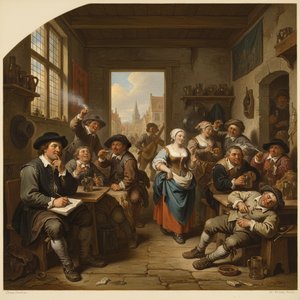
David Teniers the Younger: Genre Painting & Social Commentary in Baroque Flanders
Explore the captivating world of David Teniers the Younger, a leading Flemish Baroque painter. Discover his genre scenes, social commentary, and lasting influence on 17th-century art. Learn about his life, techniques & legacy.

Os 10 Mestres da Paisagem Romântica: Arte para Inspirar a Sua Casa
Descubra os 10 quadros mais emblemáticos da Paisagem Romântica! Explore a história de Turner, Friedrich e outros mestres. Encontre reproduções de arte exclusivas para inspirar sua decoração em ArtsDot.com.

Os 10 Mestres do Barroco Holandês: Obras Essenciais para Decorar com Arte e História
Descubra os 10 mestres do Barroco Holandês! Explore a história e o legado de Rembrandt, Vermeer e outros artistas icônicos. Encontre reproduções de arte de alta qualidade para decorar sua casa com elegância em ArtsDot.com.

Golden Age Reflections: Dutch Baroque Painting & Cultural Innovation
Explore the Dutch Golden Age of painting! Discover key artists like Vermeer & ter Borch, their innovative techniques, and the rich cultural context behind these Baroque masterpieces. Learn about collecting & appreciating this iconic art period.
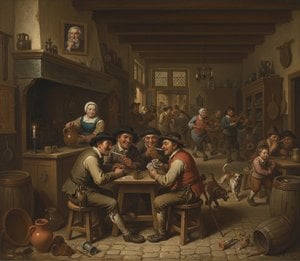
David Teniers II: Master of Flemish Genre & Social Commentary
Explore the captivating world of David Teniers II, a leading Flemish Baroque painter renowned for his lively genre scenes & insightful social commentary. Discover his masterpieces and legacy with ArtsDot.



