

 Compartilhar
 Compartilhar
 Detalhes
 Guia
Guia

 Baixar imagem
 Semelhantes
 Ver diaporama
 Perguntas e Respostas
 Estatísticas
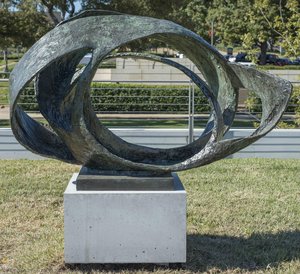
Rhythmic Form


 Ler mais
Obtenha um arquivo pronto para impressão que vai muito além da visualização na web. Cada imagem digital que vendemos provém de um arquivo mestre de alta resolução em nosso banco de dados — geralmente entre 5.000 e 15.000 pixels de largura — para que você possa imprimir em grandes formatos, realizar cortes precisos ou reproduzir detalhes minuciosos com total confiança.
Nenhum arquivo sai do nosso estúdio sem passar por um cuidadoso processo de revisão. Um especialista digital verifica as cores em relação à pintura original e as corrige se necessário, aumentando então a clareza e o detalhe com ferramentas profissionais de retoque — sempre mantendo a fidelidade às pinceladas e ao estilo do artista. O resultado é uma imagem que se assemelha à pintura, e não a um scan com filtros.
Aprovação antes da finalização: nosso especialista enviará a imagem por e-mail em até 72 horas para sua revisão. Não ficou satisfeito? Solicite melhorias ou correções, ou peça o reembolso caso a qualidade não atenda às suas expectativas.
Esta é a qualidade em que confiam editoras, estúdios de design, galerias e gráficas.
Imagem Digital
Baixe um arquivo de alta resolução para exibição pessoal, impressão e projetos criativos. ( Alternar para Impressão Comprar pintura feita à mão)
Incluído em cada compra de imagem digital
Entrega Digital Especializada e Garantida
Ao escolher o ArtsDot.com, você não está apenas adquirindo uma imagem — você está recebendo uma obra de arte digital profissionalmente aprimorada, elaborada com precisão e com garantia de satisfação. Aqui está tudo o que acompanha seu pedido, automaticamente:

Entrega rápida por e-mail
O seu arquivo de imagem digital em alta resolução será enviado por e-mail em até 72 horas após o pedido — pronto para uso imediato.

Arquivo Digital com IA Otimizado
Sua obra de arte é otimizada profissionalmente por meio de ferramentas avançadas de IA e edição manual, garantindo o máximo de detalhes, clareza e precisão de cores.

Reenvio gratuito vitalício
Apagou ou perdeu o seu ficheiro acidentalmente? Não se preocupe – nós reenviamos para si a qualquer momento, gratuitamente.

Sem Taxas de Importação - Sempre
Desfrute da sua obra de arte instantaneamente, sem taxas alfandegárias, impostos ou custos de entrega — downloads digitais são sempre isentos de taxas.

Garantia de Fidelidade de Cores
Garantimos que sua imagem digital reflita as cores originais com a maior fidelidade possível, utilizando ferramentas profissionais e gerenciamento de cores.

Garantia de satisfação de 100 dias
Se não estiver satisfeito com a sua imagem digital, nós a revisaremos ou reembolsaremos 100% dentro de 100 dias — sem perguntas.

Garantia de Reembolso 100%
Não está satisfeito? Receba o reembolso total em até 100 dias após o recebimento do seu arquivo digital — sem perguntas.

Descontos para pedidos em lote
Compre 3 imagens, economize 10% - Compre 5, economize 15% - Compre 10+, economize 20%. Ideal para projetos criativos, galerias e agências.
Rhythmic Form: A Dialogue Between Space and Spirit
Barbara Hepworth’s “Rhythmic Form,” created in 1949, stands as a testament to the profound influence of Surrealist ideas on British sculpture during World War II. More than just an aesthetically pleasing object, it embodies Hepworth's unwavering belief that sculpture could translate thought into tangible form—a conviction deeply rooted in her engagement with artists like Arp and Brancusi who championed direct carving and explored the relationship between art and nature. The piece itself is a striking example of Hepworth’s signature style: monumental forms sculpted from wood, meticulously shaped to evoke movement and resonance. Its central hole isn't merely an incision; it’s a deliberate gesture that seeks to unify opposing forces—a visual metaphor for Hepworth’s exploration of duality and balance within the creative process.- Material & Technique: Crafted from Rosewood, “Rhythmic Form” utilizes a technique honed during Hepworth's formative years in Paris – a method characterized by careful consideration of material properties and an intuitive understanding of how form interacts with space. The sculptor’s hand meticulously removes wood shavings to reveal the underlying structure, resulting in a surface that is both smooth and subtly textured.
- Historical Context: Hepworth's work emerged from a period marked by significant artistic experimentation and intellectual ferment. The Unit One group—which included Nicholson, Gabo, and Nash—challenged conventional sculptural approaches, prioritizing abstraction and responding to the anxieties of wartime Britain with an embrace of geometric forms and organic shapes.
- Symbolism & Inspiration: Hepworth drew inspiration from Neolithic Menhirs – monolithic stones erected as memorials to ancient rituals – recognizing their ability to convey timelessness and spiritual significance. She likened her sculptures to these stones, emphasizing the desire for them to “furnish a means of egress for the soul,” reflecting her belief in sculpture’s capacity to transcend mere visual representation.
- Hepworth's Philosophy: Hepworth famously described sculpture as "the plastic projection of thought," highlighting its role in capturing intangible ideas and emotions. She insisted that the work should “put no pressure on anything,” signifying a rejection of didacticism and an affirmation of art’s autonomy—a stance that aligns with her broader philosophical commitment to embracing spontaneity and responding authentically to the material at hand.
- Legacy & Influence: Hepworth's pioneering approach to sculpture continues to inspire artists today, particularly those interested in exploring spatial relationships and investigating the interplay between form and gesture. Her enduring impact is evident in the work of subsequent sculptors who adopted similar techniques and pursued similar conceptual concerns—a legacy cemented by her inclusion in Tate’s collection and celebrated as a cornerstone of British Modernism.
Perguntas e Respostas
Como é descrita a atmosfera de "Rhythmic Form", de Barbara Hepworth?
A atmosfera geral de "Rhythmic Form", de Barbara Hepworth é Serene. O clima descreve a sensação predominante da obra.
Onde posso ver uma prévia de "Rhythmic Form"?
Para visualizar uma reprodução de "Rhythmic Form", de Barbara Hepworth, acesse a página de Pré-visualização da obra.
Qual tamanho de reprodução é sugerido para "Rhythmic Form", de Barbara Hepworth?
O tamanho de impressão recomendado para "Rhythmic Form", de Barbara Hepworth é Large.
Obras Relacionadas



Biografia do Artista
Barbara Hepworth: A Pioneer of Modern Sculpture
Barbara Hepworth (Wakefield, Yorkshire, 10 January 1903 — Saint Ives, Cornwall, 20 May 1975), was an English artist and sculptor whose groundbreaking approach to abstraction revolutionized the art world in the mid-20th century. Born into a family of engineers—her father, Herbert Hepworth, worked for West Riding County Council—Jocelyn Barbara Hepworth’s early life instilled in her a fascination with precision and form, influences that would permeate her artistic vision throughout her career.- Early Influences & Education: Hepworth's formative years were marked by exposure to the landscapes of Yorkshire and the encouragement of Miss McCroben, headteacher at Wakefield Girls’ High School, who recognized Hepworth’s talent for drawing and encouraged her ambition to pursue higher education. She excelled academically, securing a scholarship to Leeds School of Art in 1920 where she encountered Henry Moore—a friendship that would endure for decades and profoundly shape their artistic trajectories.
- Royal College of Art & The Birth of Modern Sculpture: Hepworth’s studies at the Royal College of Art from 1921 to 1924 proved pivotal. Alongside Moore, she embraced a radical new aesthetic—direct carving—rejecting traditional modeling techniques in favor of working directly with stone and wood. This method allowed for an unprecedented level of spontaneity and responsiveness to material qualities, establishing Hepworth as one of the foremost figures in the burgeoning movement of abstraction-création.
The Surrealist Years & Collaboration with Ben Nicholson
Hepworth’s artistic journey gained momentum during her involvement with the Hampstead Circle group—a collective of avant-garde artists united by a shared commitment to exploring subconscious imagery and geometric abstraction. Her relationship with Ben Nicholson blossomed in 1931, culminating in marriage shortly thereafter. Together they established a studio in St Ann's Terrace, Hampstead, where Hepworth honed her craft and experimented with new materials—particularly stringed sculptures that captured the essence of natural forms through rhythmic repetition and textural interplay.Monumental Sculpture & Recognition
The Second World War brought Hepworth and Nicholson to St Ives, Cornwall, where they found inspiration in the rugged Cornish coastline. During this period, Hepworth undertook ambitious commissions—most notably Winged Figure (1961–3), a monumental sculpture commissioned by John Lewis for their Oxford Street flagship store—demonstrating her mastery of scale and materiality. Her work gained international acclaim, securing prestigious awards and cementing her place as one of the most influential sculptors of her time.Legacy & Artistic Significance
Barbara Hepworth’s enduring legacy resides in her unwavering dedication to exploring the fundamental principles of form and space—a pursuit that transcended stylistic conventions and established her as a visionary pioneer of modern sculpture. Her sculptures continue to inspire artists worldwide, serving as testament to her artistic genius and her profound contribution to the history of art.
Barbara Hepworth
1903 - 1975 , Reino Unido
Breve Biografia
- Artistic Movement Or Style: Modernismo
- Artists Or Movements Influenced By This Artist: ['Unit One']
- Artists Who Influenced This Artist: ['Henry Moore']
- Date Of Birth: 10 janeiro 1903
- Full Name: Jocelyn Barbara Hepworth
- Nationality: Inglesa
- Notable Artworks:
- Oval Form
- Two Forms
- Totem
- Place Of Birth: Wakefield, Inglaterra