


 Visualizar em escala
 Enviar
 Compartilhar
 Ver detalhes
 Guia de Obras do Aluno

 Baixar imagem
 Semelhantes
 Raio X
 Apresentação de slides
 Estatísticas
A Rustic Mill


 Ver mais
Reprodução em Óleo Feita à Mão
Óleo sobre tela pintado à mão no tamanho e moldura de sua escolha, feito sob encomenda pelos nossos artistas. ( Alternar para Impressão Ver Imagem Digital)




P118B €10

P118H €10

P118W €10

P438Z €10

P508JH €12

P508YH €12

P805H €10

P805Z €10

P919BZ €10

P919G €10

P919XJ €10

P959ZH €10

P968JZ €12

W106C €8

W218G €10

W218JH €8

W218Y €10

W307PJ €10

W316G €10

W316PJ €8

W316Y €10

W398PJ €8

W4111J €10

W500HY €15

W500JH €15

W692G €12

W849H €8

W940BG €15

W953PJ €8




Escolha entre os nossos tamanhos pré-definidos que respeitam as proporções originais da obra de arte.

Digite a largura e a altura de que necessita, para se ajustar à sua moldura ou à sua parede. Esta obra é pintada à mão, por isso, para um tamanho com uma proporção diferente, o artista pode pintar um pouco mais ao redor da imagem ou cortar um pouco — você escolhe. Enviamos-lhe uma maquete digital para aprovação antes de a pintura começar. A imagem exibida nesta página não mostra o resultado real — apenas a maquete mostra.
Após o pedido, a equipa ArtsDot.com enviará um e-mail ao cliente para solicitar instruções e fornecer uma prévia do esboço.
Entrega mundial () em 3 a 4 semanas, em vez das 5 semanas padrão. (19 Outubro). Sem comprometer a qualidade.

Envio expresso gratuito para todo o mundo

Tela de Linho Premium

Seguro de transporte total

Garantia de Reembolso de Impostos Alfandegários

Garantia de Fidelidade de Cor

Política de Devolução em 100 Dias (Apenas para Defeitos)

Garantia de reembolso de 100%

Desconto para múltiplas unidades
 A opção de vidro está disponível apenas para tamanhos inferiores a 110 cm

A Rustic Mill
Técnica de Reprodução
Dimensões da Reprodução
-


Preço Total
€ 229
A Symphony of Serenity: The Enchanted World of A Rustic Mill
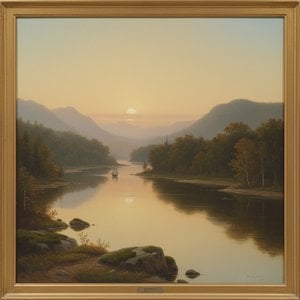
In the quietude of 1855, Albert Bierstadt captured a moment of profound stillness that transcends the boundaries of time. A Rustic Mill is not merely a landscape; it is an invitation into a sanctuary of natural grace. At its heart lies a weathered mill, nestled deeply within the verdant embrace of a lush forest. The composition is anchored by a magnificent, sprawling tree in the foreground, its vibrant green leaves acting as a gateway through which the viewer enters this secluded realm. As the eye wanders through the dappled light and shadow, it discovers the gentle presence of two figures, wandering aimlessly through the glade. Their small scale relative to the towering flora serves as a poignant reminder of the grandeur of nature, suggesting a harmonious coexistence between humanity and the wild, untamed beauty of the earth.
Bierstadt, a luminary of the Hudson River School, utilizes his masterful command of light to breathe life into this woodland scene. His technique, refined through rigorous training in the Düsseldorf tradition, allows for an exquisite attention to detail that borders on the miraculous. One can almost feel the humidity of the forest air and hear the soft rustle of leaves underfoot. The artist employs a sophisticated understanding of atmosphere, using subtle gradations of color and light to create depth and a sense of luminous clarity. This mastery of luminism ensures that every element—from the textured bark of the ancient trees to the soft, filtered sunlight piercing through the canopy—contributes to an immersive, three-dimensional experience that pulls the observer into the very soul of the forest.
A Timeless Legacy for the Discerning Collector
Beyond its technical brilliance, A Rustic Mill carries a deep emotional resonance that makes it a profound choice for art enthusiasts and interior designers alike. The painting evokes a sense of nostalgia for a simpler, more pastoral era, offering a meditative escape from the frenetic pace of modern existence. For those seeking to curate a space of tranquility and sophistication, this piece serves as a focal point of peace. Its rich, organic palette of deep greens, earthy browns, and golden light integrates seamlessly into various high-end decor styles, from classical estates to contemporary retreats that celebrate natural elements.
Owning a high-quality reproduction of this Bierstadt masterpiece is an opportunity to possess a fragment of American art history. It is more than a decorative element; it is a window into the sublime. Whether placed in a sunlit study or a grand living hall, the painting brings with it the enduring spirit of the American wilderness and the quiet majesty of the natural world. For the collector, it represents an investment in beauty and a lifelong connection to the romanticism of the nineteenth century, ensuring that the serene atmosphere of this rustic woodland continues to inspire generations to come.
Perguntas e Respostas
De qual país é a obra do Hudson River School "A Rustic Mill"?
"A Rustic Mill" foi criada por Albert Bierstadt, nascido em Alemanha, dentro do movimento Hudson River School. A origem do artista vincula a obra ao Hudson River School conforme praticado por artistas de Alemanha.
Qual é a cor predominante de "A Rustic Mill" de Albert Bierstadt?
A cor dominante de "A Rustic Mill" de Albert Bierstadt é Phthalo Green (#251d0e).
"A Rustic Mill", de Albert Bierstadt, está em domínio público? E por quê?
O status de direitos autorais de "A Rustic Mill" - em domínio público - seus direitos autorais expiraram - decorre do falecimento do artista em 1902.
Obras Relacionadas


Biografia do Artista
A Pioneer of the American West: The Life and Art of Albert Bierstadt
Albert Bierstadt’s story is deeply intertwined with the formation of America itself, a narrative beginning in Prussia in 1830 and culminating in his death in New York City in 1902. His family's emigration to New Bedford, Massachusetts, when he was just one year old, planted the seeds for a lifelong fascination with the landscapes that would define his artistic legacy. Initially self-taught, sketching with crayons as a youth, Bierstadt recognized the need for formal training and embarked on studies in Düsseldorf, Germany, in 1853. This European grounding proved crucial, providing him with technical mastery—a meticulous attention to detail and a sophisticated understanding of light and atmosphere—that he would later apply to his depictions of the American wilderness. It wasn’t merely replication that Bierstadt sought; it was an emotional resonance, a way to convey the sublime power and beauty of nature.Capturing the Majesty: The Hudson River School and Beyond
Upon his return to the United States in 1857, Bierstadt quickly became associated with the Hudson River School, a group of artists dedicated to portraying the American landscape with both accuracy and romantic idealism. While sharing their reverence for nature, Bierstadt soon distinguished himself through his ambitious scale and dramatic compositions. He wasn’t content to simply paint pretty pictures; he aimed to create immersive experiences that transported viewers to the heart of the wilderness. His breakthrough came in 1858 with a Swiss landscape exhibited at the National Academy of Design, earning him immediate acclaim and honorary membership. However, it was his subsequent expeditions westward—first with land surveyor Frederick W. Lander in 1859, then with author Fitz Hugh Ludlow in 1863 to Yosemite Valley—that truly ignited his artistic vision. These journeys weren’t just about observation; they were about immersion, allowing Bierstadt to absorb the grandeur of the Rocky Mountains, the vastness of the plains, and the awe-inspiring scale of canyons and waterfalls. He meticulously documented these scenes, translating them onto canvas with a remarkable ability to capture both the physical reality and the emotional impact of the wilderness.The Painter of Empires: Shaping Perceptions of the West
Bierstadt’s paintings weren't simply landscapes; they were statements about national identity and Manifest Destiny. His canvases—often enormous in size—depicted the American West not as a harsh, untamed frontier, but as a land of promise, abundance, and divine beauty. The Rocky Mountains, Lander’s Peak, completed in 1863 and purchased for an astonishing $25,000 (equivalent to nearly $400,000 today), exemplifies this approach. The painting isn't a precise topographical rendering; it’s a carefully constructed vision of idealized grandeur, bathed in golden light and imbued with a sense of spiritual significance. This ability to evoke emotion, to inspire awe, made Bierstadt immensely popular during his lifetime. He wasn’t just an artist; he was a cultural ambassador, shaping how Americans—and the world—perceived the West. His work fueled westward expansion by presenting it as a noble and divinely ordained undertaking. The dramatic lighting, the towering peaks, and the suggestion of human figures (often dwarfed by the scale of nature) all contributed to this powerful message.Influences and Techniques
Bierstadt’s artistic style was shaped by several key influences. His early training in Düsseldorf instilled in him a meticulous attention to detail and a mastery of traditional oil painting techniques. He admired the work of German landscape painters like Caspar David Friedrich, whose emphasis on sublime landscapes and emotional resonance resonated with Bierstadt's own vision. Returning to America, he incorporated elements of the Hudson River School’s focus on American scenery while developing his distinctive style. His use of light was particularly noteworthy—he employed a technique known as *luminism*, creating luminous effects through careful layering of paint and strategic placement of highlights. He also drew inspiration from photographs, which were becoming increasingly available in the mid-19th century, using them to accurately depict details such as rock formations and vegetation.Legacy and Influence: A Lasting Impression
While Bierstadt’s popularity waned somewhat in the late 19th century as artistic tastes shifted towards Impressionism and photography gained prominence, his influence on American landscape painting remains undeniable. He demonstrated the power of large-scale canvases to create immersive experiences, a technique later adopted by many artists. His meticulous attention to detail and masterful use of light continue to inspire painters today. Beyond his technical achievements, Bierstadt’s work serves as a valuable historical document, offering insights into the evolving perceptions of the American West during a period of rapid change and expansion. He captured a moment in time—a vision of pristine wilderness before it was irrevocably altered by human intervention. His paintings are not just beautiful images; they are windows into a pivotal era in American history, reminding us of both the promise and the cost of westward expansion. His legacy endures, ensuring that his breathtaking landscapes will continue to captivate and inspire generations to come.
Albert Bierstadt
1830 - 1902 , Alemanha
Informações Rápidas
- Artistic Movement Or Style: Escola do Rio Hudson
- Artists Or Movements Influenced By This Artist: ['Hudson River School']
- Artists Who Influenced This Artist: ['Düsseldorf']
- Date Of Birth: 7 jan 1830
- Date Of Death: 18 fev 1902
- Full Name: Albert Bierstadt
- Nationality: Alemão-Americano
- Notable Artworks:
- Paisagem Ocidental
- Cena Costeira
- Place Of Birth: Solingen, Alemanha
Artigos Relacionados

As 10 Obras-Primas que Definiram a Escola do Rio Hudson | Arte e Decoração de Luxo
Descubra as 10 obras-primas da Escola do Rio Hudson! Explore a beleza das paisagens americanas de Thomas Cole, Frederic Church e outros mestres. Encontre reproduções de arte exclusivas para decorar sua casa com elegância em ArtsDot.com.

Robert Spencer: Luminism, Narrative & the American Landscape Tradition
Explore the captivating world of Luminism & the Hudson River School with our expert analysis. Discover the history, artists, and enduring beauty of 19th-century American landscape painting. Find museum-quality reproductions at ArtsDot.
David Johnson: A Luminist Master of the Hudson River School & Beyond
Explore the captivating landscapes of David Johnson, a key figure in the Hudson River School & Luminism movement. Discover his artistic evolution, legacy, and how to collect his works with ArtsDot.

Verdant Visions: Exploring the Symbolism & Aesthetic Impact of Green in Art History
Explore the rich history & symbolism of green in art! Discover iconic paintings, techniques, and how to bring verdant harmony into your home with ArtsDot's expert guide.

The Sublime Landscape: Exploring the Hudson River School Movement
Explore the captivating world of the Hudson River School! Discover the history, artists, and defining characteristics of this iconic American art movement. Learn about Romanticism's influence & find inspiration for your collection.


