


 Zobacz w skali 1:1
 Wyślij
 Udostępnij
 Szczegóły
 Przewodnik

 Pobierz plik obrazu
 Podobne obiekty
 RTG
RTG Pokaz slajdów
 Statystyki
Hakone


 Czytaj więcej
Ręcznie malowana reprodukcja olejowa
Ręcznie malowany obraz olejny na płótnie, wykonany na zamówienie przez naszych artystów w wybranym przez Ciebie wymiarze i oprawie. ( Przełącz na wersję drukowaną Przełącz na wersję cyfrową)




P118B zł10

P118H zł10

P118W zł10

P438Z zł10

P508JH zł12

P508YH zł12

P805H zł10

P805Z zł10

P919BZ zł10

P919G zł10

P919XJ zł10

P959ZH zł10

P968JZ zł12

W106C zł8

W218G zł10

W218JH zł8

W218Y zł10

W307PJ zł10

W316G zł10

W316PJ zł8

W316Y zł10

W398PJ zł8

W4111J zł10

W500HY zł15

W500JH zł15

W692G zł12

W849H zł8

W940BG zł15

W953PJ zł8




Wybierz spośród naszych standardowych rozmiarów, które zachowują oryginalne proporcje dzieła sztuki.

Wpisz wymaganą szerokość i wysokość, aby obraz pasował do Twojej ramy lub ściany. Ponieważ jest to dzieło malowane ręcznie, w przypadku rozmiaru o innym proporcji artysta może domalować nieco więcej wokół obrazu lub przyciąć fragmenty — wybór należy do Ciebie. Przed rozpoczęciem pracy prześlemy Ci cyfrową wizualizację do zatwierdzenia. Obraz widoczny na tej stronie nie przedstawia rzeczywistego efektu — jedynie wizualizacja oddaje realny rezultat.
Po złożeniu zamówienia zespół ArtsDot.com skontaktuje się z klientem drogą mailową w celu uzyskania instrukcji i prześle wizualizację projektu
Dostawa na całym świecie () w ciągu 3–4 tygodni zamiast standardowych 5 tygodni. (22 Październik). Bez kompromisów w kwestii jakości.

Bezpłatna ekspresowa wysyłka na cały świat

Wysokiej jakości płótno lniane

Pełne ubezpieczenie transportowe

Gwarancja zwrotu należności celnych i podatków importowych

Gwarancja idealnego odwzorowania barw

100-dniowy okres na zwrot dzieła w przypadku wykrycia wad produkcyjnych

Gwarancja 100% zwrotu pieniędzy

Oferta przy zakupie wielu sztuk
 Opcja ze szkłem jest dostępna wyłącznie w rozmiarach poniżej 110 cm

Hakone
Technika wykonania
Rozmiar reprodukcji
-


Suma do zapłaty
zł 999
A Glimpse of Tranquility: Utagawa Hiroshige's "Hakone"
Utagawa Hiroshige’s “Hakone,” created in 1834, is more than just a landscape; it's a poetic meditation on the beauty and transience of nature within Edo-period Japan. This woodblock print, part of his renowned series "The Fifty-three Stations of the Tōkaidō," captures a specific moment along the vital trade route connecting Tokyo (then Edo) with Kyoto. However, Hiroshige elevates this seemingly simple depiction of a mountain pass into something profoundly evocative, inviting viewers to share in the quiet contemplation of a traveler pausing amidst breathtaking scenery.
The Artist and His Vision
Hiroshige (1797-1858), considered the last great master of *ukiyo-e*, possessed an unparalleled ability to translate the essence of a place onto paper. Born in Tokyo, his early life was steeped in samurai tradition before he embraced art under Utagawa Toyohiro. Hiroshige’s genius lay not merely in replicating what he saw but in imbuing it with emotion and atmosphere. He moved beyond the typical *ukiyo-e* focus on portraits of actors or courtesans, choosing instead to celebrate the natural world—the mountains, rivers, and roads that shaped Japanese life. His travels along the Tōkaidō provided him with a wealth of inspiration, allowing him to meticulously document the changing landscapes and capture the spirit of each station.
A Composition of Harmony: Technique and Symbolism
“Hakone” exemplifies Hiroshige’s masterful technique in woodblock printing. The print showcases a layered approach, using multiple blocks for different colors and tones to create depth and nuance. Notice how the snow-capped peaks recede into the distance, rendered with subtle gradations of blue and grey that convey atmospheric perspective. The trees, scattered across the hillside, are not merely decorative elements but contribute to the overall sense of scale and tranquility. The body of water reflects the sky, creating a mirror image that doubles the beauty of the scene. A lone figure stands near the center, seemingly absorbed in the grandeur before them—a silent participant in this serene vista. This inclusion is significant; it humanizes the landscape, reminding us of our place within nature's vastness and inviting viewers to imagine themselves experiencing this moment firsthand.
Historical Context and Enduring Legacy
The Tōkaidō was a vital artery for commerce and communication in Edo-period Japan. Hiroshige’s series documenting its stations served not only as visual guides for travelers but also as celebrations of the nation's geography and culture. “Hakone,” with its challenging terrain and stunning views, represents a moment of respite along this arduous journey. The print reflects a broader cultural appreciation for nature in Edo Japan, where landscapes were increasingly valued for their aesthetic qualities. Hiroshige’s work had a profound impact on Western art, particularly influencing the Impressionist movement. Artists like Monet and Van Gogh drew inspiration from his compositions and color palettes, recognizing the power of capturing fleeting moments of beauty.
An Invitation to Contemplation
“Hakone” is more than just a beautiful image; it’s an invitation to pause, reflect, and appreciate the simple wonders of the natural world. The print's quiet elegance and subtle details create a sense of peace and tranquility that transcends time and culture. Whether you are an art enthusiast, a collector seeking a piece of Japanese heritage, or simply someone looking for a calming presence in your home, Hiroshige’s “Hakone” offers a timeless glimpse into the beauty of Edo-period Japan.
Pytania i odpowiedzi
Jaka jest luminancja dzieła „Hakone” autorstwa Utagawa Hiroshige?
„Hakone” autorstwa Utagawa Hiroshige ma luminancję na poziomie Gentle Luminance. Luminancja określa, jak dużą ilość światła zdają się odbijać kolory.
Który artysta i jaki styl stoją za "Hakone"?
Twórcą dzieła "Hakone" jest Utagawa Hiroshige, reprezentujący nurt Ukiyo-e Woodblock.
Czy istnieje przewodnik dla „Hakone” autorstwa Utagawa Hiroshige?
Strona Przewodnik dzieła „Hakone” autorstwa Utagawa Hiroshige oferuje dwustronicową kartę informacyjną w formacie do druku: samo dzieło wraz z tabelą identyfikacyjną, oś czasu umieszczającą je w latach życia artysty, inne prace tego twórcy, zmierzoną paletę kolorystyczną oraz gotowe do skopiowania cytaty w czterech stylach.
Podobne dzieła


Biografia artysty
A Poetic Vision of Edo Japan: The Life and Art of Utagawa Hiroshige
Utagawa Hiroshige, born Andō Tokutarō in 1797 in the bustling city of Edo (modern Tokyo), stands as a pivotal figure in the world of *ukiyo-e*, or “pictures of the floating world.” Though deeply rooted in the traditions of Japanese woodblock printing, Hiroshige transcended mere replication, imbuing his landscapes with a poetic sensibility that resonated profoundly both within Japan and, later, across the Western art world. His life unfolded during a period of relative peace and prosperity under the Tokugawa shogunate, yet also one marked by increasing social change and eventual westernization – forces that would ultimately contribute to the decline of *ukiyo-e* even as they amplified Hiroshige’s enduring legacy. Initially destined for a more conventional path within a samurai family—his father served as a fire warden—Hiroshige's artistic inclinations led him to apprenticeship under Utagawa Toyohiro, a master of the Utagawa school. This proved a crucial turning point, steering him away from the popular depictions of courtesans and actors favored by many *ukiyo-e* artists toward a focus on landscape, a genre he would ultimately redefine.From Genre Scenes to Evocative Landscapes
Hiroshige’s early work adhered to the conventions of his school, featuring portraits and scenes from daily life. These initial pieces demonstrated technical proficiency but lacked the distinctive vision that would later characterize his most celebrated works. However, it was his embrace of landscape that truly distinguished him. Influenced by earlier masters like Hokusai—whose *Thirty-six Views of Mount Fuji* had already captivated audiences—Hiroshige developed a unique style characterized by atmospheric perspective, subtle color palettes, and a profound sensitivity to the changing seasons. He didn’t merely depict places; he evoked their mood, capturing the essence of a particular moment in time. The series *The Fifty-three Stations of the Tōkaidō* (1833–1834), perhaps his most celebrated achievement, exemplifies this approach. This monumental work documented the journey along the Tōkaidō road, the main route connecting Edo to Kyoto, not as a straightforward travelogue but as a series of evocative vignettes—a sudden rain shower at Shono, a distant view of Mount Fuji from Kanaya, the bustling activity at Odawara. Each print is imbued with a sense of transience and quiet beauty, inviting viewers to experience the journey alongside the travelers. He masterfully employed *bokashi*, a technique involving multiple impressions to create subtle gradations of color, adding depth and atmosphere to his compositions. The careful layering of colors, achieved through painstaking printing processes, created an illusion of movement and light—a hallmark of Hiroshige’s distinctive style.A Master of Atmosphere and Technique
Hiroshige's technical skill was as remarkable as his artistic vision. He wasn't simply interested in accurate representation; he sought to capture the *feeling* of a place. His use of color, though often restrained compared to some of his contemporaries, was crucial in achieving this effect. He frequently employed multiple blocks for a single color, allowing him to create nuanced shades and atmospheric effects that were incredibly difficult to replicate. The delicate washes of blue in his depictions of rain or mist, the warm hues of autumn foliage—these weren’t accidental; they were carefully considered elements designed to evoke specific emotions and sensations. Beyond *bokashi*, Hiroshige was adept at utilizing blank space – *ma* – a concept central to Japanese aesthetics, allowing areas of the print to “breathe” and enhancing the overall sense of tranquility. His series *One Hundred Famous Views of Edo* (1856–1858) further showcased his mastery, offering intimate glimpses into the life and landscapes of his beloved city. These prints weren’t simply topographical representations; they were carefully constructed narratives, capturing the energy and rhythm of urban life—the flow of people along the streets, the smoke rising from tea houses, the reflections in canals.The Enduring Legacy: Japonisme and Beyond
Though the *ukiyo-e* tradition began to wane after Hiroshige’s death in 1858—a decline accelerated by the Meiji Restoration and the subsequent influx of Western culture—his influence on the art world proved remarkably enduring. In the late 19th century, Japanese prints flooded Europe, sparking a phenomenon known as *Japonisme*. Artists like Édouard Manet, Claude Monet, and Edgar Degas were captivated by the bold compositions, flattened perspectives, and unconventional color schemes of *ukiyo-e*, incorporating these elements into their own work. Vincent van Gogh was particularly enthralled with Hiroshige’s prints, creating copies of several, including “Flowering Plum Tree after Hiroshige,” demonstrating his deep admiration for the Japanese master's use of color and composition. Hiroshige’s influence extended beyond painting; it can be seen in architecture, design, and even literature. Today, Utagawa Hiroshige is remembered not only as a brilliant artist but also as a cultural ambassador who helped bridge the gap between East and West, leaving an indelible mark on the history of art. His serene landscapes continue to inspire awe and contemplation, reminding us of the beauty and transience of the natural world.Notable Works
- The Fifty-three Stations of the Tōkaidō: Hiroshige’s most famous series, depicting the journey along the main road between Edo and Kyoto.
- One Hundred Famous Views of Edo: A captivating portrayal of life and landscapes in his beloved city.
- Influence on Vincent van Gogh's Japonaiserie Series: Including “Flowering Plum Tree after Hiroshige,” demonstrating Van Gogh’s deep admiration for the Japanese master.

Utagawa Hiroshige
1797 - 1858 , Japonia
Najważniejsze informacje
- Artistic Movement Or Style: *Ukiyo-e*
- Artists Or Movements Influenced By This Artist:
- Manet
- Monet
- Van Gogh
- Artists Who Influenced This Artist: ['Hokusai']
- Date Of Birth: 1797
- Date Of Death: 1858
- Full Name: Utagawa Hiroshige
- Nationality: Japoński
- Notable Artworks:
- 53 Stacje Tōkaidō
- 100 Znanych Widoków Edo
- Place Of Birth: Tokio, Japonia
Zobacz także powiązane artykuły
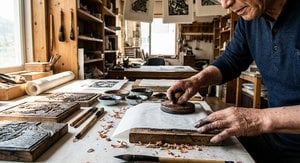
Dziedzictwo drzeworytu: Technika, historia i ekspresja artystyczna w zmieniającym się świecie
Poznaj fascynującą historię drzeworytu – od starożytnych technik po japońskie 'ukiyo-e'. Odkryj proces tworzenia, wpływ mistrzów i współczesne interpretacje tej wyjątkowej formy sztuki. Ekspercka analiza dla kolekcjonerów i miłośników grafiki.

Tsukioka Yoshitoshi: A Master of Ukiyo-e's Final Flourish – Narrative, Innovation, and the Meiji Transition
Explore the life & art of Tsukioka Yoshitoshi, the last great master of ukiyo-e woodblock printing. Discover his dramatic warrior prints, innovative series like 'One Hundred Aspects of the Moon,' and legacy reflecting Japan's Meiji transition.

Ukiyo-e's Poetic Visionary: Hiroshige Ando & the Transformation of Landscape in 19th-Century Japan
Explore the life & art of Ando Hiroshige, Japan's last great ukiyo-e master. Discover his iconic landscapes, poetic style, and profound influence on Western Impressionism. Learn about The Fifty-Three Stations & more!

Katsushika Hokusai: 25 Arcydzieł Sztuki Japońskiej dla Kolekcjonerów i Miłośników Dekoracji
Odkryj 25 arcydzieł Katsushika Hokusai, mistrza ukiyo-e! Poznaj historię Wielkiej Fali i innych ikonicznych drzeworytów. Inspiracje wnętrzarskie i reprodukcje obrazów najwyższej jakości na ArtsDot.com – sztuka japońska dla Twojego domu.

Ukiyo-e: Obrazy Przepływającego Świata – Historia, Techniki i Trwałe Dziedzictwo Japońskiej Sztuki
Poznaj fascynujący świat ukiyo-e – japońskich drzeworytów z okresu Edo. Historia, techniki, artyści i wpływ na sztukę zachodnią. Ekspercka analiza dla miłośników sztuki i kolekcjonerów.


