


 Podgląd w skali 1:1
 Wyślij jako kartkę
 Udostępnij
 Szczegóły dzieła
 Przewodnik

 Pobierz obraz
 Podobne obiekty
 RTG
RTG Pokaz slajdów
 Statystyki
Dog


 Rozwiń treść
Ręcznie malowana reprodukcja olejowa
Ręcznie malowany obraz olejny na płótnie, wykonany na zamówienie przez naszych artystów w wybranym przez Ciebie wymiarze i oprawie. ( Przełącz na wydania drukowane Przejdź do wersji cyfrowej)




P118B zł10

P118H zł10

P118W zł10

P438Z zł10

P508JH zł12

P508YH zł12

P805H zł10

P805Z zł10

P919BZ zł10

P919G zł10

P919XJ zł10

P959ZH zł10

P968JZ zł12

W106C zł8

W218G zł10

W218JH zł8

W218Y zł10

W307PJ zł10

W316G zł10

W316PJ zł8

W316Y zł10

W398PJ zł8

W4111J zł10

W500HY zł15

W500JH zł15

W692G zł12

W849H zł8

W940BG zł15

W953PJ zł8




Wybierz spośród naszych standardowych rozmiarów, które zachowują oryginalne proporcje dzieła sztuki.

Wpisz wymaganą szerokość i wysokość, aby obraz pasował do Twojej ramy lub ściany. Ponieważ jest to dzieło malowane ręcznie, w przypadku rozmiaru o innych proporcjach artysta może domalować nieco więcej wokół obrazu lub przyciąć jego fragmenty — wybór należy do Ciebie. Przed rozpoczęciem pracy prześlemy Ci cyfrową wizualizację do zatwierdzenia. Obraz widoczny na tej stronie nie przedstawia rzeczywistego efektu — jedynie wizualizacja oddaje realny rezultat.
Po złożeniu zamówienia zespół ArtsDot.com skontaktuje się z klientem drogą mailową w celu uzyskania instrukcji i prześle wizualizację projektu
Dostawa na całym świecie () w ciągu 3–4 tygodni zamiast standardowych 5 tygodni. (26 Październik). Bez kompromisów w kwestii jakości.

Bezpłatna ekspresowa wysyłka na cały świat

Wysokiej jakości płótno lniane

Pełne ubezpieczenie przesyłki

Gwarancja zwrotu należności celnych i podatków importowych

Gwarancja wiernego odwzorowania kolorów

100-dniowa polityka zwrotów (tylko w przypadku wad)

Gwarancja 100% zwrotu pieniędzy

Zniżka przy zakupie wielu sztuk
 Opcja ze szkłem jest dostępna wyłącznie w rozmiarach poniżej 110 cm

Dog
Technika reprodukcji
Wymiary reprodukcji
-


Cena całkowita
zł 1010
A Poetic Vision of Edo Japan: The Life and Art of Utagawa Hiroshige
Utagawa Hiroshige (1797 – 1858), born Andō Tokutarō in the vibrant heart of Edo (modern Tokyo), remains an undisputed titan amongst *ukiyo-e* artists, a master who elevated woodblock printing beyond mere visual representation into a vehicle for profound artistic expression. His oeuvre captures not just landscapes but also the very spirit of Japan during its golden age – a period characterized by stability under the Tokugawa shogunate yet simultaneously grappling with burgeoning Western influences that would ultimately reshape Japanese culture and aesthetics. Hiroshige’s journey from a samurai family lineage to a celebrated artist exemplifies the transformative power of passion and talent, demonstrating how individuals can defy societal expectations and forge their own distinctive paths.The Landscape as Meditation
Hiroshige's artistic vision wasn’t simply about depicting scenery; it was about conveying emotion. He approached his subjects with meticulous observation combined with an intuitive understanding of Japanese aesthetics – a tradition deeply rooted in Zen Buddhism, which emphasized contemplation and harmony with nature. Unlike earlier landscape prints that prioritized detailed topographical accuracy, Hiroshige deliberately blurred lines and softened contours, creating atmospheric vistas that evoke feelings of serenity and melancholy. This technique—known as *yakusha-ga*, or “artist’s perspective”—allowed him to capture the elusive beauty of fleeting moments and imbue his images with a palpable sense of mood. Consider "Snow Viewing," arguably Hiroshige's most iconic work, where the muted palette and hazy mountains convey not just visual splendor but also an underlying feeling of solitude and contemplation—a reflection of the Zen ideal of emptying oneself of worldly concerns to appreciate the sublime grandeur of existence.Technique and Craftsmanship: Mastering Woodblock Printing
Hiroshige’s mastery lay in his unparalleled command of *hoshi-e*, or “starry print” technique. This method demanded extraordinary precision and patience from both artist and printer, reflecting the meticulous craftsmanship that underpinned Japanese artistic traditions. The process began with a detailed sketch rendered on paper—often transferred to woodblocks using mica dust—followed by carving intricate lines into the block surface using specialized tools. These blocks were then inked with pigment mixed with varnish, and pressed onto dampened paper multiple times to achieve layered tonal effects – a technique that distinguishes *hoshi-e* from simpler monochrome prints. The resulting images possessed remarkable depth and luminosity, capturing subtle gradations of color and texture that would have been impossible to reproduce accurately by hand painting. Hiroshige’s dedication to perfecting this craft ensured that his landscapes retained an unparalleled sense of realism while simultaneously conveying a deeply felt emotional resonance.Historical Context: Edo Japan Under Western Influence
Hiroshige's artistic output coincided with a period of significant upheaval in Japan as Western powers began exerting increasing influence on its affairs. The arrival of Commodore Perry’s fleet in 1853 forced the Tokugawa shogunate to reconsider its isolationist policies, ushering in an era of rapid modernization and cultural exchange. While Hiroshige remained largely unaffected by these political developments—his artistic pursuits focused primarily on capturing the beauty of Japan's natural world—his work nevertheless reflects a subtle awareness of the changing times. The inclusion of figures like travelers or pilgrims within his landscapes speaks to the growing importance of individual experience and spiritual reflection amidst the pressures of societal transformation. Hiroshige’s art serves as a poignant reminder that even during periods of dramatic change, artistic traditions can endure—preserving values and aesthetics rooted in Japan's past while simultaneously anticipating its future.Symbolism and Emotional Resonance: Beyond Mere Representation
Hiroshige’s prints transcend mere visual depiction; they are imbued with symbolic meaning that speaks to fundamental human concerns. Recurring motifs such as pine trees, cranes, and snow—each carrying specific connotations within Japanese culture—contribute to the overall emotional impact of his compositions. Pine trees symbolize longevity and resilience, mirroring the enduring spirit of Japan itself, while cranes represent happiness and aspiration – emblems of hope amidst adversity. The depiction of snow evokes feelings of purity and tranquility, reflecting Zen Buddhist ideals of emptiness and enlightenment. Hiroshige’s ability to evoke such profound emotions through visual imagery solidified his reputation as one of Japan's greatest landscape artists—a testament to the transformative power of art to communicate ideas and sensations beyond the confines of language.Pytania i odpowiedzi
Jaką popularność cieszy się "Dog" w obrębie nurtu Japanese Landscape Painting?
„Dog” figuruje w katalogu jako dzieło o Iconic wśród prac należących do nurtu Japanese Landscape Painting.
Do którego okresu twórczości Utagawa Hiroshige należy dzieło „Dog”?
"Dog" reprezentuje Mature Period twórczości Utagawa Hiroshige.
Jak mogę odkryć dzieła podobne do „Dog” – Utagawa Hiroshige?
Dzieła podobne do „Dog” – Utagawa Hiroshige można znaleźć na stronie Podobne dzieła danego dzieła.
Podobne dzieła


Biografia artysty
A Poetic Vision of Edo Japan: The Life and Art of Utagawa Hiroshige
Utagawa Hiroshige, born Andō Tokutarō in 1797 in the bustling city of Edo (modern Tokyo), stands as a pivotal figure in the world of *ukiyo-e*, or “pictures of the floating world.” Though deeply rooted in the traditions of Japanese woodblock printing, Hiroshige transcended mere replication, imbuing his landscapes with a poetic sensibility that resonated profoundly both within Japan and, later, across the Western art world. His life unfolded during a period of relative peace and prosperity under the Tokugawa shogunate, yet also one marked by increasing social change and eventual westernization – forces that would ultimately contribute to the decline of *ukiyo-e* even as they amplified Hiroshige’s enduring legacy. Initially destined for a more conventional path within a samurai family—his father served as a fire warden—Hiroshige's artistic inclinations led him to apprenticeship under Utagawa Toyohiro, a master of the Utagawa school. This proved a crucial turning point, steering him away from the popular depictions of courtesans and actors favored by many *ukiyo-e* artists toward a focus on landscape, a genre he would ultimately redefine.From Genre Scenes to Evocative Landscapes
Hiroshige’s early work adhered to the conventions of his school, featuring portraits and scenes from daily life. These initial pieces demonstrated technical proficiency but lacked the distinctive vision that would later characterize his most celebrated works. However, it was his embrace of landscape that truly distinguished him. Influenced by earlier masters like Hokusai—whose *Thirty-six Views of Mount Fuji* had already captivated audiences—Hiroshige developed a unique style characterized by atmospheric perspective, subtle color palettes, and a profound sensitivity to the changing seasons. He didn’t merely depict places; he evoked their mood, capturing the essence of a particular moment in time. The series *The Fifty-three Stations of the Tōkaidō* (1833–1834), perhaps his most celebrated achievement, exemplifies this approach. This monumental work documented the journey along the Tōkaidō road, the main route connecting Edo to Kyoto, not as a straightforward travelogue but as a series of evocative vignettes—a sudden rain shower at Shono, a distant view of Mount Fuji from Kanaya, the bustling activity at Odawara. Each print is imbued with a sense of transience and quiet beauty, inviting viewers to experience the journey alongside the travelers. He masterfully employed *bokashi*, a technique involving multiple impressions to create subtle gradations of color, adding depth and atmosphere to his compositions. The careful layering of colors, achieved through painstaking printing processes, created an illusion of movement and light—a hallmark of Hiroshige’s distinctive style.A Master of Atmosphere and Technique
Hiroshige's technical skill was as remarkable as his artistic vision. He wasn't simply interested in accurate representation; he sought to capture the *feeling* of a place. His use of color, though often restrained compared to some of his contemporaries, was crucial in achieving this effect. He frequently employed multiple blocks for a single color, allowing him to create nuanced shades and atmospheric effects that were incredibly difficult to replicate. The delicate washes of blue in his depictions of rain or mist, the warm hues of autumn foliage—these weren’t accidental; they were carefully considered elements designed to evoke specific emotions and sensations. Beyond *bokashi*, Hiroshige was adept at utilizing blank space – *ma* – a concept central to Japanese aesthetics, allowing areas of the print to “breathe” and enhancing the overall sense of tranquility. His series *One Hundred Famous Views of Edo* (1856–1858) further showcased his mastery, offering intimate glimpses into the life and landscapes of his beloved city. These prints weren’t simply topographical representations; they were carefully constructed narratives, capturing the energy and rhythm of urban life—the flow of people along the streets, the smoke rising from tea houses, the reflections in canals.The Enduring Legacy: Japonisme and Beyond
Though the *ukiyo-e* tradition began to wane after Hiroshige’s death in 1858—a decline accelerated by the Meiji Restoration and the subsequent influx of Western culture—his influence on the art world proved remarkably enduring. In the late 19th century, Japanese prints flooded Europe, sparking a phenomenon known as *Japonisme*. Artists like Édouard Manet, Claude Monet, and Edgar Degas were captivated by the bold compositions, flattened perspectives, and unconventional color schemes of *ukiyo-e*, incorporating these elements into their own work. Vincent van Gogh was particularly enthralled with Hiroshige’s prints, creating copies of several, including “Flowering Plum Tree after Hiroshige,” demonstrating his deep admiration for the Japanese master's use of color and composition. Hiroshige’s influence extended beyond painting; it can be seen in architecture, design, and even literature. Today, Utagawa Hiroshige is remembered not only as a brilliant artist but also as a cultural ambassador who helped bridge the gap between East and West, leaving an indelible mark on the history of art. His serene landscapes continue to inspire awe and contemplation, reminding us of the beauty and transience of the natural world.Notable Works
- The Fifty-three Stations of the Tōkaidō: Hiroshige’s most famous series, depicting the journey along the main road between Edo and Kyoto.
- One Hundred Famous Views of Edo: A captivating portrayal of life and landscapes in his beloved city.
- Influence on Vincent van Gogh's Japonaiserie Series: Including “Flowering Plum Tree after Hiroshige,” demonstrating Van Gogh’s deep admiration for the Japanese master.

Utagawa Hiroshige
1797 - 1858 , Japonia
Krótka nota
- Artistic Movement Or Style: *Ukiyo-e*
- Artists Or Movements Influenced By This Artist:
- Manet
- Monet
- Van Gogh
- Artists Who Influenced This Artist: ['Hokusai']
- Date Of Birth: 1797
- Date Of Death: 1858
- Full Name: Utagawa Hiroshige
- Nationality: Japoński
- Notable Artworks:
- 53 Stacje Tōkaidō
- 100 Znanych Widoków Edo
- Place Of Birth: Tokio, Japonia
Powiązane artykuły

Floating World: The Captivating Art and Legacy of Japanese Ukiyo-e
Explore the profound beauty of Japanese Ukiyo-e. Discover the history, masters like Hokusai, and the enduring legacy of the 'Floating World' through an expert art-historical lens.
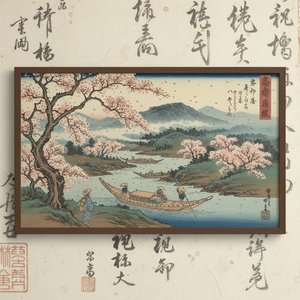
Ephemeral Landscapes: Hiroshige's Poetics of Transient Beauty in Edo Japan
Explore the captivating world of Utagawa Hiroshige's ukiyo-e landscapes. Discover his artistic innovations, influence on Western art, and the poetics of transient beauty in Edo period Japan. A guide for collectors & enthusiasts.

Ukiyo-e's Poetic Visionary: Hiroshige Ando & the Transformation of Landscape in 19th-Century Japan
Explore the life & art of Ando Hiroshige, Japan's last great ukiyo-e master. Discover his iconic landscapes, poetic style, and profound influence on Western Impressionism. Learn about The Fifty-Three Stations & more!

Katsushika Hokusai: 25 Arcydzieł Sztuki Japońskiej dla Kolekcjonerów i Miłośników Dekoracji
Odkryj 25 arcydzieł Katsushika Hokusai, mistrza ukiyo-e! Poznaj historię Wielkiej Fali i innych ikonicznych drzeworytów. Inspiracje wnętrzarskie i reprodukcje obrazów najwyższej jakości na ArtsDot.com – sztuka japońska dla Twojego domu.
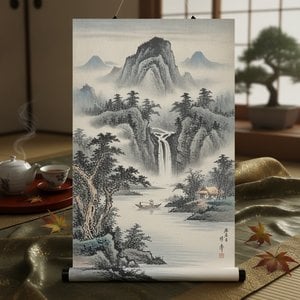
Serenity on Canvas: A Guide to the Timeless Beauty of Japanese Landscape Painting
Discover the serene beauty of Japanese landscape painting. From Hokusai's iconic woodblock prints to meditative sumi-e ink washes, explore a visual journey through the 'floating world' and learn how to bring this timeless Zen aesthetic into your modern home decor.


