


 Zobacz w skali 1:1
 Wyślij
 Udostępnij
 Szczegóły
 Przewodnik

 Pobierz plik obrazu
 Podobne obiekty
 RTG
RTG Pokaz slajdów
 Statystyki
Potion preparation


 Czytaj więcej
Giclée / Wydruk artystyczny
Wydruki giclée lub płótna o jakości muzealnej, szybka realizacja i szeroki wybór opcji wykończenia. ( Kup ręcznie malowany obraz Przełącz na wersję cyfrową)




P118B zł10

P118H zł10

P118W zł10

P438Z zł10

P508JH zł12

P508YH zł12

P805H zł10

P805Z zł10

P919BZ zł10

P919G zł10

P919XJ zł10

P959ZH zł10

P968JZ zł12

W106C zł8

W218G zł10

W218JH zł8

W218Y zł10

W307PJ zł10

W316G zł10

W316PJ zł8

W316Y zł10

W398PJ zł8

W4111J zł10

W500HY zł15

W500JH zł15

W692G zł12

W849H zł8

W940BG zł15

W953PJ zł8




Wybierz spośród naszych standardowych rozmiarów, które zachowują oryginalne proporcje dzieła sztuki.

Wpisz wymaganą szerokość i wysokość, aby dopasować grafikę do ramy lub ściany. Wydruk można jedynie przyciąć, nigdy nie powiększając go poza oryginalny obraz, dlatego format o innym proporcji spowoduje utratę części kompozycji. Przed rozpoczęciem druku prześlemy Ci cyfrowy podgląd do zatwierdzenia. Obraz wyświetlany na tej stronie nie pokazuje rzeczywistego przycięcia — jedynie podgląd oddaje ten efekt.
Dostawa na cały świat () w ciągu 2 tygodni zamiast standardowych 4/5 tygodni. (24 Październik)

Bezpłatna ekspresowa wysyłka na cały świat

Wysokiej jakości płótno lniane

Pełne ubezpieczenie transportowe

Gwarancja zwrotu należności celnych i podatków importowych

Gwarancja idealnego odwzorowania barw

100-dniowy okres na zwrot dzieła w przypadku wykrycia wad produkcyjnych

Gwarancja 100% zwrotu pieniędzy

Oferta przy zakupie wielu sztuk
 Opcja ze szkłem jest dostępna wyłącznie w rozmiarach poniżej 110 cm

Potion preparation
Giclée / Wydruk artystyczny
Rozmiar reprodukcji
-


Suma do zapłaty
zł 239
A Communal Alchemy: The Spirit of Gathering
In the evocative scene of Potion Preparation, we are transported to a moment of profound human connection, where the boundaries between survival and ritual seem to blur under the soft glow of a coastal fire. The artwork captures a lively, communal gathering on a beach, where a group of figures is deeply immersed in the shared rhythms of life. As men stand, sit, and kneel around a central fire pit, the composition breathes with the energy of a collective endeavor. There is an undeniable sense of purpose in their movements; some appear focused on the culinary arts, while others engage in the quiet intimacy of conversation. The scattered bowls, the solitary cup, and the glint of a knife suggest a meticulous process of preparation—a literal and metaphorical brewing of something significant. This is not merely a meal being prepared, but a ritualistic assembly where every element, from the flickering flames to the shared tools, contributes to a larger narrative of community and sustenance.
The atmosphere of the piece is thick with a sense of ancient tradition, evoking the feeling of an era where the preparation of food was inseparable from the preparation of spirit. The artist, Theodore de Bry, utilizes a style that emphasizes the textures of the natural world—the grit of the sand, the warmth of the embers, and the ruggedness of the figures involved. Through a masterful use of light and shadow, the painting creates a chiaroscuro effect that draws the viewer’s eye toward the heart of the fire, making the heat of the scene almost palpable. For the collector or interior designer, this work offers a profound emotional anchor; it brings a sense of warmth, groundedness, and historical depth to any space, serving as a window into a time when humanity found its greatest strength in the shared hearth.
A Masterpiece of Narrative Detail
Technically, the artwork excels in its ability to weave intricate details into a cohesive emotional tapestry. The placement of objects—the knife resting near the foreground, the various vessels distributed throughout the scene—serves as a silent language of storytelling. These elements act as symbols of domesticity and survival, grounding the more ethereal aspects of the "potion" preparation in the tangible reality of daily life. The composition guides the eye through a rhythmic dance of figures, ensuring that no part of the beach setting feels stagnant. Each character contributes to a larger movement, creating a sense of cinematic motion within a static frame.
For those looking to adorn a sophisticated interior, a high-quality reproduction of Potion Preparation provides more than just decoration; it offers a conversation piece that invites contemplation. Whether placed in a study filled with leather-bound books or a contemporary living space seeking a touch of historical soul, the painting’s themes of alchemy, preparation, and togetherness resonate deeply. It is an invitation to slow down, to appreciate the beauty of the process, and to find magic in the most fundamental human gatherings.
Pytania i odpowiedzi
Jak postrzegana jasność prezentuje „Potion preparation” autorstwa Theodore De Bry?
Postrzegana jasność dzieła „Potion preparation” autorstwa Theodore De Bry wynosi balanced. Można ją dopasować do oświetlenia w docelowym pomieszczeniu.
Czy mogę zobaczyć „Potion preparation” autorstwa Theodore De Bry w różnym oświetleniu?
Widok rentgenowski dzieła „Potion preparation” autorstwa Theodore De Bry znajduje się na stronie Prześwietlenie utworu: to interaktywna analiza obrazu poprzez jedenaście warstw optycznych.
Czy „Potion preparation” autorstwa Theodore De Bry to portret, pejzaż czy kompozycja kwadratowa?
Dzieło „Potion preparation” autorstwa Theodore De Bry ma format Landscape. Format ten określa proporcje kompozycji.
Podobne dzieła


Biografia artysty
Albrecht Dürer: The Architect of the Renaissance
Albrecht Dürer, born in 1471 in the vibrant imperial city of Nuremberg, Germany, stands as a towering figure in the history of art – a true Renaissance man who seamlessly blended painting, printmaking, writing, and theoretical scholarship. More than simply an artist, he was a meticulous observer, a relentless innovator, and a profound thinker whose work continues to captivate audiences centuries after his death in 1528. His legacy rests not just on the beauty of his creations but also on his pioneering approach to artmaking, establishing new standards for technical precision, psychological depth, and intellectual engagement.
Dürer’s early life was steeped in the traditions of goldsmithing and craftsmanship, inherited from his father, Albrecht Dürer the Elder. This background instilled a deep appreciation for detail, proportion, and the transformative power of materials – qualities that would profoundly shape his artistic vision. He began his formal training as a draughtsman within his father’s workshop, quickly demonstrating an exceptional talent for drawing and perspective. Recognizing this potential, Albrecht Dürer the Elder secured him an apprenticeship with Michael Wolgemut, a leading painter and woodcut designer in Nuremberg – a pivotal experience that exposed young Albrecht to the techniques of altarpiece production and illuminated manuscripts.
The Rise of a Master: Painting and Printmaking
Following his apprenticeship, Dürer embarked on a period of extensive travel throughout Europe, absorbing artistic influences from various schools and traditions. He spent time in Strasbourg, Basel, and the Netherlands, studying the works of contemporary artists and refining his own style. This journey was crucial to his development, allowing him to synthesize diverse techniques and establish his unique approach – one characterized by an unparalleled level of realism, emotional intensity, and intellectual rigor. His early paintings, such as the *Young Dürer*, showcase a late Gothic sensibility, but quickly evolved into a distinctly Renaissance style marked by careful observation, precise rendering, and a growing interest in human anatomy.
Dürer’s mastery of printmaking is arguably his most enduring contribution to art history. He revolutionized the medium, elevating it from a primarily decorative craft to an independent art form capable of expressing complex ideas and emotions. His woodcuts, particularly the monumental *Apocalypse* series (1498), are breathtaking in their scale, detail, and dramatic power. Simultaneously, his engravings – including the iconic *Adam and Eve* (1504) – demonstrated a remarkable command of tonal shading and line quality, achieving an unprecedented level of realism and psychological insight. He experimented with various techniques, including drypoint and burin, constantly pushing the boundaries of what was possible within the medium.
Theoretical Pursuits and Artistic Innovation
Dürer’s artistic ambition extended far beyond mere technical skill; he was a deeply intellectual artist who sought to understand the underlying principles governing beauty, proportion, and perspective. He meticulously documented his observations and experiments in numerous treatises, most notably *Four Books on Human Proportions* (1504), which offered a comprehensive analysis of human anatomy based on mathematical ratios and geometric principles. This work was groundbreaking for its time, establishing Dürer as a leading authority on the subject and influencing generations of artists.
Furthermore, he wrote *Underweysung der Messung* (1525), a manual on perspective that demonstrated his understanding of linear and atmospheric perspective. His meticulous approach to measuring and representing space reflected a broader interest in scientific inquiry and mathematical precision – qualities increasingly valued during the Renaissance. Dürer’s relentless pursuit of knowledge and his willingness to engage with theoretical concepts set him apart from many of his contemporaries, solidifying his reputation as a true intellectual giant.
Legacy and Enduring Influence
Albrecht Dürer's impact on Western art is immeasurable. He not only mastered the techniques of painting and printmaking but also fundamentally altered our understanding of these mediums. His meticulous attention to detail, his profound psychological insights, and his intellectual rigor established new standards for artistic excellence. His work served as a model for subsequent generations of artists, influencing figures such as Raphael, Titian, and Holbein.
Beyond his individual achievements, Dürer’s legacy lies in his embodiment of the Renaissance ideal – a synthesis of art, science, and humanism. He remains an enduring symbol of artistic genius, demonstrating the power of observation, innovation, and intellectual curiosity to transform the world through beauty and insight. His works continue to be studied, admired, and celebrated as testaments to the extraordinary talent and vision of one of history’s greatest artists.

Theodore De Bry
1528 - 1598 , Belgium
Najważniejsze informacje
- Artistic Movement Or Style: Renaissance engraving
- Full Name: Theodore de Bry
- Nationality: Walloon
- Notable Artworks:
- Nigritae in Scrutandis Venis Metallicis
- Cenas de Antropofagia no Brasil
- Tupinamba Indians Observed By Hans Staden
- Christopher Columbus Engraving
- Place Of Birth: Liège, Belgium
- Date Of Birth: 1528
- Date Of Death: 1598
Zobacz także powiązane artykuły

Top 10 Arcydzieł Malarstwa do Salonu: Inspiracje i Dekoracje od ArtsDot
Odkryj top 10 słynnych obrazów idealnych do salonu! Poznaj historie Van Gogha, Moneta i Klimta. Inspiracje malarstwem klasycznym i współczesnym dla Twojego wnętrza. Reprodukcje najwyższej jakości na ArtsDot.com
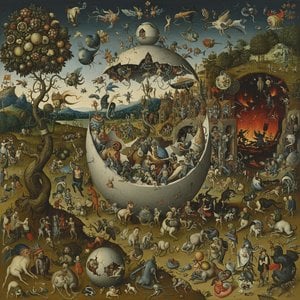
Hieronymus Bosch: 25 Arcydzieł Mistrza Niderlandzkiego Renesansu | ArtsDot
Odkryj 25 arcydzieł Hieronymusa Boscha – mistrza niderlandzkiego renesansu! Poznaj fascynujące historie, symbolikę i techniki malarskie tego niezwykłego artysty. Reprodukcje obrazów najwyższej jakości na ArtsDot.com. Eksploruj pełną kolekcję online!
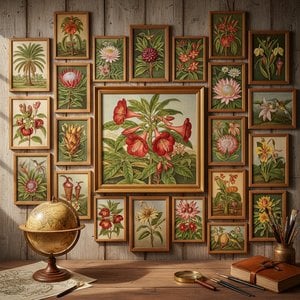
Marianne North: 25 Najpiękniejszych Obrazów Botanicznych i Krajobrazów – Kolekcja ArtsDot
Odkryj 25 fascynujących obrazów Marianne North – wiktoriańskiej artystki i botaniczki. Egzotyczne krajobrazy, kolorowe kwiaty i inspiracje wnętrzarskie. Reprodukcje najwyższej jakości na ArtsDot.com! Poznaj pełną kolekcję online.

Fernand Léger: 25 Arcydzieł Kubizmu i Maszynerii - Kolekcja ArtsDot
Odkryj 25 arcydzieł Fernanda Légera – pioniera kubizmu i malarstwa maszyn. Poznaj historię, technikę i inspiracje tych ikonicznych obrazów. Reprodukcje najwyższej jakości na ArtsDot.com! Eksploruj pełną kolekcję online.
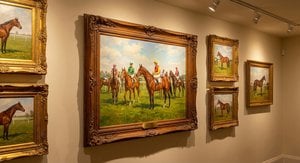
Sir Alfred James Munnings: 25 Arcydzieł Malarstwa Koni i Angielskiej Wsi | ArtsDot.com
Odkryj 25 arcydzieł Sir Alfreda Jamesa Munningsa – mistrza malarstwa koni i angielskiego krajobrazu. Poznaj historię, technikę i piękno jego obrazów. Reprodukcje najwyższej jakości na ArtsDot.com! Eksploruj pełną kolekcję online.