

- 39.0 x 56.0 cm


The picture follows your choices: , .
Opis obiektu
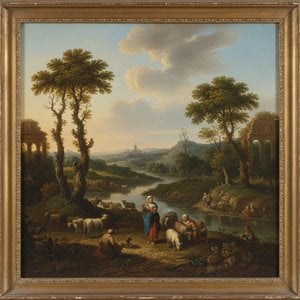
Experience the serene beauty of Philips Wouwerman's Dune Landscape (1645), a masterful depiction of Dutch Golden Age nature and maritime life housed at Vienna’s Kunsthistorisches Museum.
 Rozwiń treść
Biografia artysty
"meta_description": "Philips Wouwerman (1619-1668) – holenderski malarz zimy Golden Age, znany ze dynamicznych scen myśliwskich, krajobrazów i bitew, a szczególnie mistrzowskiego przedstawienia koni. Jego obrazy to fascynujące portrety życia XVII wieku."
Ręcznie malowana reprodukcja olejowa
Ręcznie malowany obraz olejny na płótnie, wykonany na zamówienie przez naszych artystów w wybranym przez Ciebie wymiarze i oprawie. ( Przełącz na wydania drukowane Przejdź do wersji cyfrowej)
More about this painting
 Podgląd w skali 1:1
 Wyślij jako kartkę
 Udostępnij
 Szczegóły dzieła
 Przewodnik

 Pobierz obraz
 Podobne obiekty
 RTG
RTG Pokaz slajdów
 Q&A
Q&A Statystyki
Order your painting in four simple steps
Take your time. You can change any answer; the price in your order card follows each choice.
1 Step one of four
Which size would you like?
These sizes keep the proportions of the original painting. The drawing shows your choice on a wall, above a two-metre sofa.
Or give your own measurements
Wybierz spośród naszych standardowych rozmiarów, które zachowują oryginalne proporcje dzieła sztuki.

Wpisz wymaganą szerokość i wysokość, aby obraz pasował do Twojej ramy lub ściany. Ponieważ jest to dzieło malowane ręcznie, w przypadku rozmiaru o innych proporcjach artysta może domalować nieco więcej wokół obrazu lub przyciąć jego fragmenty — wybór należy do Ciebie. Przed rozpoczęciem pracy prześlemy Ci cyfrową wizualizację do zatwierdzenia. Obraz widoczny na tej stronie nie przedstawia rzeczywistego efektu — jedynie wizualizacja oddaje realny rezultat.
2 Step two of four
How should it be prepared: rolled, stretched or framed?
The prices below are for the size you chose in step one.
Choose the edges of the stretched canvas
Choose your frame

White zł1

Blurside zł1

Extended zł1

P118B zł10

P118H zł10

P118W zł10

P438Z zł10

P508JH zł12

P508YH zł12

P805H zł10

P805Z zł10

P919BZ zł10

P919G zł10

P919XJ zł10

P959ZH zł10

P968JZ zł12

W106C zł8

W218G zł10

W218JH zł8

W218Y zł10

W307PJ zł10

W316G zł10

W316PJ zł8

W316Y zł10

W398PJ zł8

W4111J zł10

W500HY zł15

W500JH zł15

W692G zł12

W849H zł8

W940BG zł15

W953PJ zł8

H24-GOLD zł30

H24-SILVER zł30

H36-GOLD zł45

H36-SILVER zł45
W oprawie
Moulding: . Overall size with the frame: .
3 Step three of four
Would you like anything changed in the painting?
Most people answer no. Because each painting is made by hand, our artist can also adapt it for you.
After order, ArtsDot.com team will email client for instructions and provide a mockup preview
4 Step four of four
A few finishing options
All of them are optional. The answers already selected cost nothing extra.
Who paints it?
Dostawa na całym świecie () w ciągu 3–4 tygodni zamiast standardowych 5 tygodni. (3 Listopad). Bez kompromisów w kwestii jakości.
A nameplate, as in a museum?
Szczegóły grawerowanej brązowej tabliczki
This elegant plaque features the artist's name and the title of the artwork, finely engraved for a timeless presentation.
It is made from bronze with a refined, elegant finish. The text is precisely laser-engraved for a sharp and permanent result. Measuring 9x2 cm, the plaque is compact yet easy to read. It's built to be durable and scratch-resistant, offering a professional, museum-quality look. Mounting is simple thanks to the included adhesive backing.
Szczegóły przezroczystej tabliczki akrylowej
The plaque includes essential engraved details such as the artist's name, the title of the artwork, the date it was created, the type of media used-like oil on canvas or watercolor-a brief description of the piece, and a QR code that links to the complete artwork information.
It is crafted from clear acrylic, offering a sleek, modern appearance. The text is UV-engraved in black to ensure strong visual contrast. With a size of 10x15 cm, it ensures optimal readability. It comes equipped with two metal hooks for secure wall mounting. The plaque is designed to be weather-resistant, making it suitable for various environments, and it includes interactive features that work seamlessly with smartphone scanning.
Szczegóły czarnej tabliczki akrylowej
This elegant plaque includes engraved information such as the artist's name, the title of the artwork, the date it was created, the type of media used (like oil on canvas or watercolor), a short description of the artwork, and a QR code for quick access to more information.
The plaque itself is made from refined black acrylic with a premium finish. The text is laser-engraved in white for high contrast and readability. Its size is 10x15 cm, designed to be easy to read. It comes with two metal hooks for professional mounting. The design is sleek and fits any interior style. It is also weather-resistant and durable, with built-in digital integration for mobile compatibility.
A protective varnish?
When do you need it?
✓ Check and order
Your painting, as you ordered it

Dune Landscape
Technika reprodukcji
Wymiary reprodukcji
-

Wybitny mistrz artystyczny
Większa szczegółowość, finezja i dodatkowy czas na realizację
-

Opcje oprawy reprodukcji
-
-
W przypadku dzieł sztuki lub reprodukcji, których którykolwiek z boków przekracza 105 cm (około 41 cali), rama zostanie wysłana w formie zestawu do samodzielnego montażu. Metoda ta zapewnia bezpieczną dostawę i zapobiega uszkodzeniom podczas transportu.
Wymagany profesjonalny montaż – nie jest to produkt typu DIY.
Zestaw musi zostać złożony, a płótno naciągnięte przez doświadczonego profesjonalnego ramiarza, przy użyciu kleju do drewna (brak w zestawie), kleszczy do naciągania płótna oraz ścisków, które utrzymają krosna w równej pozycji podczas schnięcia kleju. Nieprawidłowy montaż lub nierównomierne napięcie płótna może trwale uszkodzić dzieło sztuki i nie podlega naszej gwarancji.
 W przypadku dzieł sztuki lub reprodukcji, których którykolwiek z boków przekracza 105 cm (około 41 cali), rama zostanie wysłana w formie zestawu do samodzielnego montażu. Metoda ta zapewnia bezpieczną dostawę i zapobiega uszkodzeniom podczas transportu.
W zestawie znajdują się wszystkie listwy z litego drewna, precyzyjnie docięte do wymiarów.
Montaż odbywa się przy użyciu dołączonych wkrętów oraz kleju do drewna do łączenia narożników, którego zestaw nie zawiera i który musi zostać dostarczony przez ramiarza.
Wymagane są profesjonalne narzędzia, których nie ma w zestawie: kleszcze do naciągania płótna (napinacz) oraz zaciski, które pozwolą utrzymać listwy w równej pozycji podczas schnięcia kleju.
Ważne:
Do połączenia narożników niezbędny jest klej do drewna, listwy należy unieruchomić za pomocą ścisków do momentu całkowitego wyschnięcia kleju, a naciągnięcie płótna na złożoną ramę wymaga użycia kleszczy do naciągania płótna. Żaden z tych elementów nie jest dołączony do zestawu. Przed zamówieniem tego rozmiaru zalecamy konsultację z doświadczonym ramiarzem.

Etykieta obiektu
-
-

Lakier ochronny
Lakier z połyskiem (pogłębia kolory, chroni przed światłem i wilgocią)
-

Personalizacja dzieła
Przykłady możliwości personalizacji: zastąp twarz zdjęciem klienta; dodaj zwierzę domowe (np. zamień kota na psa); umieść ukrytą wiadomość w tle; zmień krajobraz lub elementy tła.
-

Ekspresowa
Dostawa na cały świat () w ciągu 3–4 tygodni zamiast standardowych 5 tygodni. (3 Listopad). Bez kompromisów w kwestii jakości.
-
Przesyłka ekspresowa
Dostawa na cały świat () w ciągu 5 tygodni. (10 Listopad).
W cenie
Cena całkowita
zł 1024
Opcja ze szkłem jest dostępna wyłącznie w rozmiarach poniżej 110 cm
Included with every order
- Bezpłatna ekspresowa wysyłka na cały świat
- Wysokiej jakości płótno lniane
- Pełne ubezpieczenie przesyłki
- Gwarancja zwrotu należności celnych i podatków importowych
- Gwarancja wiernego odwzorowania kolorów
- 100-dniowa polityka zwrotów (tylko w przypadku wad)
- Gwarancja 100% zwrotu pieniędzy
- Zniżka przy zakupie wielu sztuk


A Serene Vista of Dutch Tradition: Exploring Philips Wouwerman’s Dune Landscape
Philips Wouwerman (baptized May 24, 1619 – died May 19, 1668) was a prolific and remarkably adaptable Dutch painter who cemented his place as one of the most celebrated artists of the Dutch Golden Age. Unlike many contemporaries focused on portraiture—though he produced several notable portraits—Wouwerman dedicated himself primarily to capturing the dynamism of the natural world and the visceral thrill of hunting expeditions, establishing him as a pioneer in landscape painting and a master storyteller through visual representation. His Dune Landscape, completed in 1645, exemplifies his distinctive approach and offers a window into the artistic sensibilities of his era.The Painter’s Vision: Style and Technique
Wouwerman's style is characterized by an unparalleled realism combined with expressive brushwork that imbues his canvases with palpable energy. He eschewed idealized depictions favored by some artists, opting instead for meticulous observation and detailed rendering—a hallmark of the *luminist* movement gaining traction during this period. The Dune Landscape showcases this commitment to accuracy; every ripple in the water’s surface, every grain of sand on the dune, is rendered with painstaking detail. His technique involved layering thin glazes of oil paint over a preparatory underpainting, allowing for subtle gradations of color and creating an illusion of depth that transcends mere representation. This masterful manipulation of light—particularly its reflection off the water—is arguably Wouwerman’s greatest achievement, transporting viewers into the very heart of the scene.A Snapshot of Seventeenth-Century Life
The painting depicts a coastal dune landscape populated by figures engaged in leisurely pursuits – men observing the sea and contemplating the beauty of their surroundings. This wasn't merely an aesthetic exercise; it reflected the broader cultural preoccupation with humanist ideals prevalent during the Dutch Golden Age. The inclusion of boats adds another layer of significance, symbolizing trade routes and the economic prosperity that fueled this artistic flourishing. Furthermore, Wouwerman’s depiction captures a moment of quiet contemplation amidst activity, suggesting a harmonious relationship between humanity and nature—a sentiment deeply rooted in Calvinist theology which emphasized God's dominion over creation.Symbolism Within the Frame
Beyond its visual splendor, Dune Landscape carries symbolic weight. The dune itself represents stability and permanence against the backdrop of turbulent seas, mirroring the philosophical debates surrounding predestination and free will that dominated intellectual discourse at the time. The figures on the dune are not simply observers; they embody human intellect and moral contemplation—a deliberate choice by Wouwerman to elevate the subject matter beyond mere visual pleasure. The artist’s careful composition directs the viewer's gaze outwards, encouraging reflection on the grandeur of God’s creation and humanity’s role within it.Legacy and Emotional Resonance
Philips Wouwerman’s Dune Landscape continues to resonate with audiences today because it transcends its historical context. Its luminous palette, masterful brushwork, and evocative depiction of a tranquil seascape evoke feelings of serenity and wonder—qualities that endure across centuries. It stands as a testament to the power of art to capture not only what is seen but also what is felt, cementing Wouwerman’s reputation as one of the most emotionally compelling painters of his generation. Its current residence at the Kunsthistorisches Museum in Vienna ensures its preservation for future generations to appreciate this enduring masterpiece.Pytania i odpowiedzi
Jak mogę pobrać obraz „Dune Landscape” – Philips Wouwermański?
Obraz „Dune Landscape” – Philips Wouwermański można pobrać na stronie Pobierz plik cyfrowy dzieła: wysokiej rozdzielczości cyfrowe zdjęcie do pobrania.
W jaki sposób "Dune Landscape" wpisuje się w tematykę i styl twórczości Philips Wouwermański?
"Dune Landscape" dzieli z innymi dziełami Philips Wouwermański styl właściwy dla Dutch Golden Age oraz powracające motywy: dutch tradition, baroque style, hunting imagery, tranquility landscape, genre painting.
Jaki nastrój oddaje „Dune Landscape” – Philips Wouwermański w ramach nurtu Dutch Golden Age?
Tranquil emocja dzieła „Dune Landscape” współgra z jego stylem Dutch Golden Age.
Podobne dzieła


Philips Wouwermański
1619 - 1668, Holandia
Biografia artysty
Philips Wouwerman: A Master of Dutch Dynamism
Philips Wouwerman, born in Haarlem in 1619 and tragically passing away in the same city in 1668, stands as a pivotal figure within the vibrant tapestry of the Dutch Golden Age. More than just a painter, he was a keen observer of human life – a chronicler of bustling marketplaces, spirited hunts, and the quiet dramas unfolding amidst landscapes both familiar and fantastical. His prolific output, encompassing over a thousand works (though many attributed to his numerous followers), reveals an artist constantly evolving, yet always rooted in the traditions of Haarlem and deeply influenced by the artistic currents of his time.
Early Influences and Artistic Training
Wouwerman’s early life offers intriguing glimpses into his formative years. Born into a family connected to the art world – his father, Pouwels Joostsz Wouwerman, was a painter specializing in historical scenes – he likely received some initial instruction from his father. However, details regarding his formal training remain somewhat elusive. A significant influence on his early work appears to have been the *bamboccianti* tradition, a movement originating in Rome that focused on depicting everyday life and genre scenes populated by peasants, soldiers, and laborers. Artists like Pieter van Laer (1592/99–after 1642), known for his lively depictions of tavern scenes and street life, undoubtedly shaped Wouwerman’s initial approach to composition and subject matter. It's believed that he also studied under Frans Hals (1581/85–1666), a prominent Haarlem portraitist, though the direct impact of Hals’ distinctive style on Wouwerman’s mature work is subtle.
The Emergence of a Unique Style
Wouwerman's artistic development witnessed a remarkable transformation throughout his career. Initially emulating the *bamboccianti*, he gradually developed a distinctly personal style, characterized by a masterful command of light and shadow, dynamic compositions, and an unparalleled ability to render horses in motion. A key element of this evolution was the introduction of the diagonal slope of land – often featuring a strategically placed tree acting as a repoussoir (a device used to create depth and drama) – which became a hallmark of his landscapes. His mid-career works are particularly notable for their carefully constructed scenes, populated by figures engaged in various activities: hunting parties, military encampments, festive gatherings of peasants, and travelers pausing at inns. These compositions were not merely static representations; they conveyed a sense of movement, energy, and narrative complexity.
Mastery of the Horse and Expanding Subject Matter
Perhaps Wouwerman’s most enduring legacy lies in his extraordinary skill as an equestrian painter. He possessed an almost uncanny ability to capture the power, grace, and dynamism of horses – from majestic warhorses charging into battle to spirited hunters pursuing their quarry. Art historian Frederik J. Duparc famously declared him “undoubtedly the most accomplished and successful 17th-century Dutch painter of horses,” a testament to his meticulous observation, anatomical accuracy, and understanding of equine movement. Beyond his equestrian paintings, Wouwerman broadened his subject matter considerably, venturing into landscapes with travelers, cavalry battles, military encampments, and even depictions of everyday life – all rendered with remarkable detail and a keen eye for storytelling. His later works often featured a softer palette and a more subdued atmosphere, reflecting a shift in artistic sensibilities.
Historical Significance and Lasting Influence
Philips Wouwerman’s paintings enjoyed immense popularity during his lifetime, securing him a prominent place within the Dutch art market. His work was highly sought after by collectors throughout Europe, including princely houses in Dresden and St. Petersburg, demonstrating its enduring appeal. The fact that many of his works were copied and imitated by artists like Jan van Huchtenburgh and Pieter van Bredael underscores his significant influence on subsequent generations of painters. Wouwerman’s legacy extends beyond individual masterpieces; he represents a pivotal moment in the development of Dutch painting – a synthesis of observation, technique, and narrative skill that continues to captivate viewers today. His paintings offer a vibrant window into the social, cultural, and artistic landscape of the Dutch Golden Age.

Powiązane artykuły
Nicolaes Berchem: Dutch Golden Age Pastoralism & the Evolution of Landscape Painting
Explore the captivating world of Nicolaes Berchem, a leading Dutch Golden Age painter. Discover his idyllic landscapes, masterful technique & lasting influence on art history. Learn more at ArtsDot.

Charles Leickert: Capturing the Dutch Golden Age Light – A Comprehensive Study of Technique, Context, and Legacy
Explore the captivating winter landscapes of Charles Leickert, a master of Dutch Golden Age light & atmosphere. Discover his techniques, symbolism, and lasting legacy – a comprehensive study for art enthusiasts and collectors.

Złoty Wiek Niderlandów: Światło, Realizm i Kulturowe Innowacje w Malarstwie Barokowym
Odkryj fascynujący świat malarstwa holenderskiego Złotego Wieku! Poznaj arcydzieła Rembrandta, Vermeera i innych mistrzów. Analiza technik, gatunków i wpływu na sztukę europejską.