


The picture follows your choices: , .
Opis obiektu
Discover "Lochside Scene" by James William Giles (1801-1870). This serene Scottish landscape captures a peaceful sunset over a loch, showcasing the artist's skill and capturing a moment of tranquility.
 Rozwiń treść
Biografia artysty
James William Giles (1801-1870) – szkocki malarz krajobrazowy, znany z atmosferycznych pejzaży i portretów dla królowej Wiktorii. Jego prace uchwycą piękno Szkocji.
Ręcznie malowana reprodukcja olejowa
Ręcznie malowany obraz olejny na płótnie, wykonany na zamówienie przez naszych artystów w wybranym przez Ciebie wymiarze i oprawie. ( Przełącz na wydania drukowane Przejdź do wersji cyfrowej)
More about this painting
 Podgląd w skali 1:1
 Wyślij jako kartkę
 Udostępnij
 Szczegóły dzieła
 Przewodnik

 Pobierz obraz
 Podobne obiekty
 RTG
RTG Pokaz slajdów
 Q&A
Q&A Statystyki
Order your painting in four simple steps
Take your time. You can change any answer; the price in your order card follows each choice.
1 Step one of four
Which size would you like?
These sizes keep the proportions of the original painting. The drawing shows your choice on a wall, above a two-metre sofa.
Or give your own measurements
Wybierz spośród naszych standardowych rozmiarów, które zachowują oryginalne proporcje dzieła sztuki.

Wpisz wymaganą szerokość i wysokość, aby obraz pasował do Twojej ramy lub ściany. Ponieważ jest to dzieło malowane ręcznie, w przypadku rozmiaru o innych proporcjach artysta może domalować nieco więcej wokół obrazu lub przyciąć jego fragmenty — wybór należy do Ciebie. Przed rozpoczęciem pracy prześlemy Ci cyfrową wizualizację do zatwierdzenia. Obraz widoczny na tej stronie nie przedstawia rzeczywistego efektu — jedynie wizualizacja oddaje realny rezultat.
2 Step two of four
How should it be prepared: rolled, stretched or framed?
The prices below are for the size you chose in step one.
Choose the edges of the stretched canvas
Choose your frame

White zł1

Blurside zł1

Extended zł1

P118B zł10

P118H zł10

P118W zł10

P438Z zł10

P508JH zł12

P508YH zł12

P805H zł10

P805Z zł10

P919BZ zł10

P919G zł10

P919XJ zł10

P959ZH zł10

P968JZ zł12

W106C zł8

W218G zł10

W218JH zł8

W218Y zł10

W307PJ zł10

W316G zł10

W316PJ zł8

W316Y zł10

W398PJ zł8

W4111J zł10

W500HY zł15

W500JH zł15

W692G zł12

W849H zł8

W940BG zł15

W953PJ zł8

H24-GOLD zł30

H24-SILVER zł30

H36-GOLD zł45

H36-SILVER zł45
W oprawie
Moulding: . Overall size with the frame: .
3 Step three of four
Would you like anything changed in the painting?
Most people answer no. Because each painting is made by hand, our artist can also adapt it for you.
After order, ArtsDot.com team will email client for instructions and provide a mockup preview
4 Step four of four
A few finishing options
All of them are optional. The answers already selected cost nothing extra.
Who paints it?
Dostawa na całym świecie () w ciągu 3–4 tygodni zamiast standardowych 5 tygodni. (30 Październik). Bez kompromisów w kwestii jakości.
A nameplate, as in a museum?
Szczegóły grawerowanej brązowej tabliczki
This elegant plaque features the artist's name and the title of the artwork, finely engraved for a timeless presentation.
It is made from bronze with a refined, elegant finish. The text is precisely laser-engraved for a sharp and permanent result. Measuring 9x2 cm, the plaque is compact yet easy to read. It's built to be durable and scratch-resistant, offering a professional, museum-quality look. Mounting is simple thanks to the included adhesive backing.
Szczegóły przezroczystej tabliczki akrylowej
The plaque includes essential engraved details such as the artist's name, the title of the artwork, the date it was created, the type of media used-like oil on canvas or watercolor-a brief description of the piece, and a QR code that links to the complete artwork information.
It is crafted from clear acrylic, offering a sleek, modern appearance. The text is UV-engraved in black to ensure strong visual contrast. With a size of 10x15 cm, it ensures optimal readability. It comes equipped with two metal hooks for secure wall mounting. The plaque is designed to be weather-resistant, making it suitable for various environments, and it includes interactive features that work seamlessly with smartphone scanning.
Szczegóły czarnej tabliczki akrylowej
This elegant plaque includes engraved information such as the artist's name, the title of the artwork, the date it was created, the type of media used (like oil on canvas or watercolor), a short description of the artwork, and a QR code for quick access to more information.
The plaque itself is made from refined black acrylic with a premium finish. The text is laser-engraved in white for high contrast and readability. Its size is 10x15 cm, designed to be easy to read. It comes with two metal hooks for professional mounting. The design is sleek and fits any interior style. It is also weather-resistant and durable, with built-in digital integration for mobile compatibility.
A protective varnish?
When do you need it?
✓ Check and order
Your painting, as you ordered it

Lochside Scene
Technika reprodukcji
Wymiary reprodukcji
-

Wybitny mistrz artystyczny
Większa szczegółowość, finezja i dodatkowy czas na realizację
-

Opcje oprawy reprodukcji
-
-
W przypadku dzieł sztuki lub reprodukcji, których którykolwiek z boków przekracza 105 cm (około 41 cali), rama zostanie wysłana w formie zestawu do samodzielnego montażu. Metoda ta zapewnia bezpieczną dostawę i zapobiega uszkodzeniom podczas transportu.
Wymagany profesjonalny montaż – nie jest to produkt typu DIY.
Zestaw musi zostać złożony, a płótno naciągnięte przez doświadczonego profesjonalnego ramiarza, przy użyciu kleju do drewna (brak w zestawie), kleszczy do naciągania płótna oraz ścisków, które utrzymają krosna w równej pozycji podczas schnięcia kleju. Nieprawidłowy montaż lub nierównomierne napięcie płótna może trwale uszkodzić dzieło sztuki i nie podlega naszej gwarancji.
 W przypadku dzieł sztuki lub reprodukcji, których którykolwiek z boków przekracza 105 cm (około 41 cali), rama zostanie wysłana w formie zestawu do samodzielnego montażu. Metoda ta zapewnia bezpieczną dostawę i zapobiega uszkodzeniom podczas transportu.
W zestawie znajdują się wszystkie listwy z litego drewna, precyzyjnie docięte do wymiarów.
Montaż odbywa się przy użyciu dołączonych wkrętów oraz kleju do drewna do łączenia narożników, którego zestaw nie zawiera i który musi zostać dostarczony przez ramiarza.
Wymagane są profesjonalne narzędzia, których nie ma w zestawie: kleszcze do naciągania płótna (napinacz) oraz zaciski, które pozwolą utrzymać listwy w równej pozycji podczas schnięcia kleju.
Ważne:
Do połączenia narożników niezbędny jest klej do drewna, listwy należy unieruchomić za pomocą ścisków do momentu całkowitego wyschnięcia kleju, a naciągnięcie płótna na złożoną ramę wymaga użycia kleszczy do naciągania płótna. Żaden z tych elementów nie jest dołączony do zestawu. Przed zamówieniem tego rozmiaru zalecamy konsultację z doświadczonym ramiarzem.

Etykieta obiektu
-
-

Lakier ochronny
Lakier z połyskiem (pogłębia kolory, chroni przed światłem i wilgocią)
-

Personalizacja dzieła
Przykłady możliwości personalizacji: zastąp twarz zdjęciem klienta; dodaj zwierzę domowe (np. zamień kota na psa); umieść ukrytą wiadomość w tle; zmień krajobraz lub elementy tła.
-

Ekspresowa
Dostawa na cały świat () w ciągu 3–4 tygodni zamiast standardowych 5 tygodni. (30 Październik). Bez kompromisów w kwestii jakości.
-
Przesyłka ekspresowa
Dostawa na cały świat () w ciągu 5 tygodni. (6 Listopad).
W cenie
Cena całkowita
zł 1013
Opcja ze szkłem jest dostępna wyłącznie w rozmiarach poniżej 110 cm
Included with every order
- Bezpłatna ekspresowa wysyłka na cały świat
- Wysokiej jakości płótno lniane
- Pełne ubezpieczenie przesyłki
- Gwarancja zwrotu należności celnych i podatków importowych
- Gwarancja wiernego odwzorowania kolorów
- 100-dniowa polityka zwrotów (tylko w przypadku wad)
- Gwarancja 100% zwrotu pieniędzy
- Zniżka przy zakupie wielu sztuk


A Moment of Highland Grace: James William Giles’s “Lochside Scene”
James William Giles' "Lochside Scene," painted in 1838, isn’t merely a depiction of a Scottish landscape; it’s a carefully constructed tableau brimming with the quiet dignity and understated beauty characteristic of the artist’s oeuvre. The scene unfolds along the shores of a loch – likely Loch Lomond or a similar expanse of water – where two figures stand poised on the bank, seemingly lost in contemplation beneath the fading light of a sunset. This isn't a dramatic vista of towering mountains or violent storms; instead, Giles offers us a serene moment, a pocket of tranquility captured with remarkable precision and imbued with a palpable sense of melancholy and reflection.
Giles, born in Aberdeen in 1801, was deeply rooted in the artistic traditions of his region. His early training, largely self-directed within the domestic sphere under his father’s guidance, instilled a profound understanding of light, shadow, and the subtle nuances of color – skills he would later hone through commissions for royalty and aristocratic patrons. His work frequently draws upon the dramatic landscapes of northern Scotland, but it's in this particular piece that we see a shift towards a more intimate and contemplative style. The figures themselves are deliberately indistinct, their faces obscured by the gathering dusk, inviting the viewer to project their own emotions and experiences onto the scene.
The Language of Light and Color
Giles’s technique is characterized by a meticulous attention to detail and an almost photographic realism. He employs a restrained palette – predominantly muted blues, greens, and browns – that perfectly captures the atmospheric conditions of twilight. The light isn't aggressively bright; rather, it’s diffused and softened, creating a sense of gentle melancholy. Notice how he builds up layers of color with delicate brushstrokes, suggesting texture in the water, the foliage, and even the clothing of the figures. The use of chiaroscuro – the dramatic contrast between light and dark – is particularly effective in highlighting the forms and adding depth to the composition. The subtle gradations of tone create a sense of movement and atmosphere, as if the scene is slowly dissolving into the approaching night.
Furthermore, Giles’s mastery lies in his ability to evoke mood through color. The dominant blues and greens speak to the vastness and mystery of the loch, while the warm hues of the setting sun hint at a fleeting moment of beauty before darkness descends. The overall effect is one of quiet contemplation – an invitation to pause and appreciate the simple pleasures of nature.
Symbolism and Context
“Lochside Scene” was painted during a period of significant social and political change in Scotland, following the Highland Clearances and the rise of industrialization. While seemingly a straightforward landscape, the painting can be interpreted as a reflection on themes of loss, memory, and the passage of time. The indistinct figures suggest a sense of isolation and loneliness – perhaps representing individuals grappling with the uncertainties of their era. It’s also worth noting that Giles was commissioned by prominent Scottish families, including the Earl of Aberdeen, suggesting an interest in documenting and celebrating the beauty of his homeland.
The inclusion of the dog, partially obscured in the background, adds another layer of intrigue. Dogs were often associated with loyalty, companionship, and a connection to the natural world – elements that resonated deeply with the Scottish identity. It’s possible that Giles intended the animal to symbolize a bond between the figures or perhaps a longing for simpler times.
A Legacy in Reproduction
Today, “Lochside Scene” is readily available as a high-quality reproduction, allowing art lovers and interior designers alike to bring this evocative landscape into their homes. The meticulous detail and atmospheric quality of the original are faithfully reproduced, capturing the essence of Giles’s artistic vision. Whether adorning a study or a living room, this painting offers a timeless reminder of the beauty and tranquility of the Scottish Highlands – a moment frozen in time, inviting us to contemplate the mysteries of nature and the complexities of human experience.
Pytania i odpowiedzi
Do którego okresu twórczości James William Giles należy dzieło „Lochside Scene”?
„Lochside Scene” pochodzi z okresu Early Period w twórczości James William Giles. Klasyfikacja ta wiąże dzieło z rozwojem artysty.
Jaki jest dominujący kolor dzieła „Lochside Scene” – James William Giles?
„Lochside Scene” skłania się ku Amber to Saffron tonacji.
Jaki poziom luminancji ma „Lochside Scene” – James William Giles?
„Lochside Scene” – James William Giles ma luminancję na poziomie Soft Shadow. Luminancja określa, jak dużą ilość światła zdają się odbijać kolory.
Podobne dzieła


James William Giles
1801 - 1870, Wielka Brytania
Biografia artysty
James William Giles (1801–1870): A Life Etched in Light
James William Giles, a name perhaps less familiar than some of his contemporaries, nevertheless holds a significant place within the history of Scottish art. Born in Glasgow in 1801, amidst the bustling industrial landscape of the burgeoning textile industry, his artistic journey began not within the formal confines of prestigious academies but rather within the nurturing environment of his family home. His father, a skilled designer and artist himself, instilled in young James an early appreciation for visual expression – a spark that ignited with remarkable intensity. However, this idyllic beginning was soon disrupted by hardship; the elder Giles abandoned the family when James was still a boy, thrusting upon him the weighty responsibility of supporting his mother and sister. This challenging period forged not only resilience but also an unwavering dedication to honing his artistic talent—a commitment born from necessity and fueled by a profound love for creation. Even at the tender age of thirteen, James found solace and sustenance in art, meticulously adorning snuffbox lids with delicate portraits – miniature testaments to a skill far exceeding his years. These early commissions, coupled with teaching opportunities secured after the family’s relocation to Aberdeen around 1805, provided him with a means of livelihood while simultaneously refining his craft. Formal education at the Aberdeen Art School offered foundational training, yet it was an insatiable thirst for broader horizons that propelled him towards London in 1823, seeking initial instruction and then onward to Paris to study under the esteemed Jean François Regnault.The Italian Awakening: A Dialogue with the Masters
Between 1824 and 1825, Giles embarked on a transformative journey through Italy—a period that fundamentally reshaped his artistic sensibilities. This sojourn wasn’t merely a geographical relocation; it was an immersive experience within the heart of artistic heritage, a profound dialogue with the Old Masters that profoundly influenced his aesthetic vision. He dedicated himself to meticulously copying forty masterpieces – works he later exhibited in Oxford, demonstrating his unwavering commitment to mastering technique and understanding the principles of classical art. More significantly, Italy gifted him with something intangible: an unparalleled understanding of light. The radiant Mediterranean sun, casting its golden hues upon ancient ruins; the subtle nuances of shadow dancing across weathered stone—these elements seeped into his artistic consciousness, becoming defining characteristics of his mature style. He observed how light interacted with landscapes, creating a sense of depth and atmosphere that would later become a hallmark of his work. This Italian sojourn wasn’t just about copying paintings; it was about absorbing the very essence of artistic expression—a process that fundamentally altered his approach to composition, color, and technique.A Master of Atmosphere: Style and Influences
James William Giles carved a unique niche for himself as a painter of classic landscapes imbued with an exceptional sensitivity to atmospheric effects. He wasn’t simply depicting scenes; he was conveying *experiences*—the crisp chill of a Highland storm, the golden warmth of a sunset over rolling hills, the ethereal quality of mist clinging to ancient trees. His sky studies were particularly celebrated for their originality and boldness, demonstrating a keen understanding of meteorological phenomena and an ability to render them with breathtaking realism. The influence of J.M.W. Turner is undeniable in Giles’s work; he admired Turner's daring use of color and his mastery of atmospheric perspective, incorporating similar techniques into his own compositions. However, Giles wasn’t merely imitating; he was synthesizing these influences with his own distinct vision, creating landscapes that were both dramatic and deeply personal. Beyond the grandeur of sweeping vistas, Giles also revealed a fondness for more intimate scenes, frequently depicting angling scenes – a reflection of his lifelong passion for fishing. These paintings offer glimpses into leisurely pursuits, capturing the quiet beauty of rural life and the harmonious relationship between man and nature. His versatility extended beyond painting; he demonstrated considerable skill in landscape architecture, designing public gardens and monuments within Aberdeen, including the striking James McGrigor Monument in Duthie Park, and landscaping estates throughout Aberdeenshire.Royal Favor and Lasting Recognition
Giles’s talent didn't go unnoticed by those in positions of power. He received commissions from Queen Victoria and members of the Scottish aristocracy, a testament to his growing reputation and artistic merit. His views of Balmoral Castle proved particularly significant; they so captivated Queen Victoria and Prince Albert that they were convinced to lease – and later purchase – the estate. Giles played an integral role in shaping the grounds surrounding the castle, assisting with the layout of gardens and parkland, further cementing his connection to the royal family. In 1829, he achieved another milestone: election as an Academician of the Royal Scottish Academy, a prestigious honor that acknowledged his artistic contributions. He was also a founding member of the Aberdeen Artists Society in 1827 alongside Archibald Simpson, demonstrating his commitment to fostering a vibrant artistic community within his hometown. Despite this recognition during his lifetime, Giles’s work fell into relative obscurity after his death in 1870. Perhaps it was due to his decision to remain largely based in Aberdeen rather than seeking the spotlight of London's art scene. However, recent years have witnessed a resurgence of interest in his paintings, fueled by a growing appreciation for his unique style and his significant contribution to Scottish art.Legacy and Notable Works
- A Falconer: A captivating example of Giles’s skill in capturing both animal grace and atmospheric detail.
- Figures By A Palace: Showcasing aristocratic leisure within a grand garden setting, demonstrating his Rococo/Neoclassical influences.
- A Sportsman With Gundogs On A Woodland Path: Reflecting his passion for angling and the beauty of rural life.
- Drawings of Aberdeenshire Castles: Commissioned by Lord Aberdeen, these watercolors reveal a fine impression of Scottish architecture.

Powiązane artykuły
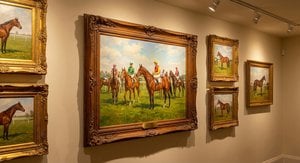
Sir Alfred James Munnings: 25 Arcydzieł Malarstwa Koni i Angielskiej Wsi | ArtsDot.com
Odkryj 25 arcydzieł Sir Alfreda Jamesa Munningsa – mistrza malarstwa koni i angielskiego krajobrazu. Poznaj historię, technikę i piękno jego obrazów. Reprodukcje najwyższej jakości na ArtsDot.com! Eksploruj pełną kolekcję online.

Romantyczny Krajobraz w Malarstwie: 10 Arcydzieł, Które Zdefiniowały Epokę | ArtsDot.com
Odkryj 10 arcydzieł romantyzmu w malarstwie! Poznaj historie Caspara Davida Friedricha, Turnera i innych mistrzów. Inspiracje wnętrzarskie & reprodukcje obrazów najwyższej jakości na ArtsDot.com. Eksploruj kolekcję online!

James Giles: Capturing Scottish Life Through the Lens of British Realism
Explore the life & work of James Giles (1801-1870), a master of Scottish landscape painting and favored artist of Queen Victoria. Discover his atmospheric realism & royal commissions.