


The picture follows your choices: , .
Opis obiektu
Explore Henri Edmond Cross’ ‘A Pine Tree,’ a vibrant Neo-Impressionist landscape showcasing Pointillism & nature's beauty. Admire this 1905 masterpiece – perfect for art lovers!
 Rozwiń treść
Biografia artysty
Henri-Edmond Cross – francuski malarz neoimpresjonistyczny znany z atmosferycznych krajobrazów i pionierskiego wykorzystania Pointylizmu w celach ekspresyjnych. Jego twórczość wpłynęła na Fauwizm i współcześnie fascynuje swoją kolorystyką oraz wizją społeczną.
Ręcznie malowana reprodukcja olejowa
Ręcznie malowany obraz olejny na płótnie, wykonany na zamówienie przez naszych artystów w wybranym przez Ciebie wymiarze i oprawie. ( Przełącz na wydania drukowane Przejdź do wersji cyfrowej)
More about this painting
 Podgląd w skali 1:1
 Wyślij jako kartkę
 Udostępnij
 Szczegóły dzieła
 Przewodnik

 Pobierz obraz
 Podobne obiekty
 RTG
RTG Pokaz slajdów
 Q&A
Q&A Statystyki
Order your painting in four simple steps
Take your time. You can change any answer; the price in your order card follows each choice.
1 Step one of four
Which size would you like?
These sizes keep the proportions of the original painting. The drawing shows your choice on a wall, above a two-metre sofa.
Or give your own measurements
Wybierz spośród naszych standardowych rozmiarów, które zachowują oryginalne proporcje dzieła sztuki.

Wpisz wymaganą szerokość i wysokość, aby obraz pasował do Twojej ramy lub ściany. Ponieważ jest to dzieło malowane ręcznie, w przypadku rozmiaru o innych proporcjach artysta może domalować nieco więcej wokół obrazu lub przyciąć jego fragmenty — wybór należy do Ciebie. Przed rozpoczęciem pracy prześlemy Ci cyfrową wizualizację do zatwierdzenia. Obraz widoczny na tej stronie nie przedstawia rzeczywistego efektu — jedynie wizualizacja oddaje realny rezultat.
2 Step two of four
How should it be prepared: rolled, stretched or framed?
The prices below are for the size you chose in step one.
Choose the edges of the stretched canvas
Choose your frame

White zł1

Blurside zł1

Extended zł1

P118B zł10

P118H zł10

P118W zł10

P438Z zł10

P508JH zł12

P508YH zł12

P805H zł10

P805Z zł10

P919BZ zł10

P919G zł10

P919XJ zł10

P959ZH zł10

P968JZ zł12

W106C zł8

W218G zł10

W218JH zł8

W218Y zł10

W307PJ zł10

W316G zł10

W316PJ zł8

W316Y zł10

W398PJ zł8

W4111J zł10

W500HY zł15

W500JH zł15

W692G zł12

W849H zł8

W940BG zł15

W953PJ zł8

H24-GOLD zł30

H24-SILVER zł30

H36-GOLD zł45

H36-SILVER zł45
W oprawie
Moulding: . Overall size with the frame: .
3 Step three of four
Would you like anything changed in the painting?
Most people answer no. Because each painting is made by hand, our artist can also adapt it for you.
After order, ArtsDot.com team will email client for instructions and provide a mockup preview
4 Step four of four
A few finishing options
All of them are optional. The answers already selected cost nothing extra.
Who paints it?
Dostawa na całym świecie () w ciągu 3–4 tygodni zamiast standardowych 5 tygodni. (2 Listopad). Bez kompromisów w kwestii jakości.
A nameplate, as in a museum?
Szczegóły grawerowanej brązowej tabliczki
This elegant plaque features the artist's name and the title of the artwork, finely engraved for a timeless presentation.
It is made from bronze with a refined, elegant finish. The text is precisely laser-engraved for a sharp and permanent result. Measuring 9x2 cm, the plaque is compact yet easy to read. It's built to be durable and scratch-resistant, offering a professional, museum-quality look. Mounting is simple thanks to the included adhesive backing.
Szczegóły przezroczystej tabliczki akrylowej
The plaque includes essential engraved details such as the artist's name, the title of the artwork, the date it was created, the type of media used-like oil on canvas or watercolor-a brief description of the piece, and a QR code that links to the complete artwork information.
It is crafted from clear acrylic, offering a sleek, modern appearance. The text is UV-engraved in black to ensure strong visual contrast. With a size of 10x15 cm, it ensures optimal readability. It comes equipped with two metal hooks for secure wall mounting. The plaque is designed to be weather-resistant, making it suitable for various environments, and it includes interactive features that work seamlessly with smartphone scanning.
Szczegóły czarnej tabliczki akrylowej
This elegant plaque includes engraved information such as the artist's name, the title of the artwork, the date it was created, the type of media used (like oil on canvas or watercolor), a short description of the artwork, and a QR code for quick access to more information.
The plaque itself is made from refined black acrylic with a premium finish. The text is laser-engraved in white for high contrast and readability. Its size is 10x15 cm, designed to be easy to read. It comes with two metal hooks for professional mounting. The design is sleek and fits any interior style. It is also weather-resistant and durable, with built-in digital integration for mobile compatibility.
A protective varnish?
When do you need it?
✓ Check and order
Your painting, as you ordered it

A Pine Tree
Technika reprodukcji
Wymiary reprodukcji
-

Wybitny mistrz artystyczny
Większa szczegółowość, finezja i dodatkowy czas na realizację
-

Opcje oprawy reprodukcji
-
-
W przypadku dzieł sztuki lub reprodukcji, których którykolwiek z boków przekracza 105 cm (około 41 cali), rama zostanie wysłana w formie zestawu do samodzielnego montażu. Metoda ta zapewnia bezpieczną dostawę i zapobiega uszkodzeniom podczas transportu.
Wymagany profesjonalny montaż – nie jest to produkt typu DIY.
Zestaw musi zostać złożony, a płótno naciągnięte przez doświadczonego profesjonalnego ramiarza, przy użyciu kleju do drewna (brak w zestawie), kleszczy do naciągania płótna oraz ścisków, które utrzymają krosna w równej pozycji podczas schnięcia kleju. Nieprawidłowy montaż lub nierównomierne napięcie płótna może trwale uszkodzić dzieło sztuki i nie podlega naszej gwarancji.
 W przypadku dzieł sztuki lub reprodukcji, których którykolwiek z boków przekracza 105 cm (około 41 cali), rama zostanie wysłana w formie zestawu do samodzielnego montażu. Metoda ta zapewnia bezpieczną dostawę i zapobiega uszkodzeniom podczas transportu.
W zestawie znajdują się wszystkie listwy z litego drewna, precyzyjnie docięte do wymiarów.
Montaż odbywa się przy użyciu dołączonych wkrętów oraz kleju do drewna do łączenia narożników, którego zestaw nie zawiera i który musi zostać dostarczony przez ramiarza.
Wymagane są profesjonalne narzędzia, których nie ma w zestawie: kleszcze do naciągania płótna (napinacz) oraz zaciski, które pozwolą utrzymać listwy w równej pozycji podczas schnięcia kleju.
Ważne:
Do połączenia narożników niezbędny jest klej do drewna, listwy należy unieruchomić za pomocą ścisków do momentu całkowitego wyschnięcia kleju, a naciągnięcie płótna na złożoną ramę wymaga użycia kleszczy do naciągania płótna. Żaden z tych elementów nie jest dołączony do zestawu. Przed zamówieniem tego rozmiaru zalecamy konsultację z doświadczonym ramiarzem.

Etykieta obiektu
-
-

Lakier ochronny
Lakier z połyskiem (pogłębia kolory, chroni przed światłem i wilgocią)
-

Personalizacja dzieła
Przykłady możliwości personalizacji: zastąp twarz zdjęciem klienta; dodaj zwierzę domowe (np. zamień kota na psa); umieść ukrytą wiadomość w tle; zmień krajobraz lub elementy tła.
-

Ekspresowa
Dostawa na cały świat () w ciągu 3–4 tygodni zamiast standardowych 5 tygodni. (2 Listopad). Bez kompromisów w kwestii jakości.
-
Przesyłka ekspresowa
Dostawa na cały świat () w ciągu 5 tygodni. (9 Listopad).
W cenie
Cena całkowita
zł 1024
Opcja ze szkłem jest dostępna wyłącznie w rozmiarach poniżej 110 cm
Included with every order
- Bezpłatna ekspresowa wysyłka na cały świat
- Wysokiej jakości płótno lniane
- Pełne ubezpieczenie przesyłki
- Gwarancja zwrotu należności celnych i podatków importowych
- Gwarancja wiernego odwzorowania kolorów
- 100-dniowa polityka zwrotów (tylko w przypadku wad)
- Gwarancja 100% zwrotu pieniędzy
- Zniżka przy zakupie wielu sztuk


A Symphony of Light and Color: The Magic of A Pine Tree
In the realm of Neo-Impressionism, few works capture the ephemeral dance of light with as much rhythmic vitality as Henri Edmond Cross’s 1905 masterpiece, A Pine Tree. This breathtaking landscape is not merely a depiction of nature; it is an immersive sensory experience that invites the viewer to step into a world where color breathes and light vibrates. At its heart stands a majestic pine tree, a towering sentinel that anchors a coastal scene brimming with life. Surrounded by a lush tapestry of smaller trees and verdant banks, the composition draws the eye upward toward a luminous sky, where soft clouds drift through an expanse of brilliant blue. The painting serves as a profound testament to the artist's ability to transform a solitary natural subject into a cosmic celebration of existence.
The technique employed by Cross in this work is nothing short of revolutionary, showcasing the pinnacle of Pointillism. Rather than relying on traditional, sweeping brushstrokes, the artist meticulously applied countless tiny dots of pure, unblended pigment to the canvas. This method requires a sophisticated understanding of optical science; as the viewer stands before the piece, the eye performs its own magic, blending these disparate flecks of pink, orange, yellow, and violet into a cohesive, shimmering atmosphere. The result is a texture that feels alive—a dense, pulsating surface that mimics the way sunlight filters through leaves or reflects off a moving tide. For the discerning collector or interior designer, this technique offers a unique depth that changes subtly depending on the lighting of a room, making it a dynamic centerpiece for any curated space.
Historical Resonance and Artistic Legacy
To understand A Pine Tree is to understand a pivotal moment in art history. Created during the height of the Post-Impressionist movement, this work reflects a deliberate departure from the fleeting, naturalistic concerns of early Impressionism. Cross, alongside contemporaries like Paul Signac and Georges Seurat, sought to bring a more structured, scientific, and expressive approach to color. By utilizing geometric arrangements of light, he paved the way for the radical emotionality of Fauvism and the structural innovations of modern masters like Henri Matisse. This painting is a bridge between the observational world of the 19th century and the abstract, emotive power of the 20th century.
Beyond its technical brilliance, the painting carries a profound symbolic weight. The central pine tree, standing resilient against the vastness of the sky and sea, can be interpreted as a symbol of strength, endurance, and the eternal connection between the earth and the heavens. There is a sense of quietude and peace found in the diffused light of dawn or dusk, evoking a feeling of nostalgia and wonder. For those seeking to bring a sense of tranquility and sophisticated beauty into their homes, a high-quality oil reproduction of this work offers more than just decoration; it provides a window into a moment of pure, luminous harmony that continues to inspire awe over a century after its creation.
Pytania i odpowiedzi
Do jakiego nurtu należy "A Pine Tree"?
Nurt związany z „A Pine Tree” – Henri-Edmond Cross to Post-Impressionism. Ta klasyfikacja sytuuje dzieło wśród pokrewnych artystów i dzieł sztuki.
W którym roku powstało „A Pine Tree” – Henri-Edmond Cross?
"A Pine Tree" powstało w 1905 roku. Data ta pozwala umiejscowić dzieło w kontekście twórczości Henri-Edmond Cross oraz epoki, w której powstało.
Kto stworzył "A Pine Tree" i kiedy?
Autorem dzieła "A Pine Tree" jest Henri-Edmond Cross, a datowanie pracy pochodzi z 1905 roku.
Podobne dzieła


Henri-Edmond Cross
1856 - 1910, Francja
Biografia artysty
A Life Bathed in Light: The Journey of Henri Edmond Cross
Henri Edmond Cross, born Henri-Edmond-Joseph Delacroix in 1856 in the northern French town of Douai, was an artist whose life and work were inextricably linked to a pursuit of light, color, and a harmonious vision of existence. His story is one of artistic evolution, driven by both personal circumstance and a fervent embrace of avant-garde ideals. The son of an adventurous father and a British mother, Cross’s early years saw a relocation to Lille, where his budding talent was recognized and nurtured by Dr. Auguste Soins, a patron who provided crucial financial support for lessons with the esteemed Carolus-Duran. This foundational training instilled in him a respect for classical technique—a grounding that would later be brilliantly subverted as he ventured into the revolutionary world of Neo-Impressionism. Even early on, a desire to forge his own artistic identity led him to adopt “Cross” as part of his name, and eventually fully transition to "Henri-Edmond Cross" in 1886, distancing himself from both the celebrated Eugène Delacroix and another contemporary artist sharing the same surname. This act was symbolic of a larger ambition: to define a unique artistic voice amidst a rapidly changing art world.From Realism to Radiant Divisionism
Cross’s initial artistic explorations leaned towards the Realist tradition, manifesting in portraits and still lifes that demonstrated technical skill but lacked a distinctive spark. He began his training at the École des Beaux-Arts in Paris, studying under various instructors before finding a mentor in Carolus-Duran, whose influence shaped his early style. However, the Parisian art scene of the 1880s was abuzz with new ideas, and Cross found himself increasingly drawn to the revolutionary principles of Neo-Impressionism—a movement spearheaded by Georges Seurat and Paul Signac. This encounter proved transformative. The scientific approach to color theory, the meticulous application of tiny, distinct brushstrokes (or “points”) designed to create optical mixing, resonated deeply with his artistic sensibilities. Simultaneously, recurring bouts of rheumatism led him to seek solace in the warmer climate of southern France, beginning in 1883 and culminating in a permanent settlement in Saint-Clair in 1891. The radiant light and vibrant landscapes of this region became integral to his artistic vision. He didn’t simply replicate Seurat's pointillism; instead, he evolved it, favoring larger, more mosaic-like brushstrokes that retained the luminosity of divided color while allowing for greater expressive freedom. This “second generation” Neo-Impressionism was characterized by its bold chromatic intensity and dynamic compositions—a style that would become his signature.Anarchist Ideals and Utopian Visions
Beyond technical innovation, Cross’s work was deeply informed by a strong sense of social and political idealism—specifically, anarchist beliefs. This conviction wasn't overtly propagandistic; rather, it manifested in his depictions of idyllic rural scenes, portraying harmonious coexistence between humanity and nature as an alternative to the perceived corruption and alienation of modern urban life. His paintings weren’t merely aesthetic exercises but visual statements advocating for a more equitable and peaceful world. The influence of this ideology is subtly woven into the fabric of his compositions, imbuing them with a sense of utopian longing. Works like *Before the Storm* and *The Farm, Evening* are not simply representations of nature; they are allegories for a just society—the vibrant colors and dynamic brushwork evoking energy and optimism, suggesting transformation and renewal. He sought to capture a world where humanity lived in balance with its surroundings, free from the constraints of industrialization and social hierarchy.Key Works & Continuing Relevance
Several works stand out as particularly representative of Cross’s artistic vision:- Before the Storm (aka The Storm): A quintessential example of his Neo-Impressionist landscapes, capturing dramatic skies and hinting at underlying anarchist themes.
- The Washerwoman: Showcases his mastery of Pointillism and divisionism, depicting a scene of everyday life with vibrant color and dynamic composition.
- The Farm, Evening: A serene depiction of rural life, embodying his utopian vision of harmonious coexistence between humanity and nature.
Influences & Legacy
Cross’s artistic development was shaped by a confluence of factors: his formal training under Carolus-Duran instilled in him a solid foundation in classical technique; his exposure to Seurat and Signac introduced him to the principles of Pointillism; and his relocation to southern France provided him with an unparalleled source of inspiration. However, it was his encounter with anarchist thought that truly defined his artistic vision—a vision rooted in a desire for social justice and a belief in the transformative power of art. His work served as a bridge between Impressionism and modernism, paving the way for subsequent generations of artists to explore new possibilities in color, form, and composition. His legacy is evident not only in his own paintings but also in the works of those he influenced, demonstrating the enduring impact of his artistic innovations.


Powiązane artykuły
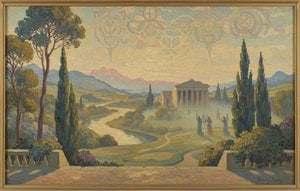
Henri Martin: A Synthesis of Impressionism & Symbolism in the French Landscape Tradition
Explore the captivating world of Henri Martin, a French Post-Impressionist bridging Impressionism & Symbolism. Discover his unique style, influential landscapes, and lasting legacy with ArtsDot.

Poza Impresjonizmem: Eksploracja Głębii Emocjonalnej Malarstwa Postimpresjonistycznego
Odkryj fascynujący świat postimpresjonizmu! Analiza dzieł Van Gogha, Cézanne'a i Gauguina. Poznaj techniki malarskie, symbolikę oraz wpływ tego ruchu na sztukę współczesną. Ekspercka wiedza i inspiracje dla miłośników sztuki.

Impressionizm w Obrazach: 10 Arcydzieł Pełnych Światła i Koloru | ArtsDot
Odkryj 10 arcydzieł impresjonizmu! Poznaj historie Claude Moneta, Degasa i Van Gogha. Reprodukcje obrazów najwyższej jakości – pejzaże pełne światła i koloru do Twojego wnętrza. ArtsDot.