


 Zobacz w skali 1:1
 Wyślij
 Udostępnij
 Szczegóły
 Przewodnik

 Pobierz plik obrazu
 Podobne obiekty
 RTG
RTG Pokaz slajdów
 Statystyki
Bird
 Oil On Canvas
- WallArt
- Romanticism
 1839
1839- 19th Century
 61.0 x 73.0 cm
 Smithsonian American Art Museum
 Czytaj więcej
Giclée / Wydruk artystyczny
Wydruki giclée lub płótna o jakości muzealnej, szybka realizacja i szeroki wybór opcji wykończenia. ( Kup ręcznie malowany obraz Przełącz na wersję cyfrową)




P118B zł10

P118H zł10

P118W zł10

P438Z zł10

P508JH zł12

P508YH zł12

P805H zł10

P805Z zł10

P919BZ zł10

P919G zł10

P919XJ zł10

P959ZH zł10

P968JZ zł12

W106C zł8

W218G zł10

W218JH zł8

W218Y zł10

W307PJ zł10

W316G zł10

W316PJ zł8

W316Y zł10

W398PJ zł8

W4111J zł10

W500HY zł15

W500JH zł15

W692G zł12

W849H zł8

W940BG zł15

W953PJ zł8




Wybierz spośród naszych standardowych rozmiarów, które zachowują oryginalne proporcje dzieła sztuki.

Możesz wprowadzić własne wymiary, aby dopasować dzieło do konkretnej ramy lub przestrzeni. Jeśli wybrany rozmiar nie będzie odpowiadał proporcjom oryginalnego obrazu, przytniecie dzieło lub rozszerzymy obraz za pomocą odbicia lustrzanego lub jednolitego wypełnienia krawędzi. Przed rozpoczęciem produkcji prześlemy cyfrową wizualizację do Twojej akceptacji.
Prosimy pamiętać, że podgląd na ekranie nie odzwierciedla faktycznego przycinania ani rozszerzania. Tylko wizualizacja dokładnie pokaże końcową kompozycję.
Mimo dostępności niestandardowych rozmiarów, zalecamy wybór wymiaru z listy zdefiniowanej, aby zachować oryginalne proporcje.
Dostawa na cały świat () w ciągu 2 tygodni zamiast standardowych 4/5 tygodni. (4 Październik)

Bezpłatna ekspresowa wysyłka na cały świat

Wysokiej jakości płótno lniane

Pełne ubezpieczenie transportowe

Gwarancja zwrotu należności celnych i podatków importowych

Gwarancja idealnego odwzorowania barw

100-dniowy okres na zwrot dzieła w przypadku wykrycia wad produkcyjnych

Gwarancja 100% zwrotu pieniędzy

Oferta przy zakupie wielu sztuk
 Opcja ze szkłem jest dostępna wyłącznie w rozmiarach poniżej 110 cm

Bird
Giclée / Wydruk artystyczny
Rozmiar reprodukcji
-


Suma do zapłaty
zł 230
George Catlin’s “Shin ga wás sa, Handsome Bird”: A Window into the Spirit of the Plains
George Catlin (1796-1872) stands as a singular figure in American art history—a man driven by an unwavering conviction to document the disappearing cultures of Native American tribes during the mid-nineteenth century. His journey began not with formal training but with deeply formative experiences: tales recounted by his mother, Polly Sutton, who herself bore witness to the terrifying brutality of an Indian raid as a young woman. These narratives instilled within Catlin a profound respect for the frontier landscape and its inhabitants, shaping his artistic vision and fueling his determination to preserve their traditions before they vanished forever. Abandoning legal aspirations after just two years, he embraced painting with fervor—a decision that would ultimately yield one of the most iconic depictions of Native American life ever created. “Shin ga wás sa, Handsome Bird,” completed in 1834, exemplifies Catlin’s Romantic style and meticulous approach to portraiture. Executed on canvas using oil paint, this artwork captures a Plains Indian warrior with remarkable realism—a testament to Catlin's dedication to capturing the physical appearance and dignity of his subjects. The composition is deliberately theatrical, positioning the warrior centrally against a backdrop of stylized mountains and sky, reflecting the grandeur and spiritual significance attributed to these landscapes by Native American cultures. Catlin’s use of warm hues – ochre yellows and earthy reds – enhances the painting's emotional impact, conveying both strength and solemn contemplation. The portrait is more than just an image; it’s a carefully crafted symbol of leadership and cultural heritage—a poignant reminder of a bygone era.Exploring Catlin’s Technique: Observation and Stylized Representation
Catlin’s artistic process was characterized by painstaking observation combined with deliberate stylistic choices designed to convey deeper meanings beyond mere visual representation. He spent considerable time studying Native American anatomy and posture, meticulously documenting their physical characteristics with unwavering accuracy. However, he didn't strive for photographic realism; instead, he employed techniques that amplified the emotional resonance of his subjects. The artist utilized a pyramidal composition—a compositional device favored by Romantic painters—to emphasize the warrior’s stature and convey a sense of nobility. Furthermore, Catlin subtly stylized elements of the landscape, mirroring the spiritual worldview of Native Americans who saw mountains as sacred places imbued with divine power.Historical Context: The Rise of Ethnographic Art
“Shin ga wás sa” emerged during a period marked by growing interest in documenting and celebrating indigenous cultures—a trend known as ethnography. Catlin’s work aligns perfectly with this movement, reflecting the anxieties surrounding westward expansion and the perceived decline of Native American traditions. He sought to counteract prevailing stereotypes perpetuated by popular culture and government officials, presenting portraits that honored the dignity and complexity of Native American life. His expeditions into Plains territory yielded invaluable ethnographic data—detailed sketches, watercolors, and written accounts—that contributed significantly to scholarly understanding of Native American societies during the 1830s and 40s.Symbolism Beyond Appearance: Capturing Essence
The painting’s symbolism extends far beyond its depiction of a warrior's physical form. The mountainous backdrop symbolizes the spiritual realm, reflecting the belief that Native Americans viewed mountains as conduits to the divine—a concept central to their cosmology. Catlin’s careful attention to detail—the warrior’s gaze, his posture, and even the subtle shading on his skin—aimed to convey not just what he looked like but also who he was—a man embodying leadership, honor, and connection to the land. “Shin ga wás sa” remains a powerful testament to Catlin's artistic vision and his unwavering commitment to preserving the legacy of Native American culture.Pytania i odpowiedzi
Do jakiego stylu należy "Bird"?
„Bird” autorstwa George Catlin należy do nurtu Romanticism. Nurt ten stanowi stylistyczny kontekst dzieła.
W którym roku powstało dzieło "Bird"?
Powstanie „Bird” autorstwa George Catlin datuje się na 1839.
Kto sprzedaje ręcznie malowane reprodukcje dzieła „Bird” autorstwa George Catlin?
Ręcznie malowaną reprodukcję dzieła „Bird” autorstwa George Catlin można zamówić bezpośrednio na ta strona: ręcznie malowana reprodukcja olejowa na płótnie lnianym, wykonywaną na specjalne zamówienie.
Ile lat miał(a) George Catlin, tworząc "Bird" w 1839 roku?
Gdy w 1839 roku powstało dzieło „Bird”, George Catlin – urodzony/a w 1796 – miał/a 43 lat.
W jakim układzie znajduje się „Bird” autorstwa George Catlin?
Dzieło „Bird” autorstwa George Catlin ma format Landscape. Format ten określa proporcje kompozycji.
Do jakiego wnętrza polecane jest dzieło „Bird” autorstwa George Catlin?
Reprodukcja "Bird" doskonale pasuje do Living Room.
Któremu artyście przypisuje się "Bird"?
Dzieło "Bird" przypisuje się George Catlin.
Podobne dzieła


Biografia artysty
Early Life and the Call of the Frontier
George Catlin, born in Wilkes-Barre, Pennsylvania, in 1796, was destined for a life profoundly shaped by the frontier—a world both alluring and perilous, vividly etched into his memory through the tales spun by his mother, Polly Sutton. Her own harrowing experience as a captive during an Indian raid ignited within young Catlin a deep fascination with the West, a land perceived not merely as distant but as imbued with a unique spirit, a culture rapidly fading from view. Initially trained in law, he found himself drawn to a different path—a desire to capture and preserve the essence of Native American life before it disappeared entirely. This wasn’t simply an artistic pursuit; it was driven by a sense of urgency, a premonition that westward expansion would irrevocably alter these vibrant cultures, silencing their voices and erasing their traditions. His early work, primarily engravings depicting scenes along the Erie Canal, demonstrated a remarkable technical skill and attention to detail—qualities he would later hone into his ambitious project. These initial endeavors served as a crucial foundation, sharpening his observational abilities and solidifying his commitment to visual storytelling, laying the groundwork for his future explorations of the American West.Documenting a Vanishing World: The Indian Gallery
Catlin’s most enduring legacy is undoubtedly “The Indian Gallery,” an extraordinary collection of over 500 paintings meticulously documenting Native American life and culture. Beginning in the 1830s, he embarked on five arduous expeditions into the heart of the American West, traversing vast territories inhabited by tribes such as the Mandan, Sioux, Blackfeet, and Choctaw. These journeys weren’t merely observational; Catlin immersed himself within these communities, participating in ceremonies, witnessing daily life, and forging genuine relationships with tribal leaders—a rare and deeply respectful approach for an outsider at that time. He sought to understand their customs, beliefs, and social structures, translating this knowledge onto canvas with remarkable accuracy and sensitivity. His paintings are not simply portraits; they’re windows into a vanishing world, capturing the dignity, complexity, and profound connection between these people and their environment. Works like Sham Fight, Mandan Boys (1832-1833) vividly portray a playful mock battle among young warriors, showcasing their athleticism and communal spirit, while Medicine Buffalo of the Sioux (1839) captures the solemnity and power of a prominent leader. Catlin’s meticulous attention to detail—from the elaborate clothing and weaponry to the evocative landscapes—provides invaluable insights into the lives of these tribes.A Journey West: Challenges and Artistic Development
Catlin's expeditions were fraught with challenges – logistical difficulties, harsh weather conditions, and the inherent complexities of navigating unfamiliar cultures. He faced skepticism from some quarters, who viewed his work as romanticized or even exploitative. Despite this, he persevered, driven by a deep conviction that documenting these cultures was an urgent necessity. During his travels, Catlin’s artistic style evolved significantly. Initially influenced by European academic painting, he gradually developed a more expressive and dynamic approach—a technique characterized by bold colors, dramatic lighting, and a focus on capturing movement and emotion. He experimented with different mediums, including oil paint, watercolor, and lithography, adapting his techniques to suit the subject matter and environment. His work became increasingly infused with a sense of immediacy and authenticity, reflecting his deep engagement with the people he was portraying. The portraits he created were not merely likenesses; they were attempts to convey the spirit and character of each individual, capturing their unique presence and dignity.Recognition and Legacy
Despite facing financial difficulties and initial resistance from the art establishment, Catlin’s “Indian Gallery” eventually garnered international acclaim. His exhibitions in London, Paris, and Berlin captivated audiences with their unprecedented portrayal of Native American life. The success of these tours provided him with much-needed financial support and solidified his reputation as a pioneering artist and ethnographer. However, he never achieved the level of recognition or compensation he felt was due to him. In 1872, shortly before his death, Catlin donated his collection to the Smithsonian Institution in Washington D.C., hoping it would serve as a lasting testament to his work and a valuable resource for future generations. Today, George Catlin is remembered not only as a talented painter but also as a courageous advocate for Native American rights and a vital chronicler of a vanishing culture. His paintings offer invaluable insights into the lives, customs, and beliefs of the Plains Indians—a legacy that continues to inspire artists, historians, and anyone interested in understanding the complex history of the American West.Key Works
- Sham Fight, Mandan Boys (1832-1833): A lively depiction of a playful mock battle among young Mandan warriors.
- Mrs. George Catlin (Clara Bartlett Gregory) (1850): A portrait showcasing the artist’s wife, offering insight into his personal life.
- Pipestone Quarry, Coteau Des Prairies (1848): Illustrates a sacred site for many tribes and their spiritual connection to the land.
- Medicine Buffalo of the Sioux (1839): A striking portrait capturing the dignity and power of a prominent Sioux leader.
- Prairie Meadows Burning (1832): Depicts a dramatic scene of controlled burning, highlighting the relationship between Native Americans and their environment.
- Little Wolf, A Famos Warrior (1844): A powerful portrait of a Native American warrior, symbolizing strength and resilience.

George Catlin
1796 - 1872 , Stany Zjednoczone
Najważniejsze informacje
- Artistic Movement Or Style: Malba frontierowa
- Artists Or Movements Influenced By This Artist: ['']
- Artists Who Influenced This Artist: ['']
- Date Of Birth: 26 lipca 1796
- Date Of Death: 23 grudnia 1872
- Full Name: George Catlin
- Nationality: Amerykański
- Notable Artworks:
- Sham Fight
- Prairie
- Pipestone
- Buffalo
- Eagle Dance
- Place Of Birth: Wilkes-Barre, USA
Zobacz także powiązane artykuły

Charles Bird King: Capturing Native American Dignity Through Portraiture & Cultural Exchange
Explore the captivating portraits of Charles Bird King, renowned for his depictions of Native American leaders. Discover the historical context, artistic techniques, and collecting value of these significant 19th-century artworks.
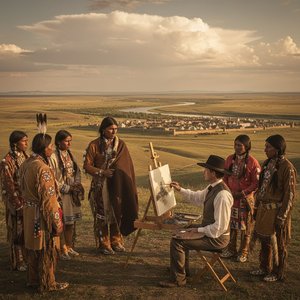
George Catlin: Witnessing & Representing Indigenous Life on the American Frontier
Explore the captivating art of George Catlin, renowned for his vivid portraits & landscapes documenting Native American life on the frontier. Discover a vanishing world through stunning paintings and historical context.

Grant Wood & American Regionalism: Identity, Myth & the Rural Landscape
Explore the world of Grant Wood & American Regionalism with ArtsDot. Discover the symbolism behind 'American Gothic', recurring themes, and the movement's lasting impact on art history. High-quality reproductions available.
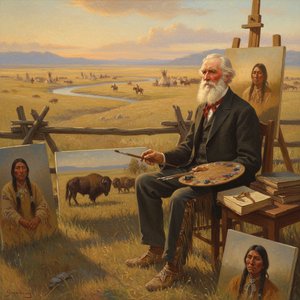
Joseph Henry Sharp: Capturing the Spirit of the Plains – Life, Art & Legacy
Explore the life & art of Joseph Henry Sharp, a founding member of the Taos Society of Artists renowned for his realistic depictions of Native American culture and Western landscapes. Discover his legacy with ArtsDot.

Shadow Catcher: Edward S. Curtis & the Ethnographic Portraiture of a Vanishing West
Explore the life & work of Edward S. Curtis, the 'Shadow Catcher,' and his groundbreaking photographic documentation of Native American cultures. Discover iconic images from *The North American Indian* and a critical look at his lasting legacy.
