

 Podgląd w skali 1:1
 Wyślij jako kartkę
 Udostępnij
 Szczegóły dzieła
 Przewodnik

 Pobierz obraz
 Podobne obiekty
 RTG
RTG Pokaz slajdów
 Pytania i odpowiedzi
 Statystyki
Sandø


 Rozwiń treść
Giclée / Wydruk artystyczny
Wydruki giclée lub płótna o jakości muzealnej, szybka realizacja i szeroki wybór opcji wykończenia. ( Zamów ręcznie malowaną reprodukcję Przejdź do wersji cyfrowej)




































Wybierz spośród naszych standardowych rozmiarów, które zachowują oryginalne proporcje dzieła sztuki.

Wpisz wymaganą szerokość i wysokość, aby dopasować grafikę do ramy lub ściany. Wydruk można jedynie przyciąć, nigdy nie powiększając go poza oryginalny obraz, dlatego format o innych proporcjach spowoduje utratę części kompozycji. Przed rozpoczęciem druku prześlemy Ci cyfrowy podgląd do zatwierdzenia. Obraz wyświetlany na tej stronie nie pokazuje rzeczywistego przycięcia — jedynie podgląd oddaje ten efekt.
Dostawa na cały świat () w ciągu 2 tygodni zamiast standardowych 4/5 tygodni. (7 Listopad)

Bezpłatna ekspresowa wysyłka na cały świat

Wysokiej jakości płótno lniane

Pełne ubezpieczenie przesyłki

Gwarancja zwrotu należności celnych i podatków importowych

Gwarancja wiernego odwzorowania kolorów

100-dniowa polityka zwrotów (tylko w przypadku wad)

Gwarancja 100% zwrotu pieniędzy

Zniżka przy zakupie wielu sztuk
 Opcja ze szkłem jest dostępna wyłącznie w rozmiarach poniżej 110 cm

Sandø
Giclée / Wydruk artystyczny
Wymiary reprodukcji
-


Cena całkowita
zł 246
Podobne dzieła


Biografia artysty
A Legacy of Light and Line: The Life of Eilif Peterssen
In the heart of nineteenth-century Norway, a period defined by a burgeoning national identity and a profound connection to the rugged Nordic landscape, Eilif Peterssen emerged as a transformative force. Born Hjalmar Eilif Emanuel Peterssen in 1852 within the vibrant cultural atmosphere of Christiania, now Oslo, his very lineage was steeped in the artistic traditions of his homeland. From his early years in the district of Frogner, Peterssen demonstrated an innate sensitivity to the world around him, a trait that would later manifest in his ability to capture both the monumental scale of Norwegian nature and the intimate nuances of the human soul. His journey was not merely one of personal growth but a sophisticated odyssey through Europe’s most prestigious art capitals, each stop adding a new layer of complexity to his brushwork.
The foundation of his technical mastery was laid in his native Norway, where he studied at the Johan Fredrik Eckersberg School of Painting. However, the true expansion of his artistic vocabulary occurred as he ventured beyond the borders of his birth nation. His travels through Copenhagen and Germany brought him into contact with the rigorous academic traditions of the Royal Danish Academy of Fine Arts and the innovative spirit of the Weimar Saxon-Grand Ducal Art School in Karlsruhe. It was during these formative years that Peterssen began to move away from strict realism, absorbing the experimental energies of his contemporaries. His time in Munich proved particularly transformative; under the guidance of masters like Wilhelm von Diez and Franz von Lenbach, he embraced the bold, expressive color palettes and plein air techniques characteristic of the Munich School, a movement that would forever alter his approach to light and atmosphere.
The Mastery of Portraiture and Landscape
Peterssen’s oeuvre is a breathtaking duality of subject matter, oscillating between the grandiosity of historical narrative and the quiet intimacy of portraiture. He gained early acclaim with his powerful history painting, Christian II signing the Death Warrant of Torben Oxe, a work that showcased his ability to command dramatic tension and historical weight. Yet, it was in the realm of portraiture that he truly established himself as one of Norway's most revered chroniclers of character. His portraits were more than mere likenesses; they were psychological studies that captured the essence of the era's most influential figures. Through his brush, the contemplative moods of legendary composer Edvard Grieg and the intellectual depth of playwright Henrik Ibsen were rendered with a profound, lifelike dignity.
Parallel to his success in portraiture was his deep, spiritual connection to the Norwegian landscape. As a prominent figure within the circle of the Skagen Painters, Peterssen sought to capture the ephemeral qualities of light as it danced across the Nordic terrain. His landscapes are characterized by an Impressionistic sensibility, where the boundaries between earth and sky often blur into a cohesive, atmospheric whole. Whether depicting the serene stillness of Sevilosen or the evocative, muted tones of The Salmon Fisher, his work evokes a sense of solitude and reverence for the natural world. His ability to translate the rugged textures of Norway into soft, luminous compositions allowed him to become a pioneer of Norwegian Landscape Impressionism.
A Lasting Contribution to National Identity
Beyond the canvas, Eilif Peterssen’s influence extended into the very fabric of Norwegian national symbolism. In 1905, a year of immense political significance for Norway, he was tasked with designing the nation's new coat of arms. His creation, featuring the iconic Norwegian lion, became a permanent fixture of the state's identity, used by both the government and the royal house to this day. This achievement underscores his role not just as an observer of culture, but as an active participant in the construction of a national aesthetic.
The significance of Peterssen’s career lies in his ability to bridge the gap between traditional academic realism and the modern, emotive impulses of Impressionism. His life's work serves as a vital link in the evolution of Nordic art, reflecting a period of intense transition and creative flowering. To look upon a Peterssen painting is to witness a master navigating the delicate balance between the tangible reality of the physical world and the intangible beauty of light and emotion. His legacy remains etched in the landscapes he loved and the faces he immortalized, standing as a testament to the enduring power of the Norwegian spirit.

Eilif Peterssen
1852 - 1928
Krótka nota
- Artistic Movement Or Style: Realism & Impressionism
- Artists Or Movements Influenced By This Artist: ['Skagen Painters']
- Artists Who Influenced This Artist:
- Ludwig Des Coulres
- Wilhelm Riebstahl
- Arnold Böcklin
- Franz Von Lenbach
- Date Of Birth: 1852
- Date Of Death: 1928
- Full Name: Hjalmar Eilif Emanuel Peterssen
- Nationality: Norwegian
- Notable Artworks:
- Summer Evening
- Winter in Rapallo
- Place Of Birth: Christiania (Oslo), Norway
Powiązane artykuły

10 Arcydzieł Impresjonizmu Krajobrazowego, Które Zdefiniowały Sztukę
Odkryj 10 arcydzieł impresjonizmu krajobrazowego! Poznaj historie Moneta, Renoir'a i Van Gogha. Inspiracje wnętrzarskie, techniki malarskie i piękne reprodukcje obrazów na ArtsDot.com. Eksploruj kolekcję online!

Romantyczny Krajobraz w Malarstwie: 10 Arcydzieł, Które Zdefiniowały Epokę | ArtsDot.com
Odkryj 10 arcydzieł romantyzmu w malarstwie! Poznaj historie Caspara Davida Friedricha, Turnera i innych mistrzów. Inspiracje wnętrzarskie & reprodukcje obrazów najwyższej jakości na ArtsDot.com. Eksploruj kolekcję online!
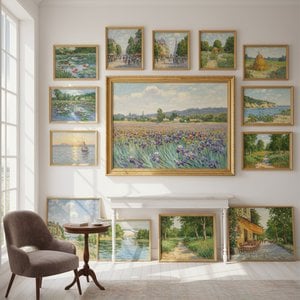
10 Arcydzieł Impresjonizmu Krajobrazowego: Sztuka, Artyści i Dekoracje Wnetrz
Odkryj 10 arcydzieł impresjonizmu krajobrazowego! Poznaj historie Monet, Renoir i innych mistrzów. Inspiracje wnętrzarskie, techniki malarskie i reprodukcje obrazów najwyższej jakości na ArtsDot.com. Eksploruj pełną kolekcję online!

Beyond the Horizon: A Curated Guide to Integrating Post-Impressionist Landscapes into Modern Interiors
Transform your home with the emotive power of Post-Impressionist landscapes. Discover expert tips on selecting hand-painted oil reproductions to create a soulful, vibrant interior that reflects your unique style and connection to nature.

Evocations of Place: A Historical Journey Through Landscape Art
Explore the rich history of landscape art with ArtsDot. Discover renowned artists, movements like Impressionism & Romanticism, and expert guidance for collecting timeless pieces. Find your perfect serene escape today!