Zobacz w skali 1:1
 Wyślij
 Udostępnij
 Szczegóły
 Przewodnik

 Pobierz plik obrazu
 Podobne obiekty
 RTG
RTG Pokaz slajdów
 Statystyki
Springime


 Czytaj więcej
Ręcznie malowana reprodukcja olejowa
Ręcznie malowany obraz olejny na płótnie, wykonany na zamówienie przez naszych artystów w wybranym przez Ciebie wymiarze i oprawie. ( Przełącz na wersję drukowaną Przełącz na wersję cyfrową)




P118B zł10

P118H zł10

P118W zł10

P438Z zł10

P508JH zł12

P508YH zł12

P805H zł10

P805Z zł10

P919BZ zł10

P919G zł10

P919XJ zł10

P959ZH zł10

P968JZ zł12

W106C zł8

W218G zł10

W218JH zł8

W218Y zł10

W307PJ zł10

W316G zł10

W316PJ zł8

W316Y zł10

W398PJ zł8

W4111J zł10

W500HY zł15

W500JH zł15

W692G zł12

W849H zł8

W940BG zł15

W953PJ zł8




Wybierz spośród naszych standardowych rozmiarów, które zachowują oryginalne proporcje dzieła sztuki.

Wpisz wymaganą szerokość i wysokość, aby obraz pasował do Twojej ramy lub ściany. Ponieważ jest to dzieło malowane ręcznie, w przypadku rozmiaru o innym proporcji artysta może domalować nieco więcej wokół obrazu lub przyciąć fragmenty — wybór należy do Ciebie. Przed rozpoczęciem pracy prześlemy Ci cyfrową wizualizację do zatwierdzenia. Obraz widoczny na tej stronie nie przedstawia rzeczywistego efektu — jedynie wizualizacja oddaje realny rezultat.
Po złożeniu zamówienia zespół ArtsDot.com skontaktuje się z klientem drogą mailową w celu uzyskania instrukcji i prześle wizualizację projektu
Dostawa na całym świecie () w ciągu 3–4 tygodni zamiast standardowych 5 tygodni. (19 Październik). Bez kompromisów w kwestii jakości.

Bezpłatna ekspresowa wysyłka na cały świat

Wysokiej jakości płótno lniane

Pełne ubezpieczenie transportowe

Gwarancja zwrotu należności celnych i podatków importowych

Gwarancja idealnego odwzorowania barw

100-dniowy okres na zwrot dzieła w przypadku wykrycia wad produkcyjnych

Gwarancja 100% zwrotu pieniędzy

Oferta przy zakupie wielu sztuk
 Opcja ze szkłem jest dostępna wyłącznie w rozmiarach poniżej 110 cm

Springime
Technika wykonania
Rozmiar reprodukcji
-


Suma do zapłaty
zł 1000
A Moment of Renewal: Introducing Charles Edward Conder’s “Springime”
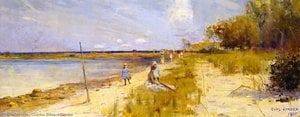
Charles Edward Conder's "Springime," painted in 1892, isn’t merely a depiction of springtime; it’s an immersion into the very essence of renewal. This oil on canvas, currently residing within the hallowed halls of the Tate Gallery in London, captures a fleeting moment of vibrant beauty – a celebration of burgeoning life against a backdrop of warm, inviting hues. Conder, a pivotal figure in Australia's Heidelberg School movement, masterfully blends Impressionistic techniques with a distinctly Australian sensibility, creating an artwork that resonates with both tranquility and dynamic energy.
The painting immediately draws the eye to its foreground: a profusion of delicate pink blossoms clustered around a graceful tree. These aren’t simply flowers; they are symbols of rebirth, mirroring the season's promise of new beginnings. Behind this vibrant display, a smaller, more distant tree provides depth and scale, anchoring the scene within a broader landscape. The careful layering of colors – from the warm yellows dominating the sky to the subtle greens of the foliage – establishes a harmonious balance between light and shadow, creating an atmosphere that is both luminous and deeply felt.
The Heidelberg School: A New Vision of Australian Art
To fully appreciate “Springime,” it’s crucial to understand its context within the Heidelberg School. Emerging in late 19th-century Australia, this group of artists sought to capture the unique beauty and spirit of their homeland – a landscape vastly different from the European traditions dominating the art world at the time. Rejecting academic formality, they embraced *plein air* painting, working directly outdoors to observe and record nature’s nuances with immediacy and sensitivity. Conder, along with Tom Roberts and Frederick McCubbin, became central figures in this movement, developing a distinctive style characterized by loose brushstrokes, vibrant colors, and an emphasis on everyday Australian life.
Conder's work often reflected his own experiences – his early years in India, his move to Australia, and his travels throughout Europe. “Springime,” however, feels distinctly rooted in the Australian landscape, capturing not just a visual representation but also a feeling of optimism and connection to the natural world. The painting’s composition subtly evokes the vastness of the Australian outback, hinting at both its beauty and its inherent challenges.
Technique and Symbolism: A Dance of Light and Color
Conder's masterful use of color is a defining characteristic of “Springime.” He employs broken brushstrokes to create an impressionistic effect, allowing the colors to blend and shimmer in the viewer’s eye. The warm yellows and oranges of the sky are juxtaposed with the cooler greens and pinks of the foliage, creating a dynamic interplay of light and shadow. The artist's attention to detail is evident in the delicate rendering of the flowers and leaves, as well as the subtle variations in tone that suggest depth and texture.
Beyond its aesthetic qualities, “Springime” carries symbolic weight. The blossoming tree represents hope and regeneration, while the distant landscape suggests a connection to something larger than oneself. The painting’s overall mood is one of serenity and contemplation – an invitation to pause and appreciate the simple beauty of nature. It's a testament to Conder's ability to capture not just what he saw but also what he felt.
Bringing “Springime” Home: Reproductions and Artistic Inspiration
“Springime” is more than just a painting; it’s an experience. High-quality reproductions offer a remarkable way to bring this captivating artwork into your home or office, adding a touch of timeless beauty and tranquility to any space. Whether you're drawn to the painting's vibrant colors, its evocative symbolism, or simply its undeniable charm, “Springime” is sure to inspire and delight.
Pytania i odpowiedzi
Czy prawa autorskie do „Springime” autorstwa Charles Edward Conder pozwalają na tworzenie reprodukcji?
Dzieło „Springime” autorstwa Charles Edward Conder, znajdujące się w zbiorach Tate Britain, znajduje się w stanowi domenę publiczną – autorskie prawa majątkowe wygasły. Status ten określa, czy możliwe jest tworzenie reprodukcji obrazu.
Do jakiego pomieszczenia, biorąc pod uwagę kolorystykę, polecane jest dzieło „Springime” autorstwa Charles Edward Conder?
Biorąc pod uwagę jego Earthy kolorystykę, dzieło "Springime" idealnie pasuje do Living Room.
Czy dzieło „Springime” autorstwa Charles Edward Conder znajduje się w domenie publicznej i dlaczego?
„Springime” autorstwa Charles Edward Conder znajduje się w stanowi domenę publiczną – autorskie prawa majątkowe wygasły. Okres ochrony praw autorskich liczony jest od śmierci artysty, która nastąpiła w 1909.
Podobne dzieła


Biografia artysty
Early Life and Artistic Journey
Charles Edward Conder (1868 – 1909) was an English-born painter, lithographer and designer who emigrated to Australia and became a pivotal figure in the Heidelberg School*, arguably marking the genesis of a distinctive Australian tradition within Western art. Born in Tottenham, Middlesex, on October 24, 1868, Conder’s formative years were shaped by his mother's untimely passing in India when he was merely four; he subsequently returned to England and attended several schools including Eastbourne Preparatory School from 1877. Despite his father’s inclination towards a civil engineering career—a path antithetical to Conder’s innate artistic inclinations—he pursued this profession nonetheless, recognizing the practical necessities of securing financial stability.Artistic Career in Australia
In 1884, at the age of 16, Conder ventured to Sydney, Australia, where he commenced employment with his uncle, a surveyor for the New South Wales government. However, he quickly discerned that surveying was not his true calling and gravitated towards drawing landscapes—a passion that would define much of his artistic output. By 1886, he secured a position as an artist for *Illustrated Sydney News*, collaborating alongside prominent artists such as Albert Henry Fullwood and Frank Mahony. This association fostered connections with fellow creatives like Julian Ashton and Tom Roberts, establishing him within the burgeoning Heidelberg School movement. His engagement with G. P. Nerli—an itinerant Italian painter who championed European artistic currents—significantly impacted his artistic evolution.The Heidelberg School and Notable Works
Conder’s magnum opus, *Departure of the Orient – Circular Quay* (1888), stands as a testament to his newfound mastery of form and brushwork. This evocative depiction of Sydney Harbour at the moment of the *Orient*'s departure for England captured the essence of the Heidelberg School's aesthetic—characterized by luminous color palettes and expressive handling of light—and swiftly garnered acclaim from the Art Gallery of New South Wales, securing its place as Conder’s inaugural work within a public collection. Alongside Roberts and Ashton, he participated in the Heidelberg School’s seminal exhibition in Melbourne, cementing his position as one of Australia's foremost Impressionist painters. His artistic endeavors extended beyond landscape painting; he produced captivating portraits and executed lithographs that showcased his versatility and technical prowess.Legacy and Later Life
Conder’s later years were marred by debilitating illness—primarily paralysis resulting from syphilis—which nonetheless spurred him to continue creating art until his untimely demise in 1909. Despite facing considerable physical challenges, Conder persevered in his artistic pursuits, leaving behind a legacy as an indispensable contributor to Australian Impressionism and cementing his place within the annals of art history. His paintings are prominently displayed at Tate Britain and the Art Gallery of New South Wales, serving as enduring reminders of his remarkable talent and contribution to the visual arts.
Charles Edward Conder
1868 - 1909 , Anglia
Najważniejsze informacje
- Artistic Movement Or Style: Heidelberg School
- Artists Who Influenced This Artist:
- Alfred Daplyn
- Victor Mann
- Julian Ashton
- Date Of Birth: October 24, 1868
- Date Of Death: February 9, 1909
- Full Name: Charles Edward Conder
- Nationality: British
- Notable Artworks:
- Departure of the Orient – Circular Quay
- A holiday at Mentone
- Under The Southern Sun
- Place Of Birth: Tottenham, United Kingdom
Zobacz także powiązane artykuły

John Constable: 25 Najlepszych Obrazów Mistrza Angielskiego Krajobrazu | ArtsDot
Odkryj 25 arcydzieł Johna Constable'a – mistrza angielskiego krajobrazu! Poznaj romantyczne pejzaże, technikę malarską i inspiracje z Dedham Vale. Reprodukcje obrazów najwyższej jakości na ArtsDot.com. Eksploruj pełną kolekcję online!

Romantyczny Krajobraz w Malarstwie: 10 Arcydzieł, Które Zdefiniowały Epokę | ArtsDot.com
Odkryj 10 arcydzieł romantyzmu w malarstwie! Poznaj historie Caspara Davida Friedricha, Turnera i innych mistrzów. Inspiracje wnętrzarskie & reprodukcje obrazów najwyższej jakości na ArtsDot.com. Eksploruj kolekcję online!

Stephen Bone: A Reassessment of Colour, Form & the British Neo-Romantic Landscape Tradition
Explore the vibrant world of Stephen Bone (1904-1958), a key figure in British Neo-Romanticism. Discover his captivating landscapes, impactful war art & unique artistic style. Learn about his life, influences & legacy.

Edward Hopper: 25 Arcydzieł Malarstwa Pełnych Emocji i Amerykańskiej Duszy | ArtsDot.com
Odkryj 25 arcydzieł Edwarda Hoppera – malarstwa pełnych samotności, realizmu i amerykańskiej duszy. Poznaj historie kultowych obrazów, inspiracje wnętrzarskie i wyjątkową atmosferę jego dzieł. Reprodukcje najwyższej jakości na ArtsDot.com

Edward Wilkins Waite: A Victorian Vision of Surrey's Serene Landscapes & Artistic Legacy
Explore the serene landscapes of Edward Wilkins Waite (1854-1924), a prolific Victorian painter celebrated for his depictions of Surrey's countryside. Discover his artistic influences, career highlights & collecting guide.