


 Wyślij
 Udostępnij
 Szczegóły
 Przewodnik

 Pobierz plik obrazu
 Podobne obiekty
 Pokaz slajdów
 Statystyki
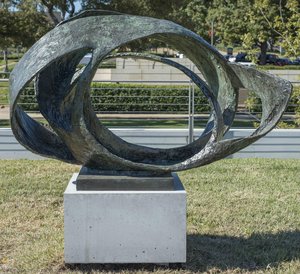
Rhythmic Form


 Czytaj więcej
Dzieło sztuki prezentowane na tej stronie podlega ochronie prawem autorskim, co oznacza, że nie mamy prawa do tworzenia ani sprzedaży jego identycznej reprodukcji. Ochrona ta jest egzekwowana na mocy umów międzynarodowych, takich jak Konwencja berneńska oraz przez przepisy prawa krajowego, w tym te określone w Prawo autorskie USA – Tytuł 17.
Metoda ta jest w pełni zgodna z przepisami prawa autorskiego, ponieważ nie polega na kopiowaniu ani powielaniu chronionego dzieła. Stanowi ona kreatywną reinterpretację – nowy obraz, który czerpie inspirację z oryginału, ale nie jest z nim tożsamy.
Giclée / Wydruk artystyczny
Wydruki giclée lub płótna o jakości muzealnej, szybka realizacja i szeroki wybór opcji wykończenia. ( Kup ręcznie malowany obraz Przełącz na wersję cyfrową)




































Wybierz spośród naszych standardowych rozmiarów, które zachowują oryginalne proporcje dzieła sztuki.

Wpisz wymaganą szerokość i wysokość, aby dopasować grafikę do ramy lub ściany. Wydruk można jedynie przyciąć, nigdy nie powiększając go poza oryginalny obraz, dlatego format o innym proporcji spowoduje utratę części kompozycji. Przed rozpoczęciem druku prześlemy Ci cyfrowy podgląd do zatwierdzenia. Obraz wyświetlany na tej stronie nie pokazuje rzeczywistego przycięcia — jedynie podgląd oddaje ten efekt.
Dostawa na cały świat () w ciągu 2 tygodni zamiast standardowych 4/5 tygodni. (24 Październik)

Bezpłatna ekspresowa wysyłka na cały świat

Wysokiej jakości płótno lniane

Pełne ubezpieczenie transportowe

Gwarancja zwrotu należności celnych i podatków importowych

Gwarancja idealnego odwzorowania barw

100-dniowy okres na zwrot dzieła w przypadku wykrycia wad produkcyjnych

Gwarancja 100% zwrotu pieniędzy

Oferta przy zakupie wielu sztuk
 Opcja ze szkłem jest dostępna wyłącznie w rozmiarach poniżej 110 cm

Rhythmic Form
Giclée / Wydruk artystyczny
Rozmiar reprodukcji
-


Suma do zapłaty
zł 238
Rhythmic Form: A Dialogue Between Space and Spirit
Barbara Hepworth’s “Rhythmic Form,” created in 1949, stands as a testament to the profound influence of Surrealist ideas on British sculpture during World War II. More than just an aesthetically pleasing object, it embodies Hepworth's unwavering belief that sculpture could translate thought into tangible form—a conviction deeply rooted in her engagement with artists like Arp and Brancusi who championed direct carving and explored the relationship between art and nature. The piece itself is a striking example of Hepworth’s signature style: monumental forms sculpted from wood, meticulously shaped to evoke movement and resonance. Its central hole isn't merely an incision; it’s a deliberate gesture that seeks to unify opposing forces—a visual metaphor for Hepworth’s exploration of duality and balance within the creative process.- Material & Technique: Crafted from Rosewood, “Rhythmic Form” utilizes a technique honed during Hepworth's formative years in Paris – a method characterized by careful consideration of material properties and an intuitive understanding of how form interacts with space. The sculptor’s hand meticulously removes wood shavings to reveal the underlying structure, resulting in a surface that is both smooth and subtly textured.
- Historical Context: Hepworth's work emerged from a period marked by significant artistic experimentation and intellectual ferment. The Unit One group—which included Nicholson, Gabo, and Nash—challenged conventional sculptural approaches, prioritizing abstraction and responding to the anxieties of wartime Britain with an embrace of geometric forms and organic shapes.
- Symbolism & Inspiration: Hepworth drew inspiration from Neolithic Menhirs – monolithic stones erected as memorials to ancient rituals – recognizing their ability to convey timelessness and spiritual significance. She likened her sculptures to these stones, emphasizing the desire for them to “furnish a means of egress for the soul,” reflecting her belief in sculpture’s capacity to transcend mere visual representation.
- Hepworth's Philosophy: Hepworth famously described sculpture as "the plastic projection of thought," highlighting its role in capturing intangible ideas and emotions. She insisted that the work should “put no pressure on anything,” signifying a rejection of didacticism and an affirmation of art’s autonomy—a stance that aligns with her broader philosophical commitment to embracing spontaneity and responding authentically to the material at hand.
- Legacy & Influence: Hepworth's pioneering approach to sculpture continues to inspire artists today, particularly those interested in exploring spatial relationships and investigating the interplay between form and gesture. Her enduring impact is evident in the work of subsequent sculptors who adopted similar techniques and pursued similar conceptual concerns—a legacy cemented by her inclusion in Tate’s collection and celebrated as a cornerstone of British Modernism.
Pytania i odpowiedzi
Ile światła zdają się odbijać kolory dzieła "Rhythmic Form"?
Kolory dzieła "Rhythmic Form" wykazują luminancję na poziomie Luminous.
W którym roku powstało „Rhythmic Form” autorstwa Barbara Hepworth?
Powstanie „Rhythmic Form” autorstwa Barbara Hepworth datuje się na 1949.
Jaki rozmiasto wydruku "Rhythmic Form" będzie odpowiedni do mojego pokoju?
W pomieszczeniu typu Living Room sugerowany jest wydruk dzieła „Rhythmic Form” w rozmiarze Large.
Podobne dzieła



Biografia artysty
Barbara Hepworth: Pioneer of Organic Abstraction
Barbara Hepworth (1903–1975) stands as one of the most influential figures in British sculpture of the 20th century, a sculptor whose uncompromising vision reshaped artistic conventions and cemented her place among the foremost innovators of modernism. Born Jocelyn Barbara Hepworth on January 10, 1903, in Wakefield, Yorkshire—the eldest child of Herbert and Gertrude Johnson Hepworth—her formative years were steeped in the rugged beauty of the Pennines landscape, an environment that would profoundly inform her artistic sensibility for decades to come.Herbert Hepworth was a civil engineer for the West Riding County Council, who in 1921 advanced to the role of county surveyor.- Early Education: Hepworth attended Wakefield Girls’ High School where she excelled academically and musically.
- Leeds School of Art: At Leeds School of Art from 1920, she encountered Henry Moore, forging a friendship that would endure throughout their careers—a relationship characterized by mutual respect and spirited debate about artistic direction.
Formal Training and Artistic Beginnings
Hepworth’s formal training culminated in her enrollment at the Royal College of Art (RCA) in London in 1921, where she honed her sculptural skills under the tutelage of Henry Moore and others. Her diploma in 1924 marked a pivotal moment, propelling her into the burgeoning avant-garde movement of the time—specifically Abstraction-Création—and establishing her connection with fellow artists like Ben Nicholson and Paul Nash.Together with Moore and other students at the College, makes occasional trips to Paris.- Early Style: Hepworth’s initial explorations embraced simplified forms inspired by Egyptian sculpture, reflecting a fascination with ancient art traditions.
- Direct Carving Technique: She championed “direct carving,” prioritizing the tactile engagement between artist and material—a method that distinguished her work from more conventional modeling techniques.
Collaboration and Influence of Ben Nicholson
Hepworth’s artistic partnership with Ben Nicholson began in 1931, transforming into a deeply intertwined relationship both personally and professionally.She marries sculptor John Skeaping in 1925. Their shared studio in Hampstead became a crucible for experimentation—a space where they wrestled with questions of form, texture, and spatial relationships. Nicholson’s influence on Hepworth's aesthetic was undeniable, fostering her embrace of geometric abstraction and shaping her exploration of the interplay between mass and void.She would later relate this shift to having triplets with Nicholson in 1934, noting that after this ‘the work was more formal, and all traces of naturalism had disappeared, and for some years I was absorbed in the relationships in space, in size and texture and weight, as well as in the tensions between the forms.’- Unit One Movement: Hepworth’s involvement with Unit One—a collective dedicated to synthesizing Surrealist and Abstract Expressionist impulses—solidified her position at the forefront of British modernism.
- Landscape Sculpture: Hepworth's artistic vision was profoundly shaped by her immersion in the Yorkshire landscape, which served as a constant source of inspiration for her sculptures—particularly those exploring the relationship between organic forms and geometric abstraction.“The main sources of my inspiration are the human figure and the landscape; also the one in relation to the other.” Barbara Hepworth
Mature Style and Legacy
Hepworth’s mature style—characterized by a sensual exploration of material and space—produced monumental sculptures that captivated audiences worldwide.She was made a Commander of the Order of the British Empire in 1958, and was later awarded the rank of Dame in 1965. Notable works include *Oval Form*, *Two Forms*, and *Totem*, which exemplify her unwavering commitment to abstraction while retaining an evocative connection to nature.“Carving to me is more interesting than modelling, because there is an unlimited variety of materials from which to draw inspiration.” Barbara Hepworth- Hepworth Wakefield: Her legacy continues to inspire artists and art enthusiasts alike, enshrined in the Hepworth Wakefield—a museum dedicated to showcasing her oeuvre and fostering dialogue about contemporary sculpture.
- Notable Exhibitions: Hepworth’s sculptures graced prestigious venues such as the Kimbell Art Museum in Fort Worth, Texas, cementing her reputation as a globally recognized artist.The Hepworth Wakefield houses numerous masterpieces from renowned artists, including hepworth's own works.

Barbara Hepworth
1903 - 1975 , Wielka Brytania
Najważniejsze informacje
- Artistic Movement Or Style: Modernizm
- Artists Or Movements Influenced By This Artist: ['Unit One']
- Artists Who Influenced This Artist: ['Henry Moore']
- Date Of Birth: 10 stycznia 1903
- Full Name: Jocelyn Barbara Hepworth
- Nationality: Angielka
- Notable Artworks:
- Oval Form
- Two Forms
- Totem
- Place Of Birth: Wakefield, Anglia
Zobacz także powiązane artykuły

25 Arcydzieł Kandinskiego: Kolor, Duchowość i Abstrakcja w Twoim Domu | ArtsDot.com
Odkryj 25 arcydzieł Wassily Kandinskiego – pioniera abstrakcji i ekspresjonizmu! Poznaj historie, techniki i emocje kryjące się za jego kolorowymi kompozycjami. Reprodukcje obrazów najwyższej jakości na ArtsDot.com. Eksploruj pełną kolekcję online!

Trwałe Formy: Ewolucja Technik i Tematów w Rzeźbie Przez Wieki – Od Antyku do Renesansu
Poznaj fascynującą historię rzeźby od antyku do renesansu! Odkryj techniki, wybitnych artystów i wpływ na współczesną sztukę. Ekspercka analiza dla kolekcjonerów i miłośników.

Geometria Sztuki: 10 Arcydzieł Abstrakcji Geometrycznej | ArtsDot.com
Odkryj 10 arcydzieł abstrakcji geometrycznej! Poznaj historię Mondriana, Kandinskiego i Maleвича. Inspiracje wnętrzarskie z malarstwem abstrakcyjnym – reprodukcje najwyższej jakości na ArtsDot.com. Eksploruj kolekcję online!

10 Legendarnych Brązów Rzeźbiarskich, Które Zmieniły Sztukę | ArtsDot
Odkryj 10 legendarnych rzeźb brązowych od Rodina, Degasa i innych mistrzów! Poznaj historię powstania arcydzieł sztuki i inspiruj się do dekoracji wnętrz. Reprodukcje najwyższej jakości na ArtsDot.com – zobacz kolekcję!

Barbara Hepworth: A Sculptural Dialogue with Form, Space & the Human Condition
Explore the profound world of Barbara Hepworth's sculpture. Discover her artistic evolution, iconic forms, and lasting influence on modern art. A guide for collectors & enthusiasts.


