
- Strona główna

- Reprodukcja obrazu olejnego
- Barbara Hepworth
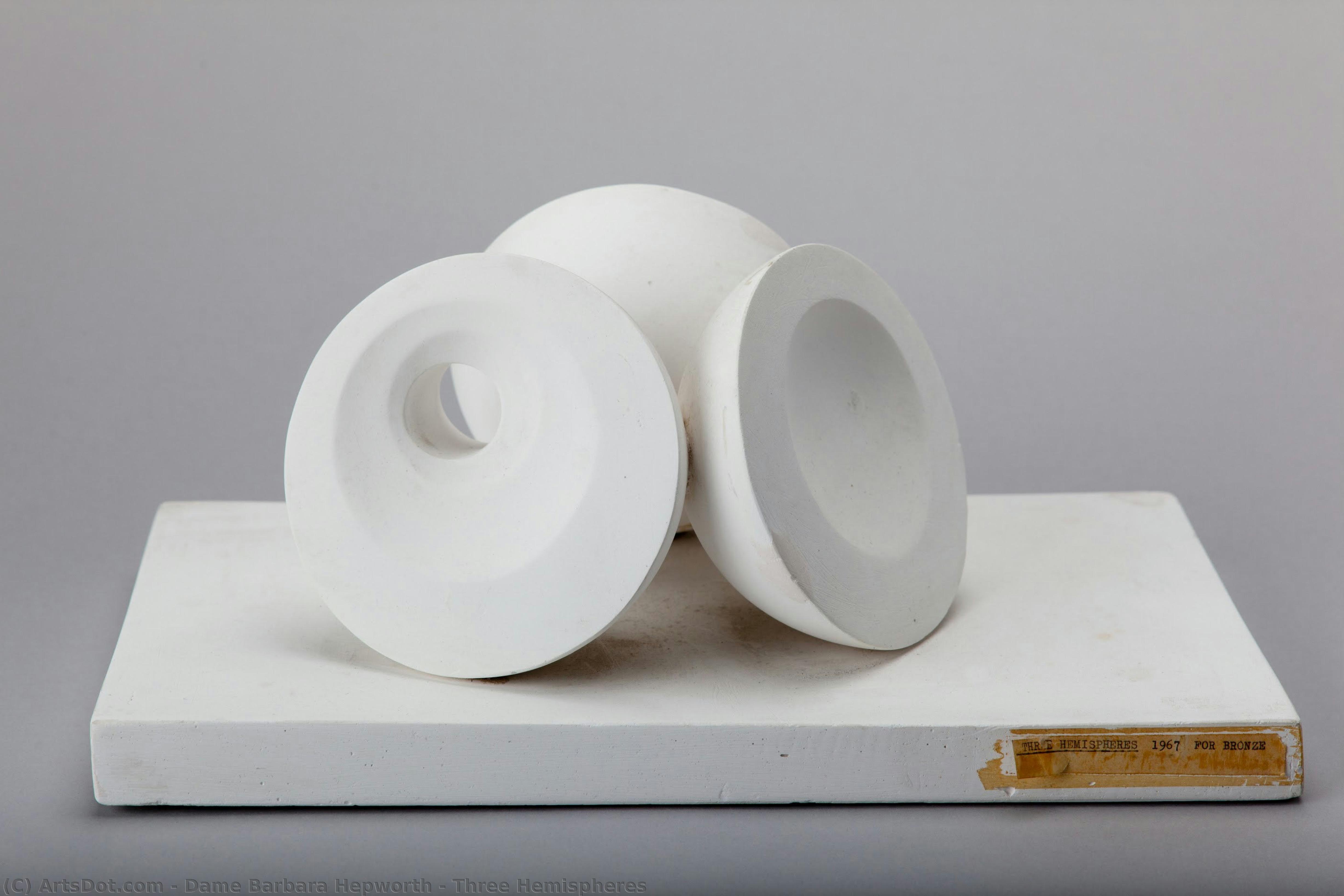
- Trzy Hemisfery
 Zamów wydruk Kup cyfrowy obraz
 Udostępnij
 Udostępnij
 Details
 Dodaj do ulubionych

 Pobierz
 Podobne obiekty
 X-Ray
X-Ray
 Pokaz slajdów
Trzy Hemisfery
 Modern Sculpture
 1967
1967 13.0 x 13.0 cm
 The Hepworth Wakefield
Ręcznie malowana reprodukcja olejowa
Ręcznie malowany olej na płótnie w Twoim wymiarze i ramie, tworzony na zamówienie przez naszych artystów.




P118B $10

P118H $10

P118W $10

P438Z $10

P508JH $12

P508YH $12

P805H $10

P805Z $10

P919BZ $10

P919G $10

P919XJ $10

P959ZH $10

P968JZ $12

W106C $8

W218G $10

W218JH $8

W218Y $10

W307PJ $10

W316G $10

W316PJ $8

W316Y $10

W398PJ $8

W4111J $10

W500HY $15

W500JH $15

W692G $12

W849H $8

W940BG $15

W953PJ $8




 Dowiedz się więcej
Wybierz spośród naszych predefiniowanych rozmiarów, które zachowują oryginalne proporcje dzieła sztuki.

Możesz wprowadzić własne wymiary, aby dopasować obraz do konkretnej ramy lub przestrzeni. Jeśli wybrany rozmiar nie będzie odpowiadał proporcjom oryginału, przytniecie dzieło sztuki lub rozszerzymy je o dodatkowe elementy, ręcznie domalowane przez artystę. Przed rozpoczęciem produkcji wyślemy projekt cyfrowy do Twojej akceptacji.
Należy pamiętać, że podgląd na ekranie nie odzwierciedla rzeczywistego przycinania ani rozszerzania obrazu. Tylko projekt dokładnie pokaże ostateczną kompozycję.
Choć oferujemy możliwość zamówienia niestandardowych rozmiarów, zalecamy wybór wymiaru z gotowej listy, aby zachować oryginalne proporcje dzieła.
Po złożeniu zamówienia zespół ArtsDot.com skontaktuje się z klientem drogą mailową w celu uzyskania instrukcji i prześle wizualizację projektu
Dostawa na całym świecie () w ciągu 3/4 tygodni zamiast standardowych 5 tygodni. (1 Lipiec). Bez kompromisów w kwestii jakości.

Bezpłatna ekspresowa wysyłka na cały świat

Wysokiej jakości płótno lniane

Pełne ubezpieczenie przesyłki

Gwarancja zwrotu należności celnych

Gwarancja pełnego zgodności kolorystycznej

Polityka 60-dniowego zwrotu (tylko w przypadku wad)

Gwarancja 100% zwrotu pieniędzy

Zniżka przy większych zamówieniach
 Opcja szkła jest dostępna wyłącznie w rozmiarach poniżej 110 cm

Trzy Hemisfery
Technika reprodukcji
Wymiary reprodukcji
-


Cena całkowita
-
Opis dzieła
Barbara Hepworth: Three Hemispheres – A Study in Organic Minimalism
Three Hemispheres by Barbara Hepworth stands as a testament to the enduring power of abstract sculpture and Hepworth’s masterful exploration of form, texture, and spatial relationships. Created in 1967, this piece exemplifies Hepworth's signature modernist style—characterized by simplicity, geometric precision tempered with an underlying sensitivity to natural forms—and represents a pivotal moment in her artistic trajectory. The sculpture itself consists of three white plaster casts meticulously crafted from a single block of alabaster, arranged on a subtly textured grey surface that anchors the composition.Composition and Form
The arrangement is strikingly symmetrical; one hemisphere dominates the center, flanked by two smaller counterparts. This deliberate balance isn’t merely aesthetic but speaks to Hepworth's fascination with equilibrium and harmony—themes frequently recurring throughout her oeuvre. Each hemisphere possesses a central hole, creating negative space that dramatically enhances its visual impact and invites contemplation of its contours. The circular shapes are subtly undulating, reflecting Hepworth’s belief in the importance of organic movement within geometric forms. These curves aren’t random; they emanate from the core of each sculpture, mirroring geological processes and hinting at a deeper connection to the natural world.Material and Technique
Hepworth's choice of alabaster—a translucent limestone known for its creamy white hue and delicate texture—was deliberate. The material lends itself beautifully to casting techniques, allowing Hepworth to capture the essence of her envisioned forms with remarkable accuracy. The plaster was meticulously molded into precise shapes, utilizing a process that combines artistry with scientific precision. Reinforcing agents were incorporated into the plaster mix to ensure stability during the casting process, demonstrating Hepworth’s commitment to both aesthetic vision and technical mastery.Symbolism and Conceptual Depth
Beyond its formal beauty, Three Hemispheres carries significant symbolic weight. The hemispherical forms are interpreted as representations of Earth, reflecting Hepworth's profound interest in geology and her desire to convey the interconnectedness of natural forces. The central holes serve as visual anchors, symbolizing emptiness or potential—a space for contemplation and transformation. Hepworth herself described her sculptures as “attempts to express something about the world,” suggesting that they transcend mere representation and aspire to communicate deeper truths about existence.Emotional Resonance
The sculpture’s serene stillness evokes a feeling of contemplative calm. Its smooth, tactile surface invites viewers to engage with its form directly, fostering a connection between mind and material. Like many of Hepworth's works, Three Hemispheres speaks to the human experience—to our awareness of both solidity and vulnerability, of contained space and boundless possibility. It’s a piece that rewards repeated viewing, revealing subtle nuances in texture and light that deepen its emotional impact.- Artist: Barbara Hepworth
- Year Created: 1967
- Medium: Plaster
- Dimensions: 13 x 13 cm
Podobne dzieła sztuki


Biografia artysty
Barbara Hepworth: Pioneer of Organic Abstraction
Barbara Hepworth (1903–1975) stands as one of the most influential figures in British sculpture of the 20th century, a sculptor whose uncompromising vision reshaped artistic conventions and cemented her place among the foremost innovators of modernism. Born Jocelyn Barbara Hepworth on January 10, 1903, in Wakefield, Yorkshire—the eldest child of Herbert and Gertrude Johnson Hepworth—her formative years were steeped in the rugged beauty of the Pennines landscape, an environment that would profoundly inform her artistic sensibility for decades to come.Herbert Hepworth was a civil engineer for the West Riding County Council, who in 1921 advanced to the role of county surveyor.- Early Education: Hepworth attended Wakefield Girls’ High School where she excelled academically and musically.
- Leeds School of Art: At Leeds School of Art from 1920, she encountered Henry Moore, forging a friendship that would endure throughout their careers—a relationship characterized by mutual respect and spirited debate about artistic direction.
Formal Training and Artistic Beginnings
Hepworth’s formal training culminated in her enrollment at the Royal College of Art (RCA) in London in 1921, where she honed her sculptural skills under the tutelage of Henry Moore and others. Her diploma in 1924 marked a pivotal moment, propelling her into the burgeoning avant-garde movement of the time—specifically Abstraction-Création—and establishing her connection with fellow artists like Ben Nicholson and Paul Nash.Together with Moore and other students at the College, makes occasional trips to Paris.- Early Style: Hepworth’s initial explorations embraced simplified forms inspired by Egyptian sculpture, reflecting a fascination with ancient art traditions.
- Direct Carving Technique: She championed “direct carving,” prioritizing the tactile engagement between artist and material—a method that distinguished her work from more conventional modeling techniques.
Collaboration and Influence of Ben Nicholson
Hepworth’s artistic partnership with Ben Nicholson began in 1931, transforming into a deeply intertwined relationship both personally and professionally.She marries sculptor John Skeaping in 1925. Their shared studio in Hampstead became a crucible for experimentation—a space where they wrestled with questions of form, texture, and spatial relationships. Nicholson’s influence on Hepworth's aesthetic was undeniable, fostering her embrace of geometric abstraction and shaping her exploration of the interplay between mass and void.She would later relate this shift to having triplets with Nicholson in 1934, noting that after this ‘the work was more formal, and all traces of naturalism had disappeared, and for some years I was absorbed in the relationships in space, in size and texture and weight, as well as in the tensions between the forms.’- Unit One Movement: Hepworth’s involvement with Unit One—a collective dedicated to synthesizing Surrealist and Abstract Expressionist impulses—solidified her position at the forefront of British modernism.
- Landscape Sculpture: Hepworth's artistic vision was profoundly shaped by her immersion in the Yorkshire landscape, which served as a constant source of inspiration for her sculptures—particularly those exploring the relationship between organic forms and geometric abstraction.“The main sources of my inspiration are the human figure and the landscape; also the one in relation to the other.” Barbara Hepworth
Mature Style and Legacy
Hepworth’s mature style—characterized by a sensual exploration of material and space—produced monumental sculptures that captivated audiences worldwide.She was made a Commander of the Order of the British Empire in 1958, and was later awarded the rank of Dame in 1965. Notable works include *Oval Form*, *Two Forms*, and *Totem*, which exemplify her unwavering commitment to abstraction while retaining an evocative connection to nature.“Carving to me is more interesting than modelling, because there is an unlimited variety of materials from which to draw inspiration.” Barbara Hepworth- Hepworth Wakefield: Her legacy continues to inspire artists and art enthusiasts alike, enshrined in the Hepworth Wakefield—a museum dedicated to showcasing her oeuvre and fostering dialogue about contemporary sculpture.
- Notable Exhibitions: Hepworth’s sculptures graced prestigious venues such as the Kimbell Art Museum in Fort Worth, Texas, cementing her reputation as a globally recognized artist.The Hepworth Wakefield houses numerous masterpieces from renowned artists, including hepworth's own works.

Barbara Hepworth
1903 - 1975 , Wielka Brytania
Kluczowe informacje
- Artistic Movement Or Style: Modernizm
- Artists Or Movements Influenced By This Artist: ['Unit One']
- Artists Who Influenced This Artist: ['Henry Moore']
- Date Of Birth: 10 stycznia 1903
- Full Name: Jocelyn Barbara Hepworth
- Nationality: Angielka
- Notable Artworks:
- Oval Form
- Two Forms
- Totem
- Place Of Birth: Wakefield, Anglia
Powiązane artykuły

Barbara Hepworth: A Sculptural Dialogue with Form, Space & the Human Condition
Explore the profound world of Barbara Hepworth's sculpture. Discover her artistic evolution, iconic forms, and lasting influence on modern art. A guide for collectors & enthusiasts.


Henri Gaudier-Brzeska: A Brief Life, Explosive Forms – Exploring the Radical Modernism of a British Sculptor
Discover the explosive artistry of Henri Gaudier-Brzeska (1891-1915), a key figure in British Modern sculpture and Vorticism. Explore his powerful direct carvings, tragic life & lasting impact. Handmade reproductions available at ArtsDot.

Poza płótno: Przewodnik współczesnego kolekcjonera po inwestowaniu w reprodukcje sztuki abstrakcyjnej – nawigacja wartości, autentyczności i osobistego wyrazu
Przewodnik po inwestowaniu w reprodukcje sztuki abstrakcyjnej. Ekspercka wiedza o wartości, autentyczności i dopasowaniu do wnętrz. Wybierz wysokiej jakości obrazy z certyfikatem i stwórz wyjątkową przestrzeń!

Od Klasycznej Natury Martwej do Współczesnej Abstrakcji: Podnoszenie Prestiżu Przestrzeni Rezydencji Poprzez Artystyczne Reprodukcje
Odkryj historię martwej natury i jak artystyczne reprodukcje podnoszą prestiż Twojej rezydencji. Eksperckie porady, najwyższa jakość obrazów od ArtsDot.com – Cézanne, Matisse i inni mistrzowie.

Urok marmuru w historii sztuki: od klasycznej rzeźby do nowoczesnej abstrakcji
Odkryj fascynującą historię rzeźby marmurowej – od klasycznych arcydzieł po nowoczesną abstrakcję. Poznaj techniki, artystów i wartość kolekcjonerską tego wyjątkowego medium. Ekspercka analiza dla miłośników sztuki.



