


 Se i rommet
 Del som digitalt kort
 Del
Del
 Detaljer
 Studentguide

 Last ned
 Liknende objekter
 Røntgen
 Lysbildefremvisning
 Besøksstatistikk
Bader


 Les mer
Håndlaget oljereproduksjon
Håndmalt olje på lerret i din valgte størrelse og ramme, laget på bestilling av våre kunstnere. ( Bytt til trykkversjon Gå til digitalt bilde)




P118B Nkr10

P118H Nkr10

P118W Nkr10

P438Z Nkr10

P508JH Nkr12

P508YH Nkr12

P805H Nkr10

P805Z Nkr10

P919BZ Nkr10

P919G Nkr10

P919XJ Nkr10

P959ZH Nkr10

P968JZ Nkr12

W106C Nkr8

W218G Nkr10

W218JH Nkr8

W218Y Nkr10

W307PJ Nkr10

W316G Nkr10

W316PJ Nkr8

W316Y Nkr10

W398PJ Nkr8

W4111J Nkr10

W500HY Nkr15

W500JH Nkr15

W692G Nkr12

W849H Nkr8

W940BG Nkr15

W953PJ Nkr8




Velg mellom våre forhåndsdefinerte størrelser som bevarer kunstverkets opprinnelige proporsjoner.

Skriv inn bredden og høyden du trenger, slik at den passer til din ramme eller vegg. Dette er håndmalt, så for en størrelse med en annen form kan kunstneren male litt mer rundt bildet, eller beskjære det noe — du velger selv. Vi sender deg en digital mockup for godkjenning før maleriet påbegynnes. Bildet som vises på denne siden viser ikke det faktiske resultatet — kun mockuppen gjør det.
Etter bestilling vil ArtsDot.com-teamet sende e-post til kunden for instruksjoner og sende et utkast (mockup) som forhåndsvisning.
Verdensomspennende levering () på 3–4 uker i stedet for standard 5 uker. (24 October). Ingen kompromisser med kvaliteten.

Gratis ekspressfrakt over hele verden

Lerretsduk av høykvalitets lin

Full transportforsikring

Garanti for refusjon av toll og importavgifter

Garantert fargeekthet

100 dagers returrett ved fabrikasjonsfeil

100% pengene tilbake-garanti

Mengderabatt
 Glassalternativet er kun tilgjengelig i størrelser under 110 cm

Bader
Reproduksjonsmetode
Format på reproduksjon
-


Totalpris
Nkr 3450
Jean Frédéric Bazille’s Celebration of Youthful Vitality
Jean Frédéric Bazille’s “Bathers (Summer Scene),” completed in 1869, stands as a cornerstone of Impressionism – an artistic movement that irrevocably altered the landscape of European painting. More than just a depiction of nude figures enjoying a tranquil summer afternoon; it embodies Bazille's profound engagement with capturing fleeting moments and conveying the very essence of natural beauty. This canvas pulsates with energy, radiating warmth and inviting contemplation about themes of masculinity, freedom, and the simple joys of existence.Impressionistic Techniques & Artistic Innovation
Bazille’s genius lies in his masterful application of Impressionist principles. He abandons the meticulous detail favored by academic painters, opting instead for loose, visible brushstrokes that dance across the canvas surface. These strokes aren't intended to create a photographic representation but rather to convey the shimmering luminescence of sunlight filtering through foliage – specifically, the dappled shade cast upon a woodland pool where six young men are immersed in playful activity. The artist’s palette is dominated by verdant greens and cool blues, skillfully blended to simulate the textures and colors of the surrounding landscape. Ochres provide subtle warmth, highlighting the flesh tones of the figures and adding depth to the composition. This deliberate disregard for traditional perspective contributes to an overall feeling of immediacy and spontaneity – a hallmark of Impressionism’s revolutionary spirit. Bazille's approach foreshadowed the bolder explorations undertaken by Post-Impressionist artists like Cézanne and Gauguin, signaling a decisive break from artistic conventions.Challenging Conventions & Historical Significance
“Bathers (Summer Scene)” represents a courageous assertion against the prevailing aesthetic standards of its time. Academic painting typically reserved nude depictions for mythological or historical narratives, prioritizing grandeur and idealized beauty. Bazille’s decision to portray male nudes in a contemporary setting – amidst ordinary individuals engaged in everyday pursuits – was considered remarkably progressive. It sparked considerable debate within artistic circles and questioned established notions about acceptable subject matter. This boldness reflects the broader movement toward realism and naturalism within Impressionism, driven by artists who sought to depict life as it truly unfolded, rather than imposing preconceived ideals upon it. The painting’s impact extended beyond its visual qualities; it signaled a shift in artistic priorities – prioritizing observation and emotion over formal correctness.Symbolism & Emotional Resonance
The scene transcends mere representation; it resonates with profound symbolic meaning. The absence of narrative invites viewers to project their own interpretations onto the artwork, fostering a connection that goes beyond superficial aesthetics. The figures themselves embody youthful vigor and carefree abandon—a deliberate contrast to the solemnity often associated with artistic endeavors. Bazille’s careful consideration of light and color contributes significantly to this emotional impact, capturing not just what is seen but how it feels – the warmth of the sun, the coolness of the water, the camaraderie of companionship. Ultimately, “Bathers (Summer Scene)” celebrates the beauty of human connection and the transformative power of experiencing nature in its purest form. It remains a testament to Bazille’s artistic vision and his enduring contribution to Impressionist legacy.- Artist: Jean Frédéric Bazille
- Born Year: 1841
- Death Year: 1870
- Birth City: Montpellier
- Birth Country: France
- Material: Oil on Canvas
- Size: Unknown
- Date: 1869
Spørsmål og svar
Hvilken plassering passer til formatet på "Bader" av Jean Frédéric Bazille?
Format (Kvadratisk format) og anbefalt rom (Stue og oppholdsrom) er de to plasseringsegenskapene som er registrert for "Bader" av Jean Frédéric Bazille.
Hvor kan "Bader" av Jean Frédéric Bazille sees utstilt i dag?
Originalen av "Bader" av Jean Frédéric Bazille oppbevares i Fogg Kunstmuseum, Cambridge, USA. En reproduksjon gjør det mulig å stille ut verket i eget hjem.
Hvem er opphavspersonen til "Bader", og i hvilken retning?
"Bader" ble skapt av Jean Frédéric Bazille i Impressionist Landscape-stil. Kunstneren og stilen identifiserer verkets tradisjon.
Relaterte kunstverk


Kunstnerbiografi
The Brief Radiance of Jean Frédéric Bazille
Jean Frédéric Bazille’s story is one of immense promise tragically cut short, a fleeting yet significant contribution to the burgeoning Impressionist movement. Born in Montpellier, France, on December 6, 1841, into a prosperous Protestant family involved in wine production, Bazille initially seemed destined for a life far removed from the world of art. His parents, while supportive, insisted he pursue medical studies alongside his artistic inclinations – a compromise reflecting the societal expectations of the time and their desire for his financial security. This duality would shape his early years, dividing his attention between anatomical dissection and the captivating allure of color and light. However, it was within the vibrant atmosphere of Paris, where he relocated in 1862 to continue his medical training, that Bazille’s artistic path truly began to unfold.Forging a Path Amongst Giants
Paris proved to be a crucible for young Bazille. He quickly fell in with a circle of artists who would become synonymous with Impressionism: Claude Monet, Pierre-Auguste Renoir, and Alfred Sisley. Studying under Charles Gleyre provided him with formal training, but it was the shared passion and radical ideas exchanged amongst these friends that truly ignited his artistic vision. Bazille’s financial stability – a fortunate contrast to the often precarious existence of his companions – allowed him to generously support them, offering studio space and materials. This generosity wasn't merely practical; it stemmed from a deep camaraderie and belief in their collective potential. He became a vital hub for this emerging group, fostering an environment of experimentation and mutual encouragement. His early works, like *The Pink Dress* (c. 1864), already demonstrate a keen eye for capturing fleeting moments and the effects of light – hallmarks that would define Impressionism. He wasn’t simply mimicking established styles; he was actively participating in the creation of something entirely new. Bazille's work often depicted scenes of Parisian life, infused with an intimate understanding of his friends and their shared experiences.A Style Defined by Light and Friendship
Bazille's artistic style, though developing rapidly, possessed a unique character within the broader Impressionist aesthetic. While sharing their fascination with *plein air* painting – working outdoors to directly capture the nuances of natural light – his compositions often exhibited a more structured quality than Monet’s or Renoir’s. He frequently combined figure painting with landscape, placing his subjects thoughtfully within their environment, as seen in masterpieces like *Family Reunion* (1867-1868). This work is not merely a depiction of familial gathering; it's an exploration of light filtering through the trees, animating the scene and imbuing it with a sense of warmth and intimacy. His paintings weren’t just about *what* he saw, but *how* he saw it – the emotional resonance evoked by color, form, and light. He was deeply influenced by Eugène Delacroix, whose vibrant use of color resonated with his own artistic sensibilities, yet he moved beyond academic conventions to embrace a more modern sensibility. Bazille’s palette often featured rich, warm tones, reflecting the southern French landscapes that held such significance for him.A Life Interrupted: Legacy and Remembrance
The blossoming career of Jean Frédéric Bazille was brutally interrupted by the Franco-Prussian War in 1870. Driven by a sense of patriotic duty, he joined a Zouave regiment just months after the conflict erupted. Tragically, he was killed in action on November 28, 1870, at the young age of 28, near Beaune-la-Rolande. His death sent shockwaves through the artistic community, robbing them of a talented friend and generous benefactor. His premature demise meant his work remained relatively unknown for many years. However, in recent decades, Bazille’s contributions have been increasingly recognized and celebrated. Today, his paintings are held in prestigious museums like the Musée d'Orsay in Paris, and reproductions allow art lovers worldwide to experience the beauty and innovation of his vision. Bazille’s legacy extends beyond his artistic output; he embodies the spirit of youthful idealism, unwavering dedication, and the power of friendship that defined the early days of Impressionism. He remains a poignant reminder of the potential lost, yet also a testament to the enduring impact of a brief but brilliant career.Family Background and Early Influences
Born into a prominent Protestant family in Montpellier, Bazille’s upbringing was markedly different from many of his artistic peers. His parents, Gaston Bazille (a respected agronomist and senator) and Camille Vialars (descended from a wealthy Toulouse family), instilled in him a strong sense of responsibility and a deep appreciation for the arts. This privileged background provided him with financial stability, allowing him to pursue both medicine and painting without the constant worry of poverty that plagued many artists of the time. The family’s connection to the cultural life of Montpellier – including its museum and artistic society – undoubtedly shaped his early exposure to art and influenced his aesthetic sensibilities. His ancestry included goldsmiths and merchants, reflecting a history of entrepreneurialism and craftsmanship that may have subtly informed his approach to painting.Key Works and Artistic Development
Bazille’s oeuvre, though limited in size due to his tragically short life, showcases a remarkable evolution in style. Early works like *The Pink Dress* demonstrate his nascent talent for capturing fleeting moments and experimenting with color and light – hallmarks of the Impressionist movement. However, it was in *Family Reunion* (1867-1868) that he truly established his unique voice, blending figure painting with landscape to create a harmonious composition imbued with warmth and intimacy. This work exemplifies his ability to capture not just the visual appearance of a scene but also its emotional atmosphere. Other notable paintings include *Studio in Rue de Furstenberg* (c. 1867), which offers a glimpse into the social life of Parisian artists, and *Bathers (Summer Scene)* (c. 1869), showcasing his interest in depicting figures within natural settings. Throughout his career, Bazille consistently sought to integrate modern compositional strategies – such as unusual cropping and dynamic perspectives – with traditional painting techniques.A Tragic End and Lasting Impact
Bazille’s promising artistic career was abruptly cut short by the Franco-Prussian War. Driven by a sense of patriotic duty, he enlisted in the army just months before the conflict erupted and perished in action on November 28, 1870. His untimely death robbed the art world of a talented and visionary artist, but his legacy has endured through the recognition of his paintings and the inspiration he provided to later generations of Impressionists. Today, Bazille is increasingly appreciated as a key figure in the development of modern painting, celebrated for his innovative approach to composition, his masterful use of color, and his profound understanding of light and atmosphere. His story serves as a poignant reminder of the fragility of artistic genius and the enduring power of friendship and dedication.
Jean Frédéric Bazille
1841 - 1870 , Frankrike
Kort om kunstneren
- Artistic Movement Or Style: Impressionisme
- Artists Or Movements Influenced By This Artist: ['Impressionisme']
- Artists Who Influenced This Artist: ['Delacroix']
- Date Of Birth: 6 desember 1841
- Date Of Death: 28 november 1870
- Full Name: Jean Frédéric Bazille
- Nationality: Fransk
- Notable Artworks:
- The Pink Dress
- Family Reunion
- Place Of Birth: Montpellier, Frankrike
Relaterte artikler

Impressionistic Realism's Finest: 10 Masterpieces for Your Home | ArtsDot
Journey through Impressionistic Realism with 10 iconic masterpieces by Monet, Renoir & Van Gogh. Explore art history, techniques & find museum-quality reproductions for your home at ArtsDot.com. Discover all masterpieces online!

Renoirs Mesterverk: Topp 25 Kunstverk for Din Vegg – ArtsDot.no
Oppdag Renoirs 25 mest ikoniske malerier! Fordyp deg i impresjonismens verden, fargerike dansebilder og vakre portretter. Finn museumskvalitets reproduksjoner & interiørinspirasjon på ArtsDot.com.

Impressionismens 10 Mesterverk: Kunst som Forandret Våre Hjem og Historien
Opplev impressionismens magi! Utforsk 10 ikoniske malerier av Monet, Degas & Renoir. Lær om historien bak mesterverkene og finn kunsttrykk til ditt hjem på ArtsDot.com.

Jean-Louis Forain: Capturing Parisian Life with Wit & Realism
Explore the captivating world of Jean-Louis Forain, a master Impressionist chronicler of Belle Époque Paris. Discover his satirical paintings, realistic scenes & lasting legacy. Learn about collecting Forain's art today!
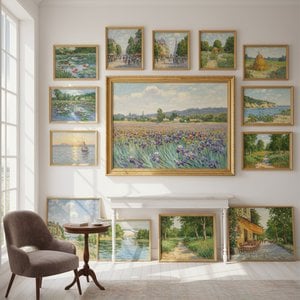
Impresjonistiske landskap: 10 mesterverk som definerte en kunstbevegelse | ArtsDot.no
Opplev impresjonismens magi! Utforsk 10 ikoniske landskapsmalerier av Monet, Renoir og Degas. Lær historien bak mesterverkene & finn din perfekte kunsttrykk på ArtsDot.com.

