


 Se i rommet
 Del som digitalt kort
 Del
Del
 Detaljer
 Studentguide

 Last ned
 Liknende objekter
 Røntgen
 Lysbildefremvisning
 Besøksstatistikk
Landscape

 Les mer
Giclée / Kunsttrykk
Giclée- eller lerretsprint av museumskvalitet med rask produksjon og fleksible valgmuligheter for etterbehandling. ( Bestill håndmalt reproduksjon Gå til digitalt bilde)




P118B Nkr10

P118H Nkr10

P118W Nkr10

P438Z Nkr10

P508JH Nkr12

P508YH Nkr12

P805H Nkr10

P805Z Nkr10

P919BZ Nkr10

P919G Nkr10

P919XJ Nkr10

P959ZH Nkr10

P968JZ Nkr12

W106C Nkr8

W218G Nkr10

W218JH Nkr8

W218Y Nkr10

W307PJ Nkr10

W316G Nkr10

W316PJ Nkr8

W316Y Nkr10

W398PJ Nkr8

W4111J Nkr10

W500HY Nkr15

W500JH Nkr15

W692G Nkr12

W849H Nkr8

W940BG Nkr15

W953PJ Nkr8




Velg mellom våre forhåndsdefinerte størrelser som bevarer kunstverkets opprinnelige proporsjoner.

Du kan oppgi egne mål for å tilpasse en spesifikk ramme eller et bestemt område. Dersom den valgte størrelsen ikke samsvarer med det originale bildets proporsjoner, vil vi enten beskjære kunstverket eller utvide bildet med en speilet eller ensfarget kant. En digital mockup vil bli sendt til din godkjenning før produksjonen starter.
Vennligst merk at forhåndsvisningen på skjermen ikke gjenspeiler den faktiske beskjæringen eller utvidelsen. Kun mockuppen vil vise den endelige komposisjonen nøyaktig.
Selv om tilpassede størrelser er tilgjengelige, anbefaler vi å velge et mål fra den forhåndsdefinerte listen for å bevare de originale proporsjonene.
Verdensomspennende levering () på 2 uker i stedet for standard 4/5 uker. (14 October)

Gratis ekspressfrakt over hele verden

Lerretsduk av høykvalitets lin

Full transportforsikring

Garanti for refusjon av toll og importavgifter

Garantert fargeekthet

100 dagers returrett ved fabrikasjonsfeil

100% pengene tilbake-garanti

Mengderabatt
 Glassalternativet er kun tilgjengelig i størrelser under 110 cm

Landscape
Giclée / Kunsttrykk
Format på reproduksjon
-


Totalpris
Nkr 578
Relaterte kunstverk


Kunstnerbiografi
Early Life and Artistic Foundations
Frederick William Jackson, born on April 4th, 1843, in the small New York community of Keeseville, emerged from a family that nurtured artistic inclination. His father, George Hallock Jackson, provided stability, while it was his mother, Harriet Maria Allen—a skilled watercolorist herself—who first ignited within him a passion for visual expression. From a young age, Frederick demonstrated a natural talent, receiving foundational training directly from her practiced hand. This early exposure wasn't merely technical; it instilled in him an appreciation for the subtleties of light and color that would permeate his later work. He absorbed lessons from Barbizon painters, whose meticulous observation of nature and tonal harmonies profoundly impacted his artistic sensibilities. However, Jackson’s path was soon diverted by the tumultuous events unfolding across the nation. In October 1862, he enlisted in the 12th Vermont Infantry, serving for nine months during the Civil War. This period proved formative not through battle, but through observation. He meticulously sketched scenes of army life—the weariness of soldiers, the starkness of camp settings, and the quiet moments between engagements—laying the groundwork for a lifelong dedication to documenting the world around him with an artist’s eye. This experience honed his ability to capture emotion and atmosphere – skills he would later apply to his landscapes and portraits alike. Following his service, he briefly established himself as an artistic painter in Rutland, Vermont, but the lure of something more expansive beckoned.Westward Expansion and Photographic Pioneering
In 1866, Jackson embarked on a transformative journey westward, traveling along the newly constructed Union Pacific Railroad. This wasn’t simply a relocation; it was an immersion into a landscape undergoing rapid change—a land of vast prairies, towering mountains, and diverse cultures. He quickly recognized the power of photography to capture this evolving frontier. Recognizing the limitations of traditional painting in conveying the grandeur of the American West, he turned his attention to the emerging photographic medium. Establishing a business with his brother Edward in Omaha, Nebraska, in 1867, Jackson began documenting the Native American tribes inhabiting the region: the Osages, Otoes, Pawnees, Winnebagoes, and Omahas. These weren’t merely ethnographic studies; they were portraits of dignity and resilience, capturing a way of life on the cusp of profound alteration. He utilized Daguerreotype and Wet Collodion processes—innovative techniques that demanded precision and patience—to create images that rivaled paintings in their detail and realism. His work earned him the moniker “Missionary to the Indians,” reflecting his respectful approach and desire to preserve their image for posterity. A pivotal commission from the Union Pacific Railroad in 1869 further solidified his career. Tasked with photographing scenery along railroad routes, Jackson’s images served a promotional purpose—enticing settlers and investors westward—but also possessed an inherent artistic merit. This led to his most significant collaboration: joining Ferdinand Hayden's geological survey in 1870.Documenting Yellowstone and Shaping National Identity
Jackson’s participation in Hayden’s geological surveys, particularly the expeditions of 1870-1871 focused on the Yellowstone River region and Rocky Mountains, proved to be a watershed moment. He joined Thomas Moran—another artist deeply inspired by Hudson River School aesthetics—to create breathtaking depictions of Yellowstone's volcanic landscapes. Employing Wet Collodion process, Jackson meticulously captured the sublime beauty of geysers, hot springs, and towering mountains with unprecedented accuracy. The resulting photographs were instrumental in persuading Congress to establish Yellowstone National Park in 1872—a landmark decision that enshrined this natural wonder for future generations. His images weren’t just scientific documentation; they were evocative landscapes that conveyed the awe-inspiring power of nature and fostered a burgeoning appreciation for conservation. He skillfully utilized stereoscopic cameras, allowing viewers to experience depth and perspective previously unattainable in painting. This collaborative effort cemented Jackson's legacy as one of the pioneers of American landscape photography and profoundly influenced artistic perceptions of the West.Legacy and Artistic Versatility
Frederick William Jackson’s influence extended beyond Yellowstone and photographic innovation. He continued to paint, producing a diverse body of work that included landscapes, portraits, and genre scenes. His paintings often reflect the same meticulous observation and appreciation for natural light evident in his photographs—a testament to his unwavering artistic principles. He was adept at capturing emotion and atmosphere with tonal harmonies reminiscent of Impressionism. Furthermore, he explored other mediums, such as etching, demonstrating a breadth of artistic talent. His oeuvre encompasses works like “Landscape,” “Cheese Making Process” and “John Armitage Portrait”—each reflecting his dedication to portraying the world around him with honesty and artistry. Jackson’s lifelong pursuit of excellence solidified his position not merely as a documentarian of the American West but as a truly accomplished artist whose work continues to inspire admiration and contemplation. He died in 1942 at the remarkable age of 99, leaving behind a rich artistic legacy that ensures his place among the most important artists of his time.
Frederick William Jackson
1843 - 1942 , USA
Kort om kunstneren
- Artistic Movement Or Style: Realisme, Impressionisme
- Artists Or Movements Influenced By This Artist: ['Vestlandsluftfotografi']
- Artists Who Influenced This Artist: ['Barbizonmålare']
- Date Of Birth: April 4, 1843
- Date Of Death: 1942
- Full Name: Frederick William Jackson
- Nationality: Amerikaner
- Notable Artworks:
- Landskap
- Ostmakningsprocess
- John Armitage Porträtt
- Place Of Birth (City And Country): Keeseville, USA
Relaterte artikler

Beyond the Horizon: A Curated Guide to Integrating Post-Impressionist Landscapes into Modern Interiors
Transform your home with the emotive power of Post-Impressionist landscapes. Discover expert tips on selecting hand-painted oil reproductions to create a soulful, vibrant interior that reflects your unique style and connection to nature.

Impressionismens landskapskunst: Topp 10 mesterverk som definerte en epoke | ArtsDot.no
Opplev impressionismens magi! Utforsk 10 ikoniske landskapsmalerier av Monet, Renoir og Van Gogh. Lær om kunsthistorien bak mesterverkene & finn din perfekte veggkunst på ArtsDot.com – museumskvalitet for ditt hjem.
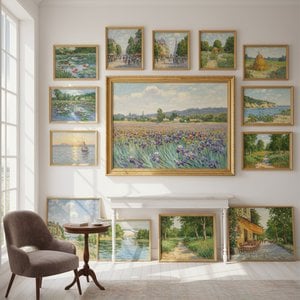
Impresjonistiske landskap: 10 mesterverk som definerte en kunstbevegelse | ArtsDot.no
Opplev impresjonismens magi! Utforsk 10 ikoniske landskapsmalerier av Monet, Renoir og Degas. Lær historien bak mesterverkene & finn din perfekte kunsttrykk på ArtsDot.com.

Frederick William Jackson: Capturing the American West Through Luminist Vision & Narrative Detail
Explore the captivating works of Frederick William Jackson, a pioneer of Western realism & Luminist painting. Discover his atmospheric landscapes, depictions of Native American life, and lasting legacy. Learn more at ArtsDot.

John Constable: Topp 25 Maler – Engelsk Landskapskunst i Ditt Hjem
Opplev John Constables 25 mest ikoniske malerier! Fordyp deg i engelsk romantikk, landskapskunst og atmosfæriske scener. Finn museumskvalitets reproduksjoner & interiørinspirasjon på ArtsDot.com. Utforsk samlingen online!