


 Bekijk op ware grootte
 Verstuur
 Delen
Delen
 Details bekijken
 Gids voor studentenkunstwerken

 Download
 Vergelijkbare items
 Röntgenonderzoek
 Diavoorstelling
 Statistieken
The Microscope


 Lees meer
Giclée / Kunstafdrukken
Giclée- of canvasafdruk van museumkwaliteit met een snelle productie en flexibele afwerkingsmogelijkheden. ( Koop handgeschilderd kunstwerk Schakel over naar digitale afbeeldingen)




P118B €10

P118H €10

P118W €10

P438Z €10

P508JH €12

P508YH €12

P805H €10

P805Z €10

P919BZ €10

P919G €10

P919XJ €10

P959ZH €10

P968JZ €12

W106C €8

W218G €10

W218JH €8

W218Y €10

W307PJ €10

W316G €10

W316PJ €8

W316Y €10

W398PJ €8

W4111J €10

W500HY €15

W500JH €15

W692G €12

W849H €8

W940BG €15

W953PJ €8




Kies uit onze vooraf ingestelde maten die overeenkomen met de originele verhoudingen van het kunstwerk.

Voer de breedte en de hoogte in die u nodig heeft, passend bij uw lijst of uw muur. Een afdruk kan alleen worden ingekort, nooit groter worden gemaakt dan het origineel, waardoor een formaat met een andere verhouding een deel van de afbeelding verliest. Wij sturen u een digitaal mockup ter goedkeuring voordat we iets drukken. De afbeelding op deze pagina toont niet de werkelijke uitsnede — dit is alleen te zien op het mockup.
Wereldwijde levering () binnen 2 weken in plaats van de standaard 4/5 weken. (22 oktober)

Gratis wereldwijde expressverzending

Hoogwaardig linnen canvas

Volledige verzendverzekering

Garantie op terugbetaling van invoerrechten

Garantie op exacte kleurweergave

Retourbeleid van 100 dagen (alleen bij defecten)

100% Geld-terug-garantie

Korting bij meerdere afnames
 De optie voor glas is alleen beschikbaar bij een formaat kleiner dan 110 cm.

The Microscope
Giclée / Kunstafdrukken
Formaat reproductie
-


Totaalprijs
€ 55
A Window into Enlightenment: Examining Robert Walter Weir’s “The Microscope”
Robert Walter Weir's "The Microscope," completed in 1849, stands as a remarkable testament to the confluence of scientific curiosity and humanist ideals that characterized mid-nineteenth century America. More than just a portrait depicting Jacob Whitman Bailey, a prominent advocate for American microscopy and instructor at West Point, this painting embodies the Romantic spirit’s fascination with both reason and imagination—a duality Weir skillfully captures through meticulous observation and expressive brushwork. The artwork resides within Yale University Art Gallery's collection, offering visitors an opportunity to contemplate its enduring significance.- Subject Matter: At its core, “The Microscope” presents a tableau of intellectual engagement. Bailey, dressed in attire reminiscent of Galileo Galilei—a deliberate allusion to the Renaissance astronomer’s groundbreaking discoveries—demonstrates his knowledge to his sons and daughter, Maria. This familial scene underscores the importance of educating children not only in traditional arts but also in scientific pursuits, reflecting the burgeoning belief that fostering intellectual development was crucial for societal progress.
- Style & Technique: Weir’s style aligns firmly with the Hudson River School tradition, prioritizing atmospheric perspective and tonal gradation to convey a sense of grandeur and tranquility. Employing oil paints on canvas, he achieved remarkable realism through careful layering and blending—a hallmark of the era's artistic approach. The subdued palette—dominated by browns, greens, and blues—creates an environment that feels both scholarly and contemplative.
Historical Context: Science and Domestic Education in Victorian America
The painting emerged during a period marked by significant advancements in scientific understanding, particularly in microscopy. Scientists like Bailey were actively exploring the microscopic world, uncovering previously unseen organisms and challenging prevailing theories about disease and heredity. Simultaneously, Victorian society placed considerable emphasis on educating girls—primarily focusing on music, dance, and needlework—though figures like Bailey recognized the necessity of introducing science into female education. Weir’s depiction reflects this societal preoccupation with cultivating intellectual prowess in young women.- Symbolism: The inclusion of Galileo's garb serves as a powerful symbol—representing the triumph of observation and experimentation over dogma. Bailey’s stance, gazing intently at the microscope, embodies the Romantic conviction that scientific inquiry could illuminate the mysteries of creation. Furthermore, Maria’s presence symbolizes the future generation inheriting this enlightened worldview.
- Emotional Impact: “The Microscope” transcends mere representation; it evokes a feeling of serene intellectual pursuit and familial devotion. Weir's masterful use of light and shadow contributes to an atmosphere of quiet contemplation—encouraging viewers to appreciate the beauty inherent in knowledge and the importance of nurturing young minds.
Yale Center for British Art’s Perspective
The Yale Center for British Art considers “The Microscope” as a pivotal piece illustrating the Romantic movement's commitment to both reason and imagination. Its inclusion within the American Art before 1900 galleries underscores its significance in shaping artistic sensibilities during this formative period. The painting continues to inspire interior designers seeking to infuse their spaces with elements of intellectual curiosity and humanist values—a legacy that extends far beyond its original creation.Vragen & Antwoorden
Welke emotie straalt het Romanticism-werk "The Microscope" uit?
De Reflective emotie van "The Microscope" gaat samen met de Romanticism stijl.
Zijn er werken die lijken op "The Microscope"?
De pagina Vergelijkbare werken van "The Microscope" door Robert Walter Weir presenteert gerelateerde kunstwerken.
Is er een diavoorstelling beschikbaar voor "The Microscope" door Robert Walter Weir?
De diaporama van "The Microscope" is te bekijken op de Diavoorstelling pagina van het kunstwerk.
Gerelateerde kunstwerken


Biografie van de kunstenaar
Een leven gegrift in de geschiedenis: De wereld van Robert Walter Weir
Robert Walter Weir, geboren in New York City op 18 juni 1803, was een figuur die diep verweven was met het artistieke en educatieve weefsel van het Amerika van de 19e eeuw. Zijn levensverhaal is er een van zelfgestuurde toewijding, een dorst naar klassieke kennis en een onvermoeibare inzet om creativiteit bij anderen te stimuleren. In zijn vroege jaren verhuisde de familie Weir tussen New York City en New Rochelle, voordat ze rond 1817 weer in de stad zouden neerstrijken. Hoewel hij aanvankelijk betrokken was bij de handel, voelde de jonge Robert de onweerstaanbare roep van artistieke expressie; op achttienjarige leeftijd verliet hij de commercie in 1821 om zich volledig aan de schilderkunst te wijden. Deze beslissing markeerde het begin van een reis die hem niet alleen een gerespecteerd kunstenaar zou maken, maar ook een cruciale pedagoog die de geest van toekomstige leiders zou vormen. De eerste opleiding van Weir was grotendeels zelfgestuurd, verfijnd door ijverige studie in New York City tussen 1822 en 1824. Het was echter zijn daaropvolgende verblijf in Italië – Florence (1824-1825) en Rome (1825-1827) – dat zijn artistieke gevoeligheid werkelijk deed ontbranden. Ondergedompeld in de meesterwerken van Michelangelo en Rafaël, absorbeerde hij de principes van de Renaissance-compositie en detail, invloeden die de rest van zijn carrière zouden resoneren.Van canvas naar klaslokaal: Een dubbele erfenis
Bij zijn terugkeer naar New York in 1827 integreerde Weir zich snel in de opkomende artistieke gemeenschap. Hij exposeerde regelmatig bij de National Academy of Design, waar hij in 1829 lid werd als geassocieerd kunstenaar en in 1831 de status van volwaardig academicus bereikte – getuigenissen van zijn groeiende vaardigheid en erkenning. Toch was het een ander pad dat het grootste deel van zijn levenswerk zou definiwtioneren: het onderwijs. In 1834 aanvaardde hij de functie van tekenleraar aan de United States Military Academy in West Point, New York. Deze aanstelling was niet louter een baan; het was een roeping. Hij klom op tot professor in de tekenkunst in 1846 en bleef maar een buitengewone achtenveertig jaar aan deze rol toegewijd, tot 1876. De impact van zijn ambtstermijn is bijna onmeetbaar. Weir leerde niet alleen tekenen; hij plantte een waardering voor kunst, observatie en visueel denken in de geest van een generatie toekomstige militaire officieren. Onder zijn studenten bevonden zich namen die synoniem zouden worden met de Amerikaanse Burgeroorlog: Ulysses S. Groot, Robert E. Lee, Jefferson Davis en James Abbott McNeill Whistler – een opmerkelijke lijst die de breedte van zijn invloed demonstreert. Hij begeleidde ook Seth Eastman, een andere vooraanstaande kunstenaar die het leven van de Native Americans documenteerde. Zijn pedagogische aanpak ging niet enkel over technische vaardigheid; het draaide om het cultiveren van een scherp oog en het stimuleren van creatieve probleemoplossende vermogens die deze mannen goed zouden dienen in hun toekomstige ondernemingen.De Hudson River School & Historische Narratieven
Weir wordt terecht beschouwd als een lid van de Hudson River School, een Amerikaanse kunststroming die beroemd is om haar romantische weergaven van het nationale landschap. Hoewel zijn doeken vaak historische onderwerpen bevatten, waren ze doordrenkt met hetzelfde gevoel van grandeur en eerbied voor de natuur dat kenmerkend was voor deze school. Zijn artistieke stijl was diep geworteld in klassieke principes die hij had opgedaan tijdens zijn Italiaanse studies – een minutieuze aandacht voor detail, gebalanceerde composities en een dramatisch gebruik van licht en schaduw. Hij kopieerde echter niet simpelweg de technieken van de Renaissance; hij paste ze aan Amerikaanse thema's en verhalen aan. Wellicht zijn meest iconische werk is The Embarkation of the Pilgrims, in opdracht gegeven door het Amerikaanse Congres in 1837 en in 1843 geplaatst in de rotunda van het Amerikaanse Capitool. Dit monumentale schilderij is niet slechts een historische weergave; het is een krachtige allegorie van moed, geloof en de stichtingsprincipes van Amerika. Andere belangrijke werken zijn *Bourbons Last March*, *Landing of Hendrik Hudson*, *Our Lord on the Mount of Olives* en *Columbus before the Council of Salamanca*. Deze schilderijen tonen zijn veelzijdigheid en zijn toewijding om cruciale momenten in de geschiedenis vast te leggen met zowel nauwkeurigheid als emotionele resonantie.Familie, Invloed & Blijvende Erkenning
De nalatenschap van Robert Walter Weir reikt veel verder dan zijn eigen artistieke prestaties. Hij vestigde een familietraditie van artistieke excellentie; twee van zijn zonen volgden in zijn voetsporen. John Ferguson Weir werd een gerespecteerd schilder en beeldhouwer, terwijl Julian Alden Weir uitblonk als een prominente portret-, figuur- en landschapsschilder – wat de naam Weir verder verankerde in de Amerikaanse kunstgeschiedenis. Robert Walter Weir trouwde tweemaal en kreeg zestien kinderen, waarmee hij naast zijn professionele ambities een levendig gezinsleven leidde. Hij overleed in 1889 en liet een rijk artistiek erfgoed en een blijvende impact op het Amerikaanse onderwijs na. Vandaag de dag worden zijn werken nog steeds tentoongesteld in vooraanstaande musea en collecties, wat ervoor zorgt dat zijn bijdragen zichtbaar blijven en gewaardeerd worden door toekomstige generaties. Zijn invloed is nog steeds voelbaar via de talloze kunstenaars die hij inspireerde, zowel direct als studenten als indirect door zijn toewijding aan het bevorderen van creativiteit en kritisch denken.Een blijvende indruk
- Verbinding met de Hudson River School: De deelname van Weir aan deze invloedrijke beweging bevestigde zijn plaats binnen de canon van de Amerikaanse landschapsschilderkunst.
- De erfenis van West Point: Zijn vier decennia in West Point vormden de artistieke gevoeligheid van talrijke toekomstige militaire leiders, wat de kracht van kunsteducatie bewijst.
- Meesterschap in historische schilderkunst: Werken zoals The Embarkation of the Pilgrims zijn voorbeelden van zijn vermogen om belangrijke historische gebeurtenissen met dramatisch effect en symbolische diepgang vast te leggen.
- Artistieke familiedynastie: Het succes van zijn zonen, John Ferguson Weir en Julian Alden Weir, vergrootte de bijdrage van de familie aan de Amerikaanse kunst verder.

Robert Walter Weir
1803 - 1889 , Verenigde Staten
Snelle feiten
- Artistic Movement Or Style: Hudson River School
- Artists Or Movements Influenced By This Artist: ['Renaissance']
- Artists Who Influenced This Artist:
- Michelangelo
- Raphael
- Date Of Birth: 18 juni 1803
- Full Name: Robert Walter Weir
- Nationality: Amerikaans
- Notable Artworks:
- Embarkation of the Pilgrims
- Landing of Hendrik Hudson
- Evening of the Crucifixion
- Place Of Birth: New York City, Verenigde Staten
Gerelateerde artikelen

Robert Spencer: Luminism, Narrative & the American Landscape Tradition
Explore the captivating world of Luminism & the Hudson River School with our expert analysis. Discover the history, artists, and enduring beauty of 19th-century American landscape painting. Find museum-quality reproductions at ArtsDot.
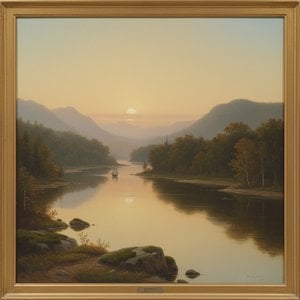
David Johnson: A Luminist Master of the Hudson River School & Beyond
Explore the captivating landscapes of David Johnson, a key figure in the Hudson River School & Luminism movement. Discover his artistic evolution, legacy, and how to collect his works with ArtsDot.

The Sublime Landscape: Exploring the Hudson River School Movement
Explore the captivating world of the Hudson River School! Discover the history, artists, and defining characteristics of this iconic American art movement. Learn about Romanticism's influence & find inspiration for your collection.

Top 10 Meesterwerken van de Hudson River School: Kunst voor uw interieur
Ontdek de 10 meesterwerken van de Hudson River School! Leer over Thomas Cole, Frederic Church & meer. Prachtige landschappen uit de 19e eeuw voor uw interieur. Kunst reproducties van museumkwaliteit op ArtsDot.com.
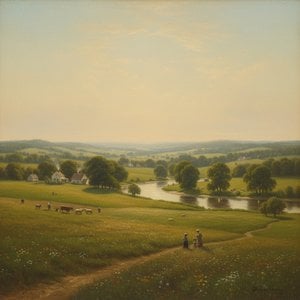
Thomas Worthington Whittredge: Capturing the American Pastoral Ideal with Luminist Light
Explore the luminous landscapes of Thomas Worthington Whittredge, a key figure in the Hudson River School and master of Luminism. Discover his captivating paintings & legacy with ArtsDot.