


 Bekijk op ware grootte
 Verstuur
 Delen
Delen
 Details bekijken
 Gids voor studentenkunstwerken

 Download
 Vergelijkbare items
 Röntgenonderzoek
 Diavoorstelling
 Statistieken
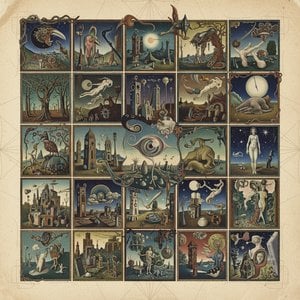
Awakening

 Lees meer
Giclée / Kunstafdrukken
Giclée- of canvasafdruk van museumkwaliteit met een snelle productie en flexibele afwerkingsmogelijkheden. ( Koop handgeschilderd kunstwerk Schakel over naar digitale afbeeldingen)




P118B €10

P118H €10

P118W €10

P438Z €10

P508JH €12

P508YH €12

P805H €10

P805Z €10

P919BZ €10

P919G €10

P919XJ €10

P959ZH €10

P968JZ €12

W106C €8

W218G €10

W218JH €8

W218Y €10

W307PJ €10

W316G €10

W316PJ €8

W316Y €10

W398PJ €8

W4111J €10

W500HY €15

W500JH €15

W692G €12

W849H €8

W940BG €15

W953PJ €8




Kies uit onze vooraf ingestelde maten die overeenkomen met de originele verhoudingen van het kunstwerk.

U kunt uw eigen afmetingen opgeven om in een specifieke lijst of ruimte te passen. Als de door u gekozen maat niet overeenkomt met de proporties van het originele kunstwerk, zullen wij de afbeelding bijsnijden of uitbreiden met een gespiegelde of effen rand. Een digitaal mockup wordt ter goedkeuring naar u verzonden voordat de productie begint.
Houd er rekening mee dat de preview op het scherm de werkelijke bijsneding of uitbreiding niet weergeeft. Alleen de mockup toont de uiteindelijke compositie nauwkeurig.
Hoewel aangepaste maten beschikbaar zijn, raden wij aan een afmeting uit de vooraf bepaalde lijst te kiezen om de originele proporties te behouden.
Wereldwijde levering () binnen 2 weken in plaats van de standaard 4/5 weken. (13 oktober)

Gratis wereldwijde expressverzending

Hoogwaardig linnen canvas

Volledige verzendverzekering

Garantie op terugbetaling van invoerrechten

Garantie op exacte kleurweergave

Retourbeleid van 100 dagen (alleen bij defecten)

100% Geld-terug-garantie

Korting bij meerdere afnames
 De optie voor glas is alleen beschikbaar bij een formaat kleiner dan 110 cm.

Awakening
Giclée / Kunstafdrukken
Formaat reproductie
-


Totaalprijs
€ 54
Gerelateerde kunstwerken


Biografie van de kunstenaar
The Shadowed World of Max Klinger: A Pioneer of Symbolism
Max Klinger, born in Leipzig in 1857, emerged as a pivotal figure bridging the gap between Realism and the burgeoning world of Symbolism. His artistic journey wasn’t one of immediate recognition but rather a gradual unfolding of a unique vision—a descent into the psychological depths that would profoundly influence modern art. Klinger's early training at the Academy of Fine Arts in Karlsruhe, under Karl Gussow, provided him with a solid foundation in traditional techniques, yet it was his fascination with the etchings of artists like Menzel and Goya that truly ignited his imagination. These masters demonstrated the power of printmaking to convey not merely visual representation but also narrative complexity and emotional intensity—qualities Klinger would masterfully employ throughout his career. He wasn’t content simply to depict the world as it appeared; he sought to unveil its hidden currents, its anxieties, and its dreams.From Realism's Embrace to Symbolic Depths
Klinger’s artistic evolution was marked by a deliberate shift away from straightforward realism towards a more subjective and symbolic language. Initially, his work reflected the prevailing aesthetic of the time—detailed depictions of everyday life. However, this phase proved merely a stepping stone. The turning point came with his series of etchings, Paraphrase on the Finding of a Glove (1881). This ambitious project, comprising ten plates, wasn’t a literal illustration of an event but rather a fragmented, dreamlike exploration of desire, loss, and the complexities of human relationships. The glove itself became a potent symbol—a relic imbued with memory and longing. This series established Klinger as a leading voice in the Symbolist movement, demonstrating his ability to transform ordinary objects into vehicles for profound psychological insight. He wasn’t interested in simply showing what things looked like; he wanted to convey what they *felt* like, what they represented on a deeper, more subconscious level. The plates depict a series of increasingly bizarre and unsettling events surrounding the discovery of the glove—a lost love, a fleeting encounter, and ultimately, an ambiguous sense of longing.Sculpture, Printmaking and the Exploration of Myth
Klinger's artistic output was remarkably diverse, encompassing painting, sculpture, and printmaking—though it’s arguably in the realm of graphic arts that he achieved his most enduring legacy. His prints are characterized by their meticulous technique, dramatic use of light and shadow, and haunting imagery. He wasn’t afraid to tackle challenging themes—mortality, sexuality, and the darker aspects of the human psyche. Beyond Paraphrase on the Finding of a Glove, works like his depictions of Faustian bargains and mythological scenes reveal a fascination with archetypal narratives and universal human struggles. His sculptural work, though less prolific than his prints, was equally ambitious. A prime example is his monumental installation in homage to Beethoven at the Vienna Secession in 1902—a powerful testament to the composer’s genius and a bold statement of artistic innovation. The sculpture depicts Beethoven as a Greek god on a large alabaster throne, surrounded by musical instruments and symbols of triumph. Klinger's sculptures were often deliberately unsettling, challenging conventional notions of beauty and form.Influences and Artistic Development
Klinger’s artistic development was shaped by a complex interplay of influences. His early training in Karlsruhe instilled in him a respect for traditional techniques, but it was his exposure to the works of Menzel and Goya that awakened his interest in printmaking as a means of conveying psychological depth and narrative complexity. He also drew inspiration from Japanese woodblock prints, which he studied during his time in Paris. Furthermore, Klinger’s intellectual life was profoundly influenced by thinkers such as Arthur Schopenhauer and Friedrich Nietzsche, whose ideas about pessimism, the will to power, and the nature of reality resonated deeply with his artistic vision. The artist's exploration of dreamlike states and subconscious desires anticipated the work of later Surrealists like Salvador Dalí and René Magritte.Legacy and Influence: A Bridge to Modernity
Max Klinger’s influence extended far beyond his own lifetime. He paved the way for Expressionism, Surrealism, and other avant-garde movements that sought to explore the inner world of human experience. His emphasis on symbolism, psychological depth, and subjective interpretation resonated with artists grappling with the anxieties and uncertainties of the modern age. The artist’s exploration of dreamlike states and subconscious desires resonated with audiences worldwide. In 1991, the Moscow art collective Inspection Medical Hermeneutics created “Klinger’s Boxes,” an installation directly inspired by his work—a testament to the enduring power of his vision. He remains a crucial figure in understanding the transition from 19th-century academic traditions to the radical experimentation of the 20th century. His art invites us to confront our own shadows, to delve into the mysteries of the human psyche, and to recognize the profound beauty that can be found even in the darkest corners of existence.Notable Works & Continued Relevance
Beyond the celebrated Paraphrase on the Finding of a Glove, Klinger’s oeuvre boasts numerous significant pieces. Paintings like “Karl Haberstock,” showcasing his influence on fellow artists, and works reflected in collections at Kunstsammlungen und Museen Augsburg demonstrate his broad impact. His monochrome photographs, such as "Days Of March III," with their intriguing UFO sightings, reveal a willingness to embrace the unconventional and explore the boundaries of perception. Klinger’s art isn't merely historical; it remains strikingly relevant today. In an era defined by uncertainty and rapid change, his exploration of psychological themes—anxiety, alienation, and the search for meaning—continues to resonate with audiences worldwide. His legacy is a reminder that true artistic innovation lies not in simply replicating reality but in revealing its hidden depths and challenging our preconceived notions about the world around us.
Max Klinger
1857 - 1920 , Duitsland
Snelle feiten
- Artistic Movement Or Style: Symbolisme
- Artists Or Movements Influenced By This Artist:
- Expressionisme
- Surrealisme
- Artists Who Influenced This Artist:
- Menzel
- Gova
- Date Of Birth: 1857
- Date Of Death: 1920
- Full Name: Max Klinger
- Nationality: Duits
- Notable Artworks:
- Paraphrase Glove
- Beethoven sculptuur
- De Bul
- Place Of Birth: Leipzig, Duitsland
Gerelateerde artikelen

Top 10 Expressionistische Meesterwerken: Kunst die de Ziel Raakt | ArtsDot
Ontdek de 10 meest iconische Expressionistische meesterwerken! Duik in de emotionele wereld van Kirchner, Kandinsky & Nolde. Museumkwaliteit kunst reproducties voor uw interieur. Exploreer de collectie op ArtsDot.com.

Max Klinger: Symbolism, Science & the Subconscious – A German Master's Legacy
Explore the captivating world of Max Klinger, a pivotal German Symbolist artist. Discover his groundbreaking prints, psychological themes, & influence on modern art movements like Expressionism. Expert analysis and insights.
Max Ernst's Top 25 Meesterwerken: Surrealisme voor uw Interieur | ArtsDot
Ontdek de top 25 meesterwerken van Max Ernst, pionier van het surrealisme & dadaïsme. Duik in zijn droombeelden en unieke technieken. Museumkwaliteit kunst reproducties voor uw interieur op ArtsDot.com. Exploreer de collectie online!

Top 10 Legendarische Etstechnieken die de Kunst Voorgoed Veranderden | ArtsDot
Ontdek de 10 meest legendarische etsen die de kunstgeschiedenis veranderden! Van Rembrandt tot Goya, leer over meesterlijke technieken en iconische werken. Vind museumkwaliteit reproducties & interieurinspiratie op ArtsDot.com.

Etching: A Historical Survey of Technique, Aesthetic Qualities & Enduring Artistic Significance
Explore the rich history of etching, from its origins to Rembrandt's masterful innovations. Discover the technique, aesthetic qualities & enduring legacy of this captivating art form. Expert insights for collectors and enthusiasts.