Een Verlicht Leven: De Reis van Henry Ossawa Tanner
Geboren in Pittsburgh, Pennsylvania, in 1859, kwam Henry Ossawa Tanner voort uit een familie die diep geworteld was in geloof en activisme. Zijn vader, predikant Benjamin Tucker Tanner, was een prominente figuur binnen de African Methodist Episcopal Church, terwijl zijn moeder, Sarah Elizabeth Tanner, de onvertelde verhalen met zich meedroeg van de ontsnapping aan de slavernij via de Underground Railroad. Deze erfenis gaf de jonge Henry een diep gevoel van identiteit en doelgerichtheid dat zijn artistieke visie zou doordringen. Van jongs af aan toonde hij een scherpe interesse in de kunst, gevoed door observaties van lokale schilders en aangemoedigd ondanks de maatschende barrières waar Afro-Amerikaanse kunstenaars destijds mee te maken kregen. De verhuizing van zijn familie naar Philadelphia bleek cruciaal; het stelde hem bloot aan een levendig cultureel landschap en legde de basis voor zijn formele opleiding aan de Pennsylvania Academy of the Fine Arts in 1879. Daar, onder de begeleiding van Thomas Eakins—een revolutionaire figuur die pleitte voor realisme en anatomische studie—slijpte Tanner zijn technische vaardigheden en ontwikkelde hij een onwankelbare toewijding aan het vastleggen van de waarheid op canvas. Toch kwam hij zelfs binnen de muren van de academie voor vooroordelen tegen, een constante herinnering aan de uitdagingen die hem nog te wachten stonden.Parijse Ontwaking: Het Vinden van een Stem en Erkenning
Een keerpunt kwam in 1891, toen Tanner een reis naar Parijs begon, aanvankelijk bedoeld als een tussenstap naar verdere studies in Rome. De aantrekkingskracht van de Franse hoofdstad bleek echter onweerstaanbaar. Hij schreef zich in bij de Académie Julian en doopte zichzelf in de bloeiende artistieke gemeenschap van de stad, waarbij hij de invloeden van de Franse academische kunst en het opkomende impressionisme in zich opnam. Het was in Parijs dat Tanner werkelijk zijn eigen stem vond, bevrijd van de beperkingen die door raciale vooroordelen in zijn vaderland werden opgelegd. Zijn werk begon weerklank te vinden bij een Europees publiek, gekenmerkt door een bijzonder realisme doordrenkt met spirituele diepgang. De acceptatie van Daniel in de Leeuwenkuil in de prestigieuze Salon van 1896 was een historisch moment—een krachtige bevestiging van zijn talent en een doorbraak voor een Afro-Amerikaanse kunstenaar op het internationale toneel. Dit succes opende de deuren naar verdere tentoonstellingen en opdrachten, waardoor Tanner een gerespecteerd figuur werd binnen de Parijse artistieke kringen. Hij was niet slechts aan het overleven; hij bloeide op, daagde verwachtingen uit en plaveide de weg voor toekomstige generaties.Thema's van Geloof en Menselijkheid: Een Unieke Artistieke Visie
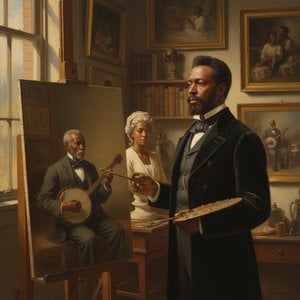
Het oeuvre van Tanner wordt gekenmerkt door een aangrijpend samenspel tussen realisme, religieuze symboliek en intieme portretten van de menselijke ervaring. Hoewel vroege werken zoals The Banjo Lesson (1893) waardige representaties boden van het Afro-Amerikaanse leven—een scherp contrast met de destijds heersende karikaturen—keerde hij zich steeds meer tot bijbelse verhalen als een middel om universele thema's van geloof, lijden en verlossing te verkennen. Schilderijen zoals Christus loopt op het water, De Opstanding van Lazarus en De Goede Herder zijn niet louter afbeeldingen van de schrift; het zijn diepgaande meditaties over spiritualiteit, weergegeven met een meesterlijke beheersing van licht, compositie en emotioneerde nuance. Hij doordrenkte zijn religieuze scènes vaak met een gevoel van stille contemplatie, waarbij hij Christus afbeeldde als een diep menselijk figuur in plaats van een afstandelijke godheid. Deze benadering resoneerde bij een publiek dat op zoek was naar troost en betekenis in een snel veranderende wereld. Naast bijbelse onderwerpen verkende Tanner ook landschappen en panoramische uitzichten—zoals het weidse Panoramisch uitzicht op het Paleis en de Tuinen van Versailles—wat zijn veelzijdigheid en technische bekwaamheid bewees.Nalatenschap en Blijvende Impact: Barrières Doorbreken en Generaties Inspireren
Henry Ossawa Tanner staat als een monumentale figuur in de Amerikaanse kunstgeschiedenis, niet alleen om zijn artistieke prestaties, maar ook om zijn pioniersrol bij het afbreken van raciale barrières. Hij was de eerste Afro-Amerikaanse schilder die wereldwijde internationale erkenning kreeg, waarmee hij stereotypen uitdaagde en de deuren opende voor talloze kunstenaars die in zijn voetsporen traden. Zijn succes tartte alle verwachtingen en bewees dat talent geen kleur kent. De invloed van Tanner reikt verder dan het domein van de kunst; hij werd een symbool van hoop en veerkracht voor de Afro-Amerikaanse gemeenschap, waarmee hij bewees dat excellentie het altijd kan laten winnen van tegenslag. In 1923 werd hij door de Franse regering geëerd als ridder in de Eer van de Legioen van Eer, en in 1927 behaalde hij het volledige lidmaatschap van de National Academy of Design—verdere getuigenissen van zijn artistieke status. Hoewel hij een groot deel van zijn carrière als expatrié leefde, vergat Tanner nooit zijn wortels; hij bleef pleiten voor gelijkheid en inspireerde verandering door zijn kunst. Hij overleed in Parijs in 1937, maar liet een nalatenschap na die tot op de dag van vandaag kunstenaars verlicht en versterkt. Zijn werk blijft een krachtige herinnering aan de transformerende kracht van kunst en de onverwoestbare menselijke geest.Opmerkelijke Werken
- The Banjo Lesson (1893): Een aangrijpende weergave van het Afro-Amerikaanse leven, vol waardigheid en vakmanschap.
- Daniel in de Leeuwenkuil (1896): Het schilderij dat Tanner naar internationale roem lanceerde.
- De Opstanding van Lazarus (1897): Een meesterlijke verkenning van geloof en verlossing, gevierd om zijn dramatische lichtinval.
- De Annunciatie (1898): Een unieke interpretatie van de bijbelse scène, doordrenkt met stille contemplatie.
- Christus loopt op het water (ca. 1910): Een krachtige en evocatieve weergave van een cruciaal moment uit de christelijke schrift.
Vraag & Antwoord
In welke stad en welk land is Henry Ossawa Tanner geboren?
Henry Ossawa Tanner werd geboren in Pittsburgh, in Verenigde Staten.
Waar zijn de kunstwerken van Henry Ossawa Tanner gegroepeerd per techniek te vinden?
De pagina Alle media groepeert de kunstwerken van Henry Ossawa Tanner op techniek.
Hoeveel kunstwerken van Henry Ossawa Tanner zijn beschikbaar om te bekijken?
U kunt 196 kunstwerken werken van Henry Ossawa Tanner bekijken op de Alle kunstwerken-pagina.
In welke stromingen heeft Henry Ossawa Tanner gewerkt?
De stromingen waarin Henry Ossawa Tanner werkte, zijn te vinden op de Alle stromingen-pagina van de kunstenaar, waar de kunstwerken per stroming zijn gegroepeerd.
Wat zijn de geboorteplaats en het geboortejaar van Henry Ossawa Tanner?
Henry Ossawa Tanner werd geboren in Pittsburgh in 1859.
Waar komt Henry Ossawa Tanner vandaan?
Henry Ossawa Tanner werd geboren in Verenigde Staten.
Waar zijn de kunstwerken van Henry Ossawa Tanner gegroepeerd op kleurpalet te vinden?
De Op kleurpalet-pagina groepeert de kunstwerken van Henry Ossawa Tanner op basis van hun kleurenpalet.