


 Bekijk op ware grootte
 Verstuur
 Delen
Delen
 Details bekijken
 Gids voor studentenkunstwerken

 Download
 Vergelijkbare items
 Röntgenonderzoek
 Diavoorstelling
 Statistieken
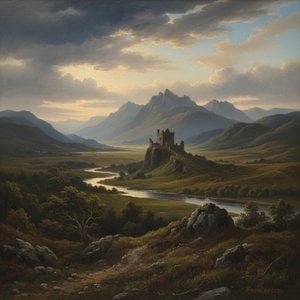
Landscape
 Acrylic On Canvas
- WallArt
- Romanticism
 1885
1885 14.0 x 19.0 cm
 Royal Scottish Academy of Art - Architecture
 Lees meer
Handgemaakte olieverfreproductie
Met de hand geschilderd in olieverf op canvas in uw gewenste maat en lijst, op bestelling gemaakt door onze kunstenaars. ( Schakel over naar print Schakel over naar digitale afbeeldingen)




P118B €10

P118H €10

P118W €10

P438Z €10

P508JH €12

P508YH €12

P805H €10

P805Z €10

P919BZ €10

P919G €10

P919XJ €10

P959ZH €10

P968JZ €12

W106C €8

W218G €10

W218JH €8

W218Y €10

W307PJ €10

W316G €10

W316PJ €8

W316Y €10

W398PJ €8

W4111J €10

W500HY €15

W500JH €15

W692G €12

W849H €8

W940BG €15

W953PJ €8




Kies uit onze vooraf ingestelde maten die overeenkomen met de originele verhoudingen van het kunstwerk.

Voer de breedte en de hoogte in die u nodig heeft, passend bij uw lijst of uw muur. Dit is handgeschilderd, dus bij een afmeting met een andere vormverhouding kan de kunstenaar iets meer rondom het schilderij schilderen of juist iets meer weglaten — u kiest zelf. Wij sturen u een digitaal mockup ter goedkeuring voordat het schilderwerk begint. De afbeelding die op deze pagina wordt getoond, is niet het uiteindelijke resultaat — alleen de mockup geeft dit weer.
Na de bestelling zal het team van ArtsDot.com per e-mail contact opnemen met de klant voor instructies en een mockup-voorbeeld sturen.
Wereldwijde levering () binnen 3 tot 4 weken in plaats van de standaard 5 weken. (22 oktober). Zonder concessies aan de kwaliteit.

Gratis wereldwijde expressverzending

Hoogwaardig linnen canvas

Volledige verzendverzekering

Garantie op terugbetaling van invoerrechten

Garantie op exacte kleurweergave

Retourbeleid van 100 dagen (alleen bij defecten)

100% Geld-terug-garantie

Korting bij meerdere afnames
 De optie voor glas is alleen beschikbaar bij een formaat kleiner dan 110 cm.

Landscape
Reproductiemethode
Formaat reproductie
-


Totaalprijs
€ 231
James Nasmyth: Pioneer of Steam Power and Landscape Painting
James Nasmyth (1808–1890) stands as an extraordinary figure—a Scottish engineer, philosopher, artist, and inventor whose legacy extends far beyond the realm of mechanics. While celebrated for his groundbreaking contribution to industrial innovation, particularly the steam hammer, Nasmyth’s artistic pursuits reveal a profound appreciation for the beauty of nature and a masterful ability to translate that observation onto canvas. This dual vocation—scientific ingenuity coupled with artistic sensibility—defines him as one of Scotland's most remarkable cultural innovators.- Early Life & Education: Born in Edinburgh, Nasmyth’s formative years were shaped by his father’s passion for landscape painting and his own burgeoning fascination with mechanics. His apprenticeship at Henry Maudslay’s workshop instilled a disciplined approach to craftsmanship and fostered an understanding of precision engineering—skills that would prove invaluable throughout his life.
- Engineering Achievements: Nasmyth revolutionized iron forging with the invention of the steam hammer, dramatically reducing processing time and elevating quality standards. He spearheaded the construction of numerous locomotives for prominent railways like the Great Western Railway, demonstrating a commitment to technological advancement that benefited both Scotland and Britain.
- Landscape Painting Style & Influences: Nasmyth’s artistic style was deeply rooted in Romanticism, mirroring the movement's emphasis on emotion and the sublime experience of confronting nature’s grandeur. He drew inspiration from artists like Peder Mork Monsted and Paul Gauguin, whose explorations of color and technique resonated with his own aesthetic sensibilities.
- Notable Works: Among Nasmyth’s most enduring achievements are Rosneath House and Dunglass Castle—architectural projects that showcased his artistic vision alongside his engineering prowess. His landscapes capture the essence of Scotland's dramatic scenery, conveying a sense of tranquility and awe through meticulous detail and harmonious color palettes.
- Symbolism & Emotional Impact: Nasmyth’s paintings aren’t merely representations of places; they are meditations on the relationship between humanity and the natural world. The use of muted earthy tones evokes feelings of warmth and contemplation, inviting viewers to immerse themselves in the serene beauty of his compositions—a testament to his belief that art could elevate the human spirit.
The Landscape Painting Technique: Romanticism Revisited
Nasmyth’s approach to landscape painting reflected the core tenets of Romanticism, prioritizing emotional response over purely descriptive accuracy. He meticulously studied geological formations and atmospheric conditions—a practice informed by his scientific background—to capture the essence of a scene's mood and grandeur. Like Monsted and Gauguin, Nasmyth skillfully employed color palettes that prioritized tonal harmony and subtle gradations to convey depth and atmosphere. The inclusion of distant mountains and hazy skies created an illusion of vastness, mirroring the Romantic fascination with sublime landscapes capable of inspiring awe and wonder.Connections to Other Artists: Monsted & Gauguin
Peder Mork Monsted’s paintings exemplify a similar stylistic trajectory—a dedication to portraying natural beauty with unwavering realism while maintaining an artistic sensibility. His works share Nasmyth's commitment to capturing the textures and colors of the Scottish Highlands, reflecting a shared appreciation for observation and meticulous detail. Paul Gauguin, on the other hand, pushed beyond mere representation, experimenting with bold color combinations and simplified forms—a stylistic divergence from Nasmyth’s more restrained palette but nonetheless united by a desire to express profound emotion through visual imagery.James Nasmyth's Legacy: Beyond Steam Power
James Nasmyth’s contribution to engineering history is undeniable, transforming iron forging and propelling the railway age forward. However, his artistic legacy—particularly his landscape paintings—offers a glimpse into a more contemplative side of this brilliant innovator. These works stand as enduring symbols of Scotland's natural heritage and demonstrate Nasmyth’s conviction that art could enrich human experience by fostering appreciation for beauty and tranquility—a timeless message conveyed through masterful technique and evocative imagery.Vragen & Antwoorden
Kan ik "Landscape" in meer detail bekijken?
De röntgenweergave van "Landscape" door James Nasmyth is te vinden op de Röntgenanalyse-pagina van het kunstwerk: een interactieve verkenning van het beeld door middel van elf optische lagen.
Hoe is de kleurcompositie van "Landscape" door James Nasmyth opgebouwd?
De kleuranalyse van "Landscape" door James Nasmyth legt een Bold contrast en een Discordant Palette harmonie vast.
Kan "Landscape" door James Nasmyth, onderdeel van de collectie van Royal Scottish Academy of Art - Architecture, op legale wijze worden gereproduceerd?
Het originele "Landscape" bevindt zich in Royal Scottish Academy of Art - Architecture en het werk is bevindt zich in het publiek domein - de auteursrechten zijn verlopen.
Gerelateerde kunstwerken


Biografie van de kunstenaar
Early Life and Education
- Born: August 19, 1808, Edinburgh, United Kingdom
- Died: May 7, 1890
- Parents: Alexander Nasmyth (painter) and Barbara Foulis
- Early exposure to mechanics through his father’s workshop.
- Attended the Royal High School in Edinburgh.
- Studied at the Edinburgh School of Arts (later Heriot-Watt University), demonstrating early mechanical aptitude.
- Constructed a working model of a high-pressure steam engine at age 17, showcasing his skills.
Career and Inventions
- Apprenticed to Henry Maudslay in London, gaining experience in machine manufacturing.
- Established his own machine shop in Manchester in 1834.
- Founded Nasmyth, Gaskell and Company (Bridgewater Foundry) in 1836, specializing in machine tools and steam engines.
- Major Invention: The Steam Hammer – revolutionized iron forging by significantly reducing processing time and improving quality. Patented in 1842.
- Manufactured over 100 steam locomotives and various other machines like pumps and hydraulic presses.
- Developed pile drivers for marine construction projects.
Artistic Pursuits and Later Life
- Retired at age 48 to Penshurst, Kent in 1856.
- Dedicated himself to hobbies including astronomy, photography, and painting.
- Authored "The Moon: Considered as a Planet, a World, and a Satellite" (1874), demonstrating his interest in astronomical observation.
- Created detailed drawings and illustrations of machinery throughout his career, showcasing artistic talent alongside engineering skills.
Influences and Historical Significance
- Influence: Henry Maudslay – Nasmyth’s apprenticeship under Maudslay provided crucial experience in precision machining.
- Impact: The steam hammer significantly advanced the Industrial Revolution, enabling larger-scale metalworking operations.
- Contribution to Engineering: Emphasized efficiency and control in machinery design.
- Legacy: Recognized as a key figure in British engineering and innovation during the Victorian era.
Philosophical Views and Opposition to Organized Labor
- Nasmyth held strong views on labor, opposing organized labor movements.
- He believed in individual effort and responsibility rather than collective bargaining.
- His philosophical stance reflected a broader perspective prevalent among industrialists of his time.
- These beliefs shaped his approach to managing his workforce and contributed to his overall legacy.

James Nasmyth
1808 - 1890 , United Kingdom
Snelle feiten
- Full Name: James Hall Nasmyth
- Nationality: Scottish
- Date Of Birth: 1808
- Date Of Death: 1890
- Place Of Birth: Edinburgh, United Kingdom
- Artistic Movement Or Style: Engineer and Inventor
- Artists Who Influenced This Artist: ['Henry Maudslay']
Gerelateerde artikelen

James Abbott McNeill Whistler: Top 25 Meesterwerken voor Kunstliefhebbers | ArtsDot
Ontdek de 25 meest iconische meesterwerken van James Abbott McNeill Whistler, pionier van het esthetisme en impressionisme. Van zijn betoverende Nocturnes tot portretten vol harmonie. Vind museumkwaliteit reproducties & decoratie-inspiratie op ArtsDot.com

Patrick Nasmyth: A Scottish Romantic's Vision of History & the Grand Manner
Explore the captivating landscapes of Patrick Nasmyth, a key figure in Scottish Romanticism. Discover his Dutch influences, embrace of the Grand Manner, and lasting artistic legacy. Learn more at ArtsDot.

Sir Alfred James Munnings: Top 25 Meesterwerken voor Kunstliefhebbers | ArtsDot.nl
Ontdek de top 25 schilderijen van Sir Alfred James Munnings, meester van paardenkunst & Engelse impressionisme. Leer over zijn leven, techniek en iconische werken. Museumkwaliteit reproducties op ArtsDot.com! Ontdek alle meesterwerken online.

James Giles: Capturing Scottish Life Through the Lens of British Realism
Explore the life & work of James Giles (1801-1870), a master of Scottish landscape painting and favored artist of Queen Victoria. Discover his atmospheric realism & royal commissions.
Alexander Nasmyth: Picturing Scotland's Romantic Landscape – Innovation & Identity
Explore the life & art of Alexander Nasmyth, a pivotal figure in Scottish Romantic landscape painting. Discover his iconic works, including portraits of Robert Burns, and learn about his lasting influence on national identity. Fine art reproductions available.
