


 Voorvertoning
 Verstuur
 Delen
Delen
 Details bekijken

 Download
 Vergelijkbare items
 Röntgenonderzoek
 Diavoorstelling
Government Bureau
 Oil On Canvas
- WallArt
- Surrealist Movement
 1956
1956 50.0 x 75.0 cm
 Metropolitan Museum of Art
 Lees meer
Giclée / Kunstafdrukken
Giclée- of canvasafdruk van museumkwaliteit met een snelle productie en flexibele afwerkingsmogelijkheden. ( Bestel handgeschilderde reproductie Koop afbeelding)




P118B $10

P118H $10

P118W $10

P438Z $10

P508JH $12

P508YH $12

P805H $10

P805Z $10

P919BZ $10

P919G $10

P919XJ $10

P959ZH $10

P968JZ $12

W106C $8

W218G $10

W218JH $8

W218Y $10

W307PJ $10

W316G $10

W316PJ $8

W316Y $10

W398PJ $8

W4111J $10

W500HY $15

W500JH $15

W692G $12

W849H $8

W940BG $15

W953PJ $8




Kies uit onze vooraf ingestelde maten die overeenkomen met de originele verhoudingen van het kunstwerk.

U kunt uw eigen afmetingen opgeven om in een specifieke lijst of ruimte te passen. Als de door u gekozen maat niet overeenkomt met de proporties van het originele kunstwerk, zullen wij de afbeelding bijsnijden of uitbreiden met een gespiegelde of effen rand. Een digitaal mockup wordt ter goedkeuring naar u verzonden voordat de productie begint.
Houd er rekening mee dat de preview op het scherm de werkelijke bijsneding of uitbreiding niet weergeeft. Alleen de mockup toont de uiteindelijke compositie nauwkeurig.
Hoewel aangepaste maten beschikbaar zijn, raden wij aan een afmeting uit de vooraf bepaalde lijst te kiezen om de originele proporties te behouden.
Wereldwijde levering () binnen 2 weken in plaats van de standaard 4/5 weken. (7 september)

Gratis wereldwijde expressverzending

Hoogwaardig linnen canvas

Volledige verzendverzekering

Garantie op terugbetaling van invoerrechten

Garantie op exacte kleurweergave

Retourbeleid van 100 dagen (alleen bij defecten)

100% Geld-terug-garantie

Korting bij meerdere afnames
 De optie voor glas is alleen beschikbaar bij een formaat kleiner dan 110 cm.

Government Bureau
Giclée / Kunstafdrukken
Afmetingen reproductie
-


Eindtotaal
$ 63
The Labyrinth of Modern Existence
George Clair Tooker’s Government Bureau confronts the viewer with an environment that feels both utterly familiar and profoundly alienating. One steps into this painted space, and immediately, one is enveloped by a meticulously rendered illusion of order—a bureaucratic machine humming with silent activity. The composition is dominated by endless rows of mirrored cubicles, creating a visual echo chamber where reality seems to fracture under the weight of repetition. It is a scene steeped in the anxieties of the mid-20th century, capturing that unsettling feeling of being observed, categorized, and processed within the vast machinery of modern life. The initial impression is one of suffocating structure, yet beneath the surface precision lies a deep current of psychological unease.Technique and Visual Mastery
The technical execution here speaks to an almost obsessive level of craftsmanship. While the subject matter hints at surrealism, Tooker employs a style rooted in near-photographic realism. The artist masterfully handles light, which is diffused and even, bathing the scene in muted tones of gray, cream, and dusty brown. This controlled lighting flattens depth just enough to make the reflections feel both tangible and spectral. Notice the rendering of texture: the heavy drape of the overcoats contrasts sharply with the cold, slick sheen of the mirrored partitions. The linear perspective is breathtaking; every parallel line—the edges of the cubicles, the window frames—converges relentlessly toward a distant vanishing point, pulling the eye deeper into the painting’s inescapable grid. This precision suggests an oil on canvas medium, allowing for those subtle, polished gradations that define his highly controlled vision.Symbolism and Emotional Resonance
The true power of Government Bureau lies in its symbolic weight. The mirrored surfaces are more than mere decoration; they function as psychological mirrors, suggesting themes of self-reflection, surveillance, and the potential loss of individual identity within large systems. Are these men waiting for judgment? Are they merely reflections of one another? Tooker seems to suggest that in the pursuit of order—be it governmental or societal—the unique spark of the individual can become infinitely multiplied, yet ultimately diminished. The emotional tone is palpable: a quiet ache of detachment, an undercurrent of anxiety humming beneath the surface calm. It invites contemplation on where we find authenticity when surrounded by such perfect, repetitive structures.A Timeless Study in Alienation
For collectors and those who appreciate art that speaks to the human condition, this piece offers a profound meditation. While its setting is specific to 1956, its themes—bureaucratic fatigue, anonymity, and the search for self—are eternally relevant. Owning a reproduction of Government Bureau is not merely acquiring a painting; it is curating a moment of intense introspection for your space. It demands that one pause, look closer at the reflections, and consider the nature of the systems that govern our daily lives, transforming a mere office scene into a powerful piece of existential commentary.Vergelijkbare kunstwerken


Biografie van de kunstenaar
A Life Immersed in the Real and the Dreamlike
George Clair Tooker Jr., a name perhaps less instantly recognizable than some of his contemporaries, nevertheless occupies a vital space within 20th-century American figurative painting. Born in Brooklyn in 1920, and passing away in 2011, Tooker’s artistic journey was one of meticulous observation, profound introspection, and a relentless pursuit of capturing the anxieties and alienation inherent in modern life. His upbringing during the Great Depression, initially in Brooklyn and then in Bellport, New York, instilled within him an awareness of social realities that would later permeate his work. Though raised with a religious background—his mother was Episcopalian—Tooker’s path wasn't one of overt religious expression but rather a subtle exploration of spiritual themes through the human form and symbolic landscapes. His early exposure to art came through lessons and frequent visits to the Fogg Art Museum, nurturing an appreciation for artistic tradition that would become foundational to his unique style.Formative Years and Artistic Development
Tooker’s academic path was initially directed towards English literature; he graduated from Harvard University in 1942. However, the call of visual art proved too strong to ignore. His service interrupted by medical discharge from the Marine Corps Officer Candidates School, he dedicated himself to formal artistic training at the Art Students League of New York between 1943 and 1945. It was here that he came under the tutelage of Reginald Marsh, a chronicler of urban life, and later, more significantly, Kenneth Hayes Miller. Miller’s emphasis on form over emotional expression proved crucial in shaping Tooker's approach—a deliberate restraint that allowed his imagery to resonate with unsettling power. The influence of Harry Sternberg, known for his challenging questioning, further honed Tooker’s critical thinking about art and its purpose. A pivotal moment came with the discovery of Daniel V. Thompson’s “The Practice of Tempera Painting,” which led him to embrace the traditional Renaissance technique of egg tempera. This painstaking method—requiring layer upon layer of delicate application—became synonymous with his artistic process, mirroring the meticulousness with which he observed and rendered the world around him.Influences and a Distinctive Vision
Tooker’s artistic vision wasn't born in isolation; it was forged through extensive self-directed study of art history. He immersed himself in the works of classical sculpture, Flemish masters like Jan van Eyck, Italian Renaissance painters such as Piero della Francesca and Paolo Uccello, Dutch Golden Age artists, 17th-century French painting, and even the Neue Sachlichkeit movement. Mexican art from the 1920s and 30s also left its mark. These diverse influences coalesced into a style that defied easy categorization. While often associated with Magic Realism, Surrealism, Photorealism, and Social Realism, Tooker resisted these labels, preferring to describe his work as an attempt to depict “reality impressed on the mind so hard that it returns as a dream.” His paintings are characterized by photographic precision combined with unsettling juxtapositions and ambiguous perspectives. Figures are rendered with meticulous detail but placed within dreamlike or imagined scenarios, creating a sense of unease and alienation. Early comparisons to artists like Andrew Wyeth, Edward Hopper, Jared French, and Paul Cadmus acknowledged his technical skill and narrative sensibility, yet failed to fully capture the unique psychological depth of his work.Themes of Isolation and Modernity
Tooker’s *oeuvre* can be broadly divided into “public” or political works and more “private” images focused on the human form. The "public" paintings, such as The Subway (1950), Government Bureau (1955-1956), The Waiting Room (1956-1957), and Terminal (1986) are stark depictions of urban isolation, anonymity, and the dehumanizing aspects of modern life. These scenes often feature faceless figures trapped within bureaucratic structures or crowded public spaces, conveying a sense of powerlessness and existential dread. His “private” works, including The Windows Series (1955-1987) and Toilette (1962), explore themes of beauty and ugliness, youth and age, often featuring studies of the female body. Recurring motifs like paper lanterns introduce a sense of warmth and intimacy into these compositions, offering fleeting moments of solace amidst the prevailing melancholy. A striking characteristic of Tooker’s figures is their almost skeletal quality—a deliberate choice that emphasizes their vulnerability and fragility. He frequently employed variations of the same face across different works, suggesting shared characteristics and commonalities among individuals, hinting at a universal human condition.Recognition and Lasting Legacy
Throughout his career, George Tooker received significant recognition for his contributions to American art. He was elected to the National Academy of Design in 1968 and became a member of the American Academy of Arts and Letters. In 2007, he was awarded the prestigious National Medal of Arts, acknowledging his profound impact on the artistic landscape. Tooker’s work continues to resonate with contemporary audiences because it addresses timeless themes of alienation, identity, and the search for meaning in a rapidly changing world. His unflinching portrayal of modern anxieties, combined with his masterful technique and evocative imagery, ensures his place as a significant figure in American figurative painting—an artist who dared to look beneath the surface of everyday life and reveal the unsettling truths that lie within.- Born: August 5, 1920, Brooklyn, New York
- Died: 2011

George Clair Tooker
1920 - 2011 , Verenigde Staten van Amerika
Belangrijkste feiten
- Artistic Movement Or Style: Magic Realisme, Surrealisme
- Artists Or Movements Influenced By This Artist:
- Cadmus
- Marsh
- Artists Who Influenced This Artist:
- Paolo Uccello
- Piero della Francesca
- Date Of Birth: 5 aug 1920
- Full Name: George Clair Jr. Tooker
- Nationality: Amerikaans
- Notable Artworks:
- The Subway
- Bureau
- Wachtkamer
- Place Of Birth: Brooklyn, VS
Gerelateerde artikelen

Georges Braque's Top 25 Meesterwerken: Cubisme & Kunst voor uw Interieur
Ontdek de 25 meest iconische meesterwerken van Georges Braque, pionier van het Cubisme. Lees over zijn techniek, inspiratie & de impact op moderne kunst. Vind museumkwaliteit reproducties en verrijk uw interieur met ArtsDot.com!

Georges Seurat's Meesterwerken: 25 Iconische Schilderijen voor Kunstliefhebbers | ArtsDot
Ontdek de 25 meesterwerken van Georges Seurat! Duik in Pointillisme, Impressionisme & chromoluminarism. Bewonder 'A Sunday on La Grande Jatte' en meer. Museumkwaliteit kunst reproducties op ArtsDot.com.

Romantic Realism's Finest: 10 Masterpieces for Your Home | ArtsDot
Explore 10 defining masterpieces of Romantic Realism! Discover Courbet, Millet & Daumier's powerful paintings—capturing emotion and social realities. Find museum-quality reproductions for your home at ArtsDot.com.

Illuminating History: A Comprehensive Exploration of Tempera Painting Techniques & Artistic Legacy
Explore the rich history & techniques of tempera painting! Discover Renaissance masters like Botticelli & Fra Angelico, conservation insights, and the enduring legacy of this captivating art form.
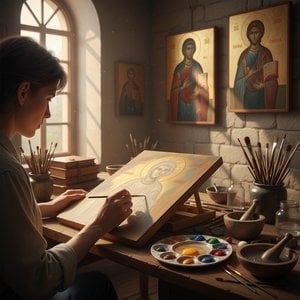
Illuminating Surfaces: A Comprehensive Exploration of Tempera on Panel Painting Techniques & Historical Significance
Explore the rich history & techniques of tempera painting! Discover Renaissance masters like Botticelli & Fra Angelico, conservation insights, and the enduring legacy of this captivating art form. Learn more now!