

 Voorvertoning
 Verstuur
 Delen
Delen
 Details bekijken
 Gids
Gids

 Download
 Vergelijkbare items
 Röntgenonderzoek
 Diavoorstelling
 Vraag & antwoord
 Statistieken
Colored Composition of Forms, 1914


 Lees meer
Giclée / Kunstafdrukken
Giclée- of canvasafdruk van museumkwaliteit met een snelle productie en flexibele afwerkingsmogelijkheden. ( Bestel handgeschilderde reproductie Schakel over naar digitale afbeeldingen)




P118B €10

P118H €10

P118W €10

P438Z €10

P508JH €12

P508YH €12

P805H €10

P805Z €10

P919BZ €10

P919G €10

P919XJ €10

P959ZH €10

P968JZ €12

W106C €8

W218G €10

W218JH €8

W218Y €10

W307PJ €10

W316G €10

W316PJ €8

W316Y €10

W398PJ €8

W4111J €10

W500HY €15

W500JH €15

W692G €12

W849H €8

W940BG €15

W953PJ €8




Kies uit onze vooraf ingestelde maten die overeenkomen met de originele verhoudingen van het kunstwerk.

Voer de gewenste breedte en hoogte in, passend bij uw lijst of muur. Een afdruk kan alleen worden ingekort en nooit groter worden gemaakt dan het origineel; een formaat met andere verhoudingen zal daarom een deel van de afbeelding verliezen. Wij sturen u een digitaal mockup ter goedkeuring voordat we tot drukwerk overgaan. De afbeelding op deze pagina toont niet de werkelijke uitsnede — dit is alleen te zien op het mockup.
Wereldwijde levering () binnen 2 weken in plaats van de standaard 4/5 weken. (13 november)

Gratis wereldwijde expressverzending

Hoogwaardig linnen canvas

Volledige verzendverzekering

Garantie op terugbetaling van invoerrechten

Garantie op exacte kleurweergave

Retourbeleid van 100 dagen (alleen bij defecten)

100% Geld-terug-garantie

Korting bij meerdere afnames
 De optie voor glas is alleen beschikbaar bij een formaat kleiner dan 110 cm.

Colored Composition of Forms, 1914
Giclée / Kunstafdrukken
Afmetingen reproductie
-


Eindtotaal
€ 56
A Burst of Color and Fragmented Form: August Macke’s *Colored Composition of Forms* (1914)
August Macke's Colored Composition of Forms, painted in the tumultuous year of 1914, is a captivating testament to the burgeoning energy of German Expressionism. This vibrant work, dominated by a central tennis racket – a seemingly mundane object elevated to symbolic importance – embodies Macke’s exploration of modern life and his desire to capture fleeting moments of intense feeling. The painting isn't simply a depiction; it’s an emotional resonance rendered in bold color and fractured forms. Created just months before the artist’s untimely death at the age of 27, the work carries with it the weight of a generation poised on the brink of war, reflecting both optimism and a profound sense of unease.
- Subject Matter: The central focus is undeniably the tennis racket, an object associated with leisure, sport, and perhaps even a yearning for escape. However, Macke doesn’t present it as a static subject; rather, it's integrated into a dynamic composition of shapes and objects.
- Style & Technique: Macke employs a technique that blends elements of Post-Impressionism with the nascent principles of Expressionism. Thick impasto brushstrokes build up layers of color, creating a tactile surface and emphasizing the physicality of the paint itself. The fragmented forms contribute to a sense of disorientation and emotional intensity, characteristic of the movement’s exploration of subjective experience.
Color as Emotion: Macke's Palette
Macke’s use of color is utterly crucial to understanding this work. He rejects naturalistic representation in favor of an intensely chromatic approach. The palette – a riot of blues, greens, yellows, and reds – isn’t intended to mimic reality but rather to convey emotion directly. The vibrant hues evoke a sense of energy, excitement, and perhaps even anxiety. Notice how the cooler tones of blue and green are juxtaposed with the warmer shades of yellow and red, creating visual tension and amplifying the painting's emotional impact. This deliberate manipulation of color aligns perfectly with the Expressionist desire to express inner feelings rather than simply depict external appearances.
Symbolic Layers & Historical Context
The inclusion of seemingly random objects – a bowl, a cup, and other scattered items – adds layers of symbolic meaning. These fragments could represent the brokenness of modern life, the anxieties surrounding rapid industrialization, or perhaps even the artist’s own fragmented state of mind. Painted in 1914, a year marked by political instability and impending war, the work resonates with the broader historical context of the time. Macke was deeply concerned with portraying the experiences of ordinary people – particularly children – and his art reflects this social consciousness.
Emotional Impact & Artistic Legacy
Colored Composition of Forms is more than just a visually striking painting; it’s an emotionally charged experience. The dynamic composition, bold colors, and fragmented forms combine to create a powerful sense of movement and energy. Macke's work foreshadowed the key tenets of Expressionism – a focus on subjective emotion, distortion of form, and the use of color as a primary means of expression. It stands as a poignant reminder of a brilliant artist’s tragically short career and his significant contribution to the development of modern art.
Veelgestelde vragen
Welke kleuren overheersen in "Colored Composition of Forms, 1914" door August Macke?
De kleuridentiteit van "Colored Composition of Forms, 1914" door August Macke: een Earthy palet, gedomineerd door Gray (#567176).
Bij welke kunststroming behoort "Colored Composition of Forms, 1914" door August Macke?
"Colored Composition of Forms, 1914" is een werk uit de German Expressionism. De stroming geeft de artistieke traditie aan waartoe het werk behoort.
Hoe intens zijn de kleuren in "Colored Composition of Forms, 1914" door August Macke?
De kleuren in "Colored Composition of Forms, 1914" door August Macke hebben een Balanced intensiteit.
Vergelijkbare kunstwerken


Biografie kunstenaar
Vroege jaren, familie en opleiding
Het verhaal van August Macke begint in het Duitse stadje Meschede, waar hij op 3 januari 1887 werd geboren. Hij was de enige zoon van August Friedrich Hermann Macke, een aannemer en amateurkunstenaar, en Maria Florentine. Zijn jeugd werd gevormd door de wisselende fortuinen van het bedrijf van zijn vader, wat de familie naar Keulen en later naar Bonn bracht. Al als kleine jongen was de drang naar visuele expressie duidelijk voelbaar; hij bracht zijn vroege jaren door met het schetsen en ontwerpen van decors voor schooltoneelstukken, waarmee hij al een manier vond om zijn omgeving op papier te vertalen, lang voordat hij ooit een formele academie zou betreden.
Zijn formele kunstopleiding begon pas echt toen hij aankwam bij de Academie van Düsseldorf, waar hij van 1904 tot 1906 studeerde. Onder de begeleiding van Adolf Maennchen leerde hij de discipline van de traditionele techniek, maar zijn geest leek te hunkeren naar iets dat veel expansiever was. Deze onrust leidde ertoe dat hij via avondcursussen bij Fritz Helmut Ehmke op zoek ging naar verdere kennis. Zijn honger naar het begrijpen van het ambacht dreef hem naar Berlijn, waar hij studeerde onder de Duitse schilder Lovis Corinth. Deze jaren van rigoureuze training boden het technische fundament waarop hij later zijn unieke visuele taal zou opbouwen, waarbij hij zich steeds verder bewoog van de beperkingen van zijn vroege instructie naar een meer persoonlijke manier van kijken.
De Invloed van het Franse Modernisme
De straten van Parijs oefenden een krachtige aantrekkingskracht uit op de jonge kunstenaar en trokken hem weg van de traditionele structuren van zijn opleiding. Tijdens zijn eerste bezoek aan de stad in 1907 was hij diep geraakt door de impressionistische schilders. Hij begon hun benadering na te bootsen, waarbij hij probeerde het spel van het licht te vangen door middel van subtiel gevlekte kleuren. Dit was geen vluchtige interesse; hij keerde tussen 1907 en 1912 regelmatig terug naar Parijs, waardoor de sfeer van de Franse hoofdstad zijn perceptie van het canvas fundamenteel kon herformuleren.
Een transformatief moment deed zich voor in 1912, toen hij Robert Delaunay ontmoette. Deze ontmoeting bleek een openbaring te zijn die de richting van zijn werk ingrijpend veranderde. Hij raakte diep beïnvloed door Delaunay's chromatisch kubisme, een stijl die zich richtte op het ritme van kleur en licht. Deze benadering, die vaak met het orphisme wordt geassocieerd, moedigde hem aan om te bewegen naar een dynamischere en niet-representatieve manier van kijken. Hij begon te experimenteren met gebroken kleurvlakken, in een poging de sensatie van het moderne leven te vertalen naar een taal van puur licht en vorm.
Lidmaatschap van Der Blaue Reiter
De koers van het leven van August Macke veranderde ingrijpend in 1909, toen hij in München arriveerde. Het was daar dat hij Franz Marc ontmoette, een ontmoeting die de vonk zou zijn voor een diepe en blijvende vriendschap. Deze verbinding trok hem in een kring van denkers en makers die streefden naar iets dat verder ging dan de loutere imitatie van de natuur. Tegen 1911 was August Macke uitgegroeid tot een vooraanstaand lid van de invloedrijke expressionistische groep die bekendstond als Der Blaue Reiter. Hij was niet slechts een deelnemer aan de beweging; hij hielp de essentie ervan vorm te geven door bij te dragen aan de tentoonstellingen en de verspreiding van de radicale ideeën die de kunstwereld zouden transformeren.
Zijn positie binnen deze avant-gardistische kring werd versterkt door zijn nauwe banden met andere grootheden uit die tijd. Hij deelde een diepe verbondenheid met Marc en Paul Klee, waarbij hij in hun gezelschap een gezamenlijke zoektocht vond naar het spirituele en het emotionele. Zelfs terwijl hij zich bewoog door de voortdurend veranderende landschappen van het modernisme, hielpen zijn interacties met figuren als Robert Delaunay om zijn unieke perspectief te verfijnen. Waar anderen binnen de groep vaak duistere of angstige thema's verkenden, zocht August Macke juist naar een gevoel van harmonie en schoonheid. Hij keek naar de wereld en zag een plek van licht en vreugde, zelfs toen de politieke schaduwen over Europa begonnen te groeien.
Artistieke Techniek en Stijl
August Macke streefde ernaar de innerlijke geest van een scène te vangen, in plaats van slechts de uiterlijke verschijning van de dingen. Zijn penseelvoering bewoog weg van de objectieve reproductie van de werkelijkheid; hij koos er in plaats daarvan voor om diepgewortelde gevoelens en stemmingen uit te drukken. Om dit te bereiken, vervormde hij regelmatig zowel kleur als vorm, waarbij hij de fysieke wereld boog naar zijn emotionele behoeften. Zijn composities leunden vaak op krachtige kleuren en geometrische vormen, waardoor er een gevoel van structuur ontstond te midden van de expressieve stroom van zijn onderwerpen. Hij vond een manier om de dynamiek van het Italiaans Futurisme in zijn composities te verweven, waarmee hij zijn scènes doordrenkte met een gevoel van beweging en moderne energie.
Deze zoektocht naar licht en kleur bereikte een hoogtepunt tijdens zijn reizen naar Noord-Afrika. Zijn Tunesische aquarellen uit 1914 getuigen van een uitzonderlijke beheersing van kleur, waarbij hij het intense, veranderlijke licht van de regio wist te vangen. In deze werken lijkt het pigment te pulseren met een eigen leven, bewegend van eenvoudige representatie naar een meer lumineuze, spirituele essentie. Hij schilderde niet louter het landschap; hij schilderde de sensatie van het er middenin zijn.
- Türkisches Café
- Market in Algiers
Meesterwerken en Cruciale Werken
Naarmate zijn artistieke visie volwassen werd, begon August Macke de verstilde ritmes van het moderne leven vast te leggen door een lens van intense kleur. In 1913 schiep hij Woman in a Green Jacket, een werk dat een bijzondere vitaliteit uitstraalt door het gedurfde palet en de zelfverzekerde penseelstreek. Zijn fascinatie voor het samenspel tussen licht en het stedelijke leven leidde tot het creëren van Large Bright Shop Window, waarin hij onderzocht hoe het licht door glas filtert. Vaak richtte hij zijn aandacht op de eenvoudige genoegens van het bestaan, zoals in Bathing girls with town in the backgraund, waar hij probeerde een gevoel van idyllische rust te verbeelden door middel van vereenvoudigde vormen.
De laatste levensfase, die diepgaand werd gevormd door zijn reizen naar Noord-Afrika, bracht een nieuwe luminositeit naar zijn doeken. Zijn verblijf in Tunesië resulteerde in een reeks werken die door velen als zijn grootste meesterwerken worden beschouwd, met Türkisches Café als meest opvallende voorbeeld. Deze periode bracht ook Market in Tunis voort, een werk dat later in een veiling in 2000 maar liefst $4,1 miljoen (£2,86 miljoen) opbracht. Zelfs toen de schaduwen van de oorlog al over Europa neerdaalden, bleef hij schoonheid vinden in intieme taferelen, zoals in The Couple at a Garden Table, dat in 1997 bij Christie's werd verkocht voor £2 miljoen.
- 1913: Woman in a Green Jacket
- 1914: Market in Tunis
- 1914: The Couple at a Garden Table
Latere Jaren en Tragische Dood
Het jaar 1914 bracht een plotselinge verschuiving in het licht dat August Macke zo intens probeerde te vangen. In de lente reisde hij naar Tunis, Tunesië, vergezeld door Paul Klee en Louis Moilliet. Deze excursie stelde hem in staat om een heel ander soort zon te aanschouwen, wat een diepgaande invloed zou hebben op de luministische benadering die zijn laatste periode zou gaan kenmerken. Hij keerde echter terug naar een Europa dat in razend tempo in chaos stortte. Naarmate de eerste maand van de Grote Oorlog verstreek, voelde de kunstenaar zich onvermijdelijk naar het conflict toe getrokken. Gedreven door een diep gevoel van plichtsbesef, meldde hij zich vrijwillig voor de militaire dienst.
Het einde kwam met een verpletterende snelheid. In de tweede maand van de Eerste Wereldoorlog sneuvelde August Macke aan het front in Frankrijk. Hij viel nabij Perthes-lès-Hurlus op 26 september 1914. Hij was pas 27 jaar oud. Zijn dood vond plaats op precies het moment dat zijn artistieke taal een nieuw niveau van helderheid en licht bereikte. De plotselinge aard van zijn overlijden liet een leegte achter in de avant-gardistische kringen van Duitsland, en maakte een einde aan een carrière die werd gekenmerkt door een rusteloze, zoekende geest.
Nalatenschap en Invloed
Hoewel zijn tijd in het zonlicht kort was, blijft de impact die August Macke heeft achtergelaten op de grote artistieke stromingen van de twintigste eeuw diepgaand. Hij verzekerde zichzelf van een plek in de geschiedenis als een betekenisvol figuur binnen het Expressionisme, waarbij hij een perspectief bood dat vaak harmonie zocht op plaatsen waar anderen slechts disharmonie vonden. Zijn vermogen om de radicale ideeën van zijn tijdgenoten te synthetiseren tot een persoonlijke beeldtaal, zorgde ervoor dat zijn visie niet verloren zou gaan in de schaduwen van de Grote Oorlog.
De waarde van zijn bijdrage werd pas lang na zijn overlijden formeel erkend, wat in 1959 leidde tot de instelling van de August Macke Prijs. Deze eer blijft de geest van zijn creatieve zoektocht eren. Zelfs vandaag de dag is zijn aanwezigheid voelbaar in de manier waarop hedendaagse kunstenaars de diepe verbindingen tussen kleur en menselijke emotie blijven verkennen. Hij leerde ons dat licht en tinten kunnen spreken van de innerlijke staat van de ziel, een les die decennia later nog steeds nagalmt.
Waar zijn zijn werken vandaag de dag te bewonderen
Wie de kamers wil doorlopen waar zijn geest nog steeds nagalmt, kan een reis maken naar Bonn, Duitsland. Daar staat het August-Macke-Haus als een toewijde heiligdom, dat de herinnering aan de man bewaart binnen de muren waar hij ooit leefde en werkte. Het was in dit huis dat hij zijn atelier vond, een ruimte die zijn creatieve energie liet bloeien voordat de schaduwen van de oorlog ingrepen. In de nabijheid bewaart ook het Kunstmuseum in Bonn zijn schilderijen, waardoor zijn visie toegankelijk blijft voor iedereen die op zoek is naar het licht dat hij zo zorgvuldig wist te vangen.
Zijn aanwezigheid voel je over vele grenzen heen, gedragen door de collecties van grote instituten. In Keulen herbergt het Museum Ludwig zijn werken, terwijl het Museum Folkwang in Essen zijn doeken bewaart voor het publiek. Ook zijn sporen zijn te vinden in de Staatsgalerie Moderner Kunst in München, waar zijn kleuren nog steeds spreken vanuit de lijsten. Zelfs in Zürich houdt het Kunsthaus Zürich een deel van zijn nalatenschap levend, met schilderijen die zijn unieke manier van de wereld zien weerspiegelen.
- Bathing girls with town in the backgraund (circa 1913)
- Woman in a Green Jacket (1913)
- Landscape with Cows and Camel (1914)
- Türkisches Café (1914)

August Macke
1887 - 1914 , Duitsland
Belangrijkste feiten
- Artistic Movement Or Style: Expressionisme, Fauvisme, Orphisme, Cubisme
- Artists Or Movements Influenced By This Artist: ['Hedendaagse kunstenaars']
- Artists Who Influenced This Artist:
- Robert Delaunay
- Adolf Maennchen
- Lovis Corinth
- Date Of Birth: 1887
- Date Of Death: 1914
- Full Name: August Robert Ludwig Macke
- Nationality: Duits
- Notable Artworks:
- Woman in a Green Jacket
- Bathing girls with town in the background
- Türkisches Café
- Landscape with Cows and Camel
- Place Of Birth: Meschede, Duitsland
Gerelateerde artikelen

Chromatic Narratives: Exploring Emotional Resonance & Artistic Impact Through Color Palette Selection
Explore the profound impact of color on emotion & artistic expression. Discover how master artists like Klee & Matisse used palettes to evoke feeling and build lasting legacies. A guide for discerning art collectors.

August Macke: Expressionist Visions of Harmony & Modern Life
Explore the vibrant Expressionist paintings of August Macke (1887-1914). Discover his key role in Der Blaue Reiter, Fauvist influences, and captivating depictions of modern life. A comprehensive guide for art enthusiasts & collectors.

Echoes of a World on the Brink: Trauma & Transformation in 1914 Art
Explore how artists responded to the trauma of World War I in 1914. Discover modernism's emergence, symbolic representations of loss, and the enduring legacy of a world forever changed. Expert analysis & insights.
Top 10 Expressionistische Meesterwerken: Kunst die Échte Emotie Spreekt | ArtsDot.nl
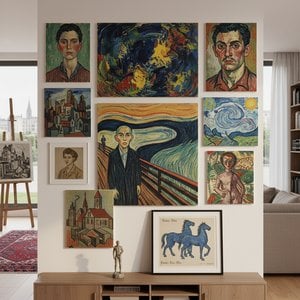
Ontdek de 10 meest iconische Expressionistische meesterwerken! Van Munch's 'De Schreeuw' tot Kandinsky's abstractie. Leer over de kunstenaars, technieken & emoties achter deze beweging. Museumkwaliteit reproducties op ArtsDot.com.

25 Masterpieces by Franz Marc: The Soul of German Expressionism
Immerse yourself in the vibrant world of Franz Marc. Explore 25 iconic German Expressionist masterpieces, from symbolic blue horses to spiritual landscapes. Find inspiration for museum-quality art reproductions and decor. Discover all masterpieces on ArtsDot.com.


