

- 9.0 x 10.0 cm


Het werk volgt uw keuzes: , .
Beschrijving verzamelobject
A striking black and yellow self-portrait drawing by Arnold Schoenberg, a pivotal figure of the early 20th century's musical avant-garde, captures the artist’s intense gaze with a distinctive mustache. Discover this unique piece and add it to your collection.
 Lees meer
Biografie kunstenaar
Ontdek de revolutionaire muziek van Arnold Schoenberg – atonaliteit, twaalftoonstechniek & invloed op 20e-eeuwse componisten. Ontdek zijn nalatenschap in het Schönberg Center.
Handgemaakte olieverfreproductie
Met de hand geschilderd in olieverf op canvas in uw gewenste maat en lijst, op bestelling gemaakt door onze kunstenaars. ( Schakel over naar print Schakel over naar digitale afbeeldingen)
Meer over dit schilderij
 Voorvertoning
 Verstuur
 Delen
Delen
 Details bekijken
 Gids
Gids

 Download
 Vergelijkbare items
 Röntgenonderzoek
 Diavoorstelling
 Vraag & antwoord
 Statistieken
Bestel uw schilderij in vier eenvoudige stappen
Neem de tijd. U kunt elk antwoord nog wijzigen; de prijs in uw besteloverzicht wordt direct aangepast aan elke keuze.
1 Stap één van de vier
Welke maat wilt u kiezen?
Deze formaten behouden de proporties van het originele schilderij. De tekening laat uw keuze zien op een muur, boven een bank van twee meter.
Of geef uw eigen afmetingen op
Kies uit onze vooraf ingestelde maten die overeenkomen met de originele verhoudingen van het kunstwerk.

Voer de breedte en hoogte in die u nodig heeft, passend bij uw lijst of uw muur. Omdat dit handgeschilderd is, kan de kunstenaar bij een afmeting met een andere beeldverhouding iets meer rondom het schilderij schilderen of juist iets meer weglaten — u kiest zelf. Wij sturen u een digitaal mockup ter goedkeuring voordat het schilderwerk begint. De afbeelding die op deze pagina wordt getoond, is niet het uiteindelijke resultaat — alleen de mockup geeft dit weer.
2 Stap twee van vier
Hoe moet het worden geleverd: gerold, opgespannen of ingelijst?
De onderstaande prijzen zijn voor de maat die u in stap één heeft gekozen.
Kies de randen van het canvas
Kies uw lijst

Wit €1

Vervagende randen €1

Doorlopende rand €1

P118B €10

P118H €10

P118W €10

P438Z €10

P508JH €12

P508YH €12

P805H €10

P805Z €10

P919BZ €10

P919G €10

P919XJ €10

P959ZH €10

P968JZ €12

W106C €8

W218G €10

W218JH €8

W218Y €10

W307PJ €10

W316G €10

W316PJ €8

W316Y €10

W398PJ €8

W4111J €10

W500HY €15

W500JH €15

W692G €12

W849H €8

W940BG €15

W953PJ €8

H24-GOLD €30

H24-SILVER €30

H36-GOLD €45

H36-SILVER €45
Ingelijst
Lijstrand: . Totale afmetingen inclusief lijst: .
3 Stap drie van vier
Wilt u dat er iets aan het schilderij wordt aangepast?
De meeste mensen antwoorden nee. Omdat elk schilderij met de hand wordt gemaakt, kan onze kunstenaar het ook voor u aanpassen.
Na de bestelling zal het team van ArtsDot.com per e-mail contact opnemen met de klant voor instructies en een mockup-voorbeeld verstrekken
4 Stap vier van vier
Enkele afwerkingsopties
Ze zijn allemaal optioneel. De reeds geselecteerde antwoorden brengen geen extra kosten met zich mee.
Wie is de kunstenaar?
Wereldwijde levering () binnen 3 tot 4 weken in plaats van de standaard 5 weken. (7 november). Zonder concessies aan de kwaliteit.
Een naambordje, zoals in een museum?
Details van de gegraveerde bronzen plaat
This elegant plaque features the artist's name and the title of the artwork, finely engraved for a timeless presentation.
It is made from bronze with a refined, elegant finish. The text is precisely laser-engraved for a sharp and permanent result. Measuring 9x2 cm, the plaque is compact yet easy to read. It's built to be durable and scratch-resistant, offering a professional, museum-quality look. Mounting is simple thanks to the included adhesive backing.
Details transparante acrylplaat
The plaque includes essential engraved details such as the artist's name, the title of the artwork, the date it was created, the type of media used-like oil on canvas or watercolor-a brief description of the piece, and a QR code that links to the complete artwork information.
It is crafted from clear acrylic, offering a sleek, modern appearance. The text is UV-engraved in black to ensure strong visual contrast. With a size of 10x15 cm, it ensures optimal readability. It comes equipped with two metal hooks for secure wall mounting. The plaque is designed to be weather-resistant, making it suitable for various environments, and it includes interactive features that work seamlessly with smartphone scanning.
Details zwarte acrylplaat
This elegant plaque includes engraved information such as the artist's name, the title of the artwork, the date it was created, the type of media used (like oil on canvas or watercolor), a short description of the artwork, and a QR code for quick access to more information.
The plaque itself is made from refined black acrylic with a premium finish. The text is laser-engraved in white for high contrast and readability. Its size is 10x15 cm, designed to be easy to read. It comes with two metal hooks for professional mounting. The design is sleek and fits any interior style. It is also weather-resistant and durable, with built-in digital integration for mobile compatibility.
Een beschermende vernis?
Wanneer heeft u het nodig?
✓ Controleren en bestellen
Uw schilderij, zoals u het heeft besteld

Self-Portrait
Druktechniek
Afmetingen reproductie
-

Geselecteerde topkunstenaars
Meer detail, verfijning en extra productietijd
-

Lijst voor reproductie
-
-
Voor kunstwerken of reproducties die aan één zijde groter zijn dan 105 cm (ongeveer 41 inch), wordt de lijst als een losse set verzonden. Deze methode garandeert een veilige levering en voorkomt schade tijdens het transport.
Professionele montage vereist - dit is geen doe-het-zelfproduct.
De set moet worden gemonteerd en het canvas moet worden gespannen door een ervaren professionele lijstenmaker, met gebruik van houtlijm (niet inbegrepen), een doekspanter en klemmen om de sponningen recht te houden terwijl de lijm droogt. Onjuiste montage of een ongelijkmatige spanning op het canvas kan het kunstwerk permanent beschadigen en wordt niet gedekt door onze garantie.
 Voor kunstwerken of reproducties die aan één zijde groter zijn dan 105 cm (ongeveer 41 inch), wordt de lijst als een losse set verzonden. Deze methode garandeert een veilige levering en voorkomt schade tijdens het transport.
Alle massief houten onderdelen zijn inbegrepen, nauwkeurig op maat gesneden voor montage.
Te monteren met de meegeleverde schroeven, plus houtlijm voor de hoekverbindingen, die niet wordt meegeleverd en door uw lijstenmaker moet worden aangeschaft.
Professioneel gereedschap is vereist en niet inbegrepen: een spanner voor canvas en klemmen om de latten recht te houden terwijl de lijm droogt.
Belangrijk:
De hoekverbindingen vereisen houtlijm, de latten moeten met lijmklemmen worden vastgehouden tot de lijm volledig is opgedroogd, en het spannen van het canvas op het samengestelde frame vereist een doekspanter. Geen van deze artikelen is inbegrepen in de set. Wij adviseren u om een ervaren professionele lijstenmaker te raadplegen voordat u deze maat bestelt.

Naamplaatje
-
-

Beschermende vernislaag
Glanzende vernis (versterkt de kleuren en biedt bescherming tegen licht en vocht)
-

Mijn kunstwerk aanpassen
Voorbeelden van aanpassingen: vervang het gezicht door een eigen foto; voeg een huisdier toe (bijv. vervang de kat door een hond); verwerk een verborgen boodschap in de achtergrond; wijzig het landschap of andere elementen op de achtergrond.
-

Spoedlevering
Wereldwijde levering () binnen 3 tot 4 weken in plaats van de standaard 5 weken. (7 november). Geen concessies aan de kwaliteit.
-
Spoedlevering
Wereldwijde levering naar binnen 5 weken. (14 november).
Inbegrepen
Eindtotaal
€ 235
De optie voor glas is alleen beschikbaar bij een formaat kleiner dan 110 cm.
Inbegrepen bij elke bestelling
- Gratis wereldwijde expressverzending
- Hoogwaardig linnen canvas
- Volledige verzendverzekering
- Garantie op terugbetaling van invoerrechten
- Garantie op exacte kleurweergave
- Retourbeleid van 100 dagen (alleen bij defecten)
- 100% Geld-terug-garantie
- Korting bij meerdere afnames


A Study in Yellow and Green: Arnold Schoenberg's Self-Portrait (1922)
This intimate drawing, measuring just 9 x 10 cm, offers an arresting glimpse into the mind of one of the 20th century’s most revolutionary composers – Arnold Schoenberg. Executed in 1922, a pivotal year in his artistic development, the work transcends a simple portrait; it's a concentrated distillation of intellectual intensity and perhaps, a subtle self-examination rendered with remarkable precision. The stark palette of yellow and green immediately draws the viewer in, colors that would become increasingly significant within Schoenberg’s musical explorations of atonality and dissonance.
- Subject & Composition: The central focus is undeniably the artist himself – a man with a neatly trimmed mustache, his gaze direct and unwavering. The simplified rendering emphasizes key features: the piercing green eyes, a hallmark of Schoenberg’s artistic vision, and the strong jawline hinting at an unyielding intellect.
- Technique & Materials: Crafted in black and yellow tones, the drawing utilizes a technique that suggests both meticulous observation and a deliberate departure from representational realism. The use of shading creates depth and volume, while the limited color palette contributes to a sense of austerity and focused contemplation.
The Second Viennese School & Atonality
To fully appreciate this self-portrait, it’s crucial to understand Schoenberg's place within the artistic landscape of early 20th-century Vienna. He was at the heart of the “Second Viennese School,” a group of composers – including Alban Berg and Anton Webern – who radically challenged traditional harmonic structures. Schoenberg pioneered atonality, rejecting the established rules of key signatures and chord progressions, believing that music should be free from conventional constraints. This drawing can be seen as a visual manifestation of this intellectual shift; the deliberate use of color and simplified form reflects a desire to break away from established artistic conventions.
The year 1922 was particularly significant for Schoenberg, marking a period of intense experimentation with serialism – a compositional technique based on mathematical series that further explored the possibilities of atonality. This self-portrait isn’t merely a likeness; it's a visual echo of his groundbreaking musical ideas.
Symbolic Resonance & Emotional Impact
While seemingly straightforward, the drawing possesses a subtle emotional depth. The intense gaze suggests introspection and perhaps a sense of isolation – feelings that likely accompanied Schoenberg as he navigated the turbulent waters of artistic innovation. The yellow and green hues, often associated with envy and growth respectively, could symbolize his ambition and relentless pursuit of new musical frontiers. The starkness of the image evokes a feeling of quiet contemplation, inviting the viewer to engage in their own thoughts about creativity, genius, and the challenges of pushing boundaries.
A Collector’s Piece – Reproduction & Legacy
This hand-painted reproduction captures not only the visual details of Schoenberg's self-portrait but also the spirit of a revolutionary artist. Each reproduction is meticulously crafted by skilled artisans, ensuring an authentic representation of this significant work. Perfect for interior design projects seeking a touch of intellectual sophistication or as a unique addition to any art collection, this piece offers a tangible connection to one of music’s most influential figures. Its small size makes it ideal for display in intimate settings, while its powerful imagery ensures that it will remain a captivating subject of contemplation for years to come.
Veelgestelde vragen
Welke techniek en stijl kenmerken "Self-Portrait" door Arnold Schönberg?
"Self-Portrait" door Arnold Schönberg combineert de Acrylic On Canvas-techniek met de Atonal Expressionism-stijl. Techniek en stroming beschrijven de vervaardiging en de stijl van het werk.
Welk gebruik en welke ruimte worden aanbevolen voor "Self-Portrait" door Arnold Schönberg?
"Self-Portrait" wordt aanbevolen voor Reflective; de ideale plek hiervoor is een Living Room.
Waar kan ik kunstwerken vinden die lijken op "Self-Portrait" door Arnold Schönberg?
Op de Vergelijkbare werken-pagina van dit kunstwerk vindt u vergelijkbare werken als "Self-Portrait" door Arnold Schönberg.
Vergelijkbare kunstwerken


Arnold Schönberg
1874 - 1951, Oostenrijk
Biografie kunstenaar
vroege leven en muzikale beginj
arnold schoenberg, een Oostenrijks-Amerikaanse componist, werd op 13 september 1874 geboren in vienna, oostenrijk. zijn vroege jaren werden gekenmerkt door een bescheiden begin, met een vader die schoenwinkelier was. ondanks deze eenvoudige omstandigheden leidde schoenbergs aangeboren passie voor muziek ertoe dat hij zichzelf grotendeels in dit vakgebied onderwees.muzikale evolutie en bepalende werken
schoenbergs vroege werken, zoals verklärte nacht (1899), toonden een brahmsiaanse-wagneriaanse synthese. naarmate hij zich verder ontwikkelde, werd hij de centrale figuur van de tweede Weense school, samen met anton webern en alban berg. zijn composities, waaronder het strijkkwartet nr. 2 (1907–1908), erwartung (1909) en pierrot lunaire (1912), vormden de belichaming van zijn innovatieve benadering van atonaliteit.onderwijs, emigratie en het latere leven
in 1933 trad schoenberg terug bij de Pruisische academie voor kunst vanwege de opkomst van de nazi's, die zijn muziek als "ontaard" bestempelden. hij ging vervolgens lesgeven in de Verenigde Staten, onder andere aan de University of California, Los Angeles (1936–1944), waar faciliteiten naar hem vernoemd zijn. [https://ArtsDot.com/@/arnold-schaenberg](ontdek meer over het leven en de werken van schoenberg op ArtsDot).- schoenberg verkende filmmuziek en schreef meer tonale muziek, waarbij hij zijn kamer symfonie nr. 2 voltooide in 1939.
- hij leverde satire op fascistische tirannen in ode aan napoleon (1942), naar byron.
- het naoorlogse vienna bood hem het ereburgerschap aan, maar hij was ziek, zoals afgebeeld in zijn strijk trio (1946).
erfenis en invloed
terwijl de wereld kennismaakte met de holocaust, eerde schoenberg de slachtoffers in a survivor from warsaw (1947). het Israëlisch conservatorium en de academie voor muziek benoemden hem in 1951 tot erevoorzitter. [https://ArtsDot.com/@@/a@d3bqc7-the-museum-destroyed-by-fire-(united-states)](leer meer over de impact van zijn werk op ArtsDot). kernpunten:- schoenbergs innovatieve muziek behoorde tot de meest invloedrijke en omstreden werken van de klassieke muziek uit de 20e eeuw.
- minstens drie generaties componisten hebben zijn enigszins formele principes voortgezet.
- zijn esthetische en muziekhistorische visies beïnvloedden musicologen theodor w. adorno en carl dahlhaus.


Gerelateerde artikelen
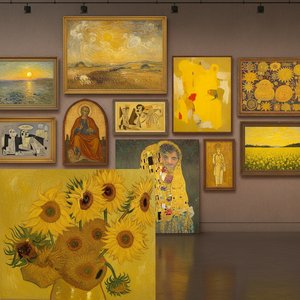
Top 10 Meesterwerken Gedomineerd door 'Chrome Geel': Kunst voor uw Interieur
Ontdek de top 10 beroemde schilderijen gedomineerd door 'Chrome Geel'! Van Gogh, Monet en meer. Leer over kunststijlen & technieken. Museumkwaliteit reproducties voor uw interieur op ArtsDot.com

Giclée Prints: Archival Quality & Aesthetic Nuances for the Discerning Collector
Explore the world of giclée prints with ArtsDot. Learn about archival quality, aesthetic nuances & investment potential. Expert guidance for discerning art collectors seeking museum-quality reproductions and lasting value.

Echoes of Time: Exploring the Enduring Appeal & Historical Context of Vintage Art Prints
Explore the captivating world of vintage art prints! Discover their history, collecting tips & enduring appeal. Expert insights on chromolithography and building a legacy collection with ArtsDot.