


 Bekijk op ware grootte
 Verstuur
 Delen
Delen
 Details bekijken
 Gids
Gids

 Download
 Vergelijkbare items
 Röntgenonderzoek
 Diavoorstelling
 Statistieken
Ագնես Միյակավա - Ալբան Մարիա Հոյենբերգ


 Lees meer
Handgemaakte olieverfreproductie
Met de hand geschilderd in olieverf op canvas in uw gewenste maat en lijst, op bestelling gemaakt door onze kunstenaars. ( Schakel over naar print Schakel over naar digitale afbeeldingen)




P118B $10

P118H $10

P118W $10

P438Z $10

P508JH $12

P508YH $12

P805H $10

P805Z $10

P919BZ $10

P919G $10

P919XJ $10

P959ZH $10

P968JZ $12

W106C $8

W218G $10

W218JH $8

W218Y $10

W307PJ $10

W316G $10

W316PJ $8

W316Y $10

W398PJ $8

W4111J $10

W500HY $15

W500JH $15

W692G $12

W849H $8

W940BG $15

W953PJ $8




Kies uit onze vooraf ingestelde maten die overeenkomen met de originele verhoudingen van het kunstwerk.

U kunt uw eigen afmetingen invoeren om in een specifieke lijst of ruimte te passen. Als de door u gekozen maat niet overeenkomt met de verhoudingen van het originele beeld, zullen we het kunstwerk bijsnijden of het schilderij uitbreiden met extra handgeschilderde elementen. Een digitale mockup wordt ter goedkeuring naar u verzonden voordat de productie begint.
Houd er rekening mee dat de preview op het scherm niet de werkelijke uitsnede of uitbreiding weergeeft. Alleen de mockup toont de uiteindelijke compositie nauwkeurig.
Hoewel aangepaste afmetingen mogelijk zijn, raden we aan een maat uit de vooraf gedefinieerde lijst te selecteren om de originele verhoudingen te behouden.
Na de bestelling zal het team van ArtsDot.com per e-mail contact opnemen met de klant voor instructies en een mockup-voorbeeld sturen.
Wereldwijde levering () binnen 3 tot 4 weken in plaats van de standaard 5 weken. (21 september). Zonder concessies aan de kwaliteit.

Gratis wereldwijde expressverzending

Hoogwaardig linnen canvas

Volledige verzendverzekering

Garantie op terugbetaling van invoerrechten

Garantie op exacte kleurweergave

Retourbeleid van 100 dagen (alleen bij defecten)

100% Geld-terug-garantie

Korting bij meerdere afnames
 De optie voor glas is alleen beschikbaar bij een formaat kleiner dan 110 cm.

Ագնես Միյակավա - Ալբան Մարիա Հոյենբերգ
Reproductiemethode
Formaat reproductie
-


Totaalprijs
$ 263
Agnes Miyakawa - Een Symfonie van Stilte en Beweging
Deze prachtige zwart-wit portretfoto van Agnes Miyakawa, genomen rond 1931, vangt een essentieel moment in het leven van een uitzonderlijke pianist en componist. Geboren Sacramento Japantown, Miyakawa liet haar geboortestad achter om muziek te studeren in Parijs – een keuze die haar carrière zou definiëren en haar werk voor altijd zou kleuren. De afbeelding straalt een gevoel van elegantie uit, gekenmerkt door een klassieke studio omgeving waarin Miyakawa centraal staat, met een directe blik naar de kijker. Een gedeeltelijk verborgen fan aan de rechterkant voegt een element van visuele interesse toe en creëert een dynamische balans binnen het beeld. De achtergrond is subtiel vervaagd, waardoor de aandacht volledig gericht blijft op Miyakawa’s gezicht en houding – een bewijs van haar zelfvertrouwen en kracht.- Stijl: Een stijlvolle combinatie van klassieke portretfotografie en een warme lichtinval creëert een gevoel van nostalgie en aandacht voor detail. De compositie is zorgvuldig gecentreerd, waardoor Miyakawa’s persoonlijkheid centraal staat.
- Techniek: Gebruikmakend van traditionele donkerkamarprocessen, heeft de foto een prachtige tonaliteit bereikt met diepe zwarttinten en heldere witte accenten, wat bijdraagt aan het algemene gevoel van tijdloosheid. Een hoogwaardige reproductie behoudt deze authentieke kwaliteit.
- Materiaal: De afbeelding is gedrukt op hoogwaardige fotografische papier, waardoor een prachtige oppervlaktekwaliteit en kleurintensiteit worden bereikt.
Een Stem uit de Jazz Age
Agnes Miyakawa’s muziek staat bekend om haar combinatie van romantische emotie en innovatieve muzikale principes – een directe reactie op de tijd waarin ze actief was, namelijk de Jazz Age. Haar werk werd sterk beïnvloed door Arnold Schoenberg en zijn ontwikkeling van de twaalftoonsysteem, waardoor haar muziek een unieke plaats krijgt in de geschiedenis van het klassiek kunstgebied. Een bijzonder belangrijk stuk is haar opera *Madame Butterfly*, die een emotionele reis biedt naar een wereld vol pijn en verlangen – een verhaal dat nog steeds aanspoort bij publiek over de hele wereld. De opera staat symbool voor een periode waarin muziek werd gebruikt om complexe gevoelens uit te drukken en nieuwe vormen van kunstelijke expressie te verkennen.- Historische Context: Miyakawa’s muziek komt voort uit een tijd waarin muziek een belangrijke rol speelde bij het vormgeven van de sociale en culturele identiteit van Europa.
- Symbolisme: De opera *Madame Butterfly* staat symbool voor een verhaal over liefde, verlies en zelfopoffering – thema's die resoneren met een universaal gevoel van emotie en ervaring.
Een Kunstwerk Voor Jouw Interieur
Een hoogwaardige reproductie van Agnes Miyakawa’s portret biedt een prachtige manier om kunst aan je huis toe te voegen. Laat je inspireren door de schoonheid van deze klassieke afbeelding en creëer een ruimte die zowel stijlvol als emotioneel aangenaam is. Een zorgvuldig gekozen kleurpalet kan het gevoel van rust en elegantie verder versterken, terwijl een mooie kader de kunstwerk nog beter tot zijn recht doet komen. Laat je leiden door jouw persoonlijke smaak en maak een prachtige kunstcollectie!Gerelateerde kunstwerken


Biografie van de kunstenaar
A Life Immersed in Sound and Emotion
Alban Maria Johannes Berg, born February 9, 1885, in Vienna, Austria, was a composer whose relatively brief life yielded a body of work that profoundly reshaped the landscape of 20th-century music. Though initially drawn to literature, a path he seriously considered pursuing, Berg’s destiny lay within the realm of sound. His father, Konrad Berg, managed a successful export business, providing a comfortable upbringing that allowed for early musical exploration – though largely self-directed at first. He began composing at fifteen, receiving piano lessons from his sister's governess, but it was a pivotal encounter in 1904 with Arnold Schoenberg that irrevocably altered the course of his artistic development. This mentorship wasn’t merely instructional; it was an immersion into a new musical language, one built on principles of developing variation and, later, the revolutionary twelve-tone technique. A complex personal life unfolded alongside his burgeoning career, including the birth of a daughter, Albine, in 1902 to Marie Scheuchl, a family maid – a circumstance that speaks to the societal complexities of the time. In 1911 he married Helene Nahowski, a union that brought both joy and social challenges.Forging a Unique Musical Voice
Berg’s genius wasn't in simply adopting Schoenberg’s innovations but in *transforming* them. He didn’t merely apply the twelve-tone technique as an intellectual exercise; he infused it with a deeply Romantic sensibility, a lyrical expressiveness that distinguished his work from that of his mentor and fellow Second Viennese School member, Anton Webern. His early compositions – five drafts for piano sonatas and a collection of songs including the evocative *Seven Early Songs* (first publicly performed in 1907) – already hinted at this unique blend. The Piano Sonata, Op. 1, completed around 1908-1909, stands as a remarkably mature debut, demonstrating an astonishing mastery of musical structure and foreshadowing the emotional depth that would characterize his later works. Berg wasn’t isolated in his artistic pursuits; he thrived within Vienna's vibrant cultural circle, associating with figures like Alexander von Zemlinsky, the iconic Gustav Klimt, and the incisive writer Karl Kraus. These interactions undoubtedly enriched his perspective and fueled his creative fire. He absorbed influences from Mahler and Wagner, retaining a connection to the Romantic tradition even as he ventured into atonality.Landmark Operas and Chamber Masterpieces
Berg’s most enduring legacy lies in his operas and chamber works. *Wozzeck* (1924), a landmark achievement of 20th-century opera, is a harrowing portrayal of a soldier exploited and driven to despair. Its fragmented scenes, dissonant harmonies, and intensely psychological characterizations broke with operatic conventions and established Berg as a major force in the genre. The *Lyric Suite* (1926), a chamber work for string sextet, showcases his ability to distill profound emotions into concise forms, revealing layers of meaning through subtle motivic development. The Violin Concerto (1935), dedicated to Louis Krasner, is a fascinating synthesis of twelve-tone technique and tonal references, incorporating elements of Bach chorales and Carinthian folk songs – a testament to Berg’s ability to bridge seemingly disparate musical worlds. Perhaps his most ambitious undertaking was *Lulu*, an opera exploring themes of sexuality, power, and societal corruption. Tragically unfinished at his death in 1935, it was later completed by Friedrich Cerha, allowing audiences to experience the full scope of Berg’s vision. The Chamber Concerto (1925) further exemplifies his skill in weaving diverse musical elements into a cohesive and emotionally resonant whole.A Lasting Impact on Modern Music
Alban Berg's untimely death on December 24, 1935, from sepsis following an insect bite robbed the world of a composer at the height of his powers. Yet, despite his relatively short life, he left behind a musical legacy that continues to resonate today. He profoundly influenced the development of modern music, demonstrating the expressive potential of atonality and twelve-tone techniques while simultaneously retaining a commitment to emotional depth and humanism. As a key member of the Second Viennese School, alongside Schoenberg and Webern, Berg contributed to a revolutionary shift in musical aesthetics. His operas, particularly *Wozzeck* and *Lulu*, remain staples of the operatic repertoire, frequently performed worldwide and captivating audiences with their dramatic intensity and psychological insight. His works are not merely studied by musicologists; they continue to inspire composers seeking new ways to express complex emotions through innovative musical structures. Theodor W. Adorno’s observation – that Berg believed “everything was supposed to develop out of something else and yet be intrinsically different” – encapsulates the essence of his compositional philosophy, a principle that continues to guide musicians today. Berg's music stands as a powerful testament to the enduring power of artistic expression in a rapidly changing world.
Alban Maria Johannes Berg
1885 - 1935 , Austria
Snelle feiten
- Artistic Movement Or Style: Expressionism, Atonal music
- Artists Or Movements Influenced By This Artist:
- Modern music
- Second Viennese School
- Artists Who Influenced This Artist:
- Arnold Schoenberg
- Mahler
- Wagner
- Date Of Birth: February 9, 1885
- Date Of Death: December 24, 1935
- Full Name: Alban Maria Johannes Berg
- Nationality: Austrian
- Notable Artworks:
- Wozzeck
- Lulu
- Lyric Suite
- Violin Concerto
- Place Of Birth: Vienna, Austria
Gerelateerde artikelen

Beyond the Lens: Photography's Enduring Influence on Modern & Contemporary Art
Explore photography's pivotal role in shaping modern & contemporary art. Discover key movements, influential artists like Stieglitz, and expert collecting advice from ArtsDot.

Top 10 Witte Meesterwerken: Kunstgeschiedenis & Interieurinspiratie
Ontdek de top 10 witte meesterwerken uit de kunstgeschiedenis! Van Monet tot Mondriaan, bewonder abstracte vormen & serene kleuren. Vind museumkwaliteit reproducties en interieurinspiratie op ArtsDot.com.

Monochrome Visions: Exploring the Aesthetic & Historical Significance of Black & White Photography
Explore the rich history & artistic power of black and white photography. From early techniques to iconic masters like Ansel Adams, discover why monochrome continues to captivate art lovers today. Expert insights for collectors.
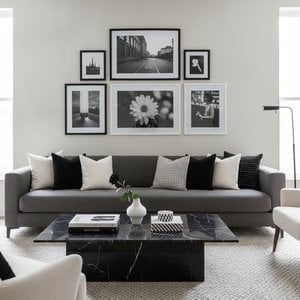
Timeless & Chic: Elevating Your New Home with the Sophistication of Black and White Photography
Transform your new home with the timeless allure of black and white photography. ArtsDot.com specializes in elegant monochrome decor and custom hand-painted wedding portraits that turn cherished milestones into lasting, soulful masterpieces. Elevate your space with ease.

Meesterwerken in Zwart: Top 10 Schilderijen Gedreven door Donkere Tinten | ArtsDot.nl
Ontdek de kracht van donker! Verlies jezelf in onze top 10 zwarte schilderijen, van Caravaggio tot Manet. Leer over meesterwerken, technieken & emotie. Museumkwaliteit reproducties op ArtsDot.com – Kunst voor uw interieur.
