


 Voorvertoning
 Verstuur
 Delen
Delen
 Details bekijken

 Download
 Vergelijkbare items
 Röntgenonderzoek
 Diavoorstelling
 Statistieken
Pleasant Letter
 Oil On Canvas
- WallArt
- Contemporary Realism
 1860
1860 66.0 x 55.0 cm
 Hermitage Museum
 Lees meer
Handgemaakte olieverfreproductie
Met de hand geschilderd in olieverf op canvas in uw gewenste maat en lijst, op bestelling gemaakt door onze kunstenaars. ( Schakel over naar print Schakel over naar digitale afbeelding)




P118B $10

P118H $10

P118W $10

P438Z $10

P508JH $12

P508YH $12

P805H $10

P805Z $10

P919BZ $10

P919G $10

P919XJ $10

P959ZH $10

P968JZ $12

W106C $8

W218G $10

W218JH $8

W218Y $10

W307PJ $10

W316G $10

W316PJ $8

W316Y $10

W398PJ $8

W4111J $10

W500HY $15

W500JH $15

W692G $12

W849H $8

W940BG $15

W953PJ $8




Kies uit onze vooraf ingestelde maten die overeenkomen met de originele verhoudingen van het kunstwerk.

U kunt uw eigen afmetingen invoeren om in een specifieke lijst of ruimte te passen. Als de door u gekozen maat niet overeenkomt met de verhoudingen van het originele beeld, zullen we het kunstwerk bijsnijden of het schilderij uitbreiden met extra handgeschilderde elementen. Een digitale mockup wordt ter goedkeuring naar u verzonden voordat de productie begint.
Houd er rekening mee dat de preview op het scherm niet de werkelijke uitsnede of uitbreiding weergeeft. Alleen de mockup toont de uiteindelijke compositie nauwkeurig.
Hoewel aangepaste afmetingen mogelijk zijn, raden we aan een maat uit de vooraf gedefinieerde lijst te selecteren om de originele verhoudingen te behouden.
Na de bestelling zal het team van ArtsDot.com per e-mail contact opnemen met de klant voor instructies en een mockup-voorbeeld sturen.
Wereldwijde levering () binnen 3 tot 4 weken in plaats van de standaard 5 weken. (10 september). Zonder concessies aan de kwaliteit.

Gratis wereldwijde expressverzending

Hoogwaardig linnen canvas

Volledige verzendverzekering

Garantie op terugbetaling van invoerrechten

Garantie op exacte kleurweergave

Retourbeleid van 100 dagen (alleen bij defecten)

100% Geld-terug-garantie

Korting bij meerdere afnames
 De optie voor glas is alleen beschikbaar bij een formaat kleiner dan 110 cm.

Pleasant Letter
Druktechniek
Afmetingen reproductie
-


Eindtotaal
$ 263
A Glimpse of Parisian Life: Alfred Stevens’ “Pleasant Letter”
Alfred Stevens' "Pleasant Letter," painted circa 1860-67, is more than just a portrait; it’s a meticulously crafted window into the refined world of late 19th-century Paris. This exquisite work, currently residing in the collection of the State Hermitage Museum, captures a fleeting moment of domestic intimacy—a woman seated at a table, engrossed in a letter, while her companion observes with quiet attentiveness. Stevens, a master of realism and a keen observer of human psychology, elevates this seemingly simple scene into a study of social grace, subtle emotion, and the delicate balance between observation and participation.
The painting’s genesis lies firmly within Stevens' signature style: a deliberate departure from grand historical or mythological subjects. Instead, he focused on capturing the nuances of modern life—the “la vie moderne”—as it unfolded in fashionable Parisian interiors. This shift was revolutionary at the time, as it prioritized the portrayal of contemporary society and its inhabitants with an unprecedented level of detail and psychological insight. Influenced by the Dutch Masters – particularly Gerard ter Borch and Gabriel Metsu – Stevens meticulously rendered textures, light, and shadow, creating a palpable sense of realism that drew viewers into the scene.
The Composition: A Dance of Observation
The composition itself is remarkably balanced and restrained. The seated woman, dressed in a fashionable gown of muted tones, dominates the foreground, her gaze directed towards the letter before her. Her posture—relaxed yet attentive—suggests both engagement and contemplation. Her companion, positioned slightly behind and to the side, offers a counterpoint – a quiet observer, perhaps reflecting on the contents of the letter or simply enjoying the shared moment. The arrangement isn’t overtly dramatic; rather, it's a subtle choreography of figures within a carefully designed space.
Stevens masterfully utilizes light and color to enhance the scene’s atmosphere. A soft, diffused light illuminates the room, casting gentle shadows that define the forms and textures of the furniture and clothing. The palette is predominantly muted – browns, creams, and grays—reflecting the understated elegance of the Parisian bourgeois lifestyle. The use of a delicate rose-colored shawl draped over the woman’s shoulders adds a touch of warmth and visual interest, subtly drawing the eye to her face.
Symbolism and Social Commentary
Beyond its aesthetic qualities, “Pleasant Letter” carries layers of symbolic meaning. The act of reading a letter represents communication, connection, and perhaps even unspoken desires. It’s a moment of private reflection within the confines of domestic life—a world carefully constructed to project an image of refinement and social standing. The painting subtly critiques the artificiality of such displays, hinting at the complexities beneath the surface of polite society.
Furthermore, Stevens' choice of subject matter – a seemingly ordinary scene of everyday life – speaks to his broader artistic vision. He sought to elevate the commonplace, revealing beauty and significance in the details of modern existence. The painting’s popularity during its time reflected a growing interest in capturing the realities of contemporary society—a trend that would profoundly influence subsequent generations of artists.
A Legacy of Elegance
Alfred Stevens' “Pleasant Letter” remains a testament to his exceptional skill and artistic vision. It is a captivating portrait not only of two women but also of an era – the Belle Époque—characterized by its elegance, social complexities, and burgeoning modernity. Reproductions of this work offer a remarkable opportunity to experience the subtle beauty and psychological depth of Stevens’s art, bringing a touch of Parisian refinement into any space.
Vergelijkbare kunstwerken


Biografie van de kunstenaar
vroege jaren en opleiding
Alfred Émile Léopold Stevens, een vooraanstaande Belgische schilder, werd op 11 mei 1823 geboren in Brussel. Zijn familie was diep geworteld in de visuele kunsten; zijn oudere broer Joseph (1816–1892) en zijn zoon Léopold (1866–1935) waren beiden schilders, terwijl een andere broer, Arthur (1825–99), werkzaam was als kunsthandelaar en criticus.artistieke carrière
Stevens begon zijn artistieke reis aan de Académie Royale des Beaux-Arts in Brussel, waar hij onder de begeleiding van François Navez studeerde, een neoklassiek schilder. In 1843 verhuisde hij naar Parijs om zich bij zijn broer Joseph te voegen en werd hij toegelaten tot de École des Beaux-als. Hoewel het onderwerp van discussie is of hij een leerling van Jean Auguste Dominique Ingres was, tonen Stevens' vroege werken, zoals The Pardon or Absolution (Hermitage, Sint-Petersburg), gesigneerd en gedateerd in 1849, zijn meesterschap in de conventionele naturalistische stijl, sterk beïnvloed door de 17e-eeuwse Nederlandse genreschilderkunst.opkomst naar roem
Het werk van Stevens werd voor het eerst publiekelijk tentoongesteld in 1851 op de Brusselse Salon, wat hem een derde-klasse medaille opleverde tijdens de Parijse Salon in 1853 en een tweede-klasse medaille op de Universele Expositie in Parijs in 1855. Zijn schilderij Ce qu'on appelle le vagabondage (Musée d'Orsay, Parijs) trok de aandacht van Napoleon III, wat uiteindelijk leidde tot een significante verandering in de behandeling van de armen.opmerkelijke werken en nalatenschap
- La Dame en Rose, of Vrouw in Roze (Musées Royaux des Beaux-Arts de Belgique, Brussel), geschilderd in 1866, is een perfect voorbeeld van Stevens' werk uit deze periode, waarbij hij een modieus geklede vrouw combineert met een gedetailleerde studie van Japanse objecten.
- Stevens werd in 1863 door de Franse regering benoemd tot Ridder (Chevalier) in de Eer van Frankrijk en werd in 1867 gepromoveerd tot Officier van de Eer van Frankrijk.

Alfred Stevens
1823 - 1906 , België
Belangrijkste feiten
- Artistic Movement Or Style: Academisch Realisme
- Artists Who Influenced This Artist:
- Jean Auguste Dominique Ingres
- Nederlandse Meesters
- Date Of Birth: 11 mei 1823
- Date Of Death: 1906
- Full Name: Alfred Émile Léopold Stevens
- Nationality: Belgisch
- Notable Artworks:
- La Dame en Rose
- Bezoek aan het atelier
- Voorbereidende tekening voor 'Panorama van de eeuw', 'Keizerin Joséphine en haar hof'
- Place Of Birth: Brussel, België
Gerelateerde artikelen

Alfred Stevens: Capturing Parisian Elegance & Fin-de-Siècle Intimacy
Discover the captivating world of Alfred Stevens, master of Parisian elegance & intimate portraiture. Explore his techniques, influences, and legacy – a prized collection for discerning art enthusiasts.

Sir Alfred James Munnings: Top 25 Meesterwerken voor Kunstliefhebbers | ArtsDot.nl
Ontdek de top 25 schilderijen van Sir Alfred James Munnings, meester van paardenkunst & Engelse impressionisme. Leer over zijn leven, techniek en iconische werken. Museumkwaliteit reproducties op ArtsDot.com! Ontdek alle meesterwerken online.
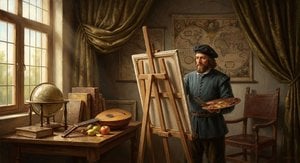
Illuminating Realism: Exploring the Dutch Golden Age of Painting (1600-1700)
Explore the Dutch Golden Age of painting (1600-1700) with ArtsDot. Discover Rembrandt, Vermeer & other masters. Learn about techniques, history & find museum-quality reproductions.

Alfred Stevens: Capturing Parisian Life with Intimate Realism & Symbolist Flair
Explore the captivating world of Alfred Stevens, a pioneer of intimate realism & Symbolist painting. Discover his elegant portraits of Parisian women and learn about his Dutch influences & lasting legacy. Art history insights at ArtsDot.

Golden Age Reflections: Dutch Baroque Painting & Cultural Innovation
Explore the Dutch Golden Age of painting! Discover key artists like Vermeer & ter Borch, their innovative techniques, and the rich cultural context behind these Baroque masterpieces. Learn about collecting & appreciating this iconic art period.