

The picture follows your choices: , .
Kolekcinio objekto aprašas
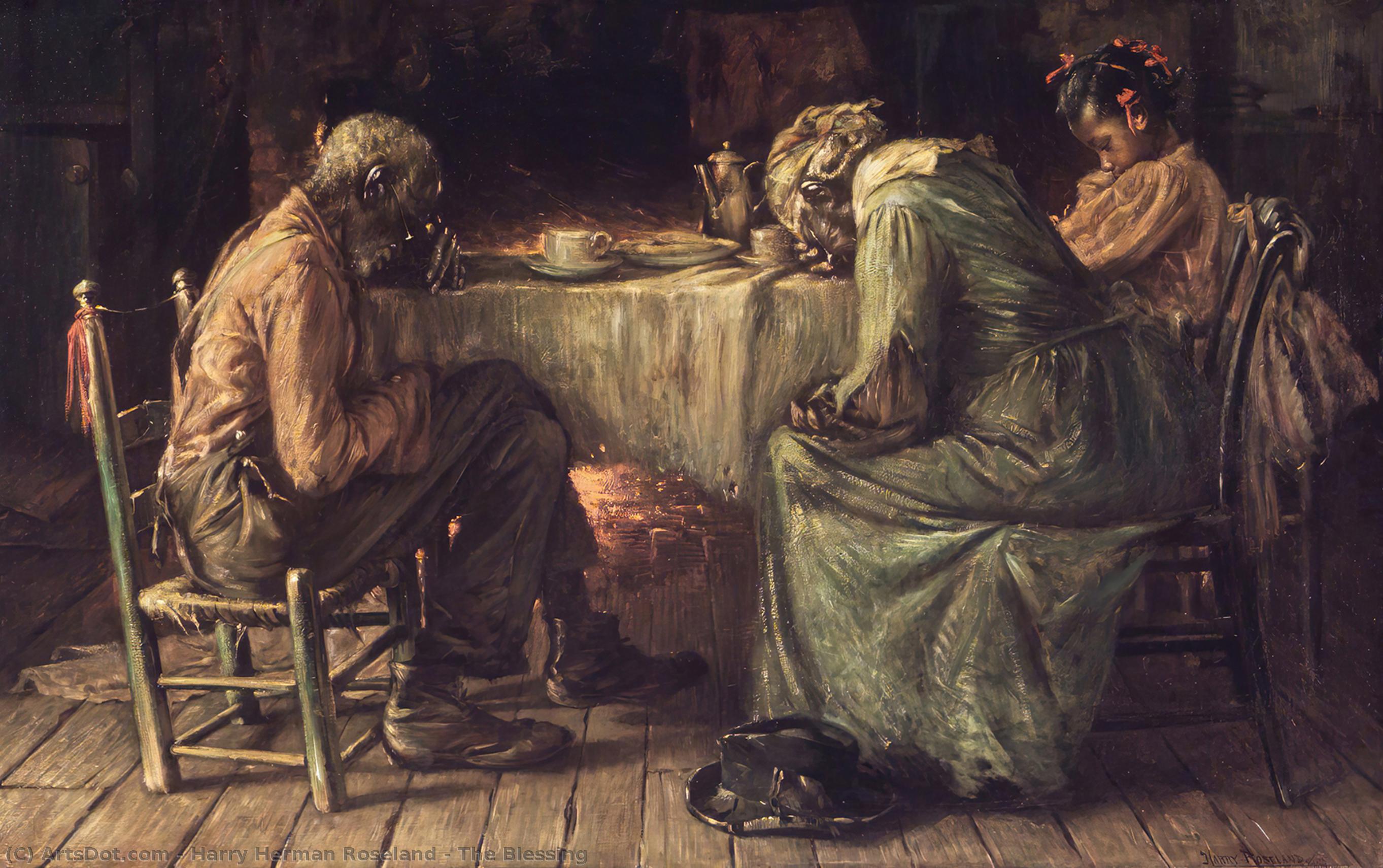
Experience 'The Blessing' by Harry Roseland – a poignant 1904 painting of family faith & quiet reflection. Realistic detail meets soulful atmosphere. Explore this American genre masterpiece.
Autoriaus biografija
Discover Harry Herman Roseland’s evocative portraits & scenes of Black life in early 20th-century America. Explore themes of family, fortune telling, and social commentary.
 Skaityti daugiau
Rankų darbo aliejinės reprodukcijos
Rankiniu būdu tapytas aliejus ant droblio jūsų pageidaujamame dydį ir rėmuose – tai mūsų menininkų pagal užsakymą sukurtas darbas. ( Perjungti į spausdinamus版作品 Perejti prie skaitmeninių vaizdų)
More about this painting
 Peržiūrėti realaus dydžio版
 Pasidalinti
 Dalintis
 Išsamiau
 Vadovas

 Atsisiųsti
 Panašūs eksponatai
 Rentgeno spindulių nuotrauka
 Automatinė diorama
 Q&A
Q&A Statistika
Order your painting in four simple steps
Take your time. You can change any answer; the price in your order card follows each choice.
1 Step one of four
Which size would you like?
These sizes keep the proportions of the original painting. The drawing shows your choice on a wall, above a two-metre sofa.
Or give your own measurements
Pasirinkite iš mūsų nustatytų dydžių, atitinkančių originalaus meno kūrinio proporcijas.

Įveskite jums reikiamą plotį ir aukštį, kad paveikslas atitiktų jūsų rėmą ar sieną. Kadangi šis darbas yra rankinio darbo, siekiant išgauti kitokios formos dydį, paveikslas gali būti šiek tiek didesnis (nuo kraštų bus palikta daugiau erdvės) arba mažesnis – pasirinkite jums patogiausią variantą. Prieš pradedant tapyti, atsiųsime jums skaitmeninį maketą patvirtinimui. Šioje puslapio nuotraukoje matomas vaizdas nėra galutinis rezultatas – jį parodys tik sukurtas maketas.
2 Step two of four
How should it be prepared: rolled, stretched or framed?
The prices below are for the size you chose in step one.
Choose the edges of the stretched canvas
Choose your frame

White €1

Blurside €1

Extended €1

P118B €10

P118H €10

P118W €10

P438Z €10

P508JH €12

P508YH €12

P805H €10

P805Z €10

P919BZ €10

P919G €10

P919XJ €10

P959ZH €10

P968JZ €12

W106C €8

W218G €10

W218JH €8

W218Y €10

W307PJ €10

W316G €10

W316PJ €8

W316Y €10

W398PJ €8

W4111J €10

W500HY €15

W500JH €15

W692G €12

W849H €8

W940BG €15

W953PJ €8

H24-GOLD €30

H24-SILVER €30

H36-GOLD €45

H36-SILVER €45
Įrėmintas
Moulding: . Overall size with the frame: .
3 Step three of four
Would you like anything changed in the painting?
Most people answer no. Because each painting is made by hand, our artist can also adapt it for you.
After order, ArtsDot.com team will email client for instructions and provide a mockup preview
4 Step four of four
A few finishing options
All of them are optional. The answers already selected cost nothing extra.
Who paints it?
Pristatymas visame pasaulyje () per 3–4 savaites, o ne įprastai – per 5 savaites. (30 spalis). Kokybė lieka nepakeičiama.
A nameplate, as in a museum?
Išgraviruotos bronzinės plokštelės detalės
This elegant plaque features the artist's name and the title of the artwork, finely engraved for a timeless presentation.
It is made from bronze with a refined, elegant finish. The text is precisely laser-engraved for a sharp and permanent result. Measuring 9x2 cm, the plaque is compact yet easy to read. It's built to be durable and scratch-resistant, offering a professional, museum-quality look. Mounting is simple thanks to the included adhesive backing.
Skaidrios akrilo plokštelės informacija
The plaque includes essential engraved details such as the artist's name, the title of the artwork, the date it was created, the type of media used-like oil on canvas or watercolor-a brief description of the piece, and a QR code that links to the complete artwork information.
It is crafted from clear acrylic, offering a sleek, modern appearance. The text is UV-engraved in black to ensure strong visual contrast. With a size of 10x15 cm, it ensures optimal readability. It comes equipped with two metal hooks for secure wall mounting. The plaque is designed to be weather-resistant, making it suitable for various environments, and it includes interactive features that work seamlessly with smartphone scanning.
Juodos akrilo plokštelės informacija
This elegant plaque includes engraved information such as the artist's name, the title of the artwork, the date it was created, the type of media used (like oil on canvas or watercolor), a short description of the artwork, and a QR code for quick access to more information.
The plaque itself is made from refined black acrylic with a premium finish. The text is laser-engraved in white for high contrast and readability. Its size is 10x15 cm, designed to be easy to read. It comes with two metal hooks for professional mounting. The design is sleek and fits any interior style. It is also weather-resistant and durable, with built-in digital integration for mobile compatibility.
A protective varnish?
When do you need it?
✓ Check and order
Your painting, as you ordered it

The Blessing
Reprodukcijos technika
Reprodukcijos matmenys
-

Aukščiausios klasės meistras
Daugiau detalių, meistriškumo ir papildomo gamybos laiko
-

Reprodukcijos rėmėjimo parinktys
-
-
Dėl meno kūrinių ar reprodukcijų, kurių bet kuri pusė yra didesnė nei 105 cm (apie 41 inch), rėmas bus siunčiamas kaip išskaidytas surinkimo rinkinys. Šis metodas užtikrina saugų pristatymą ir apsaugo nuo transportavimo metu galimos žalos.
Reikalingas profesionalus surinkimas – tai nėra „pasidaryk pats“ (DIY) produktas.
Rinkinys turi būti surinktas, o drobė išplėsta naudojant patyrį profesionalų rėmininką, medžio klijus (nėra įtraukti į rinkinį), drobės plėšimo kleslę bei presas, kad rėmo rėžiai išliktų tiesūs, kol klijai išdžiūvus. Netinkamas surinkimas arba netolydus drobės įtampa gali negrįžtamai sugadinti meno kūrinį, todėl šie atvejai nėra užtraukiami mūsų garantijos.
 Dėl meno kūrinių ar reprodukcijų, kurių bet kuri pusė yra didesnė nei 105 cm (apie 41 inch), rėmas bus siunčiamas kaip išskaidytas surinkimo rinkinys. Šis metodas užtikrina saugų pristatymą ir apsaugo nuo transportavimo metu galimos žalos.
Į komplektą įeina visi vientisos medienos elementai, tiksliai išpjauti pagal dydį.
Surmontinama naudojant pridėtus varžtus bei papildomai reikalingą medžio kliją kampų jungtims, kuris nėra pridėtas ir turi būti parinktas rėmininkui.
Reikalingi profesionalūs įrankiai, kurie nėra įtraukti į rinkinį: drobės kėlimo plytelės (stiprintuvai) ir klemiai, laikantys rėmo strygius tiesiu kampu, kol džiūsta lipas.
Svarbu:
Kampų jungtims reikalingi medžio klijai, barams reikia laikyti naudojant presas, kol klijai visiškai išdžiūvės, o surinktam rėmui įtempiamai privilgti būtinos drobės įtempimo plytযুক্ত. Šios priemonės į rinkinį neįtrauktos. Prieš užsakydami šio dydžio rinkinį, rekomenduojame pasimalkoti patyrusiu rėmų meistru.

Pavadinimo lentelė
-
-

Apsauginis lakas
Blizgus lakas (ryškina spalvas, saugo nuo šviesos ir drėgmės)
-

Personalizuoti kūrinį
Ką galima pakeisti (pavyzdžiui): pakeisti veidą klientui skirta nuotrauka; pridėti augintinį (pvz., katę pakeisti šuniu); įtraukti paslėptą žinutę fone; pakeisti fono kraštovaizdį ar elementus.
-

Skubiai
Pristatymas visame pasaulyje () per 3–4 savaites, o ne įprastai – per 5 savaites. (30 spalis). Kokybė lieka nepakeičiama.
-
Skubus pristatymas
Pristatymas visame pasaulyje () per 5 weeks. (6 lapkritis).
Įskaičiuota
Bendroji kaina
€ 232
Stiklo variantas prieinamas tik pasirinkus dydį iki 110 cm
Included with every order
- Nemokamas greitasis pristatymas visame pasaulyje
- Aukštos kokybės lininis drobė
- Pilnas siuntimo draudimas
- Muitinės mokesčių grąžinimo garantija
- Tikro spalvų atitikimo garantija
- 100 dienų grąžinimo politika (tik esant įtaigoms)
- 100% pinigų grąžinimo garantija
- Nuolaida dideliems užsakymams


panašūs kūriniai


Harry Herman Roseland
1867 - 1950, United States of America
Autoriaus biografija
A Life Depicted: The Evocative World of Harry Herman Roseland
Harry Herman Roseland, born in Brooklyn, New York around 1867 and passing away in 1950, occupies a fascinating, often-overlooked space within the landscape of early 20th-century American art. While not formally trained abroad like many of his contemporaries, Roseland forged a distinctive path, becoming renowned for his poignant depictions of African American life—a subject matter that resonated deeply with a public increasingly captivated by social realities yet still largely segregated in its artistic representations. His canvases weren’t grand historical narratives or idealized portraits; instead, they offered intimate glimpses into the everyday lives of Black Americans, often focusing on scenes of fortune telling, family moments, and quiet contemplation. Roseland's life was rooted in Brooklyn, where he spent his entire career, a testament to his dedication to observing and interpreting the world immediately around him. He became an active member of prominent art societies like the Salmagundi Club and the Brooklyn Society of Artists, demonstrating a commitment to the artistic community even as his subject matter often challenged conventional norms.Early Influences and Artistic Development
Roseland’s artistic journey began with self-study, supplemented by instruction from John Bernard Whittaker and later James Carroll Beckwith. This unconventional training allowed him a freedom to develop his unique style, unburdened by the rigid academic traditions prevalent at the time. Initially exploring landscapes and still lifes, Roseland gradually gravitated towards genre painting—scenes of everyday life. It was in this realm that he discovered his true passion: portraying African Americans. His choice of subject matter wasn’t merely a stylistic preference; it reflected a keen observational eye and an emerging desire to capture the nuances of a community often marginalized or misrepresented in art. He didn't shy away from depicting poverty, but did so with dignity and empathy, avoiding caricature and instead focusing on the humanity of his subjects. This approach set him apart from many artists of his era who tended towards stereotypical portrayals.Themes of Fortune, Family, and Social Commentary
Roseland’s most recognizable works center around Black women fortune tellers reading palms or tea leaves for white clients. These paintings are particularly compelling because they subtly address the complex social dynamics of the time. While seemingly innocuous scenes, they hint at a power imbalance—a white woman seeking guidance from a Black woman—and offer a glimpse into the cultural exchange and hidden interactions that existed despite societal barriers. Beyond fortune telling, Roseland’s canvases frequently depict intimate family moments: mothers with children, couples sharing quiet conversations, individuals lost in thought. These scenes are imbued with a sense of realism and emotional depth, capturing the resilience, strength, and dignity of Black families. To the Highest Bidder, perhaps his most famous work—and a favorite of Oprah Winfrey—is a particularly striking example of this sensitivity, portraying an auction scene that speaks to themes of vulnerability and societal pressures.Popularity and Reproduction: Reaching a Wider Audience
Roseland’s art gained significant popularity through widespread reproduction. His paintings were frequently featured on postcards and large-scale prints distributed as Sunday supplements in newspapers, bringing his work into the homes of countless Americans. This accessibility was crucial to his success; it allowed him to reach an audience far beyond the confines of galleries and museums. While some critics may have dismissed his work as sentimental or overly commercial, the sheer volume of reproductions suggests a deep resonance with the public. The widespread circulation of his images contributed to a broader understanding—albeit often romanticized—of African American life during this period. He wasn’t simply creating art for an elite audience; he was engaging in a dialogue with everyday people, prompting reflection and sparking conversations about race, class, and society.Legacy and Historical Significance
Harry Herman Roseland's legacy is one of quiet observation and empathetic portrayal. Though not as widely celebrated as some of his contemporaries, his work offers a valuable window into the early 20th-century American experience. He challenged conventional artistic norms by focusing on African American life with dignity and respect, paving the way for future generations of artists to explore similar themes.- His paintings provide important visual documentation of a community often overlooked in historical narratives.
- He subtly addressed complex social issues through seemingly innocuous scenes, prompting viewers to question existing power dynamics.
- His widespread reproduction ensured that his work reached a broad audience, contributing to a wider—though imperfect—understanding of African American life.
Susiję straipsniai

Echoes of Place: Regionalism & American Identity in Interwar Art
Explore the rise of American Regionalism in interwar art! Discover Grant Wood, Thomas Hart Benton & the movement's impact on American identity. Expert analysis & historical context.

Dark Masterpieces: 10 Iconic Paintings Dominated by Black Tones |
Explore 10 iconic paintings dominated by black tones, from Rembrandt’s chiaroscuro to Goya's dark expressions. Discover the stories behind these masterpieces & find museum-quality art reproductions for your home at .

Grant Wood & American Regionalism: Identity, Myth & the Rural Landscape
Explore the world of Grant Wood & American Regionalism with ArtsDot. Discover the symbolism behind 'American Gothic', recurring themes, and the movement's lasting impact on art history. High-quality reproductions available.