


 Peržiūrėti realybėje
 Pasidalinti
 Dalintis
 Išsamiau

 Atsisiųsti
 Panašūs eksponatai
 Rentgeno nuotrauka
 Automatinė diorama
A Monkey Alchemist

 Skaityti daugiau
Giclée / Meno spausdinimas
Muziejų lygio „giclée“ arba drobos spausdinimas: greita gamyba ir lankstios apdailos parinktys. ( Perejti prie rankinio darbo paveikslėlio Perjungti į vaizdą)




































Pasirinkite iš mūsų nustatytų dydžių, atitinkančių originalaus meno kūrinio proporcijas.

Galite nurodyti savo matmenis, kad vaizdas atitiktų konkretų rėmą ar erdvę. Jei pasirinktas dydis nesutaps su originalaus paveikslėlio proporcijomis, mes arba apkirpsime kūrinį, arba išplėsime vaizdą naudojant veideliu atspindėtą arba vientisą šoną. Skaitmeninis maketas bus išsiųstas jums patvirtinti prieš pradedant gamybą.
Atkreipkite dėmesį, kad ekrane matomas vaizdinys neatspindi tikrojo apkirpimo ar išplėtimo. Tik maketas tiksliai parodytų galutinę kompoziciją.
Nors galima rinktis ir individualius dydžius, rekomenduojame pasirinkti vieną iš išanksti nustatytų matmenų, kad būtų išlaikytos originalios proporcijos.
Pristatymas visame pasaulyje () per 2 weeks, o ne įprastas 4/5 savaičių laikotarpis. (6 rugpjūtis)

Nemokamas greitasis pristatymas visame pasaulyje

Aukštos kokybės lininis drobė

Pilnas siuntimo draudimas

Muitinės mokesčių grąžinimo garantija

Tikro spalvų atitikimo garantija

60 dienų grąžinimo politika (tik esant gamyklinėms defektams)

100% pinigų grąžinimo garantija

Nuolaida už kelias reprodukcijas
 Stiklo variantas prieinamas tik pasirinkus dydį iki 110 cm

A Monkey Alchemist
Giclée / Meno spausdinimas
Reprodukcijos matmenys
-


Galutinė kaina
$ 62
panašūs kūriniai


Autoriaus biografija
Edmund Bristow (1787–1876): A Quiet Observer of Rural Life
Edmund Bristow (1 Apr 1787 – 12 Feb 1876) was an English animal, still life and subject painter who quietly documented the beauty of British countryside and domestic scenes. Born in Eton, Berkshire, he descended from a family with roots in heraldic painting—his father practiced this craft, shaping Bristow’s early artistic sensibilities. From a young age, he benefited from patronage from influential figures like Princess Elizabeth (later Queen Victoria) and Duke Clarence (William IV), fostering connections within the aristocratic circles of his time. Bristow's artistic journey began with meticulous sketches of Eton College and Windsor Castle—capturing the essence of these iconic locations with remarkable precision. He swiftly transitioned into painting still lifes, skillfully portraying fruits, flowers, and domestic objects with an unwavering dedication to detail. Furthermore, he excelled in depicting sporting subjects – particularly equestrian pursuits – conveying movement and dynamism through his canvases. Notably, Bristow possessed a profound empathy for animals, evident in his ability to render their characteristic postures and expressions with sensitivity and accuracy. Accounts suggest he maintained correspondence with Sir Edwin Landseer, the celebrated landscape painter, highlighting a shared appreciation for capturing the spirit of nature. Bristow’s artistic output was characterized by an unconventional approach—he worked only when inspiration struck him, rejecting commissions unless genuinely motivated. This independent spirit extended to his reluctance to sell completed works, cementing his reputation as an eccentric artist who prioritized artistic integrity above financial gain. His mastery lay in portraying animals with exceptional realism; monkeys, cats, and horses were among his favored subjects, consistently demonstrating a remarkable understanding of anatomy and movement. Bristow’s paintings typically possessed a modest scale but commanded considerable attention due to their meticulous observation and masterful technique. Many pieces found their way into the collections of discerning private collectors residing in the local area—a testament to the enduring appeal of his artistic vision. Among Bristow's notable achievements were “Smith Shoeing a Horse,” exhibited at the Royal Academy in 1809, and subsequent appearances at the British Institution and Society of British Artists until 1838. His final exhibition at the British Institution showcased "The Donkey Race," marking his last foray into public art. Bristow’s artistic style evolved over time, reflecting influences from Romanticism and Neoclassicism—though he resisted categorization, prioritizing personal expression above adherence to prevailing trends. He produced relatively little during the fifteen years preceding his death in Eton on February 12th, 1876, at the age of 89. Bristow’s legacy resides not only in his captivating depictions of animals and landscapes but also in his unwavering commitment to artistic authenticity—a rare quality that distinguishes him as a singular voice within Victorian art history.
Edmund Bristow
1787 - 1876 , United Kingdom
Trumpa informacija
- Artistic Movement Or Style: Animal Painting
- Artists Or Movements Influenced By This Artist: ['Dutch Golden Age']
- Artists Who Influenced This Artist: ['Sir Edwin Landseer']
- Date Of Birth: Apr 1787
- Date Of Death: Feb 1876
- Full Name: Edmund Bristow
- Nationality: British
- Notable Artworks:
- Monkey Pugilists
- Cat's Paw
- Law and Justice
- Incredulity
- The Rehearsal
- Pros and Cons of Life
- Place Of Birth: Eton, United Kingdom
Susiję straipsniai

From Concept to Canvas: Leveraging Digital Mockups for Precision & Client Satisfaction in Custom Oil Painting Reproduction
Transform your vision into reality with ArtsDot's custom oil painting reproductions. Experience precision & peace of mind through our expert digital mockup process, ensuring a flawless masterpiece tailored to your style. Discover the art of bespoke creation today!
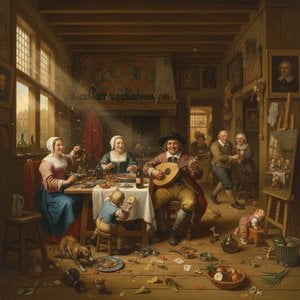
Jan Steen: A Master of Dutch Genre Painting & the Golden Age
Explore the life & art of Jan Steen, a leading Dutch Golden Age painter renowned for his humorous genre scenes & insightful social commentary. Discover his techniques, legacy, and collecting tips.

From Snapshot to Canvas: The Art of Transforming Travel Photography into Timeless Oil Paintings
Transform your cherished travel photos into timeless oil paintings with expert artists at ArtsDot.com. Museum-quality reproductions & custom portraits – preserve your memories beautifully.

From Imagination to Canvas: Commissioning Bespoke Fantasy Art with Traditional Oil Painting Techniques
Commission breathtaking bespoke fantasy art with skilled oil painters. Explore techniques, artist selection & preservation tips. Invest in a unique masterpiece today!

Oil on Canvas Masters: 10 Paintings That Redefined Art History |
Journey through art history with our guide to 10 legendary oil on canvas masterpieces! Explore iconic works by Van Gogh, Monet & Rembrandt. Find museum-quality reproductions and elevate your home decor at . Discover all masterpieces online.

