
- Pradžia

- Ežero tapybos reprodukcija
- Edmund Bristow
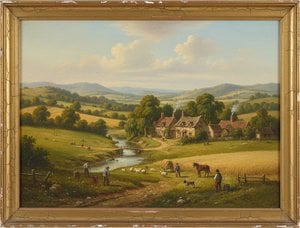
- Cattle With Cart And Barn

 Pirkti atspaudą Pirkti skaitmeninį paveikslą
 Pasidalinti
 Dalintis
 Details
 Pridėti į mėgstamiausius

 Atsisiųsti
 Panašūs eksponatai
 X-Ray
X-Ray
 Automatinė diorama
Cattle With Cart And Barn

Rankų darbo aliejinės reprodukcijos
Rankiniu būdu tapytas aliejus ant droblio jūsų pageidaujamame dydį ir rėmuose – mūsų menininkų darbas pagal užsakymą.




































 Skaityti daugiau
Pasirinkite iš mūsų nustatytų dydžių, atitinkančių originalaus meno kūrinio proporcijas.

Galite įvesti savo matmenis, kad jie atitiktų konkretų rėmą ar erdvę. Jei pasirinktas dydis neatitinka originalaus paveikslėlio proporcijų, mes arba apkropsime meno kūrinį, arba papildysime tapybą rankomis dažytい elementais. Prieš pradėdami gamybą, jūsų patvirtinimui atsiųsime skaitmeninį maketą.
Atkreipkite dėmesį, kad ekrane rodomas vaizdas neatspindi tikrojo apkarpymo ar papildymo. Tik maketas tiksliai parodys galutinę kompoziciją.
Nors galima rinktis ir individualius dydžius, rekomenduojame pasirinkti matmenis iš nustatytos sąrašo, kad būtų išlaikytos originalios proporcijos.
Gavus užsakymą, ArtsDot.com komanda susisieks su klientu el. paštu dėl instrukcijų ir pateiks maketo pavyzdį.
Pristatymas visame pasaulyje () per 3–4 savaites, o ne įprastai – per 5 savaites. (30 birželis). Kokybė lieka nepakeičiama.

Nemokamas greitasis pristatymas visame pasaulyje

Aukštos kokybės lininis drobė

Pilnas siuntimo draudimas

Muitinės mokesčių grąžinimo garantija

Tikro spalvų atitikimo garantija

60 dienų grąžinimo politika (tik esant gamyklinėms defektams)

100% pinigų grąžinimo garantija

Nuolaida už kelias reprodukcijas
 Stiklo variantas prieinamas tik pasirinkus dydį iki 110 cm

Cattle With Cart And Barn
Reprodukcijos technika
Reprodukcijos matmenys
-


Galutinė kaina
-
panašūs kūriniai


Autoriaus biografija
Edmund Bristow (1787–1876): A Quiet Observer of Rural Life
Edmund Bristow (1 Apr 1787 – 12 Feb 1876) was an English animal, still life and subject painter who quietly documented the beauty of British countryside and domestic scenes. Born in Eton, Berkshire, he descended from a family with roots in heraldic painting—his father practiced this craft, shaping Bristow’s early artistic sensibilities. From a young age, he benefited from patronage from influential figures like Princess Elizabeth (later Queen Victoria) and Duke Clarence (William IV), fostering connections within the aristocratic circles of his time. Bristow's artistic journey began with meticulous sketches of Eton College and Windsor Castle—capturing the essence of these iconic locations with remarkable precision. He swiftly transitioned into painting still lifes, skillfully portraying fruits, flowers, and domestic objects with an unwavering dedication to detail. Furthermore, he excelled in depicting sporting subjects – particularly equestrian pursuits – conveying movement and dynamism through his canvases. Notably, Bristow possessed a profound empathy for animals, evident in his ability to render their characteristic postures and expressions with sensitivity and accuracy. Accounts suggest he maintained correspondence with Sir Edwin Landseer, the celebrated landscape painter, highlighting a shared appreciation for capturing the spirit of nature. Bristow’s artistic output was characterized by an unconventional approach—he worked only when inspiration struck him, rejecting commissions unless genuinely motivated. This independent spirit extended to his reluctance to sell completed works, cementing his reputation as an eccentric artist who prioritized artistic integrity above financial gain. His mastery lay in portraying animals with exceptional realism; monkeys, cats, and horses were among his favored subjects, consistently demonstrating a remarkable understanding of anatomy and movement. Bristow’s paintings typically possessed a modest scale but commanded considerable attention due to their meticulous observation and masterful technique. Many pieces found their way into the collections of discerning private collectors residing in the local area—a testament to the enduring appeal of his artistic vision. Among Bristow's notable achievements were “Smith Shoeing a Horse,” exhibited at the Royal Academy in 1809, and subsequent appearances at the British Institution and Society of British Artists until 1838. His final exhibition at the British Institution showcased "The Donkey Race," marking his last foray into public art. Bristow’s artistic style evolved over time, reflecting influences from Romanticism and Neoclassicism—though he resisted categorization, prioritizing personal expression above adherence to prevailing trends. He produced relatively little during the fifteen years preceding his death in Eton on February 12th, 1876, at the age of 89. Bristow’s legacy resides not only in his captivating depictions of animals and landscapes but also in his unwavering commitment to artistic authenticity—a rare quality that distinguishes him as a singular voice within Victorian art history.
Edmund Bristow
1787 - 1876 , United Kingdom
Trumpa informacija
- Artistic Movement Or Style: Animal Painting
- Artists Or Movements Influenced By This Artist: ['Dutch Golden Age']
- Artists Who Influenced This Artist: ['Sir Edwin Landseer']
- Date Of Birth: Apr 1787
- Date Of Death: Feb 1876
- Full Name: Edmund Bristow
- Nationality: British
- Notable Artworks:
- Monkey Pugilists
- Cat's Paw
- Law and Justice
- Incredulity
- The Rehearsal
- Pros and Cons of Life
- Place Of Birth: Eton, United Kingdom
Susiję straipsniai

Cultivating Visions: A Historical Exploration of Rural Life in Painting
Explore the rich history of rural life in painting! Discover masterpieces from Dutch Masters to Courbet & Watteau. Uncover the artistic and social significance of idyllic landscapes and peasant scenes.


Edmund Bristow: Capturing British Life with Atmospheric Realism
Explore the captivating world of Edmund Bristow (1787-1876), a master of British realism. Discover his exquisite animal portraits, serene landscapes, and intimate domestic scenes – a testament to 19th-century artistry.

Snowy Masterpieces: 10 Famous Paintings & Art for a Winter Aesthetic
Explore 10 famous snow paintings by Monet, Degas & more! Discover the stories behind these serene winter landscapes and iconic artworks. Find museum-quality art reproductions for your home at ArtsDot.com.
Evocations of Rural Life: A Historical Journey Through Landscape Painting
Explore the rich history of rural life in painting! Discover Impressionist masterpieces, Italian Macchiaioli scenes & the enduring appeal of pastoral landscapes. Find your perfect artwork at ArtsDot.

Aelbert Cuyp: Illuminating the Dutch Golden Age with Light & Landscape
Explore the luminous landscapes of Aelbert Cuyp, a master of the Dutch Golden Age. Discover his unique light, serene riverside scenes & lasting influence on art history. Learn more at ArtsDot.

