
- ホーム

- キャンバスプリント用
- ワシリー・ワシーリエヴィチ・カンディンスキー
- The blue horseman
 手描き複製画を注文する
 シェアする
シェアする シェアする
シェアする
 詳細を見る
詳細を見る

 ダウンロード
 似ている作品
 X線
X線 スライドショー
The blue horseman


 詳細を見る
詳細を見る




P118B $10

P118H $10

P118W $10

P438Z $10

P508JH $12

P508YH $12

P805H $10

P805Z $10

P919BZ $10

P919G $10

P919XJ $10

P959ZH $10

P968JZ $12

W106C $8

W218G $10

W218JH $8

W218Y $10

W307PJ $10

W316G $10

W316PJ $8

W316Y $10

W398PJ $8

W4111J $10

W500HY $15

W500JH $15

W692G $12

W849H $8

W940BG $15

W953PJ $8




作品のオリジナル比率に合わせた、当店の規定サイズからお選びください。

特定のフレームやスペースに合わせて、ご自身でサイズを指定することも可能です。選択されたサイズが元の画像の比率と一致しない場合、作品をトリミングするか、鏡面反射または単色での塗りつぶしによって画像を拡張いたします。制作を開始する前に、ご確認用のデジタルモックアップをお送りいたします。
画面上のプレビューには、実際のトリミングや拡張は反映されませんのでご注意ください。最終的な構図を正確に確認できるのは、モックアップのみとなります。
カスタムサイズも承っておりますが、元の比率を維持するためには、あらかじめ用意されたリストからサイズを選択することをお勧めいたします。


 ガラスオプションは、110cm未満のサイズでのみご利用いただけます。

The blue horseman
ジークレー/アートプリント
複製画のサイズ
-


合計金額
-
作品詳細説明
A Pastoral Vision: Decoding Kandinsky’s ‘The Blue Horseman’
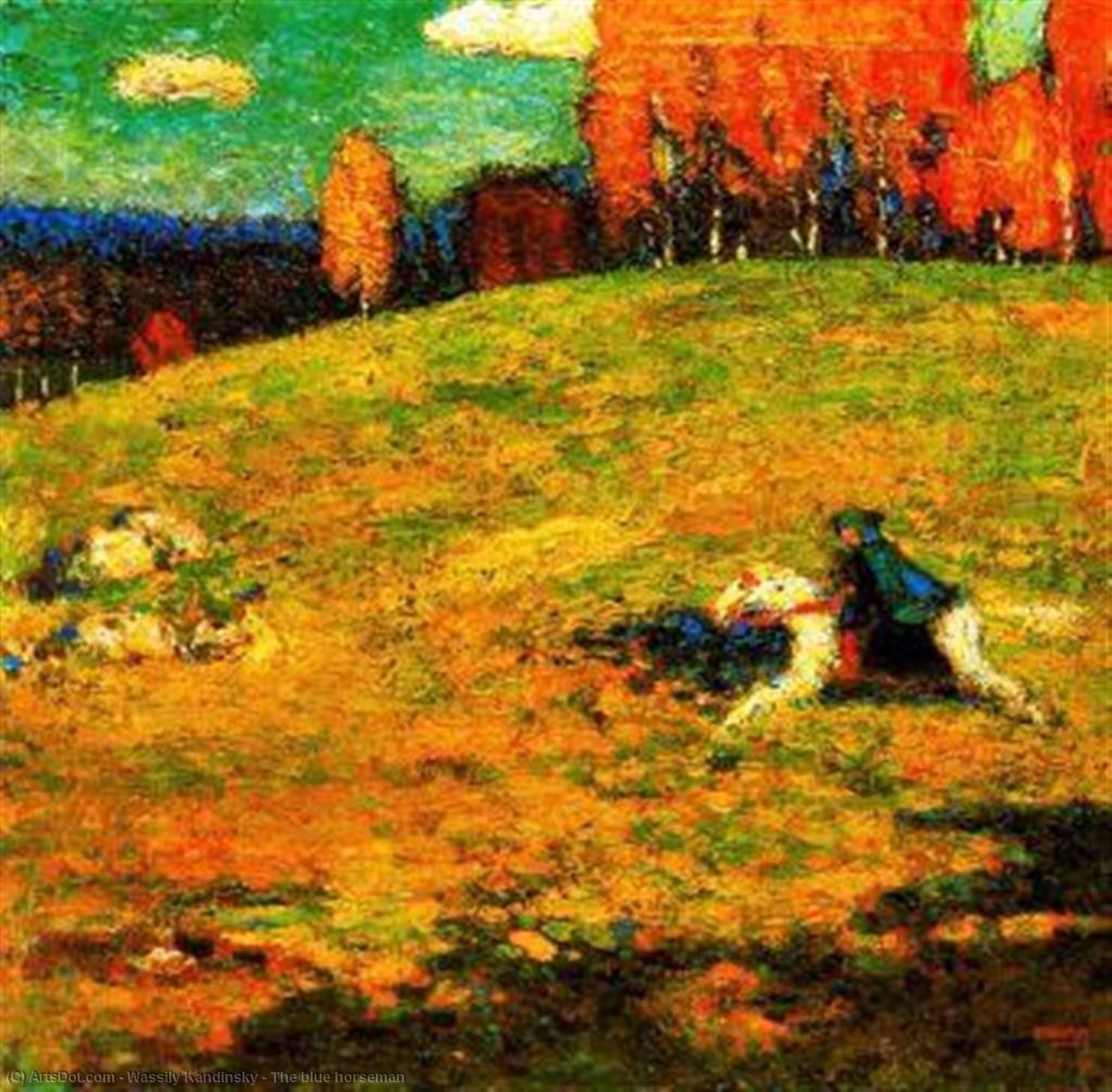
Wassily Kandinsky's *The Blue Horseman* is a captivating example of early Expressionism, bridging the gap between representational imagery and the burgeoning abstract style that would define much of his later work. This oil painting isn’t merely a depiction of a landscape; it’s an evocation of feeling, a glimpse into a spiritual realm filtered through the lens of nature.Subject & Composition: A Harmonious Encounter
The scene unfolds as a tranquil pastoral moment. A rider on horseback dominates the composition, moving across a gently sloping field. Supporting elements – trees in the background, another figure standing to the left, two dogs frolicking on the right, and a soaring bird – contribute to a sense of lively harmony. The arrangement isn’t rigidly realistic; rather, it feels dreamlike and intentionally flattened, prioritizing emotional resonance over precise perspective. This deliberate simplification allows the colors and forms to take center stage.Style & Technique: Expressionistic Brushwork
Kandinsky masterfully employs oil painting techniques to achieve a vibrant and emotionally charged effect. The brushstrokes are loose and expressive, visible across the canvas and contributing to the artwork’s dynamic energy. He utilizes bold colors – particularly blues, greens, yellows, and oranges – not necessarily to replicate reality but to convey inner states of being. This approach is characteristic of Expressionism, a movement that sought to depict subjective experience rather than objective truth. Kandinsky's technique shares affinities with contemporaries like Van Gogh and Monet, who also revolutionized oil painting through innovative brushwork and color application.Historical Context: The Dawn of Abstraction
Created around 1903, *The Blue Horseman* occupies a pivotal position in Kandinsky’s artistic development and within the broader history of modern art. It predates his fully abstract works but demonstrates a clear move away from strict representation. This period saw artists questioning traditional forms and exploring new ways to express emotion and spirituality through color and form. Kandinsky was deeply influenced by *Theosophy*, a spiritual movement that emphasized inner experience and the interconnectedness of all things, which profoundly shaped his artistic philosophy. He would soon co-found the influential group *Der Blaue Reiter* ("The Blue Rider"), further solidifying his role as a pioneer of abstract art.Symbolism & Emotional Impact: A Spiritual Journey
While seemingly straightforward, *The Blue Horseman* is rich in symbolic potential. The horse itself often represents power, freedom, and the untamed spirit. The blue hue, significant to Kandinsky and his fellow artists of *Der Blaue Reiter*, carries spiritual connotations – representing depth, tranquility, and the infinite. The overall effect is one of peaceful contemplation and a harmonious connection with nature. The painting invites viewers to step into this idyllic world and experience a sense of serenity and wonder. It’s not simply what is depicted but *how* it's depicted that evokes such a powerful emotional response.Collecting & Interior Design: Bringing Kandinsky Home
- For Art Lovers: *The Blue Horseman* represents an essential stepping stone in the evolution of abstract art, offering insight into Kandinsky’s unique vision.
- For Collectors: A reproduction of this work adds a touch of early modernism and intellectual depth to any collection.
- For Interior Designers: The painting's vibrant color palette and harmonious composition make it a versatile piece. It complements both contemporary and traditional interiors, adding a focal point that sparks conversation and inspires creativity. Its calming tones work well in living rooms, bedrooms, or studies.
関連作品


アーティストの略歴
Wassily Kandinsky (1866-1944): The Pioneer of Abstract Art
Wassily Wassilyevich Kandinsky, born in Moscow on December 4th, 1866, stands as a monumental figure in the history of art—a visionary who irrevocably transformed artistic expression and ushered in an era dominated by pure abstraction. His journey wasn’t one of immediate artistic epiphany; initially destined for a legal career at Moscow University, it was a transformative encounter with Claude Monet's “Haystacks” – capturing the shimmering light and atmospheric perspective of Impressionism – and witnessing Richard Wagner’s opera "Lohengrin" that ignited within him an irresistible yearning to pursue art. This pivotal moment, occurring around age thirty, marked not merely a career change but a profound reshaping of worldview, propelling him toward pioneering abstraction.
Early influences resonated deeply with Russian culture. His family's ethnographic expedition to the Vologda region in 1889 exposed him to vibrant color palettes and symbolic imagery derived from folk art—a formative experience that instilled a fascination for communicating emotion beyond literal representation. These foundational explorations weren’t simply aesthetic preferences; they were rooted in a profound connection to cultural heritage and an emerging understanding of art's capacity to transcend visual perception.
Moscow, 1866-1896: Seeds of Artistic Vision
Kandinsky’s formative years were marked by rigorous academic training—studying law at Moscow University alongside mastering the piano and cello. However, it was his encounter with Impressionism that fundamentally altered his artistic trajectory. As he recounted in autobiographical writings, “I remember that drawing and a little bit later painting lifted me out of the reality,” reflecting the transformative power of art to transcend mundane experience.
His marriage to Anna Chimyakina brought him into contact with a supportive family environment—a nurturing backdrop for cultivating his artistic sensibilities. He continued teaching law at Moscow University, demonstrating intellectual curiosity alongside developing his burgeoning talent for visual expression.
Munich and Gabriele Münter: The Birth of Expressionism
In 1896 Kandinsky relocated to Munich, enrolling in Anton Azbe’s prestigious private painting school—where he honed his skills in image composition and experimented with color harmonies. Simultaneously, he embarked on a romantic relationship with Gabriele Münter, forging an artistic partnership that would endure for decades.
During this period, Kandinsky's canvases pulsed with emotional intensity—characterized by bold colors and expressive brushstrokes—reflecting the influence of Expressionism’s preoccupation with subjective experience. Works like “Papeln (Poplars)” exemplify this early stylistic phase—capturing the dynamism of nature through vibrant hues and textured surfaces.
The Blue Rider Group and Geometric Harmony
The formation of Der Blaue Reiter (The Blue Rider) in Munich in 1911 marked a crucial juncture in Kandinsky’s artistic evolution. Alongside Gabriele Münter, he established an influential avant-garde collective—embracing geometric abstraction as a means of conveying spiritual truths.
His theoretical writings, notably “Concerning the Spiritual in Art,” articulated his conviction that art should aspire to transcend mere imitation of nature—seeking instead to reveal the artist’s inner world and resonate with viewers on a deeper level. Kandinsky championed the use of geometric forms—circles, triangles, squares—to evoke specific emotional responses—believing they possessed inherent symbolic significance.
“Several Circles” (140 x 140 cm), created in 1923 exemplifies this phase—a dynamic composition where color and form intertwine harmoniously—reflecting Kandinsky’s unwavering commitment to exploring the expressive potential of abstraction. This stylistic shift signaled a decisive break from representational art—embracing instead a visual language rooted in spiritual contemplation.
Bauhaus Influence and Legacy
Kandinsky's involvement with the Bauhaus school in Germany from 1922 until its closure in 1933 profoundly impacted generations of artists—solidifying his role as a champion of geometric abstraction and fostering innovation within architectural design. He taught at Bauhaus, imparting his theories on color and form—inspiring students to pursue artistic experimentation.
Following the Nazi regime’s seizure of power, Kandinsky emigrated to France in 1933—where he continued producing monumental canvases imbued with spiritual resonance—such as “Composition VII”—a testament to his enduring artistic vision. His legacy extends far beyond the realm of painting—influencing subsequent movements and shaping perceptions of abstract art worldwide.
Kandinsky’s unwavering belief in art's capacity to communicate transcendent truths—coupled with his pioneering exploration of geometric abstraction—continues to inspire artists today—affirming his place as one of the most transformative figures in 20th-century artistic history.

ワシリー・ワシーリエヴィチ・カンディンスキー
1866 - 1944 , ロシア
基本情報
- Artistic Movement Or Style: 抽象芸術、表現主義
- Artists Who Influenced This Artist:
- クロード・モネ
- リヒャルト・ヴァグナー
- Date Of Birth: 1866年12月4日
- Date Of Death: 1944年12月13日
- Full Name: ワシリー・ワシーリエヴィチ・カンディンスキー
- Nationality: ロシア
- Notable Artworks:
- いくつかの円
- 構成作品IX
- Place Of Birth: モスクワ、ロシア
関連記事

From Imagination to Canvas: Commissioning Bespoke Fantasy Art with Traditional Oil Painting Techniques
Commission breathtaking bespoke fantasy art with skilled oil painters. Explore techniques, artist selection & preservation tips. Invest in a unique masterpiece today!

Oil on Canvas Masters: 10 Paintings That Redefined Art History |
Journey through art history with our guide to 10 legendary oil on canvas masterpieces! Explore iconic works by Van Gogh, Monet & Rembrandt. Find museum-quality reproductions and elevate your home decor at . Discover all masterpieces online.
Top 10 Oil Paintings That Revolutionized Art History |
Journey through art history with our Top 10 oil paintings! Explore iconic works by Van Gogh, Monet & Rembrandt. Discover timeless masterpieces and find museum-quality reproductions for your home at .

世界中の顧客が選ぶワフーアートの多様な絵画スタイル:エリートコレクターのための芸術的ビジョンとカスタマイズの探求 | ArtsDot.com F.A.Q.
ワフーアートは、世界中のエリートコレクターに信頼されるカスタム油絵の専門店。写真から名画への変貌、個性的なギフトまで、熟練アーティストが芸術的ビジョンを形にします。高品質なアートで空間を豊かに彩りませんか?

Oil on Panel Masters: 10 Paintings That Revolutionized Art |
Journey through 10 legendary 'Oil on Panel' masterpieces by Van Eyck, Bosch & Bruegel. Explore the stories behind these iconic Renaissance & Baroque paintings and find museum-quality art reproductions to elevate your home decor. Discover all masterpieces on !



