

 設置イメージを表示
 シェアする
シェアする シェアする
シェアする
 詳細を見る
詳細を見る ガイドを表示

 ダウンロード
 似ている作品
 X線調査
X線調査 スライドショーを表示
 Q&A
Q&A 統計情報
統計情報Holoëder sulfate

 詳細を表示
詳細を表示
このページに掲載されている作品は著作権法によって保護されており、当社の許可なく同一の複製物を制作または販売することは法律で禁じられています。この保護は、以下のような国際条約に基づき執行されます。 ベルヌ条約 および、以下の条項に定められたものを含む各国の法律により、 米国著作権法 第17編。
この手法は、著作権で保護された作品の複製や複写を伴わないため、著作権法に完全に準拠しています。これは単なる模倣ではなく、創造的な再解釈です。元の作品からインスピレーションを受けつつも、それとは異なる、全く新しい絵画を生み出すものです。
ジークレー/アートプリント
スピーディーな制作と多彩な仕上げオプションが魅力の、ミュージアムクオリティなジークレー・キャンバスプリント。 ( 手描き複製画を注文する デジタル画像販売へ切り替え)




P118B ¥10

P118H ¥10

P118W ¥10

P438Z ¥10

P508JH ¥12

P508YH ¥12

P805H ¥10

P805Z ¥10

P919BZ ¥10

P919G ¥10

P919XJ ¥10

P959ZH ¥10

P968JZ ¥12

W106C ¥8

W218G ¥10

W218JH ¥8

W218Y ¥10

W307PJ ¥10

W316G ¥10

W316PJ ¥8

W316Y ¥10

W398PJ ¥8

W4111J ¥10

W500HY ¥15

W500JH ¥15

W692G ¥12

W849H ¥8

W940BG ¥15

W953PJ ¥8




作品のオリジナル比率に合わせた、当店の規定サイズからお選びください。

額縁や壁のスペースに合わせて、ご希望の幅と高さを入力してください。プリントはカットすることは可能ですが、元の画像より大きくすることはできないため、異なる比率のサイズを選択された場合は、画像の一部が欠けることになります。印刷を開始する前に、内容を確認していただくためのデジタルモックアップをお送りいたします。このページに表示されている画像は、実際のカット後の状態を示すものではありません。実際の仕上がりはモックアップにてご確認ください。


 ガラスオプションは、110cm未満のサイズでのみご利用いただけます。

Holoëder sulfate
ジークレー/アートプリント
複製画サイズ一覧
-


合計金額
¥ 9952
Max Ernst’s *Holoëder sulfate*: A Surrealist Reverie
Max Ernst's Holoëder sulfate (circa 1930) is not merely a painting; it’s an immersion into the subconscious, a meticulously constructed dreamscape rendered with the unsettling precision characteristic of the artist’s surrealist explorations. This captivating work, featuring a central umbrella dominating a chaotic yet strangely ordered arrangement of books and figures, embodies Ernst's profound engagement with psychological themes and his pioneering role in shaping 20th-century art. The painting immediately draws the viewer into an atmosphere of quiet disorientation, inviting contemplation on memory, perception, and the hidden landscapes of the mind.
A Synthesis of Disciplines: Ernst’s Intellectual Framework
Understanding Holoëder sulfate requires acknowledging the intellectual currents that fueled Max Ernst's artistic practice. Born in Brühl, Germany, in 1891, Ernst was a voracious reader and student of philosophy, psychology, and literature – disciplines he pursued with an almost obsessive intensity at the University of Bonn. This wasn’t simply academic curiosity; it was a deliberate strategy to dismantle conventional notions of reality and explore the realms of the irrational. His studies in psychiatry, particularly his interest in Freud's theories on dreams and the unconscious, profoundly influenced his artistic techniques, leading him to employ methods like frottage (rubbing textures) and decalcomania (transferring paint from one surface to another) to tap into these hidden depths. The inclusion of seemingly mundane objects – books, umbrellas – elevates them to symbolic weight, reflecting Ernst’s desire to reveal the underlying structures of thought.
Composition and Technique: Building a Dream
The composition of Holoëder sulfate is deliberately unsettling. The oversized umbrella, a recurring motif in Ernst's work, acts as a focal point, drawing the eye while simultaneously suggesting protection or concealment. Surrounding it are smaller umbrellas, creating a sense of claustrophobia and echoing the fragmented nature of memory. The books, stacked haphazardly or standing alone, represent knowledge, but also its potential for confusion and misinterpretation. Ernst’s technique is characterized by meticulous detail combined with an almost childlike spontaneity. He employed oil paints with a delicate touch, layering colors to create subtle gradations and textures that enhance the painting's dreamlike quality. The use of contrasting light and shadow further contributes to the work’s dramatic effect.
Symbolism and Emotional Resonance
While precise interpretations remain open to debate, Holoëder sulfate is rich in symbolic potential. The umbrella itself can be seen as a shield against overwhelming emotions or an attempt to control one's thoughts. The figures within the scene are ambiguous, their identities obscured, suggesting that they represent aspects of the self – perhaps memories, desires, or anxieties. The overall effect is profoundly unsettling and evokes a sense of unease, prompting viewers to confront their own subconscious fears and fantasies. Ernst’s work resonates with a deep emotional current, inviting us to explore the darker corners of our minds.
A Legacy of Surrealist Innovation
Holoëder sulfate stands as a testament to Max Ernst's groundbreaking contribution to the surrealist movement. It exemplifies his ability to transform personal anxieties and intellectual explorations into powerful visual narratives. As a hand-painted reproduction, this artwork offers an unparalleled opportunity to experience the full impact of Ernst’s vision – a captivating journey into the heart of the subconscious.
Q&A
「Holoëder sulfate」のSurrealist Explorationには、どの国のルーツが反映されているのでしょうか?
「Holoëder sulfate」は、作者の出生地を通じて、Surrealist Exploration運動とドイツを結びつけています。
その色彩を考慮すると、"Holoëder sulfate" はどの場所に飾るのがおすすめですか?
Earthyの色調を考慮すると、「Holoëder sulfate」はLiving Roomに最適です。
「Holoëder sulfate」はパブリックドメインですか?
マックス・エルンスト作「Holoëder sulfate」は著作権の保護対象ですです。このステータスは、作品画像の複製に関する規定を定めたものです。
関連作品


作家プロフィール
マックス・エルンスト:シュルレアリスムの先駆者、夢と技法の探求
マックス・エルンストは、1891年4月2日にドイツのブリュールで生まれ、20世紀美術における最も重要な芸術家の一人として記憶されています。彼の人生は、哲学的な探究心、心理学への深い関心、そして社会規範に対する強い反抗心によって推進された、自己主導型の芸術的探求でした。エルンストの父親は耳の不自由な人々を教える教師であり、アマチュア画家でもありました。この環境が、彼に世界に対する感受性と権威に対する反逆心を植え付けたのです。幼少期から培われたこの二面性は、彼の芸術的ビジョンの根幹となりました。ボン大学での学業 – 哲学、美術史、文学、心理学、精神医学を網羅する – は単なる余興ではなく、その後の作品に深く影響を与える基盤となりました。彼は絵を描く方法だけでなく、「なぜ」描くのかという問いに向き合っていたのです。 1912年のケルンで開催されたゾンダーブント展でピカソ、ゴッホ、ゴーギャンの革新的な作品に出会い、彼の芸術的軌道は決定的に変化しました。第一次世界大戦の勃発は、エルンストにとって転換点となりました。東部および西部戦線での兵役経験は彼を深く傷つけ、確立された秩序に対する深い懐疑感と、新たな表現方法への渇望を生み出しました。この失望感が肥沃な土壌を見つけたのが、台頭してきたダダイスムでした。エルンストはこれを熱心に受け入れ、ハンス・アルプと共にケルンのダダイ集団の中核を担い、伝統的な芸術的慣習を拒否し、不条理、偶然性、非合理性を抱きしめました。しかし、ダダイズムは単なる通過点でした。1920年代初頭にパリに移住したエルンストは、アンドレ・ブルトン率いるシュルレアリスムの仲間入りを果たしました。これは、夢の世界、無意識、そして非合理を探求することへのシフトを意味しました。ジークムント・フロイトの精神分析理論の影響を受け、エルンストは芸術を通して人間の経験の深層にある心理的な力を明らかにするよう努めました。革新的な技法:フロッタージュ、グラタージュ、コラージュ
エルンストの芸術的革新は主題だけでなく、技法にも及びました。彼は既存の方法を単に採用するのではなく、新しいものを発明しました。おそらく最も有名な貢献はフロッタージュです。これは、様々な素材の表面の質感に鉛筆や木炭で擦り込むことで、予期せぬ表現力豊かなイメージを生み出すプロセスです。この技法は、退屈な瞬間から生まれたものであり、エルンストが無意識に触れ、意図的に制御できない形を生成することを可能にしました。密接に関連するものとしてグラタージュがあり、キャンバスに塗られた絵の具を掻き落とし、その下に置かれたオブジェクトの痕跡を現出させます。 彼はまた、雑誌からの切り抜き、科学的イラストレーション、写真など、様々な要素を組み合わせたシュールな構成を作り出すコラージュも巧みに使用しました。これらの技法は単なる様式的な選択ではなく、無意識を探求し、伝統的な芸術的境界線を破壊したいという彼の願望に不可欠でした。彼の絵画には、しばしば反復する象徴的なイメージが見られます。鳥(特に彼のもう一人の人格であるロプロップ)、荒涼とした風景、不穏な組み合わせ、そして蔓延する神秘主義です。影響と遺産
第二次世界大戦の勃発は、エルンストをヨーロッパからの亡命へと追い込みました。彼はアメリカ合衆国で避難し、亡くなるまで新しい技法を実験しながら絵を描き続けました。戦後、彼はフランスに戻り、1954年には第27回ヴェネツィア・ビエンナーレで芸術的業績全体に対してグランプリを受賞し、国際的な評価を得ました。彼の作品は、その後の世代のアーティストに計り知れない影響を与えました。 マックス・エルンストのダダイズムとシュルレアリスムへの貢献は、画期的でした。彼は芸術規範に挑戦し、人間の心の深淵を探求し、今日までアーティストにインスピレーションを与え続けている革新的な技術を発明しました。彼は単なる画家ではなく、探検家であり、挑発者であり、芸術そのものの境界線を拡大した先見の明を持った人物でした。彼の作品は、想像力への賛歌、非合理性の魅力、そして人間の精神の複雑さを理解するための永続的な探求の証です。- 主要な作品: 全都市、エウクリデス、このことを人は知るべきではない、森と鳩
- 影響を受けた芸術家: パブロ・ピカソ、フィンセント・ファン・ゴッホ、ポール・ゴーギャン、ジークムント・フロイト、ジョルジョ・デ・キリコ
- 運動: ダダイズム、シュルレアリスム

マックス・エルンスト
1891 - 1976 , ドイツ
プロフィール概要
- フルネーム: マックス・エルンスト
- 主な作品:
- エウクリデス
- 完全都市
- 森と鳩
- この男達は知るな
- 出生地: ブリュール(ドイツ)
- 国籍: ドイツ系アメリカ人、フランス人
- 影響を与えたアーティストまたは運動:
- シュルレアリスム
- ダダ
- 影響を受けたアーティスト:
- パブロ・ピカソ
- フィンセント・ファン・ゴッホ
- ポール・ゴーギャン
- ジョルジョ・デ・キリコ
- 死亡年月日: 1976年4月1日
- 生年月日: 1891年4月2日
- 芸術運動またはスタイル: ダダ、シュルレアリスム
関連記事
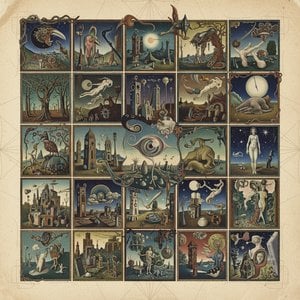
マックス・エルンスト傑作25選:シュルレアリスムの深淵と装飾への誘い
マックス・エルンストの傑作25選。シュルレアリスムを代表する画家、その夢と無意識の世界を描いた絵画や版画を紐解きます。リビングやオフィスに飾るモダンアート、インテリアに最適な作品を見つけませんか?ArtsDot.comで全コレクションをオンラインで探す。

Echoes of Time: Exploring the Enduring Appeal & Historical Context of Vintage Art Prints
Explore the captivating world of vintage art prints! Discover their history, collecting tips & enduring appeal. Expert insights on chromolithography and building a legacy collection with ArtsDot.

Giclée Prints: Archival Quality & Aesthetic Nuances for the Discerning Collector
Explore the world of giclée prints with ArtsDot. Learn about archival quality, aesthetic nuances & investment potential. Expert guidance for discerning art collectors seeking museum-quality reproductions and lasting value.
Transforming Spaces: A Comprehensive Exploration of Wall Decor Through Art History & Contemporary Practice
Explore the art of transforming spaces with our comprehensive guide to wall decor. From historical movements to contemporary trends, discover how to curate impactful interiors and commission bespoke artwork for a truly personalized aesthetic.

至高の芸術:シュルレアリスムを象徴する10選 – 夢と現実の境界線を超える
夢と現実が交差する、シュルレアリスムの10大傑作の世界へ。ダリ、マグリットなど巨匠たちの作品を深く探求し、アートの新たな次元を発見してください。ArtsDot.comで、至高の芸術をあなたの空間に取り入れましょう。


