
- ホーム

- 油絵の複製画
- ギュスターヴ・アウゲニュ・ポール・ゴギャン
- M. Loulou

 プリントを購入
 シェアする
シェアする シェアする
シェアする
 Details

 ダウンロード
 似ている作品
 X-Ray
X-Ray スライドショー
M. Loulou
 Oil On Canvas
- WallArt
- Post-Impressionism
 1890
1890- 19th Century
 55.0 x 46.0 cm




P118B $10

P118H $10

P118W $10

P438Z $10

P508JH $12

P508YH $12

P805H $10

P805Z $10

P919BZ $10

P919G $10

P919XJ $10

P959ZH $10

P968JZ $12

W106C $8

W218G $10

W218JH $8

W218Y $10

W307PJ $10

W316G $10

W316PJ $8

W316Y $10

W398PJ $8

W4111J $10

W500HY $15

W500JH $15

W692G $12

W849H $8

W940BG $15

W953PJ $8




 続きを読む
続きを読む作品のオリジナル比率に合わせた、当店の規定サイズからお選びください。

特定のフレームやスペースに合わせて、ご希望のサイズをご入力いただけます。選択されたサイズが元の画像の比率と異なる場合、アートワークをトリミングするか、手描きで要素を追加して絵画を拡張いたします。デジタルモックアップ を制作し、制作開始前にご確認(承認)をいただきます。
画面上のプレビューは、実際のトリミングや拡張を正確に反映しているものではありません。最終的な構図は、モックアップによってのみ正確にご確認いただけます。
カスタムサイズもご利用いただけますが、元の比率を維持するためには、あらかじめ用意されたリストからサイズを選択することをお勧めいたします。
ご注文後、ArtsDot.com チームより詳細な指示をお送りするとともに、仕上がりイメージ(モックアップ)をご提供いたします。


 ガラスオプションは、110cm未満のサイズでのみご利用いただけます。

M. Loulou
複製技法
複製画のサイズ
-


合計金額
-
作品解説
Captivating Subject and Introspective Mood
This striking portrait captures a young girl seated gracefully amidst a vibrant, decorative setting. Her gentle, contemplative expression invites viewers into a moment of quiet introspection, evoking a sense of innocence and inner thoughtfulness. The girl's delicate features, framed by dark hair and clasped hands, serve as a focal point that exudes calmness and emotional depth. Surrounded by stylized floral and fruit motifs, including a prominent pomegranate, the composition hints at themes of fertility, life, and the cycle of nature, adding layers of symbolic richness to the work.Distinctive Style and Artistic Technique
Created in 1890, this artwork exemplifies the bold, expressive qualities of Post-Impressionism combined with elements of Symbolism. The artist employs simplified, stylized forms and a vivid, contrasting color palette to evoke emotion and decorative appeal. Thick, black outlines define the figure and floral motifs, emphasizing their flatness and decorative nature. The brushwork is lively and energetic, with visible strokes that add texture and movement, creating a dynamic surface that captures the viewer’s eye. The flat perspective and diffuse lighting further enhance the work’s emphasis on symbolic and emotional expression over realistic spatial depth.Historical Context and Artistic Significance
Produced during a period of artistic experimentation, this piece reflects the transition from Impressionism to more expressive, symbolic approaches. The artist’s use of bold colors and simplified shapes aligns with the Post-Impressionist movement’s desire to convey deeper emotional and spiritual truths. The inclusion of symbolic elements like the pomegranate connects to broader themes of vitality, mortality, and renewal, resonating with the Symbolist movement’s focus on conveying complex ideas through visual allegory. This work stands as a testament to the artist’s innovative approach to portraiture and decorative art, influencing generations of modern artists.Emotional Impact and Decorative Appeal
With its vibrant color scheme and harmonious composition, this artwork radiates warmth, introspection, and a sense of quiet strength. It invites viewers to reflect on themes of innocence, inner life, and the natural world, making it a meaningful addition to any collection or interior space. Its decorative qualities, characterized by stylized floral motifs and bold outlines, make it an ideal piece for enhancing contemporary or traditional interiors. Whether displayed in a private collection, gallery, or sophisticated home, this reproduction offers a captivating visual experience that inspires admiration and emotional connection.関連作品


アーティストの略歴
Eugène Henri Paul Gauguin: A Revolutionary Post-Impressionist Painter
Paul Gauguin, a name that resonates with vibrant color and rebellious spirit, stands as a pivotal figure in the transition from Impressionism to modern art. Born in Paris in 1848, his life was anything but conventional. His early years were shaped by an unusual upbringing; his father a journalist, and his mother descended from Peruvian aristocracy—her grandmother, Flora Tristan, a pioneering feminist and socialist writer whose ideals undoubtedly resonated within the family. This heritage would profoundly shape Gauguin’s artistic vision, instilling in him a fascination with cultures beyond Europe. A formative period spent in Peru as a child, following his family's relocation in 1850, immersed him in a world vastly different from Parisian society, an experience that lingered and ultimately fueled his quest for authenticity in art. Returning to France after his father’s death, Gauguin received a formal education but found himself drawn not to academia, but to the burgeoning financial world, embarking on a career as a stockbroker—a path seemingly at odds with the artistic destiny that awaited him. ## Early Influences and Artistic Beginnings Gauguin's initial exposure to art came through his father’s collection, which included works by Camille Corot and Eugène Delacroix – artists who championed Impressionism’s exploration of light and color. However, Gauguin quickly recognized the limitations of Impressionistic technique in capturing deeper emotional truths. He felt that Impressionists were primarily concerned with documenting visual sensations rather than conveying inner feelings or spiritual ideas—a distinction that would become central to his artistic philosophy. Influenced by Japanese prints – Japonisme – he adopted flattened perspectives, bold outlines, and decorative patterns as stylistic elements, reflecting a burgeoning interest in non-Western art traditions. This fascination with Primitivism stemmed from Gauguin’s conviction that primitive cultures possessed an innate spirituality and honesty absent in European civilization—a belief that would profoundly inform his artistic endeavors. He began experimenting with color palettes inspired by Byzantine icons and medieval stained glass windows, seeking to evoke a sense of transcendence and symbolic resonance. ## The Parisian Years: Impressionism and Dissatisfaction Despite his initial engagement with Impressionism, Gauguin’s artistic ambitions soon propelled him beyond its confines. He diligently pursued his stockbroker career while secretly honing his painting skills, driven by an unwavering desire for creative expression. However, the financial crisis of 1882 proved a catalyst for change, forcing him to abandon his lucrative profession and wholeheartedly embrace his artistic vocation. This wasn’t merely a shift in occupation; it was a fundamental transformation of worldview. Gauguin sought guidance from Camille Pissarro, who encouraged his development and introduced him to the avant-garde circles of Paris—circles that championed radical experimentation and challenged established conventions. Yet, Gauguin remained dissatisfied with Impressionistic ideals, yearning for something more profound – a way to communicate emotion and spiritual insight beyond mere visual representation. He began to develop Synthetism, a style characterized by simplified forms and bold colors designed to convey symbolic meaning rather than objective observation. ## Tahiti: A Quest for Authenticity and Spiritual Renewal The turning point in Gauguin’s artistic life arrived with his decision to travel to Tahiti in 1891 – an island he envisioned as a refuge from the pressures of Parisian society and a source of inspiration for his art. Driven by a deep longing for spiritual renewal, Gauguin immersed himself in Polynesian culture, meticulously documenting its rituals, myths, and landscapes through his distinctive artistic style. He rejected Western academic conventions, prioritizing intuition and emotion over meticulous realism—a stance that solidified his reputation as a visionary artist. His palette exploded with vibrant hues – reds, yellows, blues – mirroring the intensity of Polynesian spirituality and reflecting his own inner turmoil. Iconic paintings like “Vahine no te miti” (Woman with Mango) and “The Vision After The Sermon” exemplify this stylistic approach, demonstrating Gauguin’s masterful manipulation of color and form to convey profound emotional states. He sought to capture the essence of Polynesian life—its simplicity, its connection to nature, its belief in supernatural forces—translating these experiences into visual metaphors that resonated with universal themes of faith and transcendence. ## Legacy and Influence: Shaping Modern Art Paul Gauguin’s artistic legacy extends far beyond his own lifetime, profoundly influencing generations of artists who followed him. His bold use of color, simplified forms, and symbolic imagery challenged the conventions of Impressionism and paved the way for movements like Fauvism and Expressionism—movements that prioritized emotional intensity over visual accuracy. Artists such as Pablo Picasso and Henri Matisse acknowledged Gauguin’s influence on their own work, recognizing his pioneering spirit in rejecting academic tradition and pursuing artistic freedom. Gauguin's unwavering commitment to exploring spiritual themes and capturing the essence of primitive cultures continues to inspire artists today—artists who strive to express emotion and convey meaning beyond mere visual representation. He remains a symbol of artistic rebellion and visionary creativity—a testament to the transformative power of art to transcend cultural boundaries and illuminate the human condition. His enduring impact on modern art is undeniable, securing his place as one of the most important figures in the history of Western painting.
ギュスターヴ・アウゲニュ・ポール・ゴギャン
1848 - 1903 , フランス
基本情報
- Artistic Movement Or Style: 印象派、シンボリズム
- Artists Or Movements Influenced By This Artist:
- パブロ・ピカソ
- アンリ・マティス
- Artists Who Influenced This Artist: ['カミーユ・ペッサロ']
- Date Of Birth: 1848年6月7日
- Date Of Death: 1903年5月8日
- Full Name: Eugène Henri Paul Gauguin
- Nationality: フランス人
- Notable Artworks: ['清風']
- Place Of Birth: パリ、フランス
関連記事

Masterful Portraits: 10 Artworks That Define a Genre | ArtsDot
Explore 10 iconic portrait paintings – from Mona Lisa to Van Gogh’s self-portraits. Discover the stories behind these masterpieces, artistic techniques & find museum-quality art reproductions for your home at ArtsDot.com.


Capturing Fleeting Moments: Light, Color & Emotion in Impressionistic Art
Explore the captivating world of Impressionism! Discover the techniques, artists (Monet, Renoir, Degas), and enduring legacy of this revolutionary art movement. Expert insights for collectors & enthusiasts.

Beyond Impressionism: Exploring the Emotional Depth of Post-Impressionist Painting
Explore the profound emotional depth & innovative techniques of Post-Impressionism with ArtsDot. Discover Cézanne, Van Gogh, Gauguin & more – and their lasting impact on modern art.

Chromatic Resonance: Exploring the Emotional Impact of Vibrant Color Palettes in Painting
Explore the fascinating relationship between color & emotion in art history. Discover how master artists like Matisse & Gauguin used vibrant hues to evoke feelings and cultural meanings. A deep dive for classic art enthusiasts.
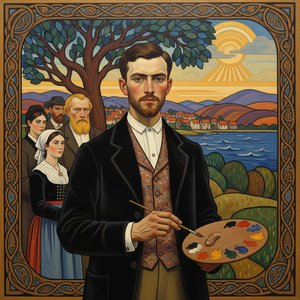
Émile Bernard: Pioneering Synthetism & the Post-Impressionist Quest for Essence
Explore the life & work of Émile Bernard, a pivotal Post-Impressionist pioneer of Synthetism. Discover his influence on Van Gogh & Gauguin and learn about collecting his art with ArtsDot.



