


 設置イメージを確認
 送る
送る シェア
シェア
 詳細情報
詳細情報 ガイドを表示

 画像をダウンロード
 似ている作品
 X線調査
X線調査 スライドショー
 統計情報
統計情報Study for Dance


 続きを読む
続きを読む
手描き油彩複製画
当社のアーティストが、お客様のご希望のサイズと額縁に合わせて、キャンバスに手描きで制作する油彩画です。 ( プリント版に切り替え デジタル画像販売へ切り替え)




P118B ¥10

P118H ¥10

P118W ¥10

P438Z ¥10

P508JH ¥12

P508YH ¥12

P805H ¥10

P805Z ¥10

P919BZ ¥10

P919G ¥10

P919XJ ¥10

P959ZH ¥10

P968JZ ¥12

W106C ¥8

W218G ¥10

W218JH ¥8

W218Y ¥10

W307PJ ¥10

W316G ¥10

W316PJ ¥8

W316Y ¥10

W398PJ ¥8

W4111J ¥10

W500HY ¥15

W500JH ¥15

W692G ¥12

W849H ¥8

W940BG ¥15

W953PJ ¥8




作品のオリジナル比率に合わせた、当店の規定サイズからお選びください。

フレームや壁のスペースに合わせて、ご希望の幅と高さを入力してください。本作品は手描きのため、異なる比率のサイズをご希望の場合、絵画の周囲を少し広げて描くか、あるいは端を少しカットして調整することが可能です。お客様のご要望に合わせます。制作を開始する前に、仕上がりを確認するためのデジタルモックアップをお送りいたします。このページに表示されている画像は完成品の実物ではなく、あくまでモックアップによるイメージです。
ご注文後、ArtsDot.com チームより詳細な指示をお送りするとともに、仕上がりイメージ(モックアップ)をご提供いたします。


 ガラスオプションは、110cm未満のサイズでのみご利用いただけます。

Study for Dance
再現技法
複製画サイズ一覧
-


合計金額
¥ 41377
A Study in Fluidity: Alphonse Mucha’s ‘Study for Dance’
Alphonse Maria Mucha's “Study for Dance,” a pastel drawing of remarkable delicacy and dynamism, offers a captivating glimpse into the heart of Art Nouveau. Dating from around 1900, this piece transcends mere representation; it is an embodiment of movement, beauty, and the spirit of a burgeoning artistic era. The artwork’s immediate impact lies in its depiction of a nude woman – a recurring motif in Mucha's oeuvre – caught in a swirling, almost ecstatic pose, reminiscent of a dancer lost within her own rhythm. This isn’t a study for a grand salon painting; rather, it feels intensely personal, a concentrated exploration of form and emotion.
Style & Technique: The Essence of Art Nouveau
Mucha's distinctive style is immediately recognizable. “Study for Dance” exemplifies the flowing lines, organic forms, and decorative elements that defined Art Nouveau. The composition prioritizes graceful curves over rigid realism, creating a dreamlike atmosphere where perspective is subtly flattened to emphasize the figure’s movement. The pastel technique itself is crucial – layers of color are meticulously built up to achieve a velvety texture and luminous quality. Notice how loose brushstrokes contribute to the ethereal effect, while delicate linework defines the contours of the woman's body and the intricate details of the circular frame. The use of hatching and cross-hatching adds depth and dimension, particularly in rendering the folds of her dress, which appears to ripple with movement.
Symbolism & Composition
Beyond its aesthetic beauty, “Study for Dance” is rich in symbolic meaning. The swirling lines that dominate the composition represent fluidity – not just physical movement but also ideas and emotions. The ornate circular frame, a frequent element in Mucha’s work, suggests eternity or a celestial realm, elevating the figure to something almost divine. The warm color palette—dominated by reds, golds, and muted greens—evokes feelings of sensuality and warmth. Considering Mucha's influences – particularly his admiration for Gustave Moreau – we can see echoes of classical mythology and allegorical themes within this intimate study. The pose itself, with the woman’s arms outstretched, speaks to a yearning for freedom and expression, aligning perfectly with the core values of Art Nouveau.
Historical Context & Mucha's Legacy
Created during a period of immense artistic innovation, “Study for Dance” reflects the broader cultural shift towards embracing beauty, nature, and decorative arts. Mucha’s work was instrumental in establishing Art Nouveau as a dominant style, influencing designers, architects, and artists across Europe. His commissions for Parisian department stores and exhibitions helped to popularize his distinctive aesthetic. As a precursor to Cubism and other modern movements, Mucha's emphasis on flattened perspective and stylized forms paved the way for new approaches to representation. Studying “Study for Dance” allows us to appreciate not only Mucha’s individual genius but also his pivotal role in shaping the course of 20th-century art.
よくあるご質問
アルフォンス・ミュシャ作「Study for Dance」の色使いは、作品の感情とどのように結びついているのでしょうか?
「Study for Dance」では、Pastelsの色調がEtherealな情緒を添えています。
アルフォンス・ミュシャ作「Study for Dance」 の色彩的な特徴は何ですか?
アルフォンス・ミュシャ作「Study for Dance」の色彩表現:Khaki (#dcd17e)を基調とした、Pastelsなパレット。
「Study for Dance」は、明暗のコントラストが強い作品ですか?
「Study for Dance」の明暗のコントラストはSereneと記録されています。コントラストとは、明るい部分と暗い部分がどの程度強く異なっているかを表す指標です。


アーティストについて
幼少期と教育
- 1860年7月15日、モラヴィア地方のイヴァニチツェ(現在のチェコ共和国)に生まれました。
- 幼い頃から芸術的な才能を示しました。
- プラハ美術アカデミーに入学しましたが、伝統的な手法に幻滅感を抱きました。
- 1887年にパリに移り住み、独自のスタイルを追求しました。
アール・ヌーヴォー様式と代表作
- 流れるような線、有機的なフォルム、躍動感を持つ独特のアール・ヌーヴォー様式で知られています。
- ピエール=オーギュスト・ルノワールやギュスターヴ・モローといった芸術家から影響を受けました。
- 代表作:
- スラヴの反乱 - 伝統的なチェコのモチーフとモダンなアール・ヌーヴォー要素を融合させた作品です。
- サロン・ド・サン
- ギュスターヴ・モローの『テスピオの娘たち』やピエロ・ドラツィオの『ゴベランの乱れ者たち』にインスパイアされた絵画。
- サー・ヒューバート・フォン・ヘルコマーの『亜麻を破る農夫たち』に基づいた挿絵。
- 流れるようなローブを身につけた理想化された女性を、豊かな花々に囲んで描くことがよくあります。
キャリアのハイライトと主要な依頼
- サラ・ベルナールとのコラボレーション: 1894年に『ジスムンダ』のポスターを制作し、女優サラ・ベルナールのためにポスターやデザインを手がけ、キャリアをスタートさせました。
- パリ万国博覧会(1900年): この博覧会でアール・ヌーヴォー様式が国際的に認められました。ボスニア・ヘルツェゴビナ館の装飾を担当し、オーストリア館にも協力しました。
- チャールズ・リチャード・クレーンからのパトロン: チャールズ・リチャード・クレーンの支援を受け、記念碑的なシリーズ『スラヴ叙事詩』(1912-30) を制作することができました。
- 独立後のチェコスロバキア: 新しいチェコスロバキアのために切手、紙幣、政府の文書をデザインしました。
影響と遺産
- チェコの芸術的伝統とヨーロッパ近代美術の影響を受けています。
- 彼のユニークなスタイルは、アール・ヌーヴォーやセセッション運動の次世代のアーティストへの道を開きました。
- エヴァ・プロコプツォヴァのような他のアーティストに影響を与えました。
- 彼の遺産は芸術作品を超えてデザインと美学にまで及びます。スラヴ叙事詩 は、チェコの国民的アイデンティティを表現する重要な役割を果たしました。
晩年と死
- 1906年にマルシュカ(マリー/マリア)ヒティロヴァと結婚しました。
- 娘のヤロスラヴァが生まれた1906年から1910年までアメリカを訪問しました。
- 1939年7月14日、チェコスロバキアのプラハで亡くなりました。

アルフォンス・ミュシャ
1860 - 1939 , チェコ共和国
アーティスト情報
- Artistic Movement Or Style: アール・ヌーヴォー
- Artists Or Movements Influenced By This Artist: ['エヴァ・プロコプツォーヴァ']
- Artists Who Influenced This Artist:
- ピエール=オーギュスト・ルノワール
- ギュスターヴ・モロー
- Date Of Birth: 1860年7月15日
- Date Of Death: 1939年
- Full Name: アルフォンス・マリア・ミュシャ
- Nationality: チェコ人
- Notable Artworks (List Of Titles):
- スラヴの台頭
- サロン・ド・サン
- テスピオの娘たち
- Place Of Birth (City And Country): チェコ共和国、ブルノ
関連記事
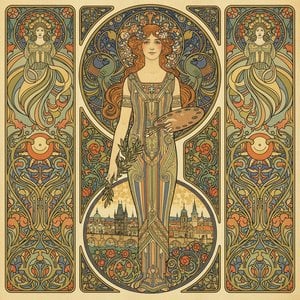
Alphonse Mucha: A Comprehensive Exploration of Art Nouveau's Master of Decorative Symbolism
Explore the life & art of Alphonse Mucha, master of Art Nouveau! Discover his iconic posters, stunning illustrations, and the monumental Slav Epic. A comprehensive guide for collectors & enthusiasts.

The Enduring Allure of the Nude: A Historical & Artistic Exploration of the Human Form
Explore the captivating history of nude art! Discover iconic paintings & artists from classical to modern eras. Uncover symbolism, techniques & find museum-quality reproductions at ArtsDot.

The Subtleties of Pastel: A Comprehensive Exploration of Technique, History & Emotional Resonance
Explore the captivating world of pastel art! Discover its rich history, Impressionistic masters like Degas, emotional power & unique techniques. Find museum-quality reproductions at ArtsDot.

The Eloquent Form: A Historical & Aesthetic Exploration of the Nude in Art
Explore the captivating history of the nude in art! From ancient Greece to modern masters, discover its evolving symbolism, techniques & enduring beauty. Expert insights for collectors and enthusiasts.

The Subdued Radiance of Pastel: Exploring Nuance & Emotion in Art
Explore the nuanced world of pastel art! Discover its history, techniques & emotional power with expert insights from ArtsDot.com. Find museum-quality reproductions and learn about collecting this delicate medium.